

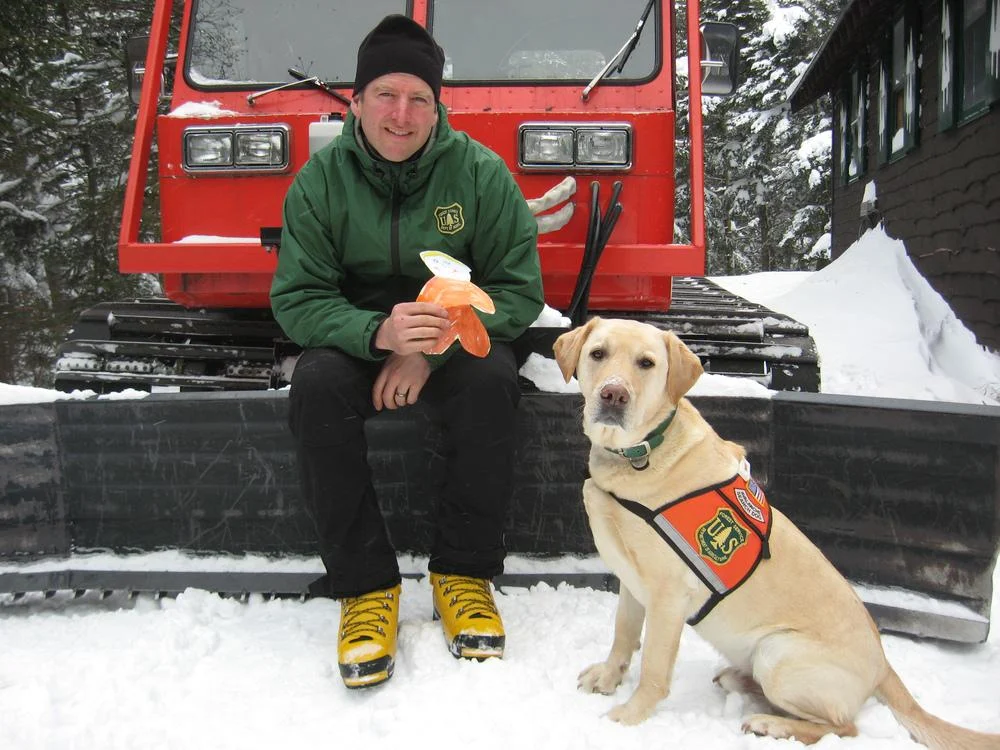
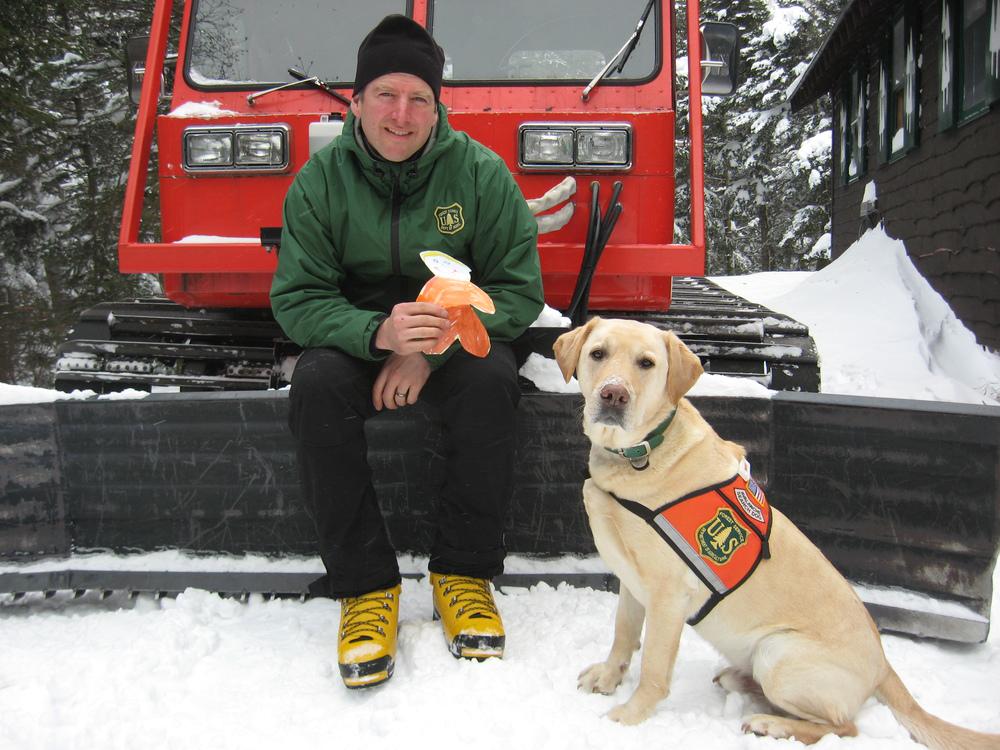
The Mount Washington Avalanche Center (MWAC) and the broader search and rescue community in the White Mountains of New Hampshire are mourning the loss of Cutler, a dedicated avalanche rescue dog who served the region for over a decade. Cutler, who passed away recently at the age of 14, was a cornerstone of the safety operations managed by the United States Forest Service (USFS) within the White Mountain National Forest. During his 11-year career, Cutler was not only a vital tool in search and rescue (SAR) operations but also became a public symbol for avalanche awareness and mountain safety. His service spanned approximately 80% of his life, a testament to the rigorous and long-term commitment required of working canines in high-alpine environments.
Working alongside Mount Washington Avalanche Center Director Chris Joosen, Cutler patrolled some of the most dangerous and heavily trafficked winter terrain in the United States. His primary area of operations included the Presidential Range, specifically the high-use zones of Tuckerman Ravine and Huntington Ravine. These areas are known for their extreme weather, significant snow accumulation, and high volume of backcountry skiers and climbers, making the presence of a highly trained avalanche dog a critical component of the Forest Service’s risk management strategy.
A Career Defined by Service and Specialized Training
The career of an avalanche dog like Cutler is defined by intensive training and a unique set of skills that cannot be replicated by human technology. While modern avalanche transceivers (beacons) are the primary tool for locating buried victims, they require the victim to be wearing a functioning device. In many cases, including those involving recreationalists who are unprepared or those whose equipment has failed, a canine’s sense of smell becomes the only viable method for a rapid find.
Cutler’s training began in his puppyhood, focusing on scent discrimination and the ability to detect human scent through several feet of compacted snow and debris. Avalanche dogs are trained to alert their handlers to the scent of "pool air" or skin cells and breath rising through the snowpack. For Cutler, this meant maintaining a high level of physical fitness to navigate the rugged, icy slopes of Mount Washington, which often experiences hurricane-force winds and temperatures well below zero.
Over his 11 years of active duty, Cutler participated in numerous training exercises and standby alerts. The life of a rescue dog on Mount Washington is grueling; it involves long hours waiting in cold environments, ready to be deployed at a moment’s notice via snowcat, snowmobile, or on foot. Director Chris Joosen, who acted as Cutler’s primary handler and partner, noted that Cutler’s presence provided an added layer of security for the Snow Rangers as they conducted their daily observations and hazard assessments.
The Strategic Importance of Mount Washington and the MWAC
To understand the impact of Cutler’s service, one must consider the environment in which he worked. Mount Washington, standing at 6,288 feet, is the highest peak in the Northeastern United States. It is world-renowned for its "worst weather in the world" and holds records for some of the highest wind speeds ever measured on Earth. The Mount Washington Avalanche Center, established in 1953, is the only Type 1 avalanche center in the U.S. located east of the Mississippi River.
The center is responsible for issuing daily avalanche forecasts for the Presidential Range, which attracts tens of thousands of visitors every winter and spring. Tuckerman Ravine, in particular, is a natural amphitheater that collects massive amounts of wind-drifted snow, creating significant avalanche hazards. On peak spring weekends, it is not uncommon for several thousand people to be in the ravine at once.
In this high-stakes environment, Cutler served as a force multiplier. While a line of 20 human searchers using probes might take hours to clear a large avalanche debris field, a dog like Cutler could search the same area in a fraction of the time. This speed is crucial because the survival rate for avalanche victims drops precipitously after 15 to 30 minutes of burial.
Chronology of a Canine Legacy
The timeline of Cutler’s life reflects a transition in how the Mount Washington Avalanche Center approached public safety and search readiness in the early 21st century.
- 2001-2004: Early Life and Initial Training. Cutler was introduced to the alpine environment as a young dog, beginning the socialization and basic SAR training required to handle the stressors of mountain operations.
- 2004-2015: Active Service. Cutler became a permanent fixture at the Hermit Lake Courtyard and the Joe Dodge Lodge. His career spanned a decade of significant growth in backcountry skiing popularity, which increased the demand for avalanche education.
- Public Relations and Education: Throughout his career, Cutler excelled in "ambassador" duties. He was a primary draw during educational seminars, allowing Snow Rangers to engage with the public more effectively.
- 2015: Passing and Commemoration. At age 14, Cutler passed away, leaving a legacy that has been documented by Director Chris Joosen through various educational blogs and photo archives intended to highlight the importance of the canine program.
Supporting Data: The Impact of Avalanche Dogs in SAR
The utilization of avalanche dogs is supported by significant data regarding search efficiency. According to international search and rescue standards, a single trained avalanche dog can search a one-hectare area (approximately 2.5 acres) in approximately 30 minutes. In contrast, it would take 20 human searchers roughly four hours to cover the same area using traditional probe lines.
In the context of Mount Washington, where weather windows for rescue are often extremely narrow, this efficiency is a matter of life and death. While Cutler’s career was fortunately marked by many "standby" situations where his full deployment for a burial was not required, his presence served as a constant deterrent and a ready response tool.
Furthermore, the public relations data suggests that programs involving animals see a 30-40% higher engagement rate in educational settings. By using Cutler as the "face" of the Avalanche Center, the USFS was able to disseminate safety information regarding the "essential three" (beacon, shovel, and probe) to a much wider demographic, including younger hikers and families who might otherwise overlook technical safety briefings.
Official Responses and Community Reaction
The news of Cutler’s passing has elicited a strong response from the mountaineering community in New England. While official statements from the Forest Service emphasize the professional loss of a high-value asset, the personal reflections from those who worked alongside him highlight the emotional bond inherent in SAR work.
Director Chris Joosen, in a commemorative blog post, described Cutler as more than just a tool for the job. He was a partner who shared the "daily grind" of the Snow Rangers. Joosen’s accounts detail Cutler’s enthusiasm for "going to work," even in the harshest conditions of Tuckerman Ravine. This sentiment is echoed by the Mount Washington Volunteer Ski Patrol and various local search and rescue organizations, such as Mountain Rescue Service (MRS) and the Androscoggin Valley Search and Rescue (AVSAR), who often coordinate with the MWAC.
Community members have shared numerous accounts of meeting Cutler at the base of the mountain or at the Pinkham Notch Visitor Center. For many, Cutler was the first point of contact with the Avalanche Center, serving as a friendly entry point into the serious topic of mountain safety.
Broader Impact and Implications for the Future
The loss of Cutler underscores the importance of succession planning within specialized canine programs. Training an avalanche dog is a multi-year investment involving thousands of hours of labor and significant financial resources. The MWAC and other alpine organizations must constantly look toward the next generation of canine responders to ensure there is no gap in coverage.
Cutler’s career also highlights the evolution of the Snow Ranger program. In the decades prior, avalanche safety was largely a technical and enforcement-based field. The "Cutler era" represented a shift toward a more community-centric model of education. By humanizing (or "caninizing") the face of the Forest Service, the MWAC successfully fostered a culture of cooperation between the rangers and the backcountry community.
The implications of Cutler’s service extend to the national level as well. The success of the canine program at Mount Washington serves as a case study for other small but high-use avalanche centers across the United States. It demonstrates that even in regions without the massive vertical relief of the Rocky Mountains or the Sierras, the risks of the "low" mountains are real, and the tools required to mitigate those risks—including highly trained dogs—are essential.
Analysis of the Canine Rescue Model
From a logistical standpoint, the use of dogs like Cutler is one of the most cost-effective investments a search and rescue organization can make. While the initial training and maintenance of the animal require a dedicated handler, the operational value provided during a crisis is unmatched.
However, the passing of a dog like Cutler also serves as a reminder of the limitations and the heavy toll this work takes on the animals. The physical strain of navigating frozen scree fields and deep powder, combined with the sensory overload of high-altitude environments, means that these dogs often require specialized veterinary care and early retirement compared to domestic pets. Cutler’s ability to reach the age of 14, while remaining active for 11 of those years, is a credit to the care provided by Chris Joosen and the MWAC staff.
Conclusion
Cutler’s life was defined by a singular purpose: the safety of those who ventured into the formidable terrain of the White Mountain National Forest. As a rescuer, he provided a vital link in the chain of survival for those caught in the path of an avalanche. As an educator, he helped prevent those accidents from happening in the first place by fostering a more engaged and informed public.
The legacy of Cutler will persist through the continued work of the Mount Washington Avalanche Center and the many visitors who carry the safety lessons they learned through an encounter with a friendly, hardworking dog in the shadow of the Northeast’s highest peak. His 11 years of service remain a benchmark for canine excellence in the field of alpine search and rescue.
