

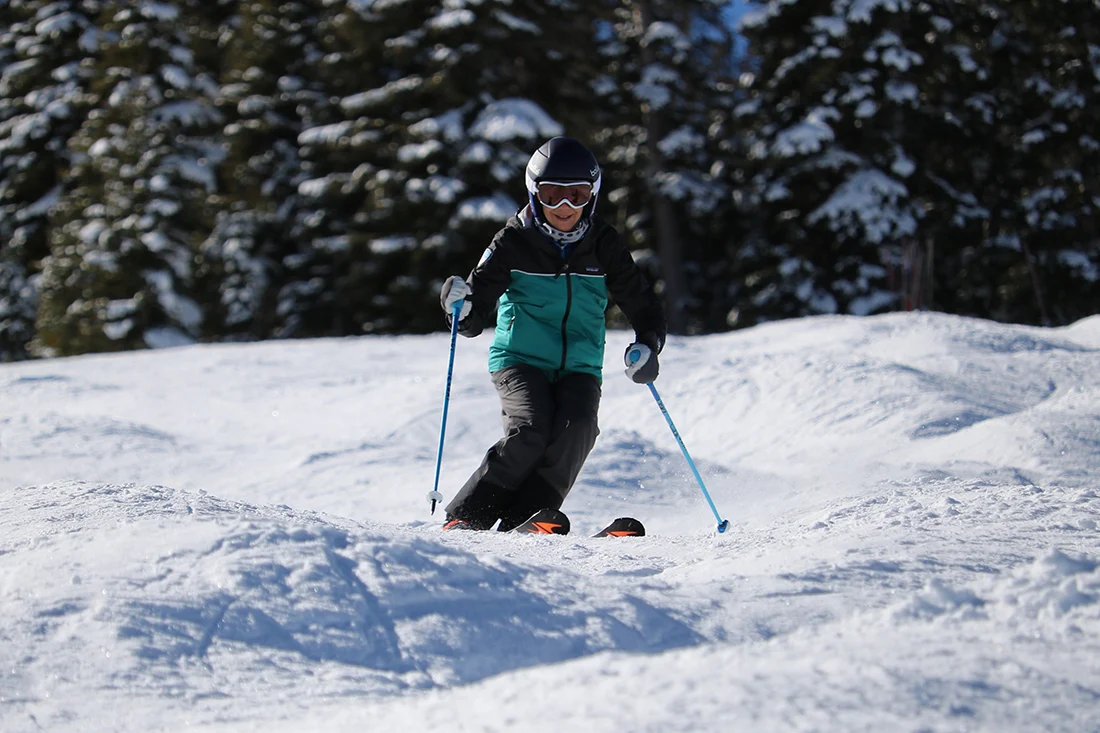
The instructional strategy known as mirroring – copying someone with the explicit intention of understanding their actions and motivations – is rapidly gaining recognition as a best practice in snowsports education, bridging ancient evolutionary mechanisms with modern brain-based learning theories. This approach, which fosters empathy, trust, and profound insight into a student’s performance, was a significant topic of discussion and practical demonstration at Interski 2023 in Levi, Finland, and continues to be championed by esteemed figures in the snowsports community, including U.S. Ski & Snowboard Hall of Famer Ellen Post Foster. Its effective implementation promises to revolutionize how instructors connect with students, challenging conventional teaching paradigms and enhancing skill acquisition across all levels.
The Deep Roots of Empathy and Learning: Evolutionary and Neurological Foundations
The capacity for humans to learn by observing and imitating others is not merely a pedagogical technique but a deeply ingrained evolutionary survival strategy, underpinned by fundamental neurological processes. At its core lies motor resonance, a foundational capability that evolved over 100 million years ago, allowing organisms to match observed actions. This ancient mechanism is evident in a vast array of vertebrates; for instance, dogs instinctively synchronize their speed, turns, and pace when moving in a pack, while young songbirds meticulously learn complex melodies by imitating their parents. This ability to mirror and internalize external actions forms a crucial basis for social interaction and learning in the natural world.
Among primates, this capacity for observational learning underwent significant sophistication tens of millions of years ago. Examples include chimpanzees learning intricate termite fishing techniques by watching elders, or bonobos engaging in complex chasing games and social greetings. These behaviors demonstrate a higher cognitive level of imitation and social transmission of knowledge. The pinnacle of this evolutionary trajectory, intentional teaching, is believed to have emerged within our own genus, Homo. The production of sophisticated stone tools, for instance, demanded more than simple observation; it required purposeful demonstration, guided practice, and explicit instruction – the very essence of teaching. This suggests that the human brain evolved specific structures and pathways to facilitate not just imitation, but also the deliberate transmission and reception of complex skills.
Modern psychological theories, such as Albert Bandura’s seminal Social Learning Theory, align seamlessly with these evolutionary insights. Bandura’s work, which emphasizes learning through observation, imitation, and modeling, can be viewed as a contemporary psychological articulation of capacities grounded in these ancient evolutionary mechanisms. The concept of "mirror neurons," discovered in the 1990s, further elucidates the neurological basis of mirroring. These specialized neurons fire both when an individual performs an action and when they observe another performing the same action. This neural circuitry provides a direct link between observation and internal simulation, offering a biological explanation for empathy, understanding, and skill acquisition through imitation. It suggests that when an instructor mirrors a student, their brain is not just physically copying movements but also internally simulating the student’s experience, providing a unique window into their kinesthetic and cognitive processes. This neuroscientific backing transforms mirroring from a simple technique into a profound, biologically supported method for teaching and understanding.
Interski 2023: A Global Stage for Innovation in Levi, Finland
Interski, the quadrennial international congress for ski and snowboard instructors, serves as a crucial global platform for sharing cutting-edge methodologies, scientific research, and best practices in snowsports education. The 2023 event, hosted in the scenic alpine environment of Levi, Finland, brought together national demonstration teams and educational experts from around the world. These gatherings are instrumental in standardizing instruction, fostering innovation, and advancing the professional development of instructors globally. One of the most impactful sessions at Interski 2023 was led by the Czech Republic National Team, focusing on brain-based learning – an educational approach that meticulously aligns instructional methodologies with neuroscientific evidence regarding how the brain processes, receives, and retains information. This approach seeks to optimize learning by understanding the brain’s natural mechanisms.
During their on-snow clinic, the Czech team orchestrated a powerful demonstration of mirroring’s efficacy. A large international group of approximately 40 participants was instructed to form a circle and, without verbal communication, identify a partner through eye contact alone. The initial awkward silence and darting glances quickly gave way to silent acknowledgments and partnerships formed through subtle non-verbal cues. This pre-task, designed to build initial non-verbal rapport, laid the groundwork for deeper connection.
Participants then stood face-to-face, about two feet apart, and again, without speaking, determined who would lead and who would follow an upcoming unknown activity. This silent negotiation further honed their non-verbal communication skills. The leaders were then instructed to spend 60 seconds miming their morning bathroom routine, while followers were tasked with reproducing these movements precisely, acting as literal reflections. This "reflective mirroring" required followers to coordinate opposite limbs and directions – for instance, a leader brushing teeth with their right hand would be mirrored by the follower using their left. This comical yet deeply insightful exercise saw 40 strangers engaging in simulated private routines, from applying deodorant to wiping away sleep from eyes. The shared vulnerability and laughter catalyzed rapid connection and fostered a sense of camaraderie, proving remarkably effective as an icebreaker despite its unusual nature. The participants, representing diverse cultures and languages, quickly established a foundation of trust and understanding.
Following this initial exercise, partners switched roles. The next phase involved "tandem mirroring" on skis. With partners now facing the same direction, the original leader executed predictable medium-radius turns, while the follower closely tracked behind, meticulously copying every detail – limb position, pole plant, helmet angle, and ski movements. At a predetermined stop, the follower articulated how mirroring the leader had impacted their technical performance and understanding. This verbal debriefing was crucial for translating kinesthetic experience into conscious insight. During the subsequent lift ride, partners engaged in further discussion, exploring similarities and differences in their techniques, the broader implications for performance, and even broader topics like the values of their respective national associations (APSI and PSIA-AASI) and global politics. This structured progression, from non-verbal connection to detailed technical analysis, created a high-impact learning experience in a remarkably short timeframe.
The corresponding indoor session provided the scientific underpinning, with Czech researchers explaining the brain-based principles behind the on-snow activities. They detailed how mirroring intrinsically facilitates trust, empathy, and understanding by activating mirror neuron systems and promoting shared experiences. This explicit connection between the practical experience and the neuroscience solidified the learning and provided participants with a robust framework for incorporating mirroring into their own instructional practices.
Pioneering Practice: The Legacy of Ellen Post Foster
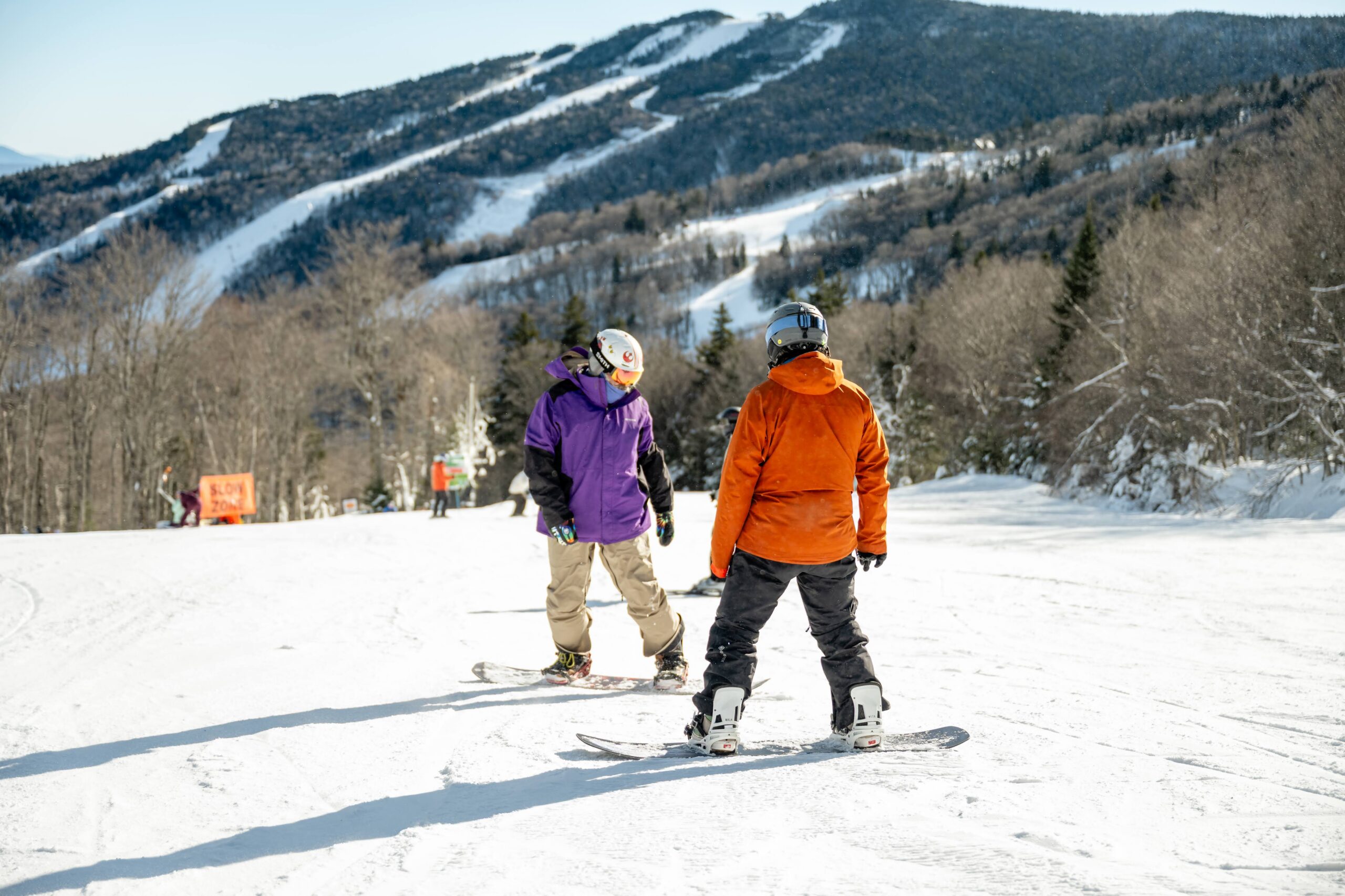
The value of mirroring is not only supported by contemporary neuroscience but also by the intuitive wisdom of seasoned snowsports legends. Skiing with Ellen Post Foster, a U.S. Ski & Snowboard Hall of Famer (Class of 2016) and a 2021 Colorado Snowsports Museum Hall of Famer, offers a profound demonstration of this. Her illustrious career includes being the 1973 Junior National Champion of Exhibition Skiing, a champion in international freestyle competition in 1975, and an alumna of the 1980 and 1984 PSIA National Demonstration Teams. Her influence on American skiing and the PSIA-AASI organization is immeasurable, and her insights into effective teaching are invaluable.
Foster, known for her remarkably nimble touch and ability to glide silently across the snow, often employs a subtle form of mirroring. On one occasion, while skiing with the author, she subtly disappeared from peripheral vision, only to reappear at the lift. When questioned about being separated, she revealed she had intentionally positioned herself behind, "following so she could understand [the author’s] skiing." This proactive approach to observation, driven by the intention to understand, is the essence of mirroring. She then respectfully requested permission to offer observations and feedback, which was readily accepted and proved highly insightful.
As a co-author of the current Teaching Snowsports Manual for PSIA-AASI, Foster’s emphasis on "following students" as a critical teaching skill is explicitly mentioned multiple times within the manual. This highlights that mirroring, in various forms, has long been recognized within the professional snowsports instructional framework as a vital tool for instructors to gain deeper insight into their students’ movements, intentions, and learning styles. Her practice underscores that effective instruction transcends mere demonstration; it requires a deep, empathetic understanding of the student’s current state and challenges.
Translating Theory to Practice: Successful Implementation in the United States
Inspired by the profound insights gained at Interski Levi, the author, Angelo Ross, has actively integrated mirroring into their instructional strategies back in the United States, yielding consistently positive results. This adaptation demonstrates the practical applicability and versatility of the mirroring concept across different snowsports disciplines and instructional contexts.
One notable application occurred last November at the Rocky Mountain Telemark Education Staff Training. Ross designed a session that replicated the Czech team’s format, beginning with an indoor segment focused on facilitating rapid connection and trust between paired partners. This non-verbal icebreaker, similar to the one in Levi, proved instrumental in breaking down initial barriers and establishing rapport. The indoor session seamlessly transitioned into an outdoor practical session that demanded careful observation and honest, constructive feedback between partners, fostering both technical refinement and interpersonal growth. The feedback from participants was overwhelmingly positive, emphasizing the speed with which connections were formed, the trust that developed, and the depth of learning achieved through this interactive approach.
A modified on-snow version of mirroring was also successfully implemented in December with a group of National Ski Patrol leaders at the Outdoor Emergency Transportation Conference held at Killington, Vermont. In this context, the focus shifted slightly from pure technical replication to facilitating partner observation and subsequent discussion regarding the applicability of various movement patterns in different, often challenging, circumstances pertinent to emergency transportation. This demonstrated mirroring’s utility not just for skill acquisition but also for critical analysis and adaptive problem-solving. Again, feedback highlighted the benefits of quick connection, trust-building, and profound learning experiences. These successful implementations underscore that mirroring is not a niche technique but a broadly applicable strategy that can be tailored to various learning objectives and participant groups within the snowsports community.
Beyond Technique: The Broader Implications for Snowsports Education
The integration of mirroring as a core teaching and learning strategy carries significant implications for the future of snowsports education. Research consistently demonstrates that mirroring behaviors inherently facilitate trust, empathy, and understanding between individuals. In an instructional setting, this translates directly into a more supportive and effective learning environment. When instructors mirror their students, they gain invaluable insights into the students’ physical understanding, their balance points, their timing, and even their cognitive processing of movements. This objective, experiential data allows instructors to provide more targeted and empathetic feedback, addressing the root causes of challenges rather than just superficial symptoms.
Conversely, encouraging students to mirror their instructors or peers fosters crucial communication pathways, builds confidence, and accelerates skill development. This reciprocal process of observation and imitation enhances kinesthetic awareness and allows students to internalize movement patterns more effectively. Beyond individual skill development, synchronized skiing and riding activities that incorporate mirroring can be incredibly fun and serve to broaden technical understanding within a group. By actively mirroring different movement patterns, students and instructors alike can gain a deeper appreciation for the value of varied approaches, challenging the persistent "one-right-way" mentality that can sometimes permeate instructional cultures. This exposure to diverse techniques sharpens the observer’s eye and provides experiential evidence for the adaptive nature of snowsports.
Incorporating nuanced mirroring into common "Follow Me" activities can significantly boost student engagement, deepen learning, and strengthen group camaraderie. By alternating roles between leader and follower, students develop leadership skills, hone their observational abilities, and become more active participants in their own learning journey. This flexible framework easily lends itself to developing creative games, exploring diverse movement patterns, and conducting "experiments" on the snow – all of which are recognized best practices in teaching and learning, aligning perfectly with PSIA-AASI fundamentals. The shift from passive reception to active, empathetic engagement transforms the learning experience.
In conclusion, mirroring is far more than a simple imitation exercise. It is a time-tested, research-backed strategy, deeply woven into the fabric of human evolution and neurological function. By embracing mirroring, snowsports instructors can create more impactful, empathetic, and effective learning environments, helping both themselves and their students to continually evolve their understanding, refine their performance, and enrich the teaching of snowsports for generations to come. Its power lies in its ability to foster genuine connection and insight, making the learning process more intuitive, enjoyable, and profoundly effective.
