

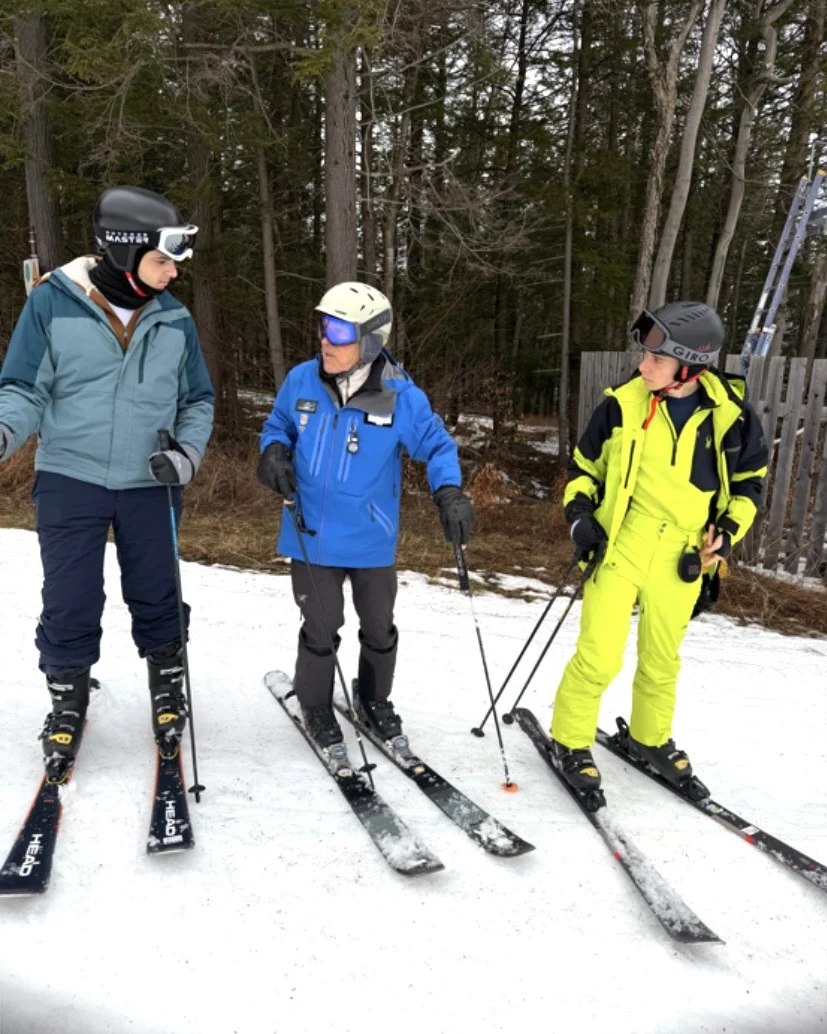
On a frigid morning in early 2026, as the biting winds of the Catskill Mountains swept across Hunter Mountain, New York, a remarkable celebration unfolded. The jacket thermometer registered a stark -5°F, with wind chill making it feel closer to -30°F. Most guests huddled indoors, seeking refuge near the lodge’s roaring fireplace. Yet, at the Otis Quad’s unloading ramp, amid the squeak of skis on cold, dry snow, stood Ralph Perlberger, preparing for another run down West Side Glide. It was his 95th birthday, and true to a life philosophy forged in resilience and a profound love for the outdoors, he was on the mountain, ready to ski. Accompanied by his wife, Carol, and two fellow ski instructors, David Raindorf and Steve Cohen, Ralph embodied an indomitable spirit that has captivated the Hunter Mountain community for decades.
Leslie Surprenant, an Alpine Level II and Children’s Specialist 1 instructor at Hunter Mountain, observed the scene with profound admiration. She introduced Ralph to the women from her weekly clinic, who, despite the extreme cold, joined in a muffled rendition of "Happy Birthday" through frozen face masks. The moment underscored not just Ralph’s personal milestone but his enduring impact on those around him. Victoria Mercado, Senior Manager of Hunter Mountain’s Ski and Ride School, articulated the collective sentiment: "Ralph is an inspiration. He’s not only skiing, but teaching! Skiing and riding keep you young. When I watch Ralph ski, I can’t believe he’s 95. His energy, skill, and passion on the mountain defy his age. It’s an absolute pleasure to work alongside him." This sentiment resonates deeply within the Professional Ski Instructors of America (PSIA) Eastern/Education Foundation, whose official publication, the SnowPro, featured Ralph’s story in its Spring 2026 issue.
A Deep-Rooted Passion for the Slopes
Ralph Perlberger’s journey into skiing began later in life, yet his dedication quickly transformed it into a lifelong passion. While studying economics at Stanford University, his father, keen to expose his sons to diverse experiences, sent Ralph and his two older brothers to Sun Valley, Idaho, for winter break. That inaugural trip ignited a spark that would burn brightly for over seven decades. Even amidst the rigorous academic demands of earning a law degree at Harvard, Ralph seized every available opportunity to hit the slopes, refining his technique and deepening his appreciation for the sport.
Over the decades, Ralph honed his skills at premier ski destinations across the globe, including Taos, New Mexico, various European resorts, and, eventually, Hunter Mountain. His profound engagement with skiing was not merely recreational; it was a testament to a life lived fully and actively. In 2002, an advertisement for instructor training at Hunter Mountain caught his eye. For a nominal fee, candidates could participate in a weekend of evaluation, with further training provided free if selected. Ralph, then 71, was among those chosen, embarking on a new chapter that blended his passion with a desire to share it. He recognized that becoming an instructor was not merely about personal skill but about the art of conveying knowledge, a challenge he embraced wholeheartedly.
Today, Ralph stands as a PSIA Level II Alpine instructor, a designation that signifies a high level of skiing proficiency and teaching ability within the professional ski instruction community. PSIA certifications involve rigorous practical and theoretical examinations, evaluating an instructor’s technical skiing, teaching methodology, and understanding of biomechanics and snow dynamics. Achieving Level II at an age when many have long retired from active pursuits is a remarkable feat, further highlighting Ralph’s enduring commitment. He credits his colleague, PSIA Alpine Examiner Charlie Knopp, with imparting one of the most impactful pieces of advice he ever received: "Lift your inside hip!" This simple directive, focusing on body mechanics, became a cornerstone of his own skiing and teaching philosophy.
His presence at Hunter Mountain’s Ski and Ride School is invaluable. Luca Arrigoni, a member of the Eastern Alpine Development Team, shared his admiration: "Ralph has a special place in my heart. I shadowed him as a new instructor and was inspired by his patient, gentle, and knowledgeable way with beginners. He still proudly wears the Hunter uniform, which shows his love for, and dedication to, the sport and teaching." This dedication is not just personal; it contributes significantly to the vibrant and intergenerational community at Hunter, where instructors’ ages span eight decades.
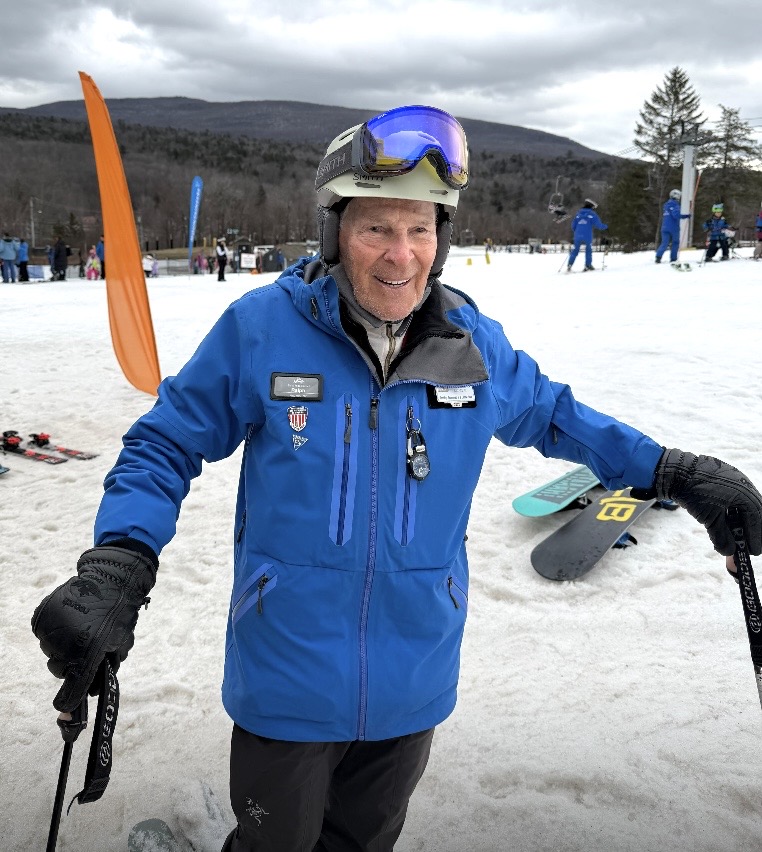
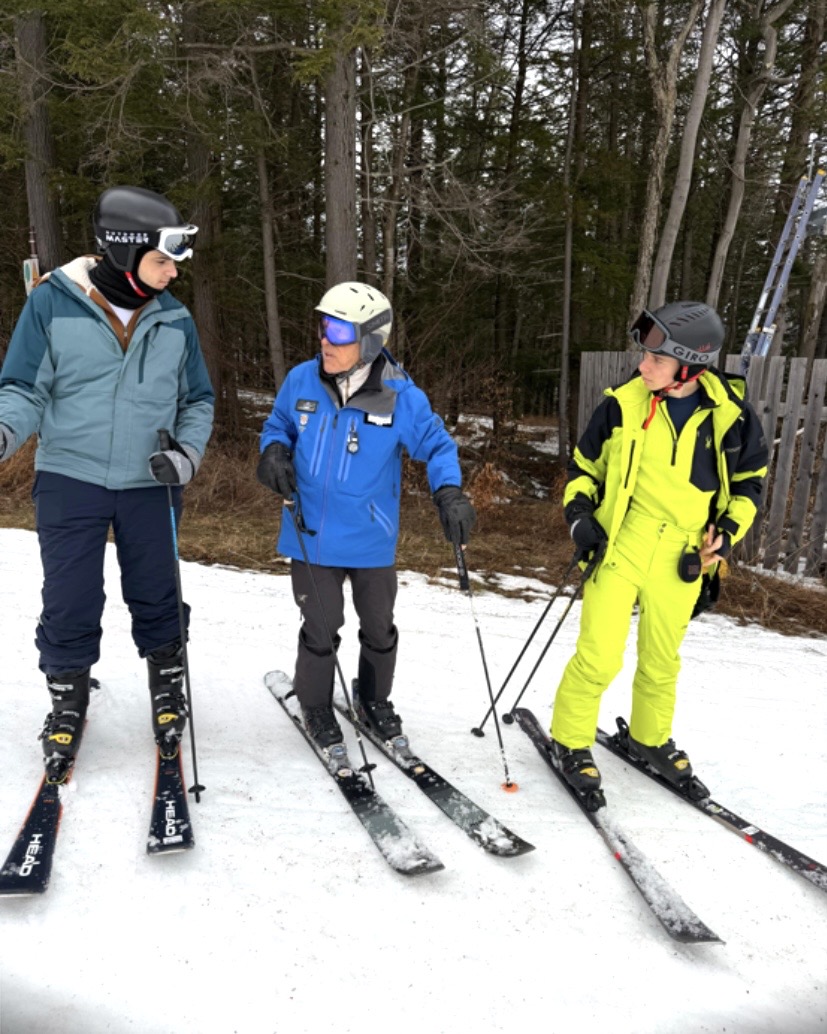
Ralph particularly enjoys working with adult intermediate skiers, often observing a common challenge: many rely on leg rotation on flat skis, lacking fundamental understanding of core skiing principles. His teaching approach focuses on practical, sensory feedback. He coaches students to maintain their center of mass over their base of support, direct pressure to their outside skis, and control edge angles effectively. A key element of his instruction is guiding skiers to feel their shins against the tongue of their boots throughout all turn phases. When he notices a student leaning back, a common energy-draining habit, he prompts them to pause and reflect on how their quadriceps feel—typically "tired" or "burning." He then redirects their attention to their body’s relationship with their feet, reinforcing the crucial shin-to-boot contact. His patient, methodical approach consistently yields results, with students not only improving their technique but also finding renewed enjoyment in the sport.
A Testament to Survival: Hope Prevails Over Despair
To truly comprehend the depth of Ralph Perlberger’s resilience and his unwavering zest for life, one must understand the crucible through which he passed in his youth. His story is not merely one of an exceptional ski instructor but of a Holocaust survivor whose early life was scarred by unimaginable trauma, yet whose spirit emerged unbroken.
In 1940, Ralph and his family resided in Amsterdam, Netherlands. As Nazi Germany’s shadow lengthened across Europe, his father, demonstrating foresight and determination, left for New York City to arrange for the family’s immigration. He arrived in the United States on May 10, 1940—the very day Nazi forces invaded the Netherlands, sealing the fate of countless Jewish families, including his own, who were left behind.
The following year, the Perlberger family’s nightmare began. Nine-year-old Ralph, his mother, and his two older brothers were forcibly removed from their Amsterdam home. They were first imprisoned in the Westerbork transit camp in the northeastern Netherlands. Westerbork, initially a refugee camp for German Jews, was transformed by the Nazis into a transit camp for Jews, Roma, and Sinti people awaiting deportation to extermination camps in German-occupied Poland. Conditions were harsh, but it was merely a temporary stop on a more terrifying journey.
In February 1944, the family was transferred by railroad cattle car to the Bergen-Belsen concentration camp in Germany. Bergen-Belsen, initially a prisoner-of-war camp, evolved into a concentration camp where thousands died from starvation, disease, and overwork, particularly during the final chaotic months of the war. Despite enduring the ravages of typhus and typhoid fever—diseases that claimed countless lives in the camps—Ralph clung to an unshakeable belief that he and his family would survive. He attributes this profound confidence, security, and hope to the unwavering strength and optimism of his parents. Remarkably, as a young boy, he even harbored the innocent thought that he would have quite a story to share with his friends once the war finally ended, a poignant reflection of a child’s perspective amidst horror.
During these harrowing years, Ralph’s father, thousands of miles away in New York City, lived in agonizing uncertainty, unaware if his family had survived the Nazi atrocities. As the war drew to a close, a flicker of hope emerged. He learned that his family was among the survivors found in the Russian-occupied village of Tröbitz, Germany. They had arrived there on what became known as the "Lost Transport." This was one of three trains, carrying approximately 7,500 Jewish prisoners, that the Nazis dispatched in April 1945. The intent was to exchange these prisoners for German prisoners of war, a desperate measure in the final throes of the Third Reich.
However, the "Lost Transport" never reached its intended destination. For two grueling weeks, the train wandered through war-torn Germany, constantly stopping and rerouting due to destroyed tracks and chaotic front lines. Hundreds of prisoners succumbed to typhus, dysentery, and starvation en route. Finally, on April 23, 1945, the train ground to a halt on a destroyed bridge over the Elster River, just outside the small village of Tröbitz. It was there that Russian troops, advancing through Germany, discovered and liberated the train’s emaciated and critically ill prisoners. This liberation, while joyous, also marked a period of immense suffering, as many survivors continued to battle the diseases and malnutrition they had endured.
The family’s reunion with Ralph’s father in the United States was still months away. During the five months their visa applications were processed, Ralph’s father, with immense relief and dedication, sent Red Cross packages filled with vital food and hygiene products to his recovering family. Finally, in February 1946, Ralph, his two brothers, and his mother immigrated to the United States, making their new home in New York City. The adjustment was profound; Ralph learned English, quickly excelling in school, while his father began the slow and emotionally complex process of getting to know his family again after years of separation and unimaginable trauma.
Enduring Legacy and Broader Implications
Ralph Perlberger’s life story offers a powerful narrative that transcends the ski slopes. His resilience in the face of the Holocaust underscores the extraordinary strength of the human spirit and the enduring power of hope. His ability to not only survive such horrific experiences but to thrive, to pursue passions, and to contribute actively to a community well into his tenth decade, serves as a profound inspiration.
His presence at Hunter Mountain highlights several broader implications. First, it champions the concept of active aging. In an era where increasing longevity is a global phenomenon, individuals like Ralph demonstrate that age need not be a barrier to physical activity, learning, and community engagement. Regular physical activity, particularly complex motor skills like skiing, has well-documented benefits for cognitive function, cardiovascular health, and mental well-being in older adults. Ralph’s continued instruction, requiring both physical stamina and mental acuity, is a living testament to these benefits.
Second, Ralph serves as an invaluable role model within the ski instruction community. His advice to younger instructors—"Keep at it and don’t give up! Don’t let anything stop you. Ski in all conditions and all weather"—is not just practical guidance but a distillation of his own life philosophy. It speaks to perseverance, adaptability, and an unwavering commitment to one’s passion. For newer, often younger, instructors, witnessing Ralph’s dedication and skill at 95 provides a unique perspective on a lifelong career in the sport and the potential for sustained excellence.
Third, his story enriches the cultural fabric of Hunter Mountain itself. It adds a layer of profound historical significance and personal triumph to the resort’s identity. The widespread admiration from colleagues and management, as evidenced by statements from Victoria Mercado and Luca Arrigoni, indicates that Ralph is not just an employee but a cherished icon. His story contributes to Hunter Mountain’s reputation as a place where community and passion thrive, attracting and retaining dedicated professionals and enthusiastic guests alike.
Finally, Ralph’s narrative resonates beyond the immediate sphere of skiing. It is a powerful reminder of the importance of remembering and learning from history. His survival and his subsequent vibrant life serve as a beacon against despair, illustrating that even after profound trauma, it is possible to build a meaningful and joyful existence. His unassuming strength and quiet determination offer a universal message of hope and the potential for human flourishing against all odds.
Having recently completed his 24th season of instructing at Hunter Mountain, Ralph Perlberger shows no signs of slowing down. His dedication to teaching, his love for the mountain, and his remarkable life journey continue to inspire. He often muses, "Maybe someone above is watching over me," a testament to his enduring gratitude and perspective. And in a nod to another figure known for his longevity and wisdom, Baseball Hall of Famer Satchel Paige, Ralph echoes the sentiment, "Don’t look back; something might be gaining on you." For countless skiers at Hunter Mountain, that "something" isn’t a threat, but the inspiring, graceful presence of Ralph Perlberger, skiing with a spirit as boundless as the mountain itself.
