

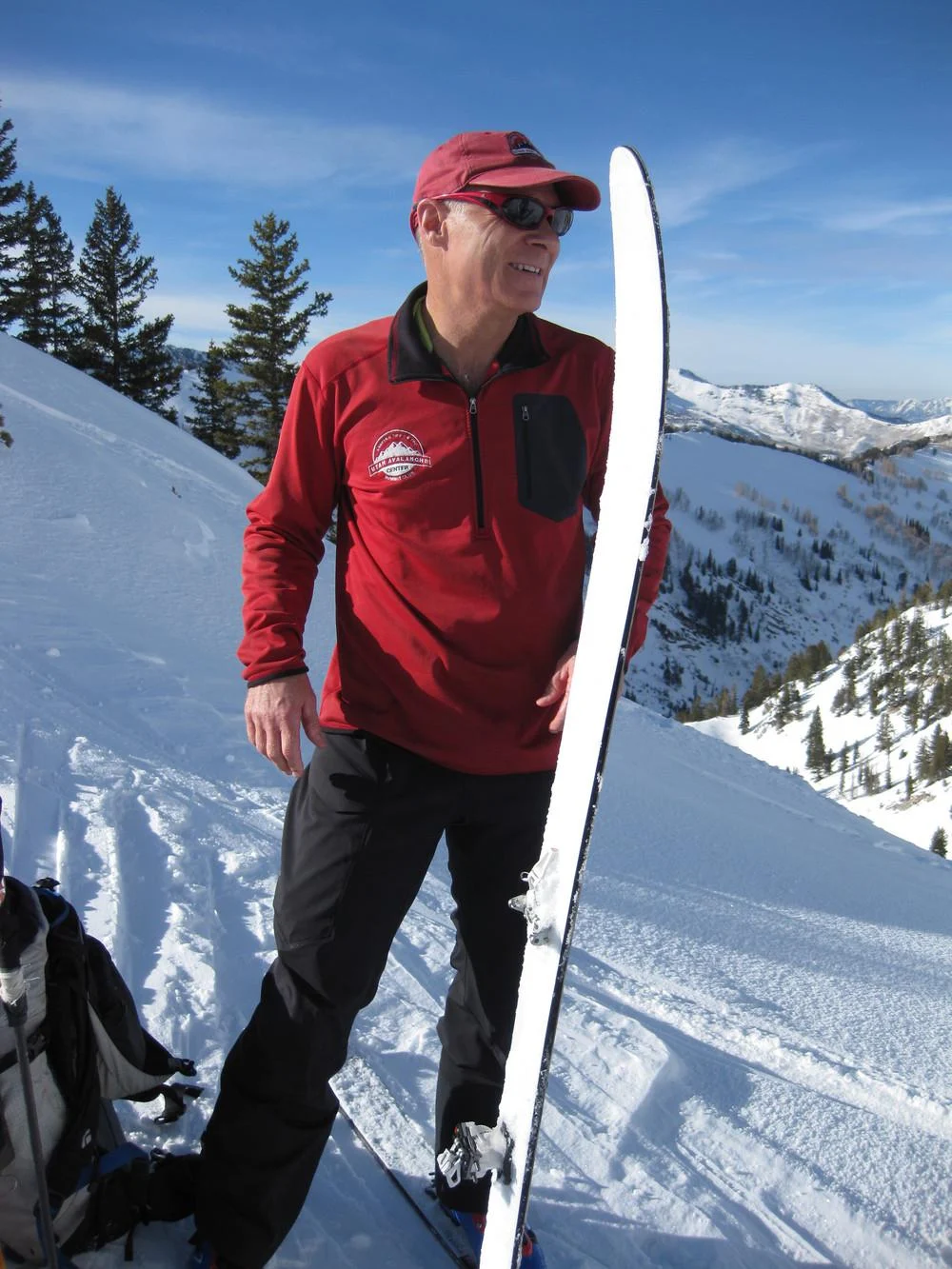
The Utah Avalanche Center (UAC) announced that Bruce Tremper, a towering figure in avalanche safety and education, will retire from his long-standing role as Director of the Forest Service’s Utah Avalanche Center at the end of August, concluding a distinguished career spanning nearly three decades. Tremper’s departure marks the end of an era for avalanche forecasting and public safety in the Wasatch Mountains and beyond, with his influence extending significantly across the national and international avalanche industry.
A Legacy of Safety and Innovation
For 29 years, Bruce Tremper has been the guiding force behind the UAC, transforming it from a regional advisory service into a sophisticated operation at the forefront of avalanche hazard communication. His tenure began in 1986, a period when avalanche advisories were primarily delivered via recorded phone messages. Under his leadership, the UAC embraced technological advancements, pioneering the development of comprehensive internet-based products, including detailed daily advisories, educational graphics, and the innovative introduction of icons and defined avalanche problems to clearly communicate the complex nature of mountain hazards. This evolution was crucial in enhancing public understanding and preparedness for the inherent risks of backcountry travel.
Tremper’s passion for avalanche safety was ignited early in his career. He earned his Master of Science degree from Montana State University, where he conducted research under the guidance of Dr. John Montagne. This academic foundation was quickly translated into practical application as he engaged in avalanche control work at prominent ski areas such as Bridger Bowl and Big Sky. His experience further broadened during his time as an avalanche forecaster at the Alaska Avalanche Center, collaborating with respected figures in the field like Doug Fesler, Jill Fredston, and Jim Woodmency. This diverse background provided him with a deep understanding of avalanche dynamics and forecasting methodologies, which he consistently applied to his leadership at the UAC.
A Multifaceted Contributor to Avalanche Science and Education
Beyond his directorship, Tremper’s contributions to avalanche safety are extensive and multifaceted. He served as the editor for The Avalanche Review for six years, a critical publication for disseminating information and fostering dialogue within the avalanche community. His prolific output includes numerous published papers, the production of several avalanche safety videos, and the authorship of two highly regarded books on avalanches, which have become essential resources for backcountry enthusiasts and professionals alike.
His expertise was also called upon during high-profile events. Tremper was instrumental in managing backcountry avalanche safety for Salt Lake City’s 2002 Olympic Winter Games, a testament to his ability to handle complex safety protocols in demanding environments. He has consistently represented the Forest Service with professionalism and clarity, engaging in hundreds of media interviews to inform the public about avalanche conditions and safety practices. For decades, Tremper has been a dedicated instructor at the National Avalanche School, a cornerstone of professional avalanche education in the United States. Furthermore, he was a key member of the working group that developed the conceptual model of avalanche danger and the associated avalanche danger scale, a foundational framework adopted in 2010 that continues to guide avalanche hazard assessment globally.

A Smooth Transition to New Leadership
With Tremper’s retirement, the UAC has appointed Mark Staples as its new Director. Staples brings a wealth of experience and a proven track record in avalanche safety and forecasting. His background includes ski patrolling and snow safety work at Big Sky Ski Area, a Master of Science degree in Engineering from Montana State University focused on snow avalanche research, and several special projects for the National Avalanche Center. He also possesses eight seasons of experience as a backcountry avalanche forecaster at the Gallatin National Forest Avalanche Center. Staples expressed his enthusiasm for joining the UAC team, stating his anticipation of contributing to the center’s ongoing mission of public safety and education. The transition is expected to be seamless, leveraging Staples’s expertise and the established strengths of the UAC staff.
The Enduring Impact of Tremper’s Tenure
Tremper’s influence on avalanche safety culture in Utah and across the United States cannot be overstated. His dedication to making complex avalanche information accessible and understandable has undoubtedly saved lives and prevented countless injuries. The UAC, under his direction, became a model for avalanche centers worldwide, demonstrating how scientific knowledge can be effectively translated into actionable safety guidance for the public.
While retiring from his official Forest Service duties, Tremper has indicated his intention to remain active in the field. He plans to continue teaching, writing, and contributing to avalanche safety projects, ensuring that his extensive knowledge and experience will remain a valuable asset to the community. It is also anticipated that he and his wife, Susi, who is also an accomplished backcountry skier, will spend even more time enjoying the legendary Wasatch snow, a testament to their lifelong passion for the mountains. The avalanche community looks forward to his continued involvement, albeit in a less formal capacity.
Broader Implications for Avalanche Safety
Tremper’s retirement and Staples’s ascension to the directorship of the UAC occur at a time when backcountry recreation continues to surge in popularity. This trend, while positive for outdoor enthusiasts, also brings increased pressure on avalanche safety resources and public education efforts. The UAC’s ability to adapt and innovate, a hallmark of Tremper’s leadership, will be crucial in meeting these evolving challenges.
The conceptual model of avalanche danger and the danger scale developed under Tremper’s involvement have become international standards. This foundational work, coupled with the UAC’s advanced forecasting products, provides a robust framework for understanding and communicating avalanche risk. As the backcountry user base diversifies, the UAC’s role in providing accessible, accurate, and timely information remains paramount. Staples’s background in research and forecasting suggests a continuation of this data-driven approach, with a focus on maintaining and enhancing the UAC’s reputation for excellence.
The legacy of Bruce Tremper is one of unwavering commitment to public safety through education and scientific rigor. His retirement marks the end of a significant chapter, but his ongoing engagement ensures that his wisdom will continue to shape the future of avalanche safety. The UAC, under Mark Staples’s leadership, is well-positioned to build upon this strong foundation, continuing its vital mission in the ever-changing landscape of mountain recreation.
