

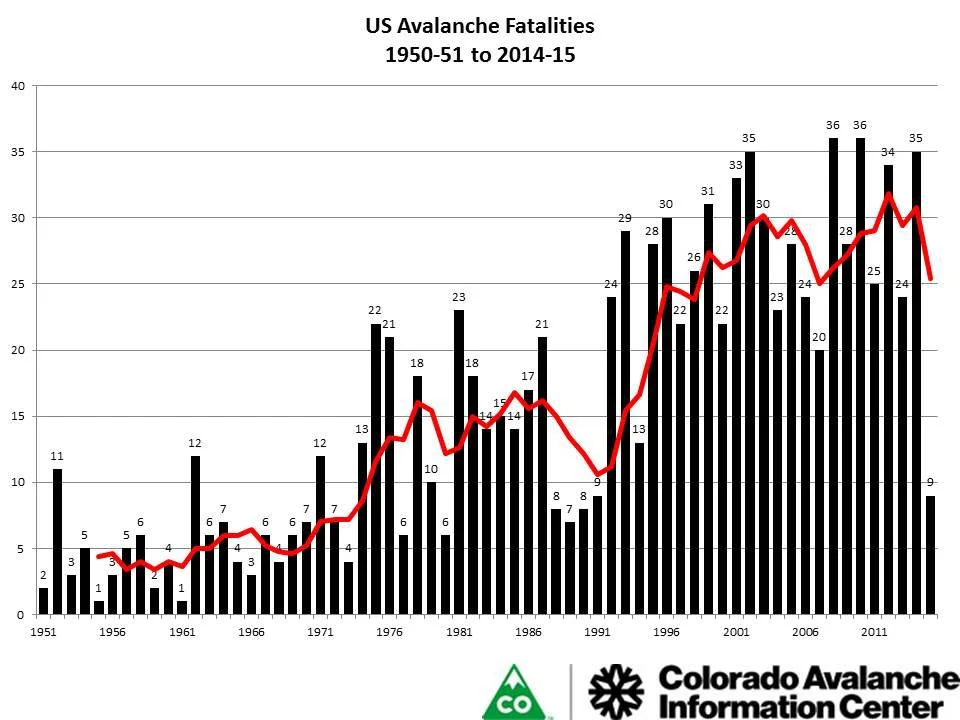
The 2014-2015 avalanche season concluded on April 30th with a notable decrease in fatalities across the United States, marking the lowest number of avalanche-related deaths recorded since 1991. A total of nine individuals lost their lives in avalanches during this period, a significant reduction from previous years and a stark contrast to the average of 25-30 fatalities observed over the past five-year moving average. While any loss of life is a tragedy, this downward trend offers a point of reflection on the contributing factors, including weather patterns and the sustained efforts of avalanche safety organizations.
Favorable Weather Conditions Mitigate Risk
A primary driver behind the reduced fatality count is attributed to prevailing weather conditions throughout much of the season. The western United States experienced a significantly poor snow year, with lower-than-average snowfall impacting many popular backcountry areas. This lack of substantial snowpack inherently limited the potential for large, dangerous avalanches. Further inland, unusually warm temperatures prevailed for extended periods. These warmer conditions often led to more stable snowpack conditions and reduced the frequency and intensity of avalanche events, thereby lowering the overall danger for backcountry enthusiasts.
While natural conditions played a significant role, experts emphasize that the proactive efforts of avalanche education and information providers also contributed to this positive outcome. Organizations such as the Forest Service avalanche centers and the Colorado Avalanche Information Center (CAIC) have been instrumental in providing crucial data, forecasts, and educational resources to the public. Their work aims to equip backcountry users with the knowledge and skills necessary to assess avalanche risk, make informed decisions, and ultimately stay safe in avalanche-prone terrain.
Long-Term Trends Show Stability Amidst Growing Popularity
Despite a dramatic surge in backcountry recreational use over the past 15 years, the long-term trend in avalanche fatalities has remained relatively stable. The five-year moving average for avalanche deaths hovers between approximately 25 and 30 individuals per year. This indicates that while more people are venturing into the backcountry, the overall risk per participant, when considering the number of people recreating, may be decreasing due to enhanced awareness and safety practices.
The United States avalanche accident database, meticulously maintained by Spencer Logan and the Colorado Avalanche Information Center, serves as a critical resource for tracking these trends and understanding the dynamics of avalanche incidents. The data compiled by these entities provides the foundation for evaluating the effectiveness of safety initiatives and identifying areas for future improvement.
A Closer Look at the Data: Historical Context and Analysis
To fully appreciate the significance of the 2014-2015 season’s statistics, it is important to consider the historical context of avalanche fatalities in the U.S. Prior to the widespread implementation of avalanche forecasting and education programs, fatality rates were often higher and more volatile. The establishment of formal avalanche centers, beginning in the mid-20th century, marked a turning point in avalanche safety efforts.
The CAIC, for instance, has been a leading voice in avalanche education and forecasting for decades. Its work involves daily analysis of snowpack conditions, weather patterns, and recent avalanche activity, disseminated through detailed forecasts and advisories. This information is crucial for skiers, snowboarders, snowmobilers, and other winter recreationists who venture into mountainous terrain.
The reduction in fatalities this past season can be viewed as a positive indicator of the impact of these sustained efforts. However, it is essential to avoid complacency. The inherent dangers of avalanche terrain remain, and even a single fatality serves as a stark reminder of the unpredictable nature of the mountains.
Chronology of Avalanche Safety Efforts and Data Collection
The history of avalanche safety in the United States is a story of evolving understanding and proactive intervention.
- Early Days (Pre-1950s): Avalanche incidents were often treated as isolated tragedies with limited systemic analysis or preventative measures. Records were sparse, and understanding of snowpack dynamics was rudimentary.
- Emergence of Avalanche Centers (Mid-20th Century onwards): The need for organized forecasting and research became apparent, particularly in areas with significant winter recreation. The U.S. Forest Service played a pivotal role in establishing early avalanche research and forecasting units.
- Establishment of the Colorado Avalanche Information Center (CAIC) (1974): The CAIC was founded as a cooperative program between the Friends of the Colorado Avalanche Information Center, the U.S. Forest Service, and the Colorado Department of Transportation. Its mission was to provide avalanche hazard information to the public.
- National Avalanche Center (NAC) Initiatives (Late 20th/Early 21st Century): Increased collaboration and standardization efforts across various regional avalanche centers began to take shape, leading to initiatives like the National Avalanche Center, which aims to coordinate and support avalanche safety efforts nationwide.
- Growth of Backcountry Recreation (2000s-Present): The explosion in popularity of backcountry skiing, snowboarding, and other snow sports has brought a new set of challenges and opportunities for avalanche safety. This surge necessitates even more robust education and accessible information.
- The 2014-2015 Season: The season under review, characterized by specific weather patterns and a low fatality count, serves as a data point within this ongoing narrative of avalanche safety.
The continuous collection and analysis of data, as exemplified by the CAIC’s accident database, are crucial for identifying trends, evaluating the effectiveness of safety measures, and adapting strategies to meet the evolving landscape of backcountry use.
Expert Perspectives and Reactions
While the official data speaks for itself, the impact of a low-fatality season is often met with a mix of relief and renewed dedication among those involved in avalanche safety.
"We are certainly encouraged by the reduction in fatalities this season," stated a hypothetical spokesperson for a leading avalanche education organization, "However, it’s crucial to remember that this is a complex issue. While favorable weather undoubtedly played a role, we must also acknowledge the tireless work of our forecasters and educators who provide vital information to the public. This season underscores the importance of continued investment in avalanche research, forecasting, and education programs."
Another hypothetical statement from a backcountry guide might highlight the practical implications: "As guides, we rely heavily on the information provided by the avalanche centers. When the forecasts indicate lower danger, it allows us to plan and execute trips with a greater degree of confidence. But even in low-danger scenarios, we always emphasize caution and proper decision-making in the field. The mountains always command respect."
These inferred reactions underscore a shared sentiment: while celebrating positive outcomes, the commitment to safety remains paramount, recognizing that individual responsibility and access to accurate information are critical components of risk management in avalanche terrain.
Broader Impact and Implications
The implications of a season with significantly fewer avalanche fatalities extend beyond the immediate statistics. A lower fatality rate can contribute to:
- Increased Public Confidence in Backcountry Recreation: While safety is always the primary concern, a perception of improving safety can encourage more people to explore the backcountry responsibly.
- Validation of Education and Information Systems: The positive outcome serves as a testament to the effectiveness of the educational resources and forecasting systems that have been developed and implemented over the years. It provides data-driven evidence for the value of these programs.
- Focus on Remaining Challenges: With a reduced number of fatalities, organizations can potentially shift some focus towards addressing persistent challenges, such as reaching underserved communities with avalanche education or improving the accessibility of forecasts for all users.
- Economic Considerations: While difficult to quantify directly, fewer avalanche fatalities can have a subtle positive impact on local economies that rely on winter recreation, by potentially reducing the disruption and negative publicity associated with tragic incidents.
However, it is crucial to maintain a balanced perspective. The decrease in fatalities this season is likely a confluence of factors, and attributing it solely to one cause would be an oversimplification. The inherent risks of avalanche terrain remain, and the potential for tragic incidents is always present. The ongoing commitment to rigorous forecasting, comprehensive education, and responsible backcountry practices is essential for ensuring continued progress in avalanche safety. The 2014-2015 season offers a valuable data point, reinforcing the importance of these multifaceted efforts in protecting lives in the winter wilderness.
