

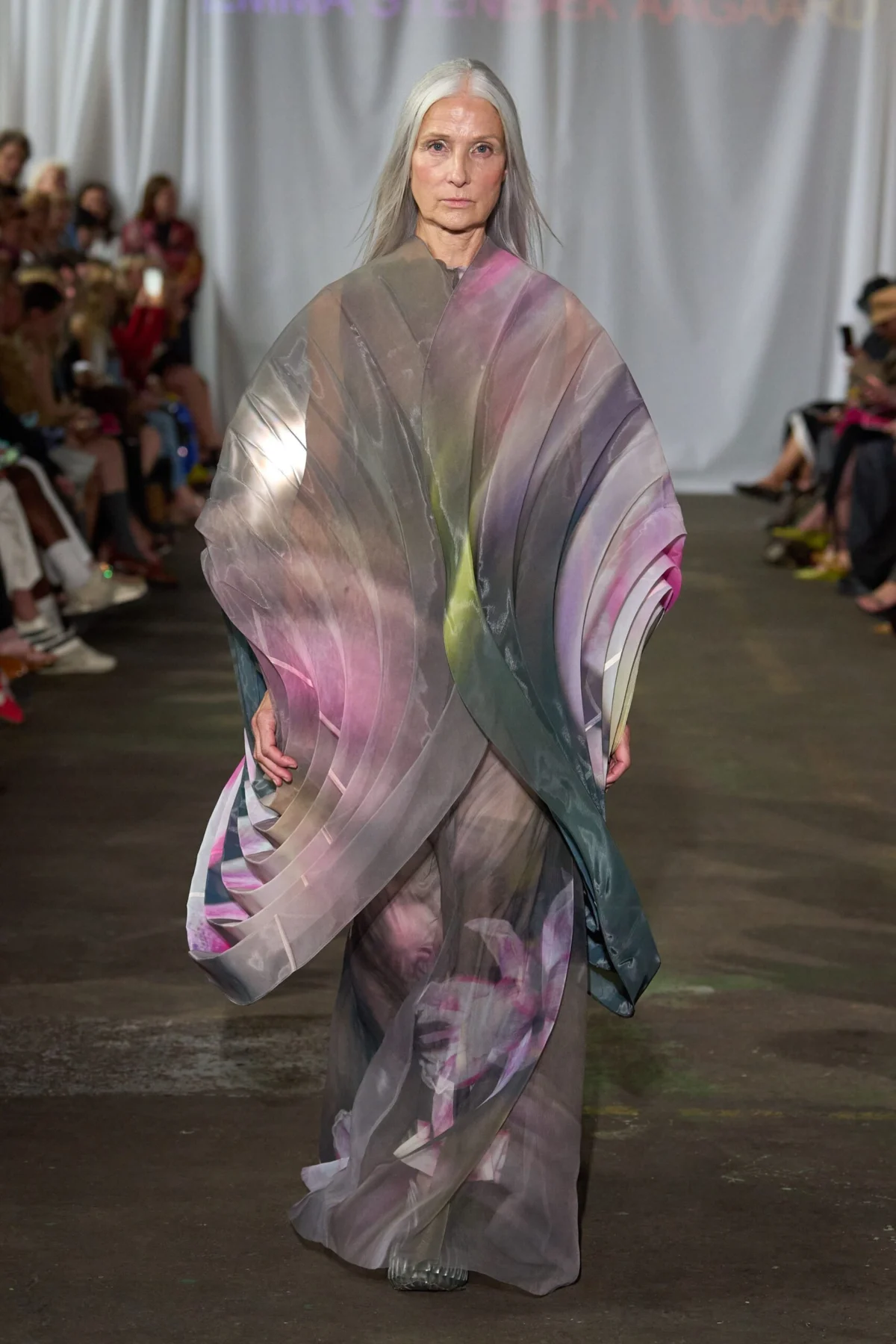
The hallowed halls of the Royal Danish Academy have once again played host to the unveiling of a graduating class poised to make its mark on the global fashion landscape. The Class of 2026, in their final showcase, presented a collection that resonated with a powerful blend of conceptual depth, technical prowess, and a palpable optimism, notably expressed through a courageous embrace of color. Assistant Professor Marcus Aminaka Wilmont aptly encapsulated the spirit of the graduating cohort, stating, "Fundamentally, they are all passionate about taking their definition of what makes for true value and turning it into clothing—and, incidentally, they are not afraid of color this year either." This sentiment of joyous exuberance was not confined to the Academy’s studios; it echoed across the broader menswear collections of recent seasons, signaling a collective shift towards designs that are both uplifting and extroverted, whether born from the minds of seasoned designers or emerging talents.
A Foundation in Form and Function: Geometric Exploration and Material Innovation
A significant thread weaving through the student collections was an informed engagement with geometry. This wasn’t merely an aesthetic choice but often a foundational principle dictating the very construction and sustainability of the garments. David Sierstad, for instance, championed a no-waste approach, meticulously developing garments that were ingeniously crafted from squares and rectangles. This method not only minimizes fabric offcuts, a critical concern in an industry striving for greater environmental responsibility, but also imbues the clothing with a distinct architectural quality. The inherent structure of these geometric forms lent themselves to clean lines and precise silhouettes, offering a modern interpretation of utilitarian design.
Emma Stenbærk Aagaard’s collection took a more fluid approach to geometric principles, centering her creative process around the circle. The inherent roundness of her inspiration translated into garments that possessed a remarkable, almost liquid, movement. Through the artful use of curved folds and sophisticated pleating techniques, Aagaard achieved a slinky, dynamic quality in her pieces. This exploration suggests a deep understanding of how form can dictate drape and how a singular geometric concept can be interpreted to evoke a sense of effortless grace and fluidity.
Further pushing the boundaries of material manipulation and form, Shurong Coa presented an innovative concept where foam was wrapped around the body, creating a form that was described as a "snail-like mobile home." This arresting imagery highlights a conceptual approach that merges architectural shelter with the human silhouette, questioning the traditional boundaries of clothing as mere covering. Coa’s work invites contemplation on our relationship with our immediate environment and the possibility of garments that offer a sense of personal enclosure and protection, akin to the natural world.
Yu Lin Eain, in her exploration of childhood memories and archetypes, translated the familiar folding technique of a paper fortune teller into fabric. This ingenious application of a childhood craft to the discipline of fashion design speaks to a broader trend of drawing inspiration from personal histories and tactile experiences. The process of folding, a fundamental act of creation, was reimagined to imbue garments with an unexpected complexity and a playful narrative, demonstrating how seemingly simple inspirations can lead to sophisticated design outcomes.
Deconstructing Masculinity: Transitions, Dichotomies, and Heritage
The discourse surrounding masculinity emerged as a central theme for several male members of the graduating class, providing a fertile ground for their creative explorations. For these designers, the transition from boyhood to adulthood was often articulated through a parallel shift from rural to urban environments, a potent metaphor for personal growth and societal integration. This dichotomy provided a rich narrative framework for their collections.
Likas Viering introduced a third layer to this exploration: the interplay between hand and machine. This conceptual addition added a nuanced dimension to his work, reflecting on the evolving nature of craftsmanship in the digital age. Viering’s Instagram posts revealed the meticulous labor behind his creations, including a pair of sweatpants adorned with "over 400 laser cut flowers in 4 sizes, arranged in a degradé pattern which was set by hand and attached with rivets." This detail underscores a commitment to both cutting-edge technology and artisanal finishing, a testament to the enduring value of human touch in fashion. Viering paired these intricate sweatpants, which bore a striking resemblance to the conceptual volume and detailing found in Cecilie Bahnsen’s designs, with a poetically draped knot top, creating a compelling juxtaposition of intricate embellishment and fluid simplicity. His work suggests a redefinition of contemporary menswear, one that embraces both delicate artistry and bold statement pieces.
Nicolaj Gotthelf, whose internship experience with the avant-garde designer Duran Lantink undoubtedly informed his perspective, envisioned a "country kid dreaming of far away subcultural worlds." This narrative allowed him to explore the potent connection between upcycled materials and a profound sense of nostalgia. By imbuing discarded textiles with new life, Gotthelf not only addressed the environmental imperative of circular fashion but also tapped into a collective longing for authenticity and a connection to the past. His use of reclaimed fabrics speaks to a generation grappling with the ephemeral nature of consumer culture and seeking solace in narratives of resilience and reinvention.
Heritage and its contemporary relevance were paramount in Nis Kongsgaard’s menswear collection. His work was a direct homage to historic Danish textiles, with a particular emphasis on utilizing local materials. This commitment to regional sourcing and traditional techniques not only celebrated Danish craft but also fostered a sense of place and cultural continuity. Kongsgaard articulated his graduate thesis as "the result of a continuous search for sensuous ties to Earth and my kin, just as the world seems on the cusp of unravelling." This poignant statement reflects a desire for grounding and connection in an increasingly fragmented world. Despite the existential undercurrents, his garments exuded a sense of profound wholeness and inherent wearability, offering not just aesthetic appeal but a tangible incentive to embrace a more mindful and connected way of living. The inherent beauty and thoughtful construction of his pieces suggest that fashion can indeed be a vehicle for hope and a pathway towards a more sustainable and meaningful future.
The Broader Context: The Royal Danish Academy and the Future of Fashion Education
The Royal Danish Academy, long recognized as a crucible for design innovation, plays a pivotal role in shaping the next generation of fashion talent. Established in 1754, the institution has consistently fostered an environment that encourages experimentation, critical thinking, and a deep understanding of craft. Its fashion design program, in particular, has gained international acclaim for its rigorous curriculum, which balances theoretical knowledge with hands-on practice, preparing students not only to create beautiful garments but also to engage with the complex social, environmental, and economic challenges facing the fashion industry.
The consistent output of compelling collections from graduating classes, such as the Class of 2026, underscores the Academy’s successful pedagogical approach. The emphasis on conceptual development, coupled with a strong grounding in material innovation and sustainable practices, equips students with the tools necessary to navigate a rapidly evolving industry. The presence of alumni in leading fashion houses and their own successful independent labels worldwide is a testament to the quality of education provided.
Looking Ahead: Color, Consciousness, and Craftsmanship
The prevailing theme of vibrant color observed in the Class of 2026’s work signals a potential shift in consumer sentiment. Following periods of introspection and perhaps a collective yearning for optimism, the embrace of joyful hues suggests a desire for fashion that is not only aesthetically pleasing but also emotionally resonant. This trend aligns with broader observations in the fashion industry, where brands are increasingly seeking to connect with consumers on an emotional level, moving beyond mere functionality to offer garments that inspire joy and self-expression.
Furthermore, the strong emphasis on sustainability, evident in the no-waste techniques of David Sierstad, the upcycling efforts of Nicolaj Gotthelf, and the local sourcing championed by Nis Kongsgaard, highlights the growing maturity of fashion education in addressing environmental concerns. These students are not just designers; they are conscious creators who understand the impact of their work and are actively seeking solutions. This generation’s commitment to ethical practices sets a precedent for future designers and industry leaders, pushing the boundaries of what is considered responsible fashion production.
The detailed craftsmanship, from Likas Viering’s intricate laser-cut flowers to Emma Stenbærk Aagaard’s sophisticated pleating, also speaks volumes. In an era of fast fashion and mass production, the appreciation for artisanal skill and meticulous attention to detail is experiencing a resurgence. These graduating designers demonstrate that innovation can coexist with a deep respect for traditional techniques, creating garments that are not only visually striking but also possess an enduring quality and a story to tell.
The Royal Danish Academy’s Class of 2026 has presented a compelling vision for the future of fashion. Their collections, characterized by a bold embrace of color, a thoughtful engagement with identity and masculinity, and an unwavering commitment to sustainable and innovative practices, offer a glimpse into a fashion landscape that is both intellectually stimulating and emotionally uplifting. As these talented individuals embark on their professional journeys, their work promises to enrich the global fashion dialogue, pushing the industry towards a more vibrant, conscious, and creatively dynamic future. The impact of their innovative approaches, rooted in a deep understanding of form, material, and meaning, will undoubtedly be felt for seasons to come.
