

A significant incident on Mont Blanc recently underscored the critical importance of respecting official advisories and the principle of self-reliance in high-alpine environments. A large group of 32 mountaineers, having disregarded explicit warnings, bypassed closed mountain refuges, and proceeded up a notoriously dangerous route, found themselves stranded at the Goûter Refuge. Their subsequent request for a free, state-funded helicopter evacuation was unequivocally denied by local authorities, igniting a renewed debate across the European Alps about the appropriate use of public search and rescue resources when individuals knowingly venture into hazardous, prohibited areas.
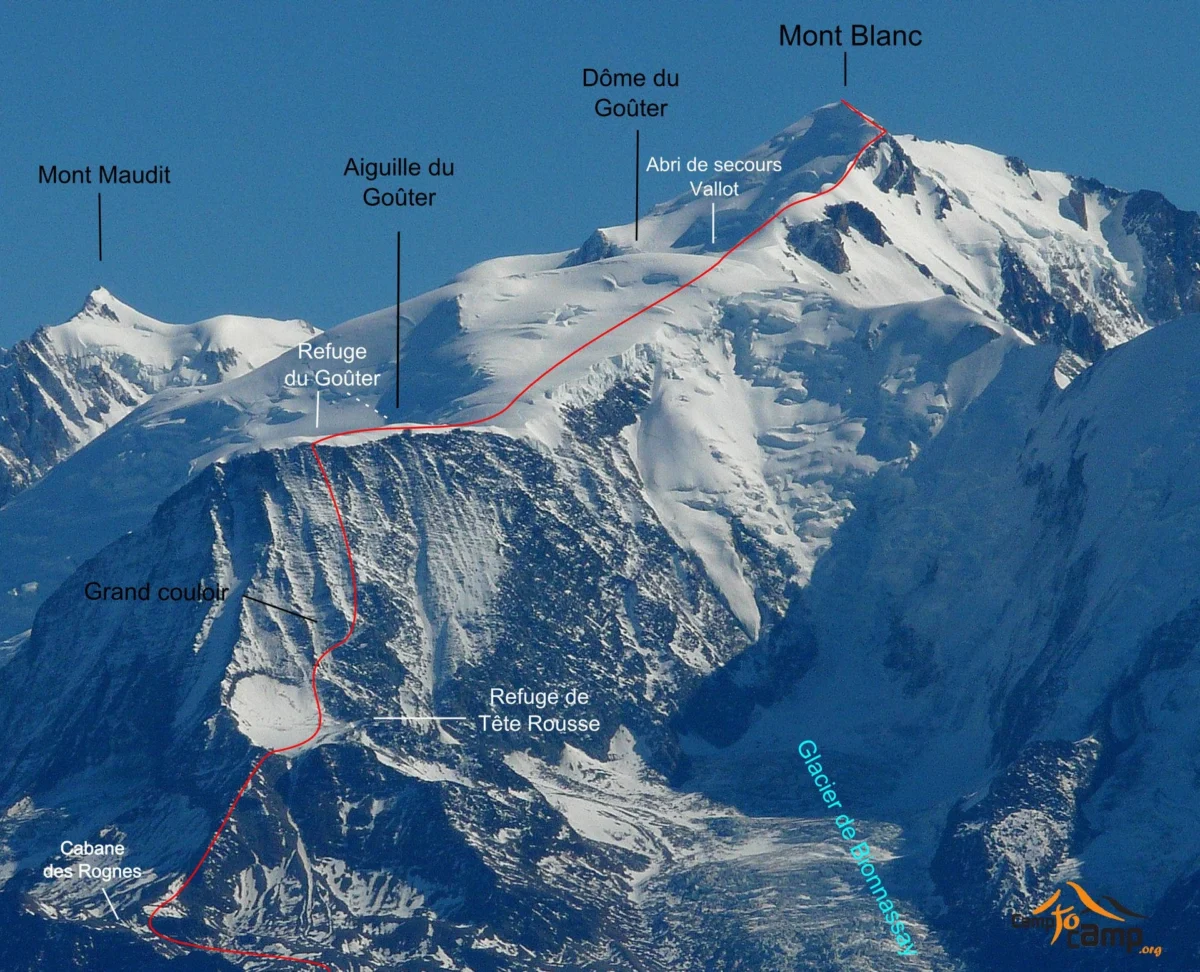
The incident unfolded on the standard Goûter route, the most popular, though far from safest, path to the summit of Mont Blanc, Western Europe’s highest peak. At an altitude of 3,835 meters (12,582 feet), the Goûter Refuge serves as a crucial staging post for climbers attempting the final push to the 4,810-meter (15,781-foot) summit. However, during the period leading up to this event, both the Goûter and the lower Tête Rousse refuges had been officially closed to the public. This closure was not a mere administrative formality but a direct response to acute and escalating environmental hazards, specifically severe rockfalls and landslides plaguing the standard ascent path. These conditions, often exacerbated by climate change leading to melting permafrost, render sections of the route, particularly the infamous Goûter Couloir, exceptionally perilous. High-mountain offices and local guides had issued explicit, widespread advisories against attempting the climb, emphasizing the extreme risks involved.
Mont Blanc’s Allure and Inherent Dangers
Mont Blanc, often referred to as the "Roof of Europe," draws tens of thousands of climbers annually, ranging from highly experienced alpinists to ambitious novices. Its popularity stems from its iconic status, relative accessibility compared to other major peaks, and the stunning alpine scenery. However, beneath its majestic facade lies a formidable and often unforgiving environment. The Goûter route, while being the most frequented, is also responsible for a significant number of incidents and fatalities each year.
The route’s challenges are multifaceted:
- Altitude: Rapid ascent can lead to acute mountain sickness (AMS) even for fit individuals.
- Exposure: Large sections are exposed to the elements and steep drops.
- Glacial Travel: Requires crampons and ice axes, with crevasses posing hidden dangers.
- The Goûter Couloir (Couloir du Goûter): This section, often dubbed the "Corridor of Death," is a notorious bottleneck prone to frequent rockfall, especially during warmer periods and in the afternoon. Climbers must traverse it quickly, often under threat from falling debris.
- Weather Variability: Conditions can change drastically and rapidly, even in summer, bringing sudden storms, high winds, and whiteouts.
In recent years, the impacts of climate change have intensified these dangers. Melting permafrost, which acts as a natural glue holding mountain slopes together, has significantly increased the frequency and severity of rockfalls and landslides across the Mont Blanc massif. This phenomenon is a primary reason for the increased caution and, in this case, the outright closure of facilities and routes. Authorities are increasingly proactive in issuing warnings and closures, not just for the safety of climbers but also for the safety of the rescue personnel who would inevitably be called upon.
The Ignored Warnings and Ascent
Despite the clear and repeated warnings from various official sources – including local authorities, the PGHM (Peloton de Gendarmerie de Haute Montagne), and professional mountain guides – the group of 32 mountaineers chose to proceed with their ascent. This decision involved not only ignoring verbal and written advisories but also bypassing physical closures of the Tête Rousse and Goûter refuges. These refuges are not merely places to sleep; they are vital safety points offering shelter, acclimatization opportunities, and crucial up-to-date information on route conditions. Their closure signals a severe deterioration of safety, meaning climbers are entering an area without the usual support infrastructure and with heightened risks. The group’s decision to push up the dangerous Goûter Couloir, knowing its propensity for rockfall and without the safety net of open refuges, demonstrated a significant misjudgment of conditions and a disregard for established safety protocols.
The Request for a Free Ride and Official Response
After successfully navigating the perilous ascent and reaching the now-closed Goûter Refuge, the group confronted the harsh reality of their situation. The descent, particularly through the Goûter Couloir, carried obvious and significant risks, prompting them to seek external assistance. It was at this point that they contacted local emergency services, not for immediate medical aid, but to request a free, state-funded helicopter evacuation.
The response to this request was swift and firm. Saint-Gervais-les-Bains Mayor Jean-Marc Peillex, a vocal proponent of responsible mountaineering and a staunch critic of reckless behavior on Mont Blanc, was directly informed of the situation. As quoted by AostaSera, Mayor Peillex recounted the call from Antoine Ratin, manager of the Goûter refuge, and his assistant Mathis Fuchs: "This morning, when I woke up, I was surprised by a phone call from Antoine Ratin, manager of the Goûter refuge, and his assistant Mathis Fuchs, harassed by the 32 climbers who had spent the night at the refuge and who were asking for someone to come and rescue them free of charge using a Civil Protection or Gendarmerie helicopter."
Following this communication, Mayor Peillex consulted with the Peloton de Gendarmerie de Haute Montagne (PGHM), France’s elite high-mountain rescue unit. The PGHM, known for its rigorous training and unparalleled expertise in alpine rescue operations, conducted a thorough assessment of the situation. Their determination was critical: the climbers were neither injured nor in life-threatening danger. Crucially, the PGHM concluded that conditions in the couloir had "calmed enough that a safe descent on foot was entirely possible." This assessment negated any humanitarian imperative for an immediate, state-funded rescue.

Mayor Peillex, consistent with his long-standing policy regarding irresponsible mountaineering, refused to dispatch taxpayer-funded state helicopters for what he deemed a non-emergency evacuation resulting from reckless decision-making. Instead, he authorized a private operator, Chamonix Mont-Blanc Helicopters (CMBH), to offer air transport to anyone in the group—provided they paid for the flights out of their own pockets. This decision highlighted a clear distinction: emergency rescue for those in genuine peril, regardless of cost, versus a paid service for those who, through their own choices, had placed themselves in a difficult but not life-threatening predicament.
The Outcome: Self-Reliance or Financial Responsibility
Faced with the choice between paying for a private helicopter or descending the mountain on foot, the group split. Several members opted to pay for the private air-taxi service, while the remaining climbers, acknowledging the PGHM’s assessment, put their boots back on and descended the mountain on foot. This outcome reinforced the authorities’ stance: self-reliance is paramount in the backcountry, and publicly funded search and rescue is a safety net for genuine emergencies, not a convenience for those who disregard official warnings.
The incident is not isolated. Mayor Peillex has historically taken a firm stance against what he perceives as a growing trend of "adventure tourism" that lacks proper preparation and respect for the mountain’s dangers. In previous years, he has threatened to bill ill-prepared climbers for rescue operations or even issue fines for ignoring safety warnings. His consistent position is that the mountain is not a theme park, and individuals must assume responsibility for their choices and their safety. This incident on the Goûter route serves as another potent example of his commitment to this principle.
Broader Implications: The Cost of Rescue Debate
This standoff has reignited a heated and long-standing debate across the European Alps regarding whether publicly funded search and rescue should remain free when individuals knowingly disregard official mountain closures and safety advisories.
Arguments for Free Rescue (Humanitarian Principle):
- Universal Access: Many argue that emergency services, including mountain rescue, should be universally accessible regardless of an individual’s financial status or perceived culpability. The primary goal should always be to save lives.
- Deterrent to Hiding Incidents: Charging for rescue might deter individuals from calling for help early, potentially worsening their situation and making rescues more dangerous and costly in the long run.
- Complexity of Blame: It can be challenging to definitively assign "blame" for every incident, as even experienced climbers can face unforeseen circumstances.
Arguments for Charging for Rescue (Responsibility and Resource Management):
- Deterrent to Reckless Behavior: Proponents argue that charging for non-emergency rescues caused by blatant disregard for warnings would act as a deterrent, encouraging greater personal responsibility and better decision-making.
- Strain on Public Resources: Mountain rescue operations are inherently dangerous and expensive, involving highly trained personnel, specialized equipment, and significant operational costs. Repeated non-emergency call-outs divert these critical resources from genuine emergencies and place rescuers at unnecessary risk.
- Fairness to Taxpayers: Why should taxpayers foot the bill for individuals who willfully ignore warnings and put themselves in predictable danger?
- Comparison to Other Regions: In many other alpine regions, such as parts of Switzerland, Italy, and Austria, non-emergency rescues often incur a cost, or climbers are strongly advised to have specific mountain rescue insurance. France has traditionally offered free mountain rescue, funded by local communes and the national gendarmerie.
The ethical considerations are complex: balancing the humanitarian imperative to save lives with the need to foster personal accountability and manage finite public resources. The increasing popularity of high-alpine activities, coupled with the escalating dangers posed by climate change, means that such incidents are likely to become more frequent. This places immense pressure on rescue services and local authorities to find sustainable solutions that prioritize safety while promoting responsible engagement with the mountain environment.
Moving Forward: A Stark Reminder
The Mont Blanc incident involving the 32 mountaineers serves as a stark reminder to all who venture into the high mountains: respect for the environment, adherence to official advisories, and a commitment to self-reliance are not optional. The mountains demand humility, preparation, and sound judgment. Ignoring these fundamental principles not only endangers the individual but also places undue strain on public resources and risks the lives of dedicated rescue personnel.
As the debate over funding and responsibility continues across the European Alps, the message from Mont Blanc authorities is clear: consult local advisories, respect closures, prepare thoroughly, and be ready to bear the consequences of your choices—which may now include pulling out your credit card for a ride off the mountain if your predicament is self-inflicted and not life-threatening. The incident underscores a pivotal moment in the discourse around mountain safety, personal responsibility, and the future of alpine access in a changing world.
