

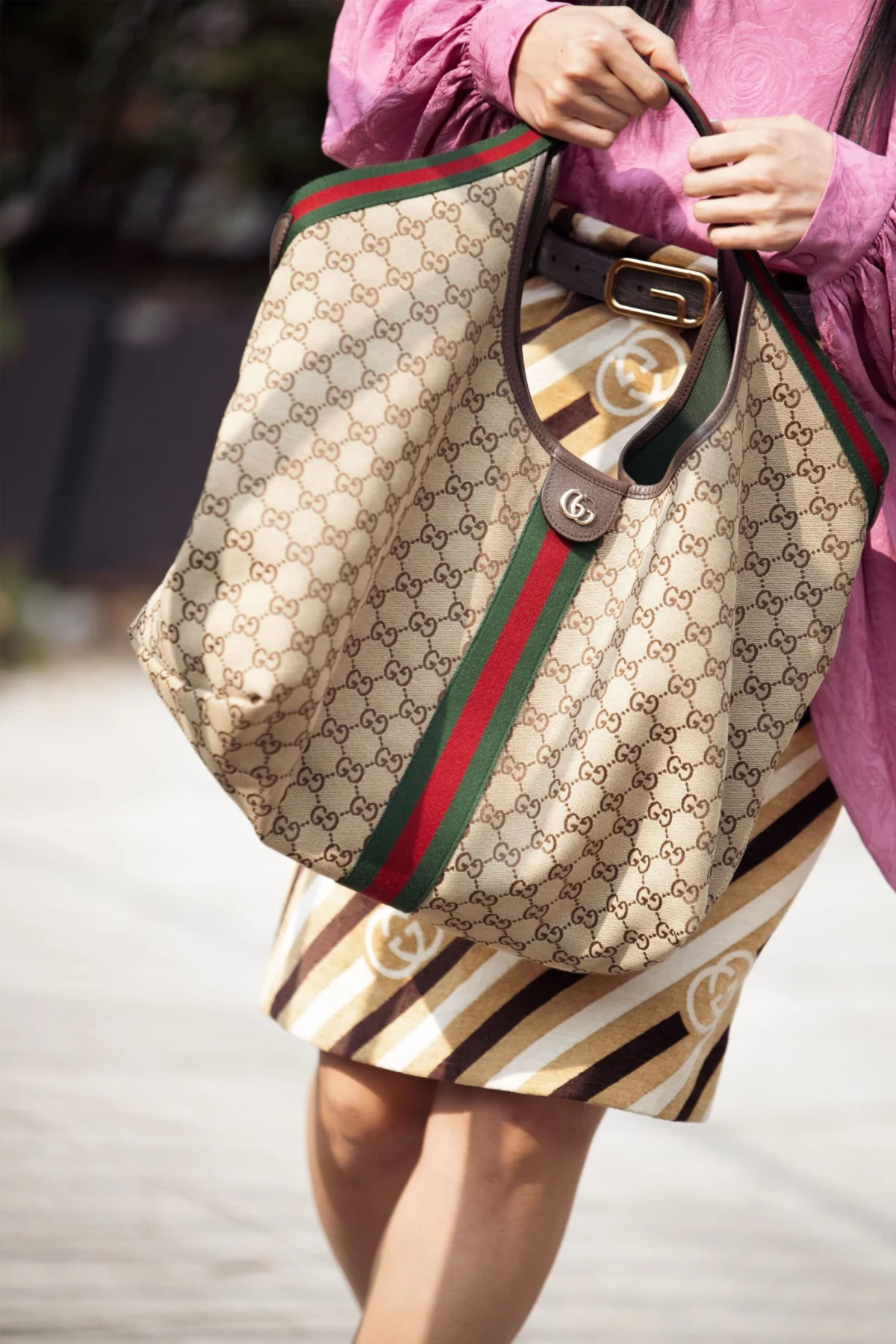
Earlier this year, a medium leather Gucci Mercato tote bag, a creation from Demna’s Spring/Summer 2026 collection, was listed at $2,900. However, by May, financial analysts at Bernstein observed a significant price adjustment: Gucci had discreetly reduced the price of this tote by an estimated 20-25%. This strategic move is indicative of a broader turnaround effort by Gucci and its parent company, Kering, aimed at stimulating sales volume and re-engaging the aspirational consumer. This recalibration was formally outlined during Kering’s Capital Markets Day in April, a critical juncture as the global luxury market grapples with the departure of approximately 50 million luxury shoppers following pandemic-induced price escalations. The central question now facing the industry is whether a reduction in prices is the viable path to recovery.
The period of the pandemic witnessed a prevailing trend among luxury brands to bolster profit margins through successive price increases. Data from HSBC reveals a staggering 52% average increase in the price of personal luxury goods between 2019 and 2024. This inflationary surge has dramatically altered the accessibility of once-coveted items. For instance, a medium Chanel Classic Flap bag, which retailed for around $1,000 in the 1980s, commanded a price of approximately $5,800 in 2019. Today, the same iconic bag carries a price tag of $11,700. Similarly, the Louis Vuitton Neverfull, a perennial favorite, has seen its price more than triple since its 2007 debut, escalating from roughly $645 to over $2,000. These examples underscore a significant trend: many of the luxury industry’s most iconic handbags have doubled in value over the past decade and a half.

The Economic Headwinds Facing Luxury Goods
The cumulative effect of these substantial price hikes, coupled with persistent high cost-of-living inflation in Western economies, a slowdown in macroeconomic growth in China, and geopolitical instability in the Middle East, has led to a noticeable deceleration in consumer spending. This economic environment is exerting considerable pressure on the profit margins of luxury brands, according to Luca Solca, an analyst whose team at Bernstein first identified the price reduction on the Gucci Mercato tote. Solca emphasizes that this slowdown is particularly impactful for "mega-brands who thrive on aspirational consumers."
Following the significant escalation of luxury handbag prices, a growing segment of consumers began to scrutinize the perceived value proposition. Younger demographics, in particular, took to social media platforms to voice their concerns. Content highlighting the "insane margins on luxury goods" from leading brands proliferated, fostering a critical discourse. A survey conducted by Vogue Business late last year revealed that a substantial 72% of Gen Z luxury shoppers expressed a preference for owning a more accessible, yet functional, item like a Walmart ‘Workin” over an Hermès Birkin bag. Interviews with respondents indicated a growing sentiment that extravagant spending on luxury is perceived as ostentatious, and that new luxury items often fail to justify their premium cost.
Achim Berg, a former senior partner at McKinsey and founder of the corporate think tank Fashion Sights, articulates a significant disconnect within the luxury sector. "There is a major disconnect in luxury, and that’s the underlying issue for the pricing discussion," Berg stated. "A lot of people just don’t understand why the price has increased when the product hasn’t improved. And that is not a fringe issue. It is a core issue for the luxury industry [today]."

Kering’s Strategic Pivot and Gucci’s Performance
During Kering’s Q2 2026 earnings call in July, Group CEO Luca De Meo acknowledged the group’s past strategy of "playing with elasticity" on pricing, which, he admitted, had a "very big impact" on sales volume. While Gucci’s revenues in Q2 showed a 2% decrease to €1.41 billion, this figure exceeded consensus expectations, signaling a marked improvement for the Italian fashion house. Nevertheless, the brand has experienced annual sales declines since fiscal year 2022, with revenues falling by 22% in fiscal year 2025 compared to the preceding year. Kering is not an isolated case; LVMH’s fashion division reported an 8% sales decline for fiscal year 2025, and many of the industry’s most prominent houses and conglomerates have faced diminishing revenues in recent years.
Gucci’s decision to reduce the price of a specific handbag model is a bold strategy to recapture lost customers. However, Solca cautions that "outright price cuts would undermine brand equity." He elaborates, "But there is no doubt that the mix must be adjusted downwards for mega-brands to address their affordability issue and reconnect with the bulk of their aspirational consumer audience. The sooner, the better. Gucci has been bold to bite the bullet, even if taking higher brand equity risk."
Navigating the "It-Bag" Dilemma
The Gucci Mercato bag, part of the SS26 Generation Gucci handbag collection under the direction of creative director Demna, features a range of canvas shoulder bags and totes. The collection’s average price point is approximately $2,000, representing a 27% decrease from the average price of Gucci bags prior to its introduction, according to reports from the Wall Street Journal.

Industry experts generally agree that it is more feasible for brands to adjust the pricing of newer bag styles, such as the Mercato, compared to their iconic pieces like the Chanel Double Flap or the Lady Dior. This is largely because consumers possess a less ingrained awareness of the historical pricing of newer models. "The reality is, it is almost impossible to touch the prices of an iconic piece for a well-established brand," explains Berg. "For those, you need to fix the price or adapt below inflation, and you hope the market catches up with your price point over time."
Robert Burke, a luxury analyst, concurs that reducing the price of well-known bags is a "big statement" that can dilute their perceived value. He notes that this action makes it challenging for luxury labels, which have invested heavily in marketing and brand narrative, to justify their established price points. "It would be very unusual, because the last thing anyone wants is for the consumer to start to question the value of their goods. It’s too risky," Burke commented.
Eric Fisch, HSBC US Head of Retail and Apparel, highlights that a luxury brand’s value is fundamentally built on a shared understanding between the company and the consumer regarding the brand’s intrinsic worth. "When a luxury house cuts prices, it implicitly signals a disconnect between price and value, which can dilute the brand’s overall image," Fisch stated. "As an alternative, brands could consider launching new products in different sizes, materials, or formulations, which justify a lower price point and bring aspirational shoppers back into the fold."

However, Berg suggests that if a newer bag, like the Mercato, has been priced too aggressively and requires a correction, "very few people will even recognize that you’ve changed the prices." He adds, "I think [in that instance] you can take [the price] down. You could also take the bag out entirely and replace it with a different SKU at a lower price point. I think that the rationale is that we overplayed it, and we now need to change that."
The Resale Market Complication
Brands contemplating price reductions must also consider the impact on the burgeoning resale market. During the luxury boom of the pandemic, when resale prices were exceptionally high, consumers could rationalize their purchases as investments. However, as luxury demand has moderated, so too have resale values. This shift means that a high-priced handbag no longer carries the same investment appeal. If a brand were to reduce the price of an iconic piece, Berg warns, "that would not only [upset the] direct customer. It would also annoy others who are trying to sell the item, as it devalues it across the board."
Diversifying the Product Mix: A Path to Broader Appeal
While major players like LVMH and Kering navigate revenue challenges, a different strategy is proving successful for some emerging fashion brands. These brands are diversifying their product portfolios to avoid alienating entry-level consumers. For example, Ralph Lauren and Coach are strategically offering a range of products, from socks priced at $12 to coats at £2,000, thereby catering to a wider spectrum of the market.

"There is a general renaissance for value for money," observes Berg. "Coach always had it, and it’s just playing that more offensively. That’s also why brands like Polène and Sézane are doing well. They are now operating slightly lower than where affordable luxury used to be; the stores feel like luxury boutiques, but [for the aspirational consumer] it’s less intimidating, there’s less of an entry barrier, and you get value for money."
At Gucci, under De Meo’s strategic vision, the price adjustment for the Mercato bag is part of a multi-pronged approach. The brand is actively diversifying its leather goods offerings to "elevate the top tier," introduce a robust mid-price range of bags between €2,000-€3,000, and critically, "redesign the entry-level without compromising quality," according to presentation materials obtained by Vogue Business.
Other brands are adopting similar tactics, developing entry-level offerings to attract aspirational shoppers. Burberry, under the creative direction of Daniel Lee since 2022, initially introduced new handbag styles at prices that rivaled established luxury maisons, such as the Knight bag launched in September 2023 at £2,490 (approximately $3,360), significantly exceeding the brand’s traditional handbag average price of £990. This strategy drew criticism, and in a late 2024 strategic update, then-new CEO Joshua Schulman acknowledged that the brand’s previous pricing strategy had become "too high across the board," particularly for leather goods. He announced a commitment to restore a "good, better, best" product architecture, offering tiered options across all consumer segments.

Burberry’s Pricing Realignment and Louis Vuitton’s Strategy
Burberry has since focused on recalibrating its pricing architecture rather than implementing outright price cuts on existing items. The brand launched a new collection of entry-level bags in 2025, with most retailing below £2,000. According to a Financial Times report, the proportion of bags priced above £2,000 on Burberry’s website has decreased from nearly 30% in late 2023 to approximately 3% currently. In its most recent earnings call, Burberry confirmed the success of its revised pricing structure. "Now handbags, women’s handbags are becoming a more meaningful part of the business, and this has been a very deliberate strategy of finding our sweet spot with good, better, best pricing in a luxury context," Schulman stated.
Robert Burke commends Louis Vuitton’s approach: "What Louis Vuitton is doing is quite smart. They’re introducing new handbags, and new products in the $2,000-$3,000, $3,500 range, but they still have the bags that [retail at] $12,000-$15,000." He adds, "The real challenge is pushing harder for interesting yet approachable fashion bags at entry level. That’s what’s been missing."
Currently, many entry-level luxury bags tend to feature prominent brand monograms or simple tote designs. However, Burke suggests that the creation of desire, regardless of price point, can significantly boost sales volume.

"What Chanel is doing is fantastic right now, and that’s not being price sensitive. It’s producing really beautiful products and great design," Burke observed. "So I think when you do that, it justifies the price you put on it. If it feels like it’s something that is overly distributed or too accessible, that’s when it’s an issue."
The Future of Luxury Pricing
Ultimately, Achim Berg posits that to overcome the current challenges facing the luxury fashion industry, a new unifying theme that drives desirability is needed, akin to the emergence of the Chinese progressive consumer and the streetwear boom a decade ago. "Quiet luxury is just incredibly unhelpful for that," he commented. Until such a theme emerges, Berg anticipates "much more repricing. A) in the affordable luxury space and b) in everything that is not iconic and line-defining for brands. If the brand is under enough pressure." This suggests a period of significant strategic adjustment for luxury brands aiming to regain traction with a broader consumer base.
