

Alexander Wang’s latest fall collection, presented amidst the bustling energy of New York Fashion Week, presented a compelling narrative that oscillated between overt declarations of "extreme opulence" and a more subtly executed aesthetic. While the designer himself cited a vision of lavishness, the garments that graced the runway told a story of calculated restraint, rendered in a palette dominated by sophisticated slate grays and deep blacks. This deliberate choice in color immediately established a mood of streamlined elegance, a stark contrast to the maximalist inclinations often associated with the brand’s signature style. The collection’s initial impression was one of polished power, with sharp, sleek blazers and imposing, padded coats in tough-girl leather. These pieces, however, were not without their characteristic Wang subversion. A cheeky, almost playful element emerged through the unexpected use of wire-formed fur belts, frozen in undulating waves, which cinched waists and added a distinctive, sculptural touch. This juxtaposition of severe silhouettes with whimsical detailing set the stage for the collection’s overarching theme: a nuanced exploration of opulence.
The Dual Motifs: Faux Fur and Rhinestones
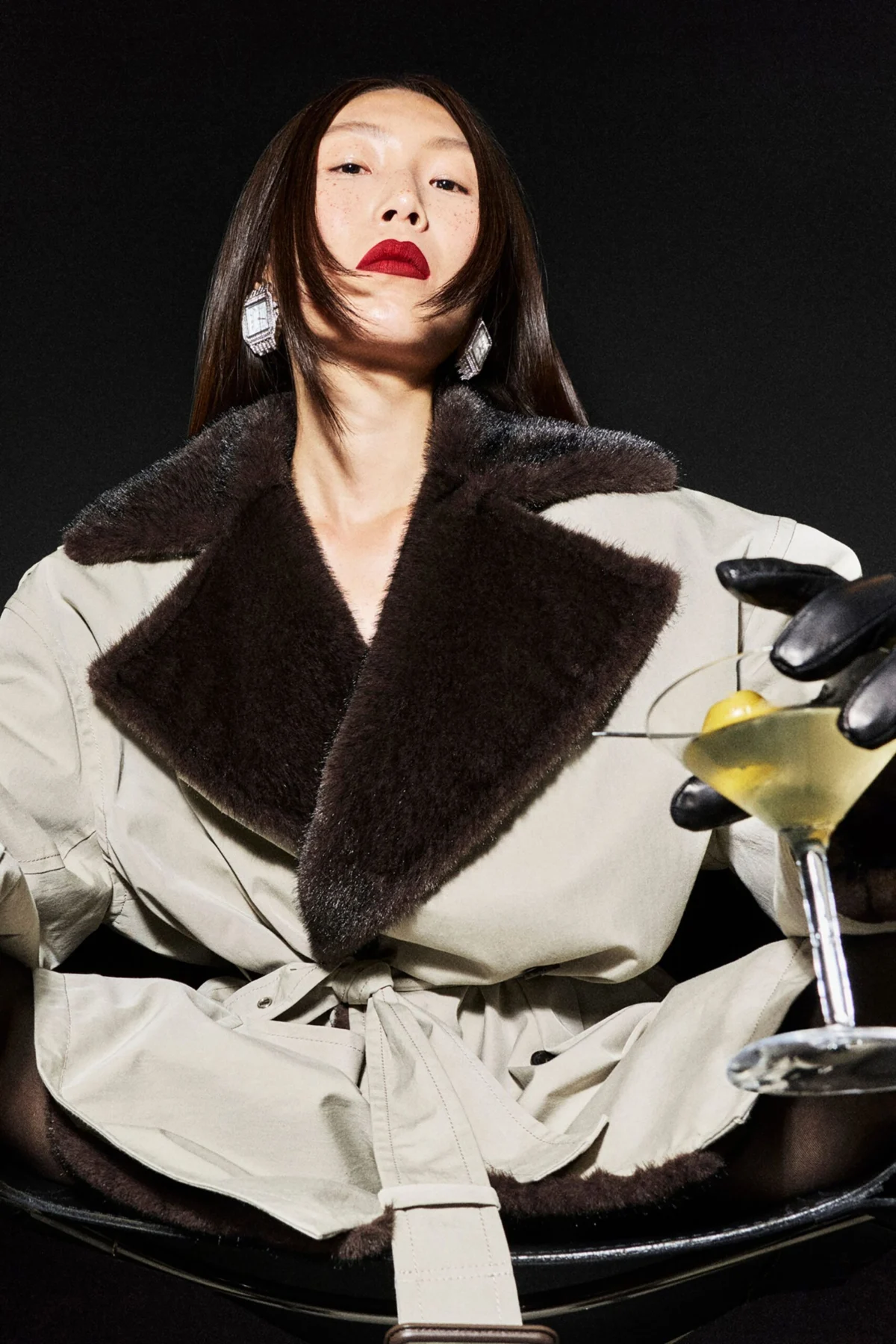
The designer’s avowed interest in opulence found its most tangible expression in the two dominant motifs weaving through the collection: faux fur and rhinestones. The faux fur, far from being a mere accent, was integrated with a bold, textural sensibility. It appeared as a luxurious lining within a classic denim jacket, lending an unexpected warmth and richness. In a more dramatic application, it framed the wide lapels of a utilitarian, tech-fabric khaki nylon trench coat, transforming a practical garment into a statement piece. Even the more utilitarian denim miniskirts were softened and elevated with plush faux fur trimmings, adding a tactile dimension to familiar silhouettes.
Beyond these more conventional uses, Wang injected a dose of playful artistry into the faux fur’s deployment. A Meret Oppenheim-esque tank top, crafted entirely from the fuzzy material, evoked a sense of surrealist art, challenging conventional notions of knitwear. Perhaps the most daring iteration was a fluffy faux fur bra, positioned atop a sleek leather dress – a pairing that the designer reportedly favored personally. This unexpected combination highlighted Wang’s penchant for pushing boundaries and subverting expectations. The squiggly faux fur belts, a recurring element, were also reimagined in more versatile applications. They appeared as playful hems on cropped high-neck sweaters and logo t-shirts, embodying what Wang described as a "gestural" quality, akin to the spontaneous act of tying a shirt around one’s waist. This intentional incorporation of movement and casual styling within high-fashion pieces underscored the collection’s blend of artfulness and wearability.
The Dazzle of Rhinestones and Geometric Simplicity
Complementing the tactile allure of faux fur, rhinestones provided the collection’s dazzling counterpoint. These sparkling embellishments were liberally applied across a range of dresses, from slinky, body-skimming minis to elegant maxi lengths. Many of these pieces featured a distinctive detail: a yanked-and-tied-at-the-hip accent, creating a draped, almost deconstructed silhouette. This particular design element was inspired by a candid, albeit perhaps apocryphal, image of supermodel Kate Moss exiting a party with her gown hem artfully knotted after an accidental tear. This anecdote, if true, speaks volumes about Wang’s ability to draw inspiration from candid moments and translate them into sophisticated fashion statements.
The fusion of faux fur and crystal embellishments extended to the collection’s accessories. Shoes and bags were adorned with these signature details, maintaining a cohesive visual language. The footwear remained resolutely high-heeled, exuding a sense of glamour and elevation, while the evening purses adopted a dainty, rectangular form, offering a chic and understated carrying option.
Alongside these elaborately embellished pieces, the collection also featured a series of garments characterized by a striking geometric simplicity. These were described by the designer as "dead-simple and breezy," possessing a clear, architectural bent. A long, cylindrical knit maxi dress, essentially a tube with strategically placed armholes and a languid cowl neck, epitomized this minimalist approach. Another standout was a slinky cape, meticulously crafted from a single, large half-circle of fabric, showcasing a mastery of pattern cutting. A particularly "frisky" little dress boasted a playfully draped and folded hemline, a result of its continuous, donut-shaped pattern. Wang articulated this aspect of the collection as an exercise in ease: "It’s just easy," he stated, "To feel minimal and not so worked. And then we add the crystal embellishment." This philosophy highlighted a conscious effort to balance inherent simplicity with moments of extravagant embellishment, creating a dynamic interplay between understated elegance and overt glamour.
A Carefree Spirit and a Nod to the Past
Collectively, the fall collection exuded a palpable sense of carefree attitude, infused with Wang’s signature irreverent gaudiness. This particular blend of insouciance and daring aesthetic choices inevitably evoked a sense of nostalgia for the brand’s heyday in the early 2010s. The timing of this nostalgic echo felt particularly resonant, as contemporary culture appears increasingly receptive to a return to the stylistic touchstones of that era. Wang himself alluded to this feeling of déjà vu, recounting an experience at the Outside Lands music festival where he saw Charli XCX perform. "I was like, ‘Oh my god, this feels so familiar,’" he remarked, drawing a parallel between the concert atmosphere and the cultural zeitgeist.
This sense of familiar comfort and enduring appeal is likely a key factor in the brand’s decision to reintroduce its iconic Rocco bag this season. Available in three sizes and notably lighter than its predecessors, the grommeted-bottom Rocco bag has long been a beloved staple for devoted Wang followers. Its return signals not just a commercial strategy but a deliberate engagement with the brand’s heritage and the enduring connection it holds with its clientele. The reintroduction of such a recognizable piece underscores the collection’s broader theme of revisiting and reinterpreting established aesthetics, blending past influences with present-day sensibilities.
Contextualizing the Collection: Fashion Week and Brand Evolution
The Alexander Wang Fall 2024 collection was presented during a pivotal moment in the fashion calendar, following a period of significant industry recalibration and a heightened focus on brand identity. New York Fashion Week, a cornerstone of the global fashion circuit, has been navigating evolving consumer behaviors and a demand for greater authenticity and sustainability. Wang’s collection, with its emphasis on both opulent embellishment and practical, almost utilitarian silhouettes, reflects a broader trend within the industry towards creating desirable yet wearable clothing.
The brand, under Wang’s creative direction, has consistently pushed boundaries since its inception in 2007. Known for its urban-infused aesthetic, blending streetwear sensibilities with high-fashion luxury, Wang has cultivated a loyal following that appreciates his ability to tap into contemporary youth culture. The current collection can be seen as a mature evolution of this signature style, demonstrating a refined understanding of his brand’s core values while embracing new creative avenues. The "extreme opulence" mentioned by Wang, when viewed through the lens of the collection’s execution, suggests a more nuanced interpretation of luxury – one that is not solely defined by overt displays of wealth but by the skillful integration of premium materials, thoughtful design, and a touch of playful subversion.
Industry Reactions and Market Implications
While specific industry reactions from critics and buyers immediately following the show are not detailed in the provided text, the collection’s themes of nostalgia and its reintroduction of the Rocco bag suggest a strategic appeal to both established fans and a new generation of consumers. The resurgence of 2010s-era aesthetics in broader fashion and pop culture trends provides a fertile ground for brands with strong ties to that period. Alexander Wang’s ability to channel this cultural moment while retaining his distinct design language positions the brand for continued relevance.
The dual focus on embellished statement pieces and more accessible, geometrically driven garments indicates a strategy aimed at broad market appeal. The "easy" and "minimal" pieces offer a point of entry for consumers seeking understated luxury, while the rhinestone-adorned dresses and faux fur accents cater to those who embrace bold, glamorous dressing. The re-release of the Rocco bag, a known commercial success, further solidifies the brand’s strategy of leveraging its heritage while adapting to contemporary demands for both iconic and innovative designs. The lighter iteration of the bag, in particular, addresses practical considerations for consumers, demonstrating an awareness of evolving lifestyle needs.
The Broader Impact: Nostalgia, Identity, and the Future of Luxury
Alexander Wang’s Fall collection serves as a compelling case study in the contemporary fashion landscape, where nostalgia and brand heritage are increasingly leveraged as powerful tools. The collection’s successful blend of "extreme opulence" with a restrained, modern aesthetic speaks to a sophisticated understanding of luxury that transcends mere ostentation. By drawing inspiration from the past, particularly the early 2010s, Wang taps into a cultural desire for familiar comfort and a re-evaluation of styles that defined a generation. This approach, when executed with the brand’s signature flair for subversion and unexpected details, resonates with a discerning consumer base.
The implications of this collection extend beyond the immediate runway presentation. It signals a broader trend within the luxury market towards a more nuanced definition of opulence, one that values craftsmanship, thoughtful design, and a sense of personal expression. The emphasis on both highly embellished pieces and minimalist, geometrically inspired garments suggests a strategy of inclusivity, catering to a diverse range of tastes and preferences. The reintroduction of the Rocco bag, a beloved icon, further underscores the enduring power of brand heritage and its ability to connect with consumers on an emotional level. As the fashion industry continues to evolve, Alexander Wang’s Fall collection offers a glimpse into a future where past influences are skillfully woven into contemporary narratives, creating a sense of continuity and enduring appeal. The collection’s ability to evoke a familiar feeling while presenting a fresh perspective solidifies Alexander Wang’s position as a designer who understands the pulse of both the past and the present.
