

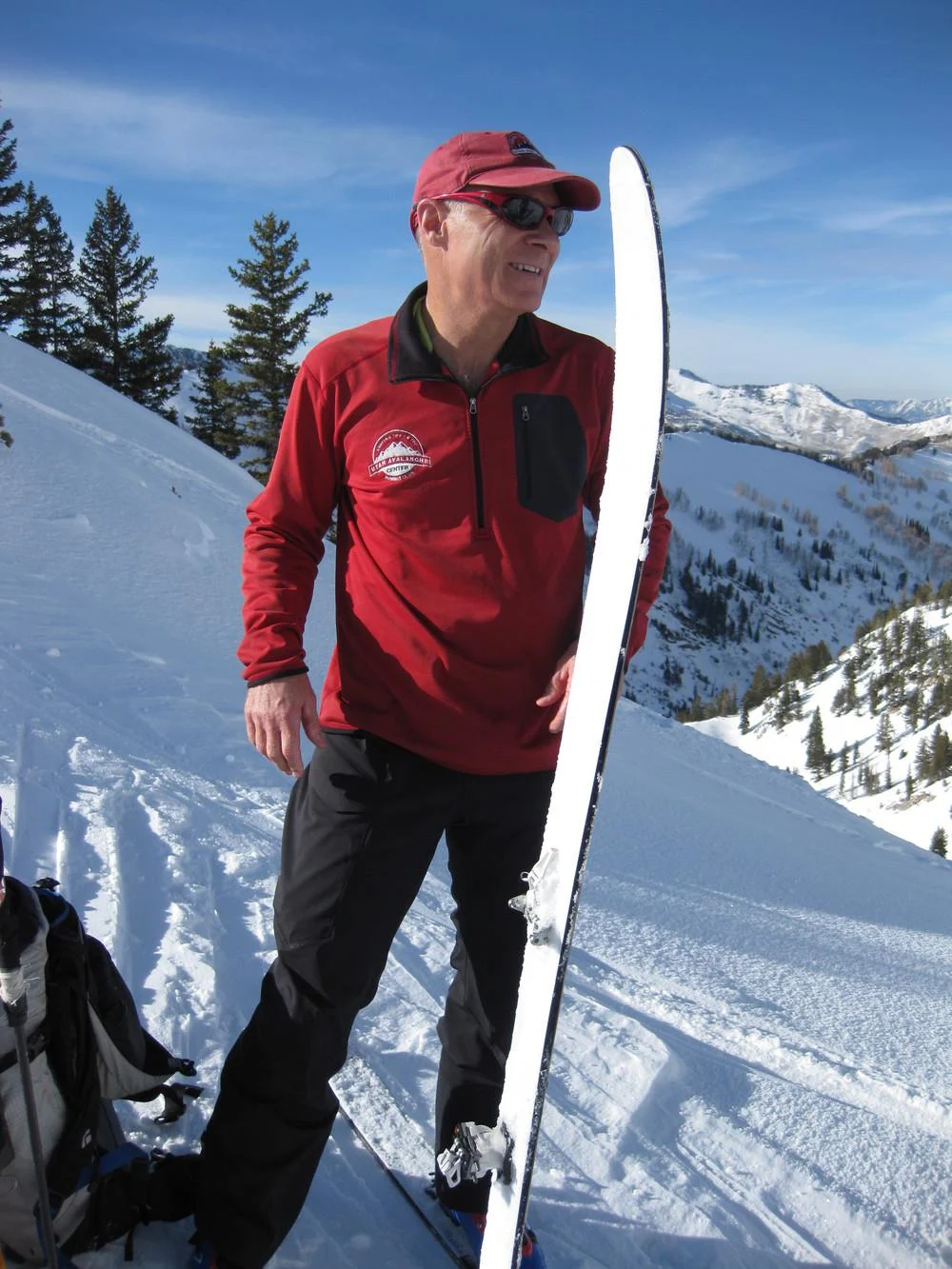
The Utah Avalanche Center (UAC) has announced the impending retirement of its long-serving Director, Bruce Tremper, effective at the close of August. Tremper, a towering figure in avalanche safety and forecasting, has helmed the UAC for 29 years, leaving an indelible mark on the field both domestically and internationally. His departure marks the end of an era for the organization and the broader avalanche community, while the UAC simultaneously welcomes Mark Staples as its new Director, ushering in a new chapter of leadership.
A Legacy Forged in Snow and Science
Bruce Tremper’s career in avalanche science is characterized by a deep commitment to public safety, innovative forecasting, and extensive fieldwork. His journey began in Montana, where he pursued his Master of Science degree at Montana State University under the guidance of Dr. John Montagne. This academic foundation was quickly complemented by practical experience. Tremper honed his skills in avalanche control operations at prominent ski resorts, including Bridger Bowl and Big Sky. Further broadening his expertise, he contributed as an avalanche forecaster at the Alaska Avalanche Center, collaborating with notable figures such as Doug Fesler, Jill Fredston, and Jim Woodmency.
In 1986, Tremper assumed directorship of the Utah Avalanche Center. During his tenure, he spearheaded a significant evolution in how avalanche information was disseminated. Under his leadership, the UAC transitioned from primarily offering phone-recorded advisories to developing a comprehensive suite of internet-based products. This digital transformation made crucial avalanche safety information more accessible to a wider audience, including recreational backcountry users, ski patrollers, and transportation departments. The UAC, under Tremper’s guidance, became a pioneer in introducing visual elements like icons and distinct avalanche problem descriptions into their daily forecasts, enhancing clarity and understanding of complex snowpack conditions.
Decades of Dedication and Broader Contributions
Beyond his directorship, Bruce Tremper’s influence extended across multiple facets of the avalanche safety landscape. For six years, he served as the editor of The Avalanche Review, a key publication for the industry, fostering knowledge sharing and professional development. His prolific output includes numerous scientific papers, several influential avalanche safety videos, and two highly regarded books on avalanches, which have become essential resources for both professionals and enthusiasts.
Tremper’s expertise was also sought after for high-profile events. He was instrumental in managing backcountry avalanche safety for Salt Lake City’s 2002 Olympic Winter Games, a testament to his ability to handle complex, large-scale safety operations. His consistent engagement with the media, through hundreds of interviews, has played a vital role in educating the public about avalanche hazards and promoting safe practices. Furthermore, he has been a dedicated educator, teaching at the National Avalanche School for decades, shaping the next generation of avalanche professionals. His involvement in developing the conceptual model of avalanche danger and the associated avalanche danger scale in 2010 underscores his significant contributions to the theoretical underpinnings of avalanche forecasting.
A Continuing Presence in the Avalanche Community
Despite his retirement from the Forest Service, Bruce Tremper has indicated his intention to remain active in the avalanche community. He plans to continue his work in teaching, writing, and contributing to avalanche safety projects. This commitment suggests that his wealth of knowledge and experience will continue to benefit the field, ensuring his insights remain accessible. It is also anticipated that Tremper, along with his wife Susi, will dedicate more time to their passion for backcountry skiing, a pursuit they have long enjoyed in the Wasatch Mountains and beyond. Their continued presence in the backcountry serves as a reminder of the ongoing need for vigilance and preparedness in avalanche terrain.
Transition to New Leadership: Mark Staples Takes the Helm
With Bruce Tremper’s retirement, the Utah Avalanche Center has appointed Mark Staples as its new Director. Staples brings a robust and relevant background to the position, having accumulated extensive experience in ski patrol and snow safety operations at Big Sky Ski Area. His academic credentials include a Master of Science degree in Engineering from Montana State University, where his research focused on snow avalanches. He has also undertaken special projects for the National Avalanche Center and served eight seasons as a backcountry avalanche forecaster at the Gallatin National Forest Avalanche Center. Staples has expressed his enthusiasm for joining the UAC and leading its highly capable team.

Supporting Data and Context: The Evolving Landscape of Avalanche Forecasting
The 29-year tenure of Bruce Tremper at the helm of the Utah Avalanche Center spans a period of significant technological and methodological advancement in avalanche forecasting. The transition from analog to digital information dissemination, as highlighted in Tremper’s leadership, reflects a broader trend.
Timeline of Key Developments in Avalanche Forecasting (Conceptual):
- Pre-1980s: Basic forecasting, often reliant on direct observation and limited communication channels.
- 1980s-1990s: Emergence of phone hotlines, early computer modeling, and standardized reporting formats. The International Snow Science Workshop (ISSW) became a crucial forum for sharing research.
- Late 1990s-2000s: Widespread adoption of the internet. Avalanche centers began developing websites, offering detailed daily advisories, and incorporating graphical representations of avalanche problems. The development of the Conceptual Model of Avalanche Hazard (CMAH) and the Avalanche Danger Scale (ADS) in the early 2000s provided a more unified framework for understanding and communicating avalanche risk.
- 2010s-Present: Advanced data collection through remote sensing, sophisticated computer modeling, social media integration for real-time observations, and increased focus on risk management frameworks. The UAC, under Tremper, was at the forefront of adopting and refining these innovations.
The Utah Avalanche Center, as one of the most active and respected avalanche forecasting programs in the United States, has historically served as a critical resource for the state’s substantial backcountry recreation community. The Wasatch Range, in particular, experiences heavy use by skiers, snowboarders, snowmobilers, and hikers. According to data from the Utah Department of Natural Resources, the state’s outdoor recreation economy generates billions of dollars annually, with winter sports being a significant contributor. The UAC’s accurate and timely forecasts are not only a matter of public safety but also crucial for the economic viability of these activities.
The impact of avalanche fatalities and injuries in Utah has historically been a concern. While precise annual figures fluctuate, the UAC’s work, under Tremper’s direction, has been instrumental in mitigating these risks. For instance, in seasons with particularly challenging snowpack conditions, the UAC’s detailed warnings and educational outreach have been credited with preventing numerous incidents. The proactive approach of identifying specific avalanche problems—such as persistent slabs, wind slabs, or wet loose avalanches—and communicating their likelihood and characteristics has empowered backcountry users to make informed decisions.
Broader Impact and Implications
Bruce Tremper’s retirement signifies the end of an era of consistent, influential leadership within the avalanche safety community. His 29 years at the UAC represent a period of significant professionalization and technological advancement in avalanche forecasting. His contributions, particularly in developing accessible and understandable forecasting products, have undoubtedly saved lives and reduced injuries. The legacy he leaves behind is one of dedication to public service and a relentless pursuit of improving avalanche safety.
The appointment of Mark Staples as the new Director suggests a continuation of the UAC’s commitment to robust forecasting and public education. Staples’s background indicates a strong foundation in both the scientific and practical aspects of avalanche management. His experience at the Gallatin National Forest Avalanche Center, another highly respected program, suggests a familiarity with the challenges and best practices of forecasting in diverse mountain environments.
The transition at the UAC occurs at a time when the demand for backcountry recreation continues to grow. As more people venture into avalanche terrain, the role of organizations like the UAC becomes even more critical. The UAC’s ability to adapt to new technologies, maintain strong community engagement, and provide reliable, actionable safety information will be key to its continued success. The leadership of Mark Staples will be crucial in navigating these evolving challenges and opportunities, building upon the strong foundation laid by Bruce Tremper. The ongoing collaboration between avalanche centers, research institutions, and public land management agencies will remain vital in addressing the persistent risks associated with snow-covered mountains.
