

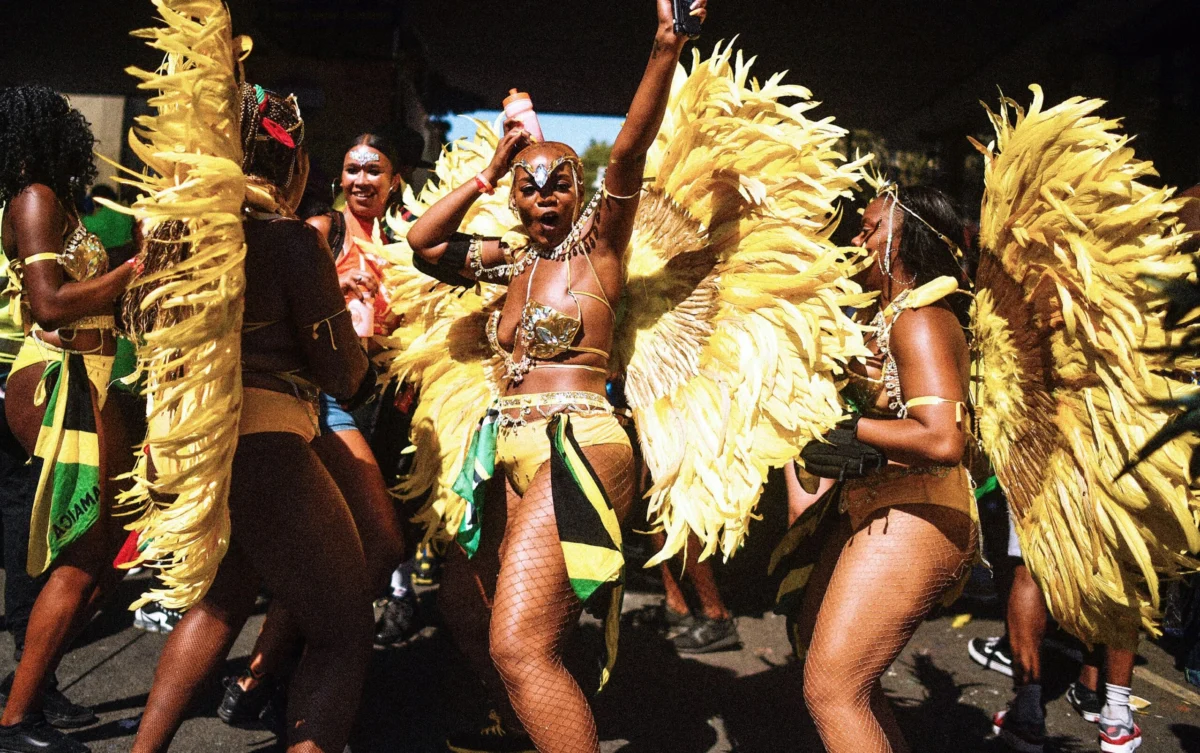
As the vibrant streets of West London prepare to pulse with the infectious rhythms of the Notting Hill Carnival from August 30-31, a familiar yet complex question resurfaces for brands: how can they authentically engage with such culturally rich and community-driven events? This perennial conundrum extends beyond Carnival, touching global public celebrations like Paris’s Fête de la Musique, which began in 1982 and now captivates cities across France, and the spectacular February festivities in Rio de Janeiro. These events, deeply rooted in or closely connected to the Black diaspora, demand a nuanced approach from any brand seeking to participate. Sensitivity, humility, and a profound understanding of context are paramount, guiding activations to be brand-second rather than brand-first.
The allure for brands is undeniable. The sheer scale of these gatherings offers immense visibility, but this exposure also invites intense scrutiny. Economic impact studies underscore the significant financial contribution these festivals make. For instance, research commissioned by The Voice in 2024 revealed that Notting Hill Carnival generates a total direct or net economic impact exceeding £396 million annually. This financial potency has not gone unnoticed by city officials; in March of this year, the Mayor of London announced an additional £4.66 million in funding specifically to support the carnival, aiming to manage potential crowding and enhance attendee experience.

Visitor numbers further illustrate the colossal reach of these events. Notting Hill Carnival consistently attracts between one and two million attendees. In its 2025 iteration, the Royal Borough of Kensington and Chelsea reported the participation of 36 sound systems, 48 mas bands (elaborate costume-clad dancing troupes), and 250 street traders. This vibrant ecosystem has drawn the attention of major brands, including Adidas, Stüssy, Puma, Diesel, and Converse, all eager to tap into the event’s potent online and in-person reach. Similarly, Paris’s Fête de la Musique this summer drew an estimated two million global attendees and, like its London counterpart, was a hub for brand activations. Chloé Parfums, for example, transformed a popular Parisian coffee spot into an immersive experience, complete with DJ sets, fragrance-themed beverages, and product sampling for an exclusive 100 guests. Byredo adopted a more public-facing strategy, featuring local DJ Broodoo Ramses and singer Sevdaliza outside its Le Marais store, amplifying the experience through social media content like vox-pop interviews and behind-the-scenes footage, subtly weaving fragrance narratives into the fabric of the celebration.
Looking ahead to Notting Hill Carnival 2026, plans are already in motion. Caymanian-Jamaican designer Jawara Alleyne is set to release a curated playlist and a capsule collection inspired by the effortless style and festive spirit of Carnival attendees. Alleyne emphasizes his perspective: "It’s less about how I’m taking inspiration from Carnival and more about the fact that Carnival has defined my point of view." For corporate entities with less organic ties to these cultural touchstones, the challenge of forging meaningful connections becomes significantly more intricate.
The Imperative of Cultural Credibility
Hari Blanch Bennett, a creative strategy expert at Kantar, asserts that "Done right, showing up at annual cultural hotspots like Fête de la Musique and Notting Hill Carnival is a no-brainer for brands that have a role to play." She elaborates, "Brands earn their place by adding to the culture, not borrowing from it." Puma’s 2025 sponsorship of Notting Hill Carnival is cited as a successful example. The sportswear giant collaborated directly with legendary sound systems like King Tubby’s and Rampage, curating a lineup of performances. Prior to the event, they also hosted a pop-up customization workshop featuring British-Caribbean designer Sharkkana and sneaker artist Latya.

While Puma’s strategy involved visible branding through seeding and stage placements, experts advocate for subtlety. Sophie Borelly, managing director at research and creative agency On Road, advises, "The key storytelling challenge for brands in these spaces is to get themselves out of the way." She argues that for brands to be perceived as credible, they must demonstrate tangible impact, such as "broadening access to soundsystem culture for young people or creating chill-out spaces for community elders." The success of brand activations, she suggests, hinges on their ability to genuinely benefit the communities that define these cultural moments.
Borelly acknowledges the inherent appeal for brands: associating with "the coolest parties on the planet" offers a significant boost to cultural relevance and audience connection. However, she stresses the importance of brands actively contributing to these cultures. If brands extract more value than they contribute, the risk of over-commercialization undermining the cultural capital of these scenes becomes a significant concern. "You risk not only making your brand look superficial and out of touch, but making things worse for culture as well," Borelly warns.
Empowering the Community Through Genuine Partnership
A crucial element for successful brand engagement is moving beyond mere "platforming" and engaging in direct consultation with the community regarding programming. This can present a challenge for brands accustomed to complete marketing control, but it is fundamental for fostering robust partnerships. Jawara Alleyne notes the inherent difficulty: "Carnival is a really hard space to crack because it’s so contained in what it is, and by its nature, it’s not really something that brands can easily integrate themselves into." He recounts his experience with Converse: "When I’m working with Converse, they are pretty open to whatever I am doing, particularly as it relates to Carnival, because this is my community and my space."

Alleyne’s collaboration with Converse on his Spring/Summer 2026 collection, which drew inspiration from Carnival style, exemplifies this approach. Last year, he created deconstructed garments as gifts for a mas band, with Converse providing the footwear for customization. This resulted in a "seamless integration," as Alleyne puts it. "It shouldn’t feel like the brand is trying to get their name out there," he emphasizes. "It’s more, ‘What are you guys already doing, and how can we help you to kind of pull it off and get it done?’"
This focus on genuine support is vital, especially given the increasing awareness of co-option. Angelo Baque, founder of Awake NY and former brand director at Supreme, observes, "Nowadays, people can smell bullshit easily – specifically Gen Z. You can’t fool them. They’re the ones that are going to do the deep dive on you. They’re the WikiLeaks of today."
Awake NY’s presence at Carnival, in collaboration with Jordan, will feature a soft launch of a new Jordan collaboration. The rollout strategy prioritizes community benefit. Through Jordan, funding will be directed to the esteemed Killerwatt sound system to host Deviation, the club outfit run by Benji B and Judah Afriyie. Additionally, financial support will be provided to a mas band. Limited-edition T-shirts, art-directed by London graffiti artist Fatzoo, will be given away freely. For the sneakers, Baque’s primary objective is to see them on the youth within the mas band. "They might not know what Awake is. They might not own a pair of Jordans. And their first pair of Jordans [will be] a pair of Awake Jordans, which I think is really cool," Baque states. This ethos of cultural integration was also evident in Awake NY’s activation at Fête de la Musique, where they partnered with Black-owned streetwear label Patta, Ghanaian radio station Oroko, and speaker brand Marshall.

Measuring Success: Beyond the Metrics
William Dickson, NTS Radio’s head of marketing and communications, argues that "IRL engagement should come above everything else." He elaborates, "I think that’s the most important thing, before we look at how we’ve amplified what happened on the ground digitally." NTS Radio assessed the success of its Fête de la Musique activation, a collaboration with Brazilian flip-flop brand Havaianas. The programming, a "curatorially sensitive" selection of Brazilian music genres, allowed Havaianas to integrate into a cultural moment that aligned with its own unique selling proposition. Instead of focusing solely on audience demographics, NTS prioritized sub-communities, scenes, and behaviors. "We don’t want programming to feel like it’s engineered back from a specific target market," Dickson explains, highlighting the diverse attendance.
Havaianas shared this perspective on success. Laure Martinez, Havaianas’ brand marketing director for Europe, stated, "The KPIs we wanted were people showing up organically and queueing, and not leaving the event. It’s not about us showing a product as a promotion, but really showcasing a pure experience for people to remember – to remember having a good time." The activation significantly exceeded its initial attendance target of 1,000 people, drawing over 6,000 attendees, many of whom stayed for more than six hours. Notably, Havaianas did not offer product customization or refreshments, instead focusing on a tightly curated program of Brazilian music genres delivered via a simple kombi van setup.
Harm van de Camp, CEO and president of Havaianas’ parent company Alpargatas, explained their brand alignment: "Us being such a democratic, accessible brand, we were looking for activations that actually mimic that, and Fête De La Musique was a great example of that. It’s free, it’s public, and it has this free spirit we wanted to engage and thought could bring the culture of Havaianas to life."

This unwavering focus on the experiential aspect is critical. Any brand initiative that feels like a contrived attempt to showcase new products risks appearing cynical and falling flat. "These are historically free, non-commercial spaces, so any whiff of extraction gets called out instantly, and criticism tends to travel faster than praise," notes Bennett. This sentiment extends to digital amplification. Authentic, unpolished portrayals of shared experiences are highly valued. Bennett advises brands to approach social amplification "not as a highlight reel but as an extension of the same spirit: credit the artists, capture real participants, and let the content feel lived-in." The ultimate measure of success at these cultural festivals lies not in the reach of logos, but in the depth of authentic connection and the genuine enrichment of the community.
