

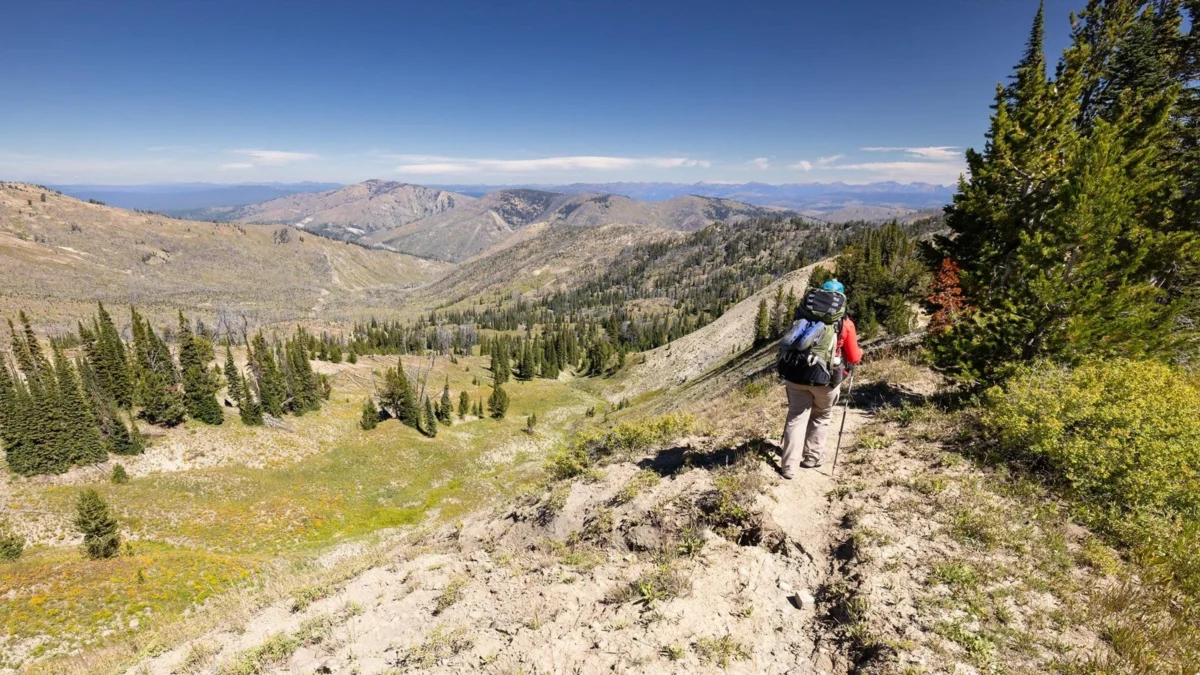
In a testament to the inherent risks and formidable challenges of the American wilderness, Teton County Search and Rescue (TCSAR) successfully extracted two backpackers from the exceptionally remote Hawk’s Rest area this week, following an ordeal that included a grizzly bear encounter, severe dehydration, and exhaustion. The incident, unfolding over two days in one of the Lower 48’s most isolated regions, underscored the critical importance of preparedness, the vital role of backcountry outfitters, and the sophisticated capabilities of modern search and rescue operations.
The dramatic events began to unfold on the evening of Monday, August 24, when an emergency call reached TCSAR dispatchers. The communication originated from a private outfitter camp situated deep within the rugged Teton Wilderness, an area renowned for its pristine natural beauty and profound isolation, approximately 30 miles from the nearest vehicular access point. The outfitters reported that two brothers, both in their early thirties, had stumbled into their camp in a state of extreme distress. Accounts from the scene indicated that the men were visibly exhausted, severely dehydrated, and one exhibited physical signs of a recent confrontation with a grizzly bear, including torn clothing and residual bear spray on his arm.
A Desperate Arrival and Urgent Assessment
The arrival of the two backpackers at the outfitter camp marked a critical turning point in their deteriorating backcountry experience. Having traversed arduous terrain, their physical and mental reserves were depleted. The report of a grizzly bear encounter immediately raised alarm, highlighting the inherent dangers of traveling through prime grizzly habitat. While the specific details of the bear interaction remained somewhat limited, the presence of bear spray residue suggested a direct defensive deployment, indicating a close-range encounter. The fact that one brother’s pants were torn could imply a struggle, a fall during a hasty retreat, or contact during the bear’s proximity.
The outfitter, acting as a crucial first responder in this remote setting, provided immediate aid, offering sustenance in the form of food and water. This initial intervention was vital, stabilizing the two men and preventing their condition from worsening rapidly in the harsh wilderness environment. However, despite their immediate needs being met, the profound remoteness of Hawk’s Rest presented a significant logistical challenge for a rapid evacuation. The terrain, combined with the onset of night, rendered a safe nighttime rescue operation by air or ground practically impossible. After careful assessment and communication with the outfitter, TCSAR made the prudent decision to defer the extraction until first light the following morning, prioritizing the safety of both the distressed individuals and the rescue personnel. This decision, common in backcountry rescue, balances immediate need with operational safety and resource availability.
Morning Complications and a Coordinated Response
As the first rays of dawn broke on Tuesday, August 25, TCSAR mobilized its specialized resources. A helicopter, a vital asset for rapid deployment and extraction in mountainous terrain, was dispatched from their headquarters in Jackson. The plan was to swiftly airlift the two brothers from the outfitter camp and transport them to a medical evaluation facility. However, upon the helicopter’s arrival at the remote camp around 8:00 AM, rescuers were met with an unexpected complication: one of the brothers had, in the interim hours, inexplicably wandered away from the safety of the camp.
This development immediately escalated the complexity of the mission. What was intended to be a straightforward extraction transformed into a search operation. TCSAR personnel on the ground, supported by aerial observation, began organizing a focused search for the missing individual. The decision by one of the backpackers to leave the relative safety of the outfitter camp, particularly after a traumatic event and in a compromised state, underscores the psychological toll that extreme backcountry experiences can exact. Disorientation, shock, or a misguided attempt to self-rescue can lead to decisions that inadvertently heighten risk.
Fortunately, the search proved to be brief. As ground teams were preparing to expand their perimeter, the missing brother reappeared, having hiked back into the camp. His return allowed the rescue operation to proceed as initially planned. Both men were safely loaded onto the TCSAR helicopter and transported back to the TCSAR headquarters in Jackson. Upon arrival, they underwent initial medical evaluations, addressing their dehydration, exhaustion, and any potential injuries or psychological impacts from their ordeal.
Hawk’s Rest: A Realm of Extreme Isolation
The Hawk’s Rest area, where this incident occurred, is not merely remote; it is legendary for its profound isolation and wild character. Situated within the expansive Bridger-Teton National Forest and part of the federally designated Teton Wilderness, it holds the distinction of being arguably the farthest point from any road in the contiguous United States. This designation, often cited as approximately 20-30 miles from the nearest paved or maintained road, makes it a true bastion of untouched wilderness. The area encompasses the headwaters of the Yellowstone River, flowing through a landscape of dense forests, alpine meadows, and rugged mountain passes.
This extreme isolation is precisely what draws experienced backpackers and hunters seeking a quintessential wilderness experience. However, it also amplifies the risks associated with any mishap. Communication is virtually non-existent, emergency services are hours, if not days, away by ground, and the environment is unforgiving. The Teton Wilderness is critical habitat for a diverse array of wildlife, including healthy populations of elk, moose, wolves, and, notably, grizzly bears. Encounters with large predators are a recognized, though relatively rare, possibility for those venturing into these territories. The absence of human infrastructure means that survival skills, robust planning, and reliable gear are not merely advisable but absolutely essential.

The Indispensable Role of Teton County Search and Rescue
Teton County Search and Rescue operates as a critical lifeline in one of the nation’s most challenging recreational landscapes. Comprised primarily of highly trained volunteers, TCSAR is responsible for responding to emergencies across a vast and diverse geographical area, including Grand Teton National Park, Bridger-Teton National Forest, and the surrounding wilderness areas. Their capabilities range from high-angle rope rescues and swift water operations to avalanche responses and wilderness medical emergencies.
The deployment of a helicopter, in this case an A-Star B3, highlights the advanced resources at TCSAR’s disposal. Helicopters drastically reduce response times in vast, roadless areas, allowing rescuers to cover distances in minutes that would take ground teams many hours or even days. This aerial capability is particularly crucial for medical evacuations where time is of the essence or when subjects are in treacherous, inaccessible terrain. The decision-making process for helicopter deployment involves assessing weather conditions, the severity of the incident, the stability of the patient, and the safety of the flight crew. For instance, nighttime flights in rugged, unlit terrain carry significantly higher risks, explaining the decision to wait until daylight for the Hawk’s Rest extraction.
TCSAR missions are costly, funded through a combination of local government support, grants, and public donations. A single helicopter mission can incur costs ranging from several thousand to tens of thousands of dollars, depending on flight time, personnel deployment, and specialized equipment. In 2023 alone, TCSAR responded to over 100 calls for service, reflecting the increasing popularity of outdoor recreation in the region and the inherent risks associated with it. Each mission underscores the immense value of these dedicated professionals and volunteers.
Navigating Grizzly Country: Bear Safety Protocols
The encounter with a grizzly bear is a stark reminder of the realities of recreating in the Greater Yellowstone Ecosystem. Grizzlies, apex predators, require respect and vigilance from human visitors. While attacks are rare, they can be severe. Data from the Interagency Grizzly Bear Committee indicates that surprise encounters, particularly with sows protecting cubs or bears defending a food source, are the most common scenarios leading to defensive attacks.
TCSAR and other wilderness management agencies consistently emphasize several key bear safety protocols:
- Carry Bear Spray and Know How to Use It: Bear spray, a highly concentrated capsaicin-based deterrent, has been proven highly effective in deterring aggressive bears when deployed correctly. It should be readily accessible, not buried in a backpack.
- Make Noise: Announcing one’s presence, especially in areas of dense vegetation or limited visibility, can prevent surprise encounters.
- Travel in Groups: Larger groups are generally perceived as more intimidating to bears, and the collective noise and vigilance reduce the chance of a close encounter.
- Store Food Properly: All food, garbage, and scented items must be stored in bear-resistant containers or hung from trees to prevent bears from becoming habituated to human food sources, which often leads to dangerous conflicts.
- Be Aware of Surroundings: Constantly scanning the environment for signs of bears (tracks, scat, disturbed vegetation) is crucial.
- Avoid Hiking at Dawn and Dusk: These are prime times for bear activity.
The backpackers in this incident demonstrated a crucial aspect of preparedness by carrying and deploying bear spray. While the details of the encounter remain private, its successful deployment likely prevented a more severe outcome, underscoring the efficacy of this non-lethal deterrent.
Backcountry Lessons for Big Country: Implications and Preventative Measures
This rescue serves as a potent case study for the broader implications of backcountry travel in extreme environments. TCSAR, in its post-mission debrief, reiterated two critical lessons for adventurers:
- The Importance of Self-Reliance: In areas as remote as Hawk’s Rest, external help can be hours or days away. Backcountry users must be equipped with the skills, knowledge, and gear to manage emergencies independently for an extended period. This includes first aid training, navigation skills (map and compass, GPS), and the ability to make sound judgments under pressure.
- Communication Planning: While cell service is non-existent in much of the wilderness, satellite communication devices (like satellite phones or two-way satellite messengers) provide a vital link to the outside world for emergencies. These devices allow for precise location reporting and critical communication with rescue agencies, significantly improving response times and reducing search areas.
The incident also highlights the psychological aspects of wilderness survival. The exhaustion, dehydration, and trauma of a bear encounter can severely impair judgment, as evidenced by one brother wandering off. Maintaining mental fortitude and adhering to established safety protocols even when stressed is paramount.
For outfitters operating in these remote zones, their presence provides an invaluable, albeit unofficial, safety net. Their camps often serve as emergency waypoints, offering shelter, sustenance, and communication capabilities that are otherwise unavailable. This informal network of experienced individuals plays a silent yet crucial role in wilderness safety.
As more individuals seek the unparalleled solitude and challenge of America’s wild spaces, the demand for search and rescue services continues to grow. This successful mission from Hawk’s Rest is a testament to the dedication and expertise of Teton County Search and Rescue. It also serves as a critical reminder to all adventurers that the wilderness, while offering profound rewards, demands respect, meticulous preparation, and a keen understanding of its inherent risks. The call to venture deep into "big country" is exhilarating, but it comes with an undeniable responsibility to oneself and to the community that may ultimately be called upon to help.
