

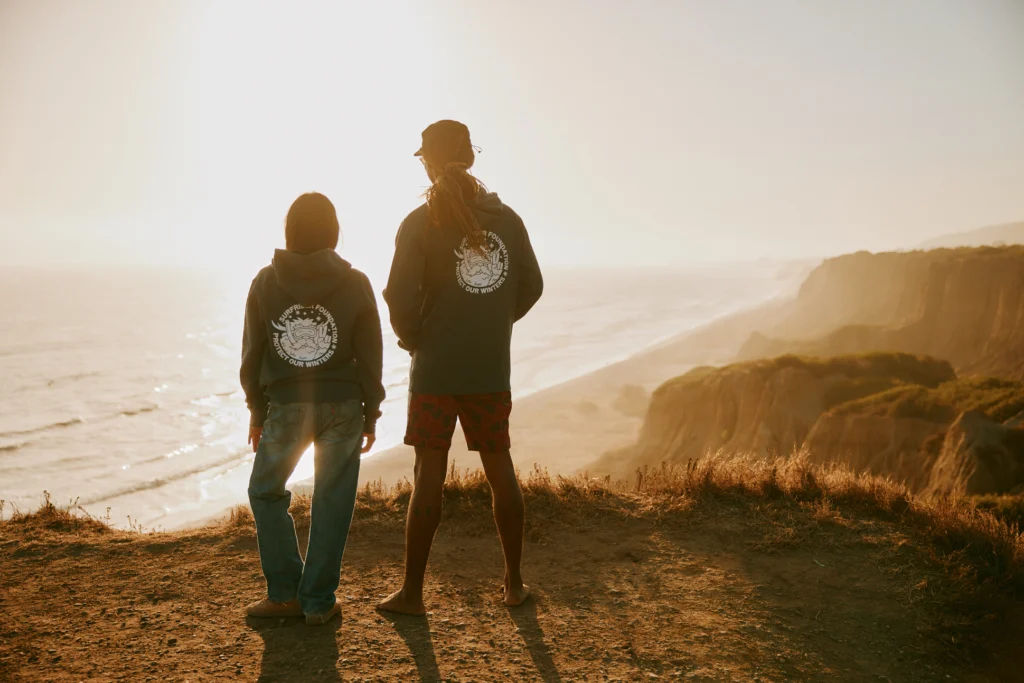
The intersection of environmental conservation and outdoor recreation has reached a new milestone with the announcement of the Ridge to Reef collection, a collaborative initiative between Protect Our Winters (POW) and the Surfrider Foundation. This partnership, centered around the visual storytelling of California-based artist Dominic McLeod of Dom Fish Designs, aims to bridge the cultural gap between mountain and ocean enthusiasts while mobilizing the "Outdoor State" against escalating threats to public lands and waters. By leveraging art as a medium for climate advocacy, the collaboration seeks to address the looming expansion of offshore oil and gas drilling and the broader impacts of the climate crisis on the natural landscapes that define the outdoor experience.
The Ridge to Reef collection is not merely a merchandise launch; it represents a strategic alignment of two of the most influential advocacy groups in the outdoor industry. Protect Our Winters, founded by professional snowboarder Jeremy Jones, has spent nearly two decades mobilizing the winter sports community to influence climate policy. Conversely, the Surfrider Foundation has served as a guardian of the world’s oceans and beaches since 1984. The new initiative highlights the ecological continuity between high-altitude peaks and coastal ecosystems, emphasizing that the degradation of one inevitably affects the other.
The Convergence of Mountain and Maritime Advocacy
The collaboration is rooted in the shared philosophy that the outdoor community must act as a unified front. For many athletes and enthusiasts, the transition between seasons—chasing snow in the winter and swells in the summer—creates a rhythmic connection to the earth’s natural cycles. However, this lifestyle is increasingly threatened by industrial extraction and legislative rollbacks.
According to the Surfrider Foundation, offshore drilling poses a multi-faceted threat to coastal communities. Beyond the immediate risk of catastrophic oil spills, the infrastructure required for offshore extraction—including pipelines, refineries, and storage facilities—leads to the industrialization of pristine coastlines and the destruction of vital wetlands. POW echoes these concerns from a terrestrial perspective, noting that the carbon emissions generated by new fossil fuel projects accelerate the warming trends that are currently decimating global snowpacks and shortening winter seasons.
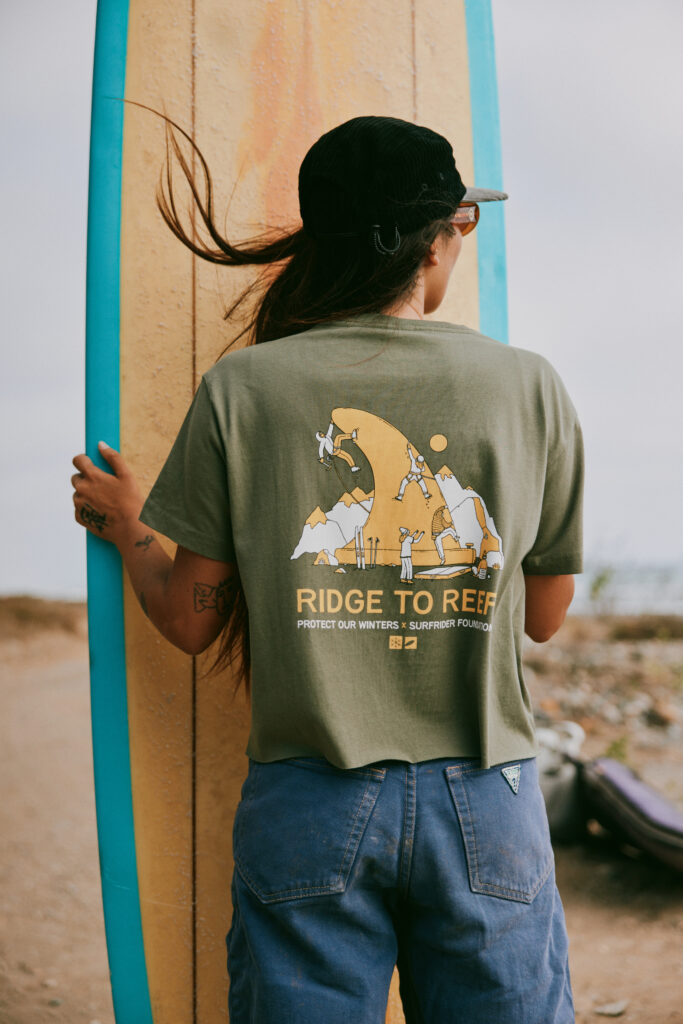
The Ridge to Reef project was born out of a necessity to simplify these complex environmental threats into a compelling narrative. Dominic McLeod was selected for his unique ability to capture the "grit and humor" of outdoor culture. Growing up in Ojai, California, McLeod lived at the geographical nexus of the mountains and the sea, an experience that fundamentally shaped his artistic lens. His work for this collection merges these worlds, utilizing iconography such as surfboard fins intertwined with alpine climbing scenes to visually represent the "cross-pollination" of sports and advocacy.
Chronology of the Collaboration and Creative Evolution
The partnership traces its spiritual roots back to the early 1990s. POW founder Jeremy Jones recalls being a 14-year-old surfer on the shores of Cape Cod, where the sight of Surfrider Foundation stickers on the vehicles of local "elder" surfers served as his first introduction to environmental activism. This early exposure fostered a lifelong commitment to being a "protector, not a plunderer," a mantra that eventually led to the creation of POW in 2007.
The formal development of the Ridge to Reef collection began as an effort to unify the messaging of both organizations ahead of critical legislative windows. The creative process involved several months of collaboration between McLeod and the advocacy teams:

- Discovery and Conceptualization: Initial "discovery calls" were held to align the artistic direction with the specific policy goals of both organizations, focusing on the defense of public lands and the opposition to new offshore drilling leases.
- Moodboarding and Cultural Synthesis: McLeod developed moodboards that captured the "characters" of the outdoor community—the hikers, surfers, and bikers who occupy the "lineup" and the trail.
- Iteration and Digitization: Using a mix of traditional sketching and digital rendering on iPad, McLeod refined designs that could be applied across various mediums while maintaining a consistent message of unity.
- Strategic Launch: The collection was released with a commitment that 100% of sales proceeds would be split between POW and Surfrider to fund their respective advocacy and policy departments.
McLeod’s personal journey also informed the project’s philosophy. A significant ankle injury that sidelined him from surfing for nearly a year forced him to pivot to bikepacking. This transition reinforced his belief that outdoor enthusiasts should not silo themselves into rigid categories. This "cross-pollination" of activities, he argues, is the blueprint for effective climate advocacy.
Supporting Data: The Economic and Ecological Stakes
The push for integrated advocacy is supported by significant economic and environmental data. The outdoor recreation economy is a powerhouse in the United States. According to the 2022 data from the Bureau of Economic Analysis (BEA), the outdoor recreation economy accounted for $1.1 trillion in gross economic output and supported 5 million jobs. This "Outdoor State" represents a demographic that, if unified, possesses the political capital to influence national environmental policy.
However, the landscapes supporting this economy are under siege. Data from the National Oceanic and Atmospheric Administration (NOAA) indicates that sea levels along the U.S. coastline are projected to rise by an average of 10 to 12 inches by 2050. Simultaneously, the U.S. Department of Agriculture (USDA) reports that snowpack levels in the Western United States have declined significantly over the last half-century, with some regions seeing a 20% to 60% reduction.
The threat of offshore drilling remains a central point of contention. The current Five-Year Outer Continental Shelf Oil and Gas Leasing Program has faced intense scrutiny from environmental groups. While some recent plans have limited the number of new leases, advocacy groups argue that any new fossil fuel infrastructure is incompatible with the goal of limiting global warming to 1.5 degrees Celsius. The Ridge to Reef collection aims to fund the legal and grassroots efforts required to oppose these measures.
Official Responses and the Philosophy of "Imperfect Advocacy"
The collaboration has garnered support from various stakeholders within the outdoor industry. Representatives from the Surfrider Foundation emphasize that the partnership allows them to reach a broader audience that may not primarily identify as "ocean activists" but values the health of the planet as a whole.
"We are all part of the same ecosystem," a Surfrider spokesperson noted in a recent briefing. "The water that melts from the peaks Jeremy Jones snowboards on eventually reaches the breaks our members surf. You cannot protect the reef without protecting the ridge."
A key component of the campaign is the promotion of "imperfect advocacy." This concept, championed by McLeod and the leadership at POW, acknowledges the inherent contradictions of modern life. They argue that an individual does not need to lead a carbon-neutral life to be a valid voice for the planet.
"You can drive a gas-powered car to the trailhead and still speak up for the planet," McLeod stated during a sit-down with POW. "Advocacy doesn’t need to be perfect. You just have to be willing to use the skills you have—whether that’s art, science, or community organizing—to contribute to the collective effort."
This pragmatic approach is designed to lower the barrier to entry for environmental activism, encouraging a wider swath of the outdoor community to engage with policy-makers and participate in the democratic process.
Broader Impact and Policy Implications
The Ridge to Reef initiative arrives at a critical juncture for U.S. environmental policy. As the federal government weighs decisions on land use, mineral extraction, and energy production, the "Outdoor State" is increasingly viewed as a swing constituency. By combining the memberships of POW and Surfrider, the collaboration creates a formidable voting bloc capable of demanding more stringent protections for natural resources.
The implications of this movement extend beyond the United States. The "Ridge to Reef" model of conservation—which recognizes the hydrological and biological links between mountains and oceans—is an internationally recognized framework used by organizations like the International Union for Conservation of Nature (IUCN). By popularizing this concept through art and apparel, POW and Surfrider are educating the public on complex ecological principles in an accessible way.
The success of the collection also highlights the growing role of the "creator economy" in social movements. Artists like Dominic McLeod are becoming essential bridge-builders, translating dry policy data into visual stories that resonate on an emotional level. This cultural shift suggests that the future of environmentalism will rely as much on creative expression as it does on scientific research.
Conclusion: A Unified Path Forward
The Ridge to Reef collection serves as a reminder that the boundaries between different outdoor disciplines are largely artificial. Whether on a summit or in a swell, the community is united by a shared dependence on stable climates and healthy ecosystems. As 100% of the proceeds from the collection are funneled into advocacy, the partnership provides a direct mechanism for enthusiasts to transition from consumers to contributors.
In an era defined by political polarization and environmental uncertainty, the collaboration between Dominic McLeod, Protect Our Winters, and the Surfrider Foundation offers a model for collective action. By embracing the "cross-pollination" of sports, art, and advocacy, the initiative seeks to ensure that the wild places defining the outdoor experience remain intact for future generations. The fight to protect these landscapes, from the highest peaks to the deepest reefs, continues to evolve, driven by a community that refuses to remain sidelined in the face of ecological change.
