

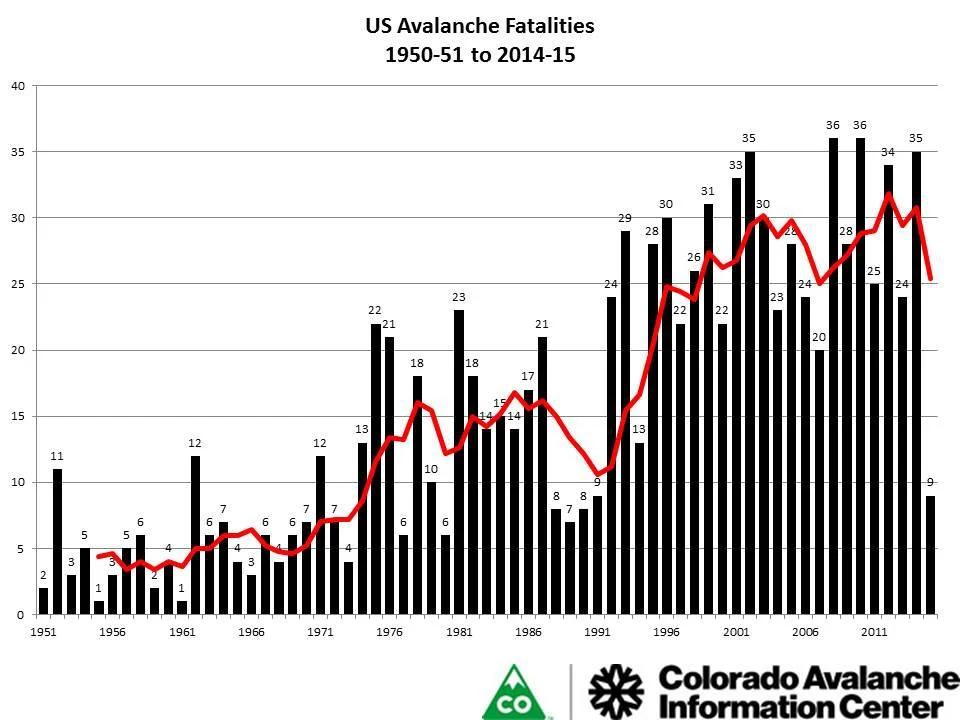
As the 2014-2015 winter recreation season concludes, official data indicates a significant and historic decline in avalanche-related deaths across the United States. According to records maintained by the Colorado Avalanche Information Center (CAIC) and the United States Forest Service, the season recorded a total of nine fatalities as of April 30, 2015. This figure represents the lowest annual death toll attributed to avalanches since 1991, marking a notable departure from the higher mortality rates observed over the last two decades. While experts caution that the avalanche season can extend into the late spring and early summer in high-altitude regions, the current statistics provide a moment of reflection for safety advocates, meteorologists, and backcountry enthusiasts alike.
The sharp decline in fatalities is being attributed to a complex confluence of meteorological conditions and a robust, multi-agency push for public education. While the loss of life is always viewed as a tragedy by the outdoor community, the single-digit fatality count is a stark contrast to the five-year moving average, which typically fluctuates between 25 and 30 deaths per year. This statistical anomaly offers a unique window into how weather patterns and human behavior intersect in the high-risk environments of the American wilderness.
Meteorological Factors and Snowpack Development
A primary driver behind the reduced fatality rate during the 2014-2015 season was the unusual weather distribution across the Western United States. Avalanche activity is intrinsically linked to snowpack structure, which is dictated by temperature fluctuations, wind speeds, and the frequency of precipitation. During this period, the West Coast experienced what meteorologists described as a "poor snow year," characterized by record-low snowpacks in the Sierra Nevada and the Cascade Range. In many areas of California, Oregon, and Washington, the lack of significant accumulation meant that the mechanical stresses required to trigger large-scale slab avalanches were largely absent.
Further inland, the Intermountain West and the Rocky Mountains experienced a different but equally impactful set of conditions. While these regions did receive snowfall, temperatures remained unseasonably warm for much of the winter. In a typical "cold" winter, thin snowpacks can undergo a process known as kinetic growth, leading to the formation of "facets" or "depth hoar"—weak, sugar-like snow crystals that create a precarious foundation for future storms. However, the warmer temperatures of the 2014-2015 season helped to stabilize the snowpack in many areas, preventing the development of these deep persistent weak layers that are often responsible for the most lethal, deep-slab avalanches.
In Colorado, a state that historically leads the nation in avalanche fatalities, the CAIC noted that while there were periods of high danger, the overall stability of the snowpack was higher than in previous "problematic" years. The lack of "monster" storm cycles followed by prolonged cold snaps limited the windows of extreme danger, effectively reducing the probability of accidental triggers by skiers, snowboarders, and snowmobilers.
The Role of Public Education and Forecasting
Beyond the influence of the weather, safety officials credit the rigorous efforts of the United States Forest Service (USFS) avalanche centers and the Colorado Avalanche Information Center for the downward trend in fatalities. Over the past decade, there has been a paradigm shift in how avalanche information is disseminated to the public. The 2014-2015 season saw an unprecedented level of engagement through digital platforms, mobile applications, and community-based workshops.
Organizations such as the American Institute for Avalanche Research and Education (AIARE) and the American Avalanche Association (A3) have standardized curriculum levels, making it easier for recreationists to seek out formal training. The "Know Before You Go" program, a collaborative effort between various regional centers, has also been instrumental in reaching younger demographics and entry-level backcountry users. By simplifying the message—encouraging users to get the gear, get the training, get the forecast, get the picture, and get out of harm’s way—forecasters have successfully lowered the barrier to entry for safety knowledge.
The CAIC, which maintains the national database for avalanche accidents, has been particularly vocal about the importance of real-time data. Spencer Logan, a lead researcher at the CAIC, has emphasized that while the low numbers this year are encouraging, they must be viewed through the lens of long-term trends. The institutional goal remains the decoupling of "participation rates" from "fatality rates." As more people head into the backcountry, the mission is to ensure their safety literacy keeps pace with their physical capabilities.
Historical Trends and the "Backcountry Boom"
To understand the significance of the nine fatalities recorded in 2014-2015, one must look at the historical context of backcountry recreation in America. In 1991, the last time fatalities were this low, the "backcountry" was a niche domain inhabited by a small number of dedicated mountaineers and telemark skiers. Since then, the industry has undergone a massive expansion. Technological advancements in equipment—such as lightweight "tech" bindings, splitboards, and high-performance snowmobiles—have allowed a much broader segment of the population to access steep, avalanche-prone terrain.
Industry data suggests that backcountry use has skyrocketed by several hundred percent over the last 15 years. Retailers have reported record sales of climbing skins, beacons, probes, and shovels. Despite this massive influx of people into the mountains, the five-year moving average for fatalities has remained remarkably stable, holding between 25 and 30.
The fact that the fatality rate has not risen in proportion to the number of users suggests that education and forecasting are working. If the fatality rate had tracked with participation growth, the U.S. could theoretically be seeing 60 to 100 deaths per year. The 2014-2015 season’s record low of nine deaths is a significant outlier that reinforces the efficacy of the current safety infrastructure, even when accounting for the "helping hand" provided by a milder winter.
Regional Breakdown and Significant Incidents
While the national total was low, the incidents that did occur serve as a sobering reminder of the inherent risks of mountain travel. The fatalities were distributed across several states, involving a mix of activities including skiing, snowmobiling, and climbing.
- The Rocky Mountains: Colorado and Utah, traditionally high-risk areas due to their continental snowpacks, saw fewer incidents than average. However, the CAIC continued to report numerous "close calls" where individuals were caught or buried but survived due to successful companion rescues.
- The Pacific Northwest: Despite the low snowpack, the maritime regions were not immune. In these areas, "wet slides" caused by rapid warming or rain-on-snow events became the primary concern toward the end of the season.
- The Northeast: While often overlooked in national statistics, the Presidential Range in New Hampshire saw its usual high volume of traffic. The Mount Washington Avalanche Center remained active in managing the risks associated with the unique "blue ice" and wind-loaded ravines of the region.
Official responses to the season’s data have been cautious. In statements released by regional avalanche centers, forecasters have been quick to remind the public that "low numbers do not mean low risk." The 2014-2015 season serves as a "best-case scenario" regarding the intersection of weather and human behavior, but officials warn against complacency in future seasons where the snowpack may be more volatile.
Technological Advancements and Survival Rates
Another factor contributing to the stabilization of fatality numbers is the advancement of rescue technology. The 2014-2015 season saw an increased prevalence of Avalanche Airbag Packs among backcountry users. These devices, designed to keep a victim on the surface of a moving slide through the principle of inverse segregation, have been credited with saving lives in several non-fatal incidents this year.
Furthermore, the refinement of Avalanche Transceivers (beacons) has made companion rescue faster and more intuitive. Modern three-antenna beacons with digital displays have significantly reduced the "search time" during a burial. Since the window for a successful rescue is typically less than 15 minutes, these seconds and minutes saved are the difference between life and death. The "nine fatalities" figure might have been higher if not for the successful interventions of well-equipped and well-trained partners who were able to extract buried companions before they succumbed to asphyxiation.
Broader Implications and Future Outlook
The data from the 2014-2015 season will be utilized by researchers to further refine avalanche forecasting models. The CAIC and the USFS will continue to analyze the relationship between the "Ridiculously Resilient Ridge" (the high-pressure system responsible for the West Coast drought) and its impact on snow stability.
From a policy and management perspective, the low fatality count reinforces the value of funding for public avalanche centers. These centers operate on relatively lean budgets, often relying on a mix of federal funding, state grants, and private donations. The success of this season provides a powerful argument for the continued support of these programs, which provide a critical public safety service that protects not only recreationists but also transportation corridors and infrastructure.
As the industry looks toward the 2015-2016 season, the focus remains on maintaining the momentum of education. The 2014-2015 season proved that a combination of favorable weather and informed decision-making can lead to a safer mountain experience. However, the avalanche community is well aware that the mountains are indifferent to statistics. Each new winter brings a blank slate and a new set of challenges. The goal for the coming years is to ensure that even when the snow returns in abundance and the "persistent weak layers" reappear, the lessons learned during this record-low season continue to guide backcountry travelers toward safer horizons.
In summary, the nine fatalities of the 2014-2015 season represent a historic low that reflects both a unique climatic year and a maturing culture of safety within the outdoor community. While the numbers are encouraging, they serve as a benchmark for what is possible when education, technology, and environmental factors align. The challenge for the future will be to maintain these low numbers as participation continues to grow and as weather patterns become increasingly unpredictable in a changing global climate.
