

The instructional strategy known as mirroring, defined as copying another person with the explicit intention of understanding their actions and underlying motivations, is increasingly recognized as a best practice in teaching and learning, particularly within the dynamic environment of snowsports. This approach, which has deep evolutionary roots, facilitates empathy, builds trust, and accelerates skill acquisition, challenging conventional teaching paradigms and fostering a more connected learning experience.
The Foundational Science of Observational Learning
The human capacity to learn through imitation and observation is not merely a pedagogical technique but a deeply ingrained biological imperative, honed over millions of years of evolution. At its core lies motor resonance, a foundational neurological capability that allows individuals to match observed actions. This capacity, present in many vertebrates for over 100 million years, is evident in phenomena such as canine packs synchronizing their movements during a chase or young songbirds acquiring their vocalizations by mimicking their parents. These examples underscore a primitive, yet powerful, mechanism for skill transfer and social cohesion.
Among primates, this basic motor resonance evolved into more sophisticated observational learning tens of millions of years ago. Chimpanzees exhibit complex tool use like termite fishing, learned through observation, while bonobos develop intricate social greetings and engage in chasing games by watching and imitating their peers. This marked a significant leap in learning complexity, moving beyond simple motor matching to understanding sequences of actions and their contextual relevance.
The pinnacle of this evolutionary trajectory likely emerged within our genus, Homo, with the development of intentional teaching. The creation of highly complex stone tools, such as Acheulean hand-axes, suggests that mere observation was insufficient for skill transmission. These advanced technologies necessitated purposeful demonstration, guided practice, and explicit instruction—true teaching—to ensure the precise replication of intricate manufacturing processes. This co-evolution of complex tool-making and intentional teaching laid the groundwork for the advanced instructional methods we employ today.
Modern psychological theories, such as Albert Bandura’s Social Learning Theory, are deeply compatible with these evolutionary insights. Bandura’s work, which posits that learning occurs in a social context through observation, imitation, and modeling, can be viewed as a modern psychological framework built upon these ancient, biological mechanisms. His emphasis on observational learning, self-efficacy, and vicarious reinforcement provides a comprehensive model for how individuals acquire new behaviors and knowledge by observing others, a concept inherently aligned with the practice of mirroring.
Interski 2023: A Global Stage for Innovation
The global snowsports instruction community converges biennially at Interski, a premier international congress that serves as a vital platform for sharing best practices, innovative methodologies, and cutting-edge research. In 2023, this prestigious event took place in Levi, Finland, a renowned ski resort nestled in the heart of Finnish Lapland. Levi, known for its challenging slopes and commitment to snowsports development, provided an ideal backdrop for the exchange of ideas among instructors, coaches, and researchers from around the world.
One of the standout presentations at Interski 2023 involved two highly impactful sessions led by the Czech Republic National Team, focusing on brain-based learning. This educational paradigm, grounded in contemporary neuroscience, tailors instructional strategies to align with how the human brain naturally processes, stores, and retrieves information. The Czech team’s sessions aimed to demonstrate how an understanding of brain function could optimize learning outcomes in snowsports.
The on-snow component of the Czech presentation brought together approximately 40 international snowsports professionals. Participants were instructed to form a circle and, without verbal communication, identify a partner through eye contact alone. The initial moments were characterized by an "awkward silence with uncomfortable, darting eyes," as described by Angelo Ross of the Eastern Alpine and Children’s Examiner, a participant in the session. However, within a minute, connections were forged through subtle non-verbal cues, and partnerships solidified. This initial exercise, deceptively simple, underscored the power of non-verbal communication and instinctive social bonding.
Ross found himself paired with Angela Cesnik from the Australian National Team (APSI), an organization recognized globally for its high standards in snowsports instruction. After a brief introduction, they were instructed to stand face-to-face, about two feet apart, and, again silently, determine who would lead an upcoming activity. Remarkably, without a single spoken word, Angela assumed the role of leader.
The leaders were then tasked with performing a 60-second pantomime of their morning bathroom routine. Followers were instructed to reproduce these movements exactly, functioning as a literal reflection in a mirror. This required complex coordination, as followers had to mirror opposite limbs and directions: if the leader used their right hand, the follower used their left; if the leader turned left, the follower turned right. The exercise was not only "comical to say the least" but profoundly insightful, as 40 strangers engaged in a synchronized, silent portrayal of personal daily rituals. Participants reported giggling as they navigated the boundaries of personal expression, yet critically, they "connected" on a deeper level. This initial reflective mirroring exercise, designed to break down barriers and foster rapid intimacy, was a testament to the strategy’s effectiveness in building rapport.
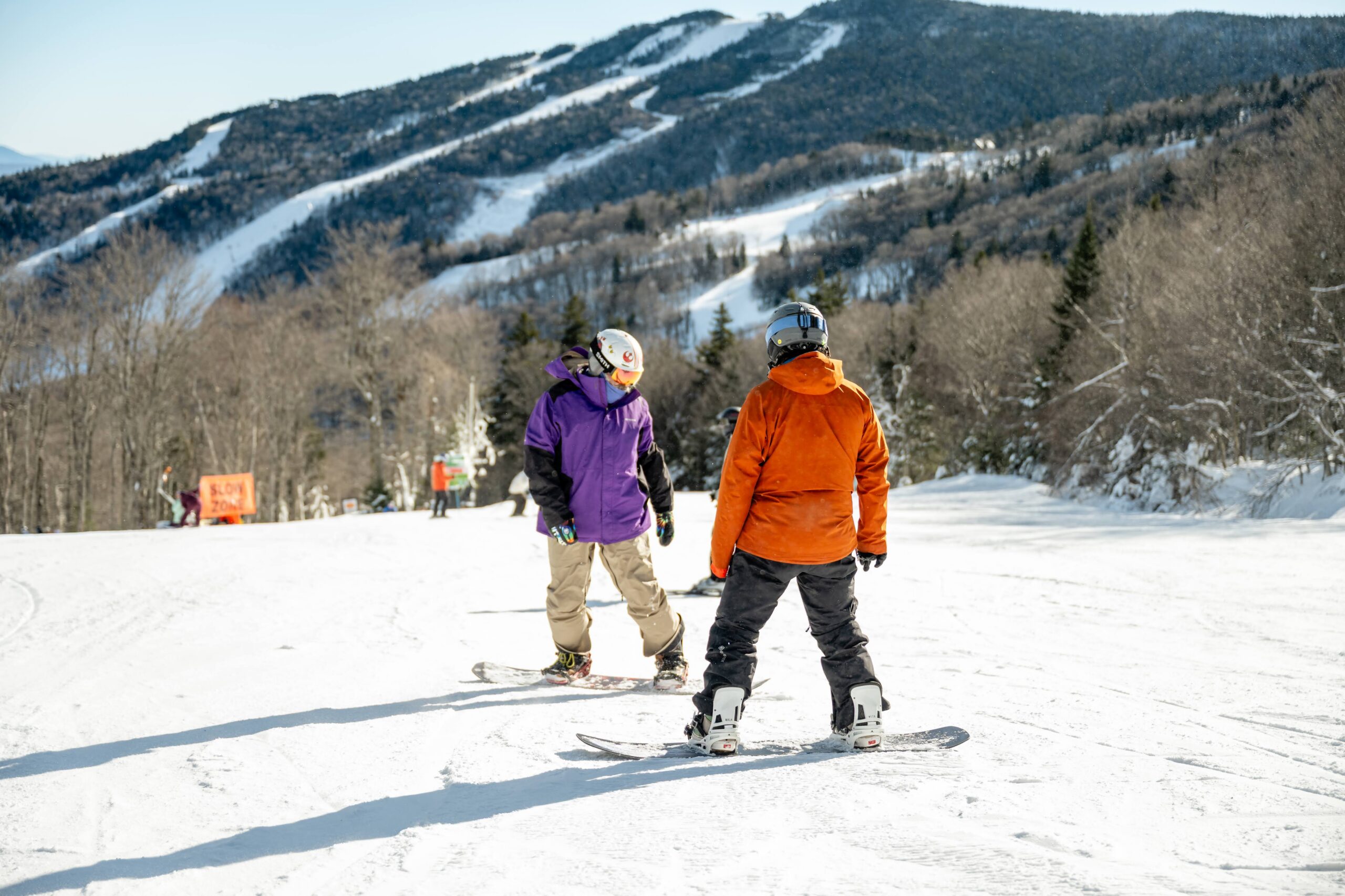
Following this, partners switched roles, allowing both individuals to experience leading and following. Ross noted the profound impact of this simple yet powerful icebreaker, highlighting how quickly strangers from vastly different geographical locations could establish rapport and superficial understanding through non-verbal cues and synchronized movement.
From Reflection to Tandem: Mirroring on the Slopes
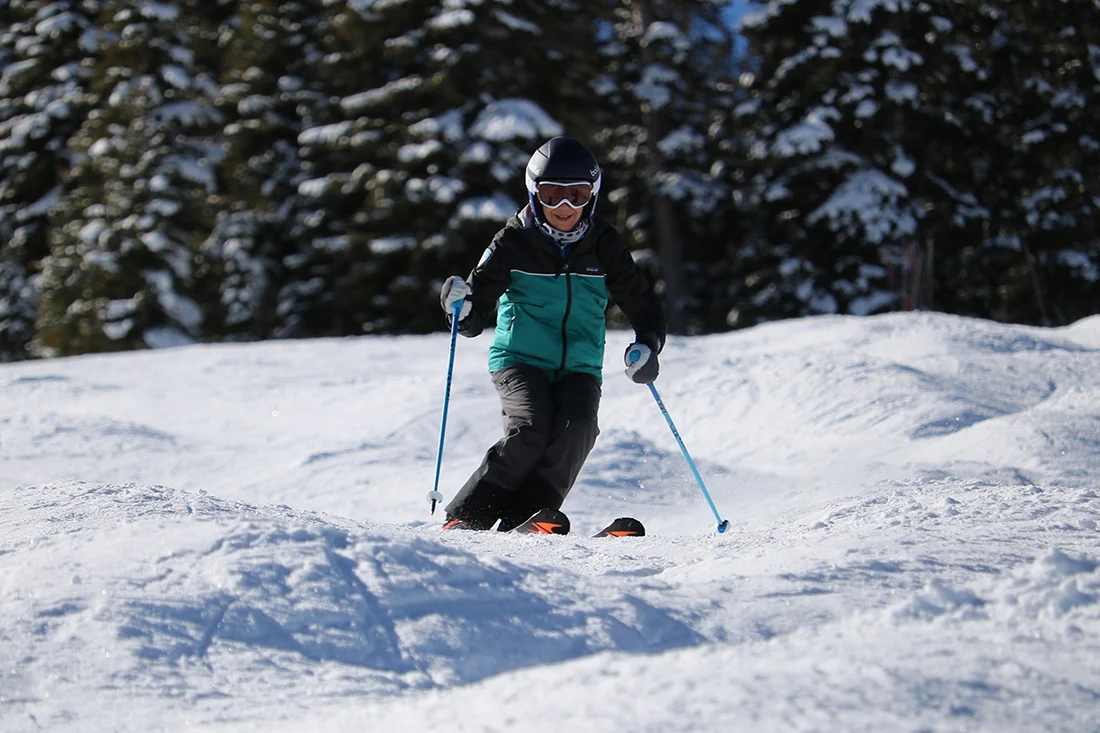
The session progressed to an on-snow application of mirroring, shifting from "reflective mirroring" to "tandem mirroring." In this phase, partners skied in the same direction, with the original leader performing predictable medium-radius turns, and the follower positioned closely behind, meticulously copying every aspect of the leader’s movement—limb placement, pole action, helmet orientation, and ski movements.
At a predetermined stopping point, the follower articulated how mirroring their partner altered their technical performance and perception of their own skiing. This reflective component was crucial for translating observed actions into conscious technical understanding. The roles then reversed for the remainder of the run. During the subsequent lift ride, Ross and Cesnik engaged in a detailed discussion, comparing their techniques, analyzing performance impacts, exchanging insights into PSIA-AASI and APSI values, and even touching upon global politics. This interaction demonstrated the high-impact nature of the experience, fostering deep learning and professional exchange within a remarkably short timeframe.
The afternoon indoor session provided the scientific underpinning for the on-snow experience. Czech researchers presented the brain-based science behind their methodology, explaining why mirroring is so effective. Their findings, consistent with broader neurological research, highlighted mirroring’s demonstrable ability to facilitate trust, cultivate empathy, and deepen understanding between individuals. This scientific validation reinforced the experiential learning from the slopes.
The Enduring Wisdom of Master Instructors
The principles of mirroring are not new; they are often instinctively employed by master instructors who possess a deep intuitive understanding of student learning. A prime example is Ellen Post Foster, a towering figure in American skiing whose impact on the sport and the Professional Ski Instructors of America and American Association of Snowboard Instructors (PSIA-AASI) is immeasurable. Her illustrious career includes the 1973 Junior National Champion of Exhibition Skiing, multiple international freestyle titles in 1975, and an alumna of the 1980 and 1984 PSIA National Demonstration Teams. A U.S. Ski & Snowboard Hall of Famer (Class of 2016) and Colorado Snowsports Museum Hall of Famer (2021), Foster is also a prolific snowsports author, including co-authoring the current Teaching Snowsports Manual.
Skiing with Ellen Post Foster often reveals her subtle yet profound instructional methods. Ross recounts instances where Foster would seemingly vanish while skiing, only to reappear at the lift, explaining she had been intentionally skiing behind him to "understand [his] skiing." After gaining permission, she would then offer precise, actionable feedback based on her observations—insights that Ross still endeavors to integrate into his own technique. This practice exemplifies mirroring not just as a student exercise but as a powerful diagnostic tool for instructors. By literally walking (or skiing) in a student’s boots, an instructor gains unparalleled insight into their movement patterns, challenges, and perceptions.
Foster’s deep understanding of mirroring’s value for instructors is clearly reflected in the Teaching Snowsports Manual, where "following students" is explicitly cited as a crucial teaching skill. This underscores that effective instruction transcends mere demonstration; it requires a profound understanding of the student’s embodied experience, which mirroring uniquely provides.
Mirroring in Modern Practice and Its Broader Implications
Since attending Interski Levi, Angelo Ross has successfully integrated mirroring into his own instructional design, creating impactful learning environments across various snowsports contexts. In November, during the Rocky Mountain Telemark Education Staff Training, he adapted the Czech methodology, commencing with an indoor session designed to build rapid connection and trust between paired partners, followed by an outdoor session demanding careful observation and honest feedback.
The efficacy of this approach was further demonstrated in December at the Outdoor Emergency Transportation Conference at Killington, Vermont, where Ross utilized a modified on-snow version with a group of National Ski Patrol leaders. This session aimed to facilitate partner observation and subsequent discussions on the applicability of diverse movement patterns in varying circumstances. Feedback from both events was overwhelmingly positive, consistently highlighting themes of "connecting quickly," "developing trust," and "deep learning." These testimonials underscore the practical benefits of mirroring in fostering rapid rapport and enhancing the depth of instructional outcomes.
The implications of integrating mirroring more broadly into snowsports instruction are significant and far-reaching:
- Enhanced Student Understanding and Performance: When instructors mirror students, they gain critical insights into the student’s physical and cognitive approach to the sport. This allows for more targeted, empathetic, and effective feedback. Conversely, when students mirror their instructor, it promotes clearer communication, builds trust, and directly contributes to their skill development and understanding of desired movements.
- Challenging the "One-Right-Way" Mentality: Mirroring peers in synchronized skiing or riding activities can be an enjoyable and highly educational experience. It provides concrete evidence of the value of varied movement patterns, sharpening the observational eye and actively working against the persistent "one-right-way" mentality that can sometimes limit instructional innovation within professional associations. It encourages an appreciation for diverse, yet effective, technical solutions.
- Increased Engagement and Camaraderie: Incorporating mirroring as a nuanced element within common "Follow Me" activities can significantly boost student interest and engagement. By empowering students to take turns leading and mirroring, it fosters a sense of ownership, builds group camaraderie, and transforms routine drills into dynamic games, explorations of movement patterns, and empirical experiments—all hallmarks of best practices in teaching and learning, and aligned with PSIA-AASI fundamentals.
- Professional Development for Instructors: For instructors, practicing mirroring enhances their observational skills, improves their ability to diagnose technical issues, and deepens their empathy for the student experience. It encourages a shift from simply demonstrating to truly understanding the student’s perspective, leading to more adaptive and effective teaching strategies.
In conclusion, mirroring is far more than a simple trick; it is a time-tested, research-backed strategy woven into the very fabric of human evolution and learning. Its deliberate application in snowsports instruction offers a powerful pathway for both instructors and students to evolve their understanding, refine their performance, and enrich the teaching and learning experience. By leveraging this ancient capacity for connection and imitation, the snowsports community can foster more empathetic, effective, and profoundly engaging educational environments.
