

The winter of 1994/95 marked a distinct era in North American backcountry recreation. The landscape of avalanche forecasting was nascent, with established centers in Denver (Knox Williams), Utah (Bruce Tremper), and Seattle (Mark Moore) leading the charge. Jackson Hole had Jim Kanzler at its helm, while Brad Ray managed operations at Mount Washington. In Bozeman, a fledgling avalanche center, initiated by the author, was entering its fifth year of operation. Notably, significant backcountry regions like the Chugach, Tahoe, and Mt. Shasta lacked dedicated avalanche centers. The equipment favored by backcountry enthusiasts was predominantly telemark gear, often including traditional leather boots, a far cry from today’s lightweight, high-performance alpine touring (AT) setups. Snowmobiles of that era were significantly less powerful and more cumbersome than their modern counterparts. Ski areas largely operated with strict in-bounds policies, and the concept of "sidecountry" access remained largely undefined in public discourse for more than a decade. Furthermore, the internet was in its infancy, with the first avalanche advisories only beginning to appear online at the close of that very season.
In this dramatically transformed environment, a surprising statistical reality has emerged: the annual number of avalanche fatalities in the United States has remained remarkably stable since that 1994/95 winter. Over the subsequent 22 seasons, despite advancements like smartphones, ubiquitous social media, ultralight AT gear, significantly more powerful snowmobiles, and an undeniable explosion in backcountry user numbers, the total number of seasonal U.S. avalanche fatalities has not seen a statistically significant increase. This stability is further underscored by data indicating that snowmobile avalanche fatalities have also remained flat over the same period. While there is some statistical evidence suggesting a slight upward trend in backcountry skier and snowboarder fatalities, the overall picture is one of remarkable consistency in the face of unprecedented growth.
Decades of Backcountry Boom: A Statistical Anomaly
The period between the winter of 1994/95 and the 2015/16 season, a span of 22 years, witnessed a profound shift in outdoor recreation patterns. The allure of untracked powder and remote wilderness experiences has drawn an exponentially larger number of individuals into the backcountry. This surge in participation, however, has not been mirrored by a corresponding rise in avalanche-related deaths.
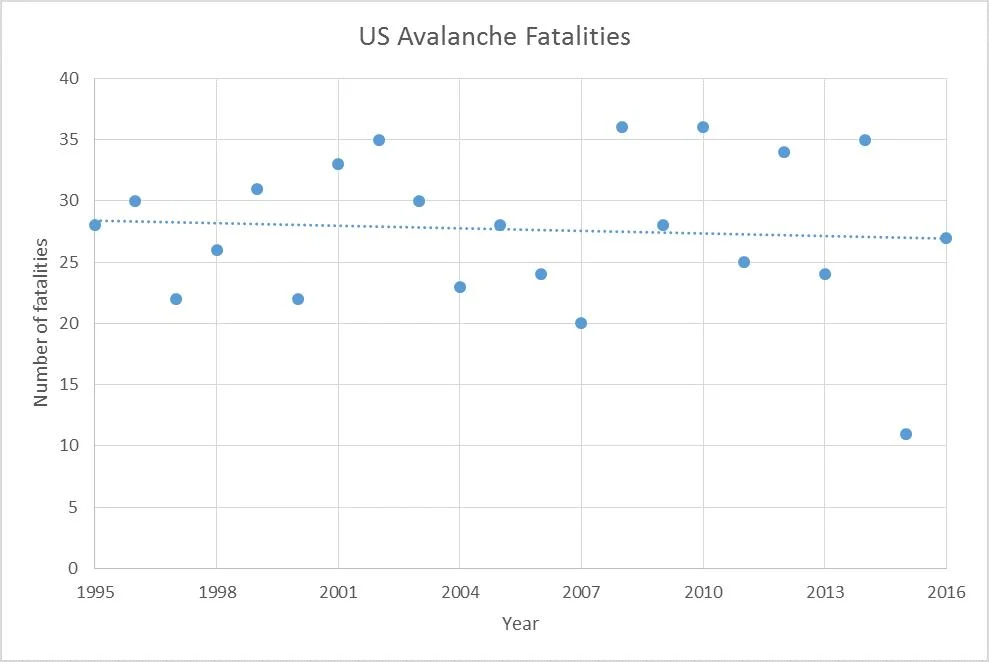
Figure 1: U.S. Avalanche Fatalities (1994/95 – 2015/16)
Analysis of historical data, primarily compiled by entities like the Colorado Avalanche Information Center (CAIC), reveals a consistent number of U.S. avalanche fatalities per season. As depicted in Figure 1, the trend line, though showing a slight decrease, is not statistically significant (p = 0.7). This indicates that, based on the available data, there is no statistically demonstrable change in the overall number of avalanche fatalities over this 22-year timeframe.
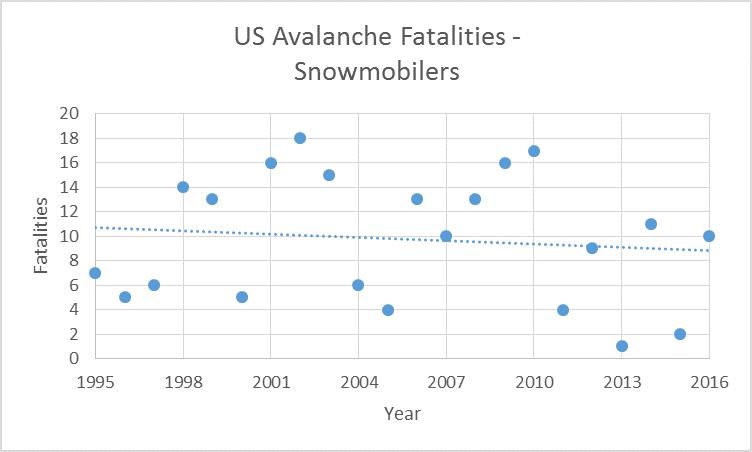
Figure 2: Snowmobile Avalanche Fatalities (1994/95 – 2015/16)
The safety record for snowmobile users in avalanche terrain has also shown a similar stability. Figure 2 illustrates that the number of snowmobile avalanche fatalities has remained relatively constant throughout the observed period. The statistical trend for this group, much like the overall fatality rate, is not statistically significant (p = 0.6), suggesting that advancements in snowmobile technology and increased access have not led to a higher incidence of fatal avalanche encounters for this user group.
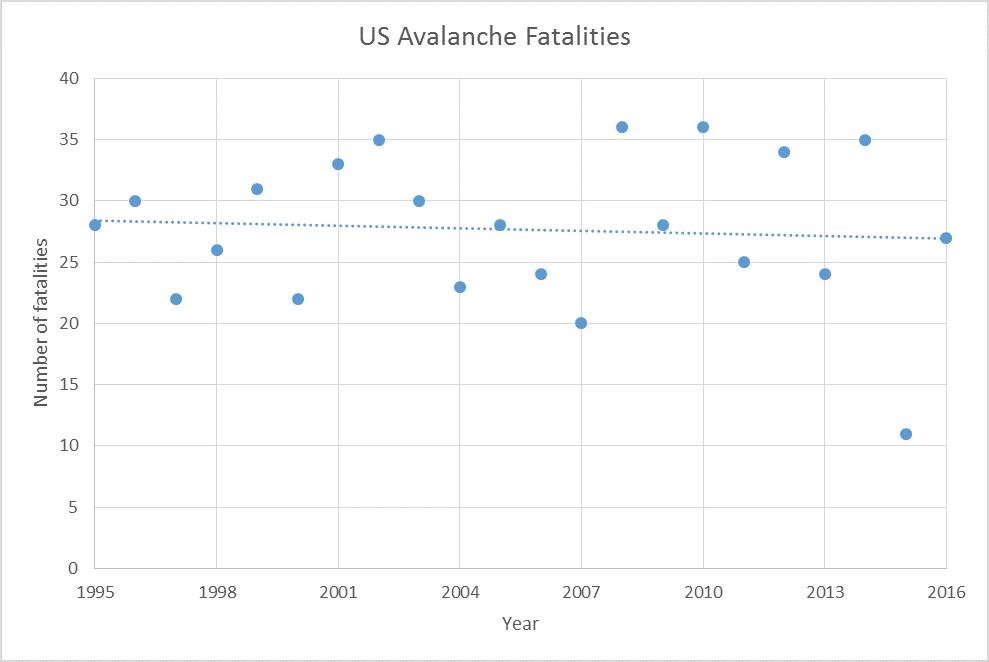
Figure 3: Backcountry Skier and Snowboarder Avalanche Fatalities (1994/95 – 2015/16)
While the overall trend remains flat, a more granular examination of specific user groups reveals a nuanced picture. Figure 3, which tracks backcountry skier and snowboarder avalanche fatalities, shows a relatively flat trend. However, there is some statistical evidence (p = 0.07) that suggests a slight increase in fatalities within this demographic. This finding warrants further investigation and highlights the importance of targeted safety initiatives for these growing user groups.
Quantifying the Unquantifiable: The Rise in Backcountry Use
The notion of a "flat line" in fatalities would be less remarkable if backcountry usage had remained static. However, anecdotal evidence and proxy data strongly suggest the opposite. Anyone who has spent time in the backcountry over the past two decades can attest to a dramatic increase in the number of people venturing into avalanche terrain. While precise, comprehensive data on dispersed winter recreation is inherently challenging to obtain, avalanche advisory usage serves as a valuable, albeit imperfect, indicator of this trend.
Over the 22 seasons from 1994/95 to 2015/16, avalanche centers across the country have reported staggering increases in public engagement with their advisories:
- Utah Avalanche Center: A 12-fold increase in advisory usage.
- Colorado Avalanche Information Center (CAIC): A 17-fold increase.
- Gallatin National Forest Avalanche Center: A remarkable 36-fold increase.
- Northwest Avalanche Center: An astonishing 60-fold increase.
While these figures are undoubtedly influenced by the ease of digital access to information through the internet and mobile devices, they unequivocally point to a significantly larger population venturing into avalanche-prone areas.
The Dramatic Decline in Fatality Rate
When the substantial increase in backcountry use is considered alongside the stable number of fatalities, the implication for the overall fatality rate is profound. Assuming a conservative estimate of an eight-fold increase in backcountry use over the past 22 years, and combining this with the flat trend in avalanche fatalities, the fatality rate per backcountry user day has plummeted dramatically. This analysis suggests that the fatality rate has decreased by at least a factor of eight, and likely more, over the past two decades.
To illustrate the significance of this achievement, consider the counterfactual: if the fatality rate had remained constant while user numbers increased eightfold, the United States could have potentially seen well over 200 avalanche fatalities per winter season. The current stable numbers, therefore, represent a substantial public safety success.
A Collective Triumph: Acknowledging the Contributors to Safety
The sustained stability in U.S. avalanche fatalities, particularly in the face of unprecedented growth in backcountry recreation, is a significant accomplishment that deserves recognition. This success is not attributable to a single factor but rather to the cumulative efforts of various stakeholders within the avalanche safety community.
The Crucial Role of Avalanche Education
The bedrock of this achievement lies in the expansion and maturation of avalanche education programs. From professional certification courses offered by organizations like the American Institute for Avalanche Research and Education (AIARE) and the National Avalanche School, to the widespread adoption of awareness programs like "Know Before You Go," the level of public knowledge and preparedness has risen dramatically. These initiatives equip individuals with the fundamental understanding of avalanche hazards, risk assessment, and safe travel practices, empowering them to make informed decisions in the backcountry.
Guiding Operations and Ski Area Partnerships
Backcountry guiding services and ski area operations have also played a vital role. Responsible guiding outfits prioritize client safety through rigorous risk management, expert decision-making, and continuous education. Similarly, many ski resorts have actively engaged in educating their patrons about the risks associated with venturing beyond resort boundaries, fostering a culture of safety that extends into the adjacent backcountry.
Innovation in Avalanche Safety Equipment
The evolution of avalanche safety equipment has been a critical enabler of safer backcountry travel. Manufacturers have invested heavily in research and development, resulting in a suite of advanced tools:
- Avalanche Transceivers (Beacons): Modern transceivers are lighter, more powerful, and feature improved user interfaces, significantly enhancing search and rescue capabilities.
- Avalungs: These devices, integrated into backpacks, provide a vital air supply for buried avalanche victims, offering a crucial lifeline in the immediate aftermath of a burial.
- Lightweight Helmets: Increased adoption of helmets has reduced the incidence of head trauma in avalanche accidents and other backcountry incidents.
- Avalanche Airbag Packs: The proliferation of airbag systems has proven effective in reducing burial depth and improving survival rates in avalanches.
These technological advancements, combined with user education on their proper deployment and limitations, have demonstrably contributed to improved outcomes.
The Indispensable Network of Avalanche Centers
The regional avalanche center network, a testament to collaborative efforts between federal agencies, state governments, and non-profit organizations, has been instrumental in disseminating critical safety information. These centers provide daily avalanche forecasts, hazard assessments, and educational resources tailored to specific geographic areas. The dramatic increase in advisory usage, as detailed earlier, underscores the public’s reliance on and engagement with these vital information hubs. The ability to access current, reliable avalanche data has fundamentally changed how individuals approach backcountry travel.
Looking Ahead: The Pursuit of Zero Fatalities
While the current data paints a picture of success, the pursuit of absolute safety in avalanche terrain remains an ongoing commitment. The avalanche community will continue to strive to push the number of fatalities towards zero. This will involve ongoing research into avalanche dynamics, the refinement of forecasting techniques, the development of new safety technologies, and a sustained emphasis on comprehensive and accessible avalanche education.
The stable trend in U.S. avalanche fatalities, particularly when contrasted with the explosive growth in backcountry participation, represents a significant public safety success story. It is a testament to the effectiveness of the integrated approach to avalanche safety, encompassing education, equipment innovation, responsible recreational practices, and the vital work of our regional avalanche centers. This achievement should instill a sense of pride within the entire community dedicated to making backcountry adventures safer for all.
The data for this analysis was generously provided by the Colorado Avalanche Information Center (CAIC). The entire avalanche community owes a profound debt of gratitude to the CAIC, its dedicated personnel who meticulously compile this crucial data, and to all individuals who report and document avalanche accidents. Their contributions are invaluable, allowing the rest of us to learn from past events and improve future safety measures. Special thanks are also extended to Simon Trautman, Doug Chabot, and Spencer Logan for their constructive reviews and insightful feedback, which have greatly enhanced the clarity and accuracy of this report.
