

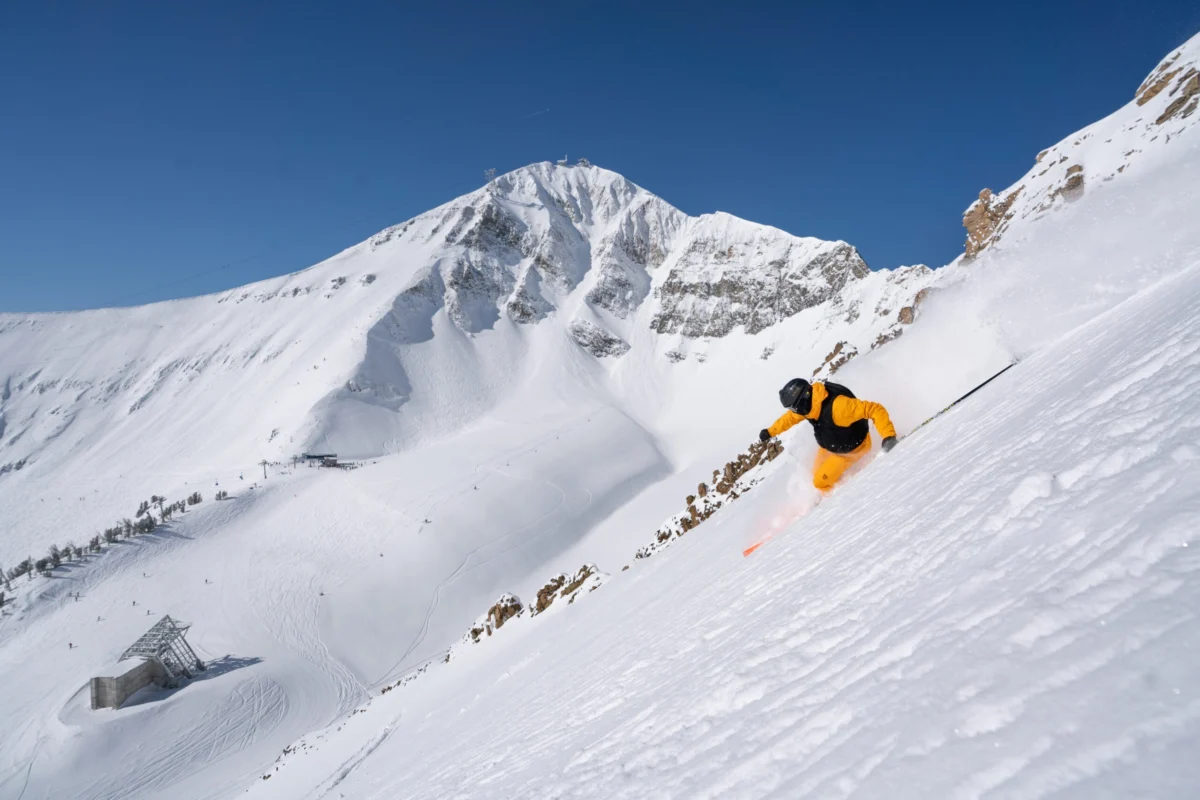
The landscape of North American alpine sports is undergoing a subtle but significant shift in how terrain difficulty is communicated to the public. For decades, the hierarchy of ski trail ratings remained a fixed trinity: the green circle for beginners, the blue square for intermediates, and the black diamond for experts. In the 1980s, the double black diamond was introduced to distinguish truly treacherous slopes from standard expert runs. However, as equipment technology has advanced and the appetite for "extreme" skiing has moved from the fringes of backcountry films into the mainstream resort experience, a new designation has emerged to mark the absolute limit of in-bounds terrain: the triple black diamond. This rating is not merely a marketing tool; it represents a critical evolution in safety communication, designed to warn skiers of high-consequence environments where a fall could lead to serious injury or death.
The Origins and Standardization of Trail Ratings
To understand the emergence of the triple black diamond, one must first look at the history of the National Ski Areas Association (NSAA) marking system. Established in the late 1960s, the uniform sign system was designed to provide a quick visual shorthand for guests. Crucially, these ratings have always been relative. A "blue square" at a small hill in the Midwest is not equivalent to a "blue square" at a high-altitude resort in the Rockies. Instead, the symbols rank the difficulty of trails within a specific mountain’s boundaries.
As skiing evolved through the 1990s and early 2000s, resorts began incorporating more "extreme" terrain—cliffs, chutes, and dense glades—that had previously been out-of-bounds or "permanent closures." With the advent of wider, rockered skis that allowed average experts to navigate deeper snow and steeper pitches, ski patrols and resort managements found it necessary to create a new tier of warning. The triple black diamond is the latest iteration of this effort to manage guest expectations and safety in increasingly rugged terrain.
Big Sky Resort: A Case Study in High-Consequence Terrain
The most prominent adoption of the triple black diamond occurred at Big Sky Resort in Montana. In 2019, the resort overhauled its trail map, reclassifying nearly every run accessed from the summit of the 11,166-foot Lone Peak. This move was not an attempt to claim the mountain had become harder overnight, but rather a strategic decision to better communicate the risks inherent to the high-alpine environment.
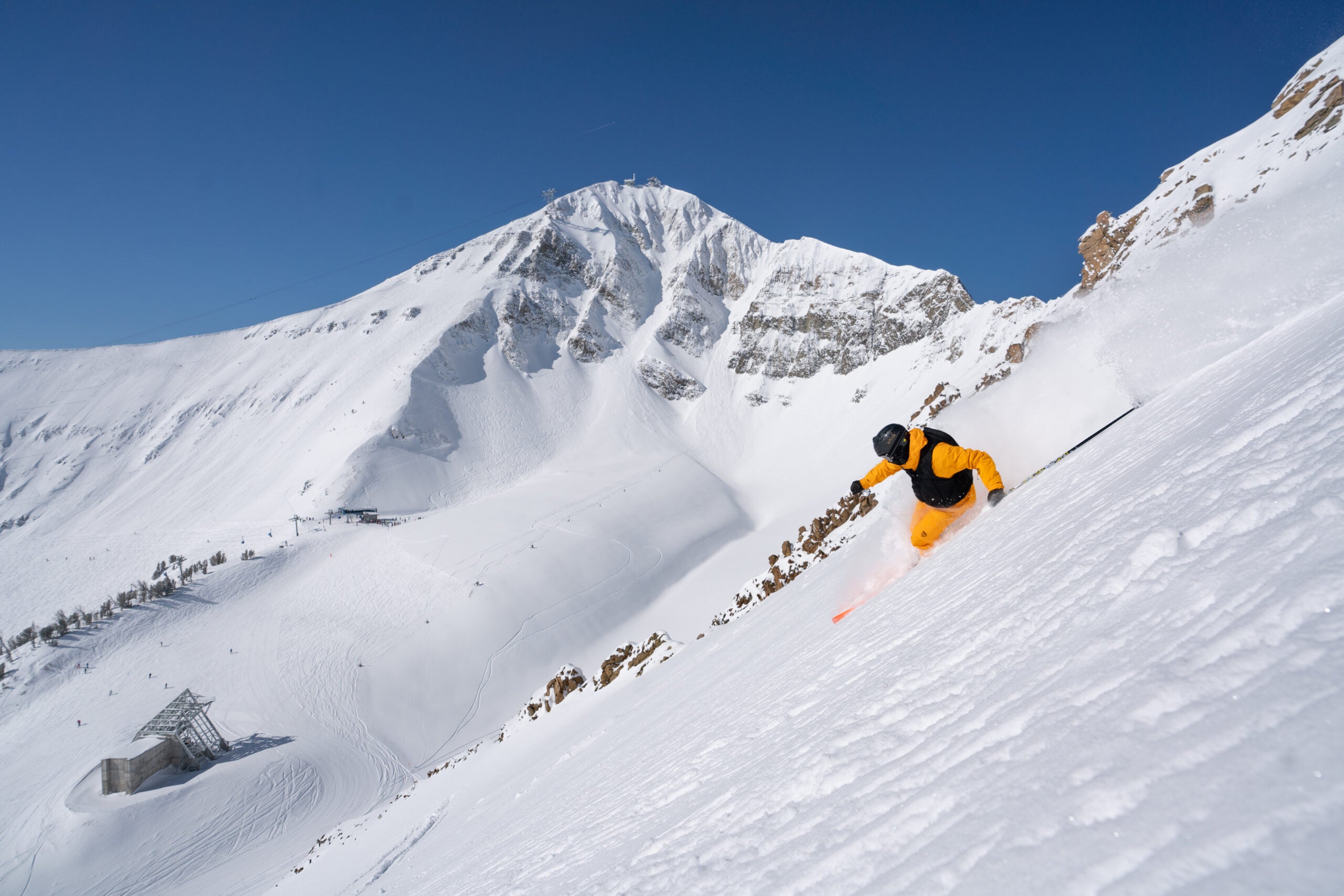
Big Sky’s methodology for the triple black rating is based on several objective hazards. According to resort officials, the designation is applied to terrain that features a sustained pitch of 40 to 50 degrees or more, "uncontrollable falls" (where a skier who falls cannot stop themselves before hitting an obstacle), and complex route-finding requirements. The Big Couloir, perhaps the most famous of these runs, requires skiers to check in with ski patrol, carry an avalanche beacon, and ski with a partner. By labeling these areas with three diamonds, the resort creates a psychological barrier, forcing skiers to pause and honestly assess their abilities before dropping into "no-fall zones."
The data supporting this change is clear: as resorts see higher visitation numbers, the frequency of "wrong-way" skiers—intermediates accidentally wandering into expert terrain—increases. The triple black diamond serves as a final, unmistakable warning. At Big Sky, the "managed access" areas like the Upper A-Z Chutes are so technical that a rescue operation in these zones is a multi-hour, high-risk endeavor for ski patrol. The rating helps limit these incidents by ensuring only the most prepared athletes attempt the descent.
The Technicality of the East: Smugglers’ Notch and the Black Hole
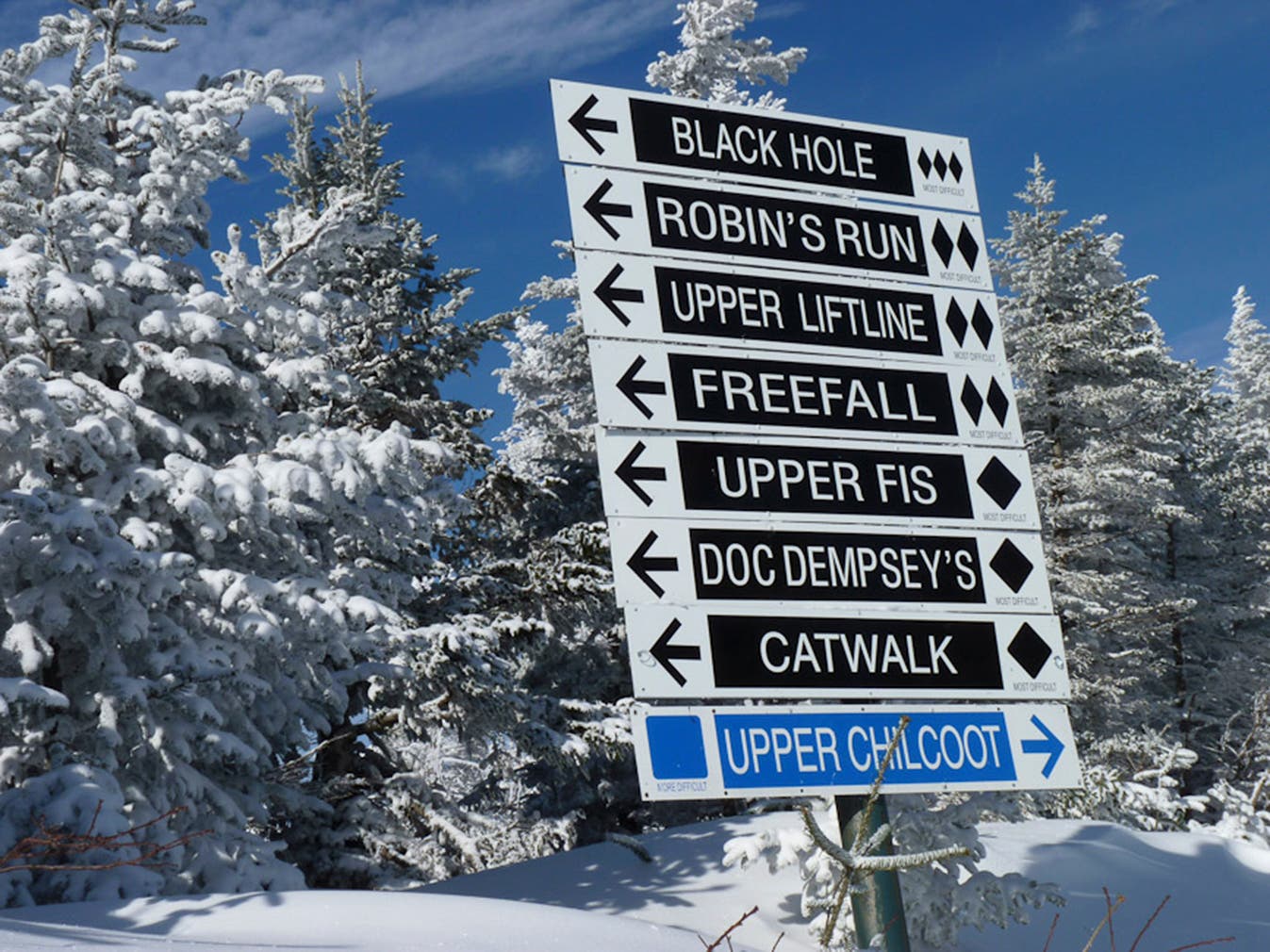
While Western resorts like Big Sky focus on verticality and exposure, Eastern resorts utilize the triple black diamond to highlight technical complexity. Smugglers’ Notch in Vermont was a pioneer in this regard, introducing the triple black diamond for "The Black Hole" in 2004.
The Black Hole was originally an unmarked glade, known only to locals and seasoned experts who sought out the tightest timber on the mountain. When the resort decided to officially add it to the trail map, they realized a double black diamond—the rating given to the adjacent and legendary "Madonna Lift" runs—did not suffice. The Black Hole is characterized by extremely dense trees, rock drops, and a total lack of "bailout" options.
Matt McCawley, a representative for Smugglers’ Notch, notes that the rating reflects a "maze-like" environment. In the East, "extreme" often means a lack of space. The triple black rating here warns skiers that once they commit to a line, they are locked in. As the season progresses, the narrow corridors between trees can develop "luge-like" characteristics due to icing, making every turn a high-stakes maneuver. This reinforces the "relative" nature of the rating: while it lacks the 1,000-foot cliff exposure of Montana, it offers a level of technical claustrophobia that is arguably just as dangerous for the uninitiated.
The Midwestern Anomaly: Mount Bohemia’s Extreme Philosophy
In the Upper Peninsula of Michigan, Mount Bohemia has carved out a unique niche by marketing itself almost exclusively to expert skiers. Unlike most North American resorts, where the majority of terrain is groomed and beginner-friendly, over 90 percent of Mount Bohemia’s runs are rated black diamond or higher.
To differentiate its most hazardous sections, Bohemia utilizes the triple black diamond for areas like "Rabbit Hole" and the "Extreme Backcountry." In this context, the rating is less about slope angle and more about the raw, unrefined state of the terrain. Skiers encounter unmarked cliffs, fallen timber, and stumps. Because Bohemia relies on lake-effect snow and does not groom its expert runs, the conditions are perpetually variable. The triple black rating here serves as a disclaimer: the resort is providing the access, but the skier is entirely responsible for navigating a wilderness-like environment that offers no safety net.
International Perspectives: Mont Sutton and the Quebec Glades
The trend extends across the border into Canada, where Mont Sutton in Quebec has implemented the triple black diamond to manage its famous gladed terrain. Mont Sutton is renowned for some of the best woods-skiing in North America, with roughly 45 percent of its footprint dedicated to expert-level glades.
The resort identifies three specific runs—Upper Bou-Bou, Etonnoir, and Crocodile—as triple black diamonds. These runs are characterized by "raw drop-ins" and hidden tree wells. By using the triple diamond, Sutton aligns itself with the evolving North American standard, acknowledging that certain glades require a level of "dense-timber" proficiency that exceeds the standard expert rating. It also highlights the "Etonnoir" (French for "funnel") effect, where terrain naturally draws skiers into increasingly difficult and narrow features with no easy exit.
The Psychology and Marketing of the Triple Diamond
The introduction of a new "most difficult" category carries both safety and marketing implications. From a psychological perspective, the triple black diamond acts as a deterrent. However, for a certain segment of the skiing population, it acts as a magnet. This "prestige" element is something resort marketers must balance carefully with the realities of risk management.
Industry analysts suggest that the triple black diamond helps a resort’s "brand" by signaling to the core ski community that the mountain has "real" terrain. In an era where many large resorts are accused of "grooming the soul" out of the sport, the triple black diamond is a badge of authenticity. Yet, from a liability standpoint, the rating is a defensive measure. By clearly demarcating terrain that requires specialized skills or equipment, resorts can better defend their safety protocols in the event of an accident.
Broader Implications for the Future of Skiing
As we look toward the future of mountain operations, the triple black diamond may eventually become a standard NSAA-recognized symbol. Currently, it remains an "unofficial" but widely accepted addition. Its rise mirrors the growth of "freeride" skiing as a competitive discipline. With more young skiers entering the sport through the lens of extreme competitions and social media, the demand for high-stakes terrain is at an all-time high.
The data indicates that while equipment has made skiing easier, the mountain environment remains as unforgiving as ever. Climate change has also introduced more volatility into snowpacks, leading to more frequent "variable" conditions—ice, crust, and thin cover—which are primary factors in triple black ratings.
Ultimately, the triple black diamond serves as a reminder of the fundamental rule of the mountains: personal responsibility. Whether it is the thin air and 50-degree chutes of Big Sky or the frozen, tight timber of Smugglers’ Notch, these ratings tell a story of terrain that demands respect. As more resorts adopt this tiered system, the hope is that it will lead to a more informed skiing public, fewer preventable rescues, and a clearer understanding of where the groomed world ends and the true wild begins.
