

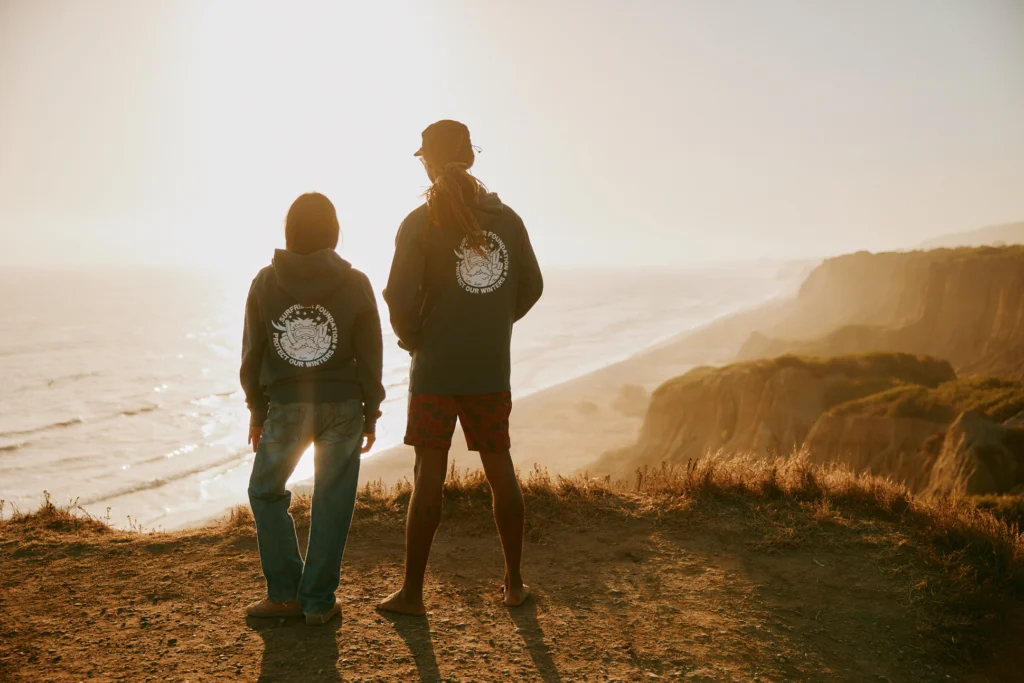
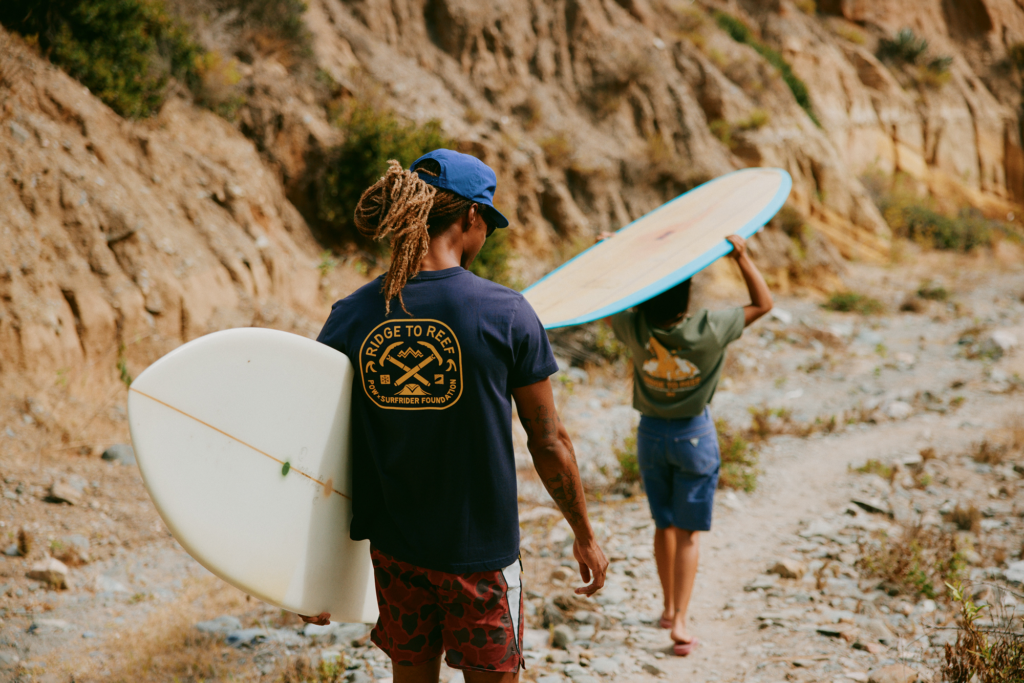
The convergence of mountain and maritime conservation has reached a new milestone with the launch of the Ridge to Reef collection, a collaborative initiative between Protect Our Winters, the Surfrider Foundation, and acclaimed artist Dominic McLeod of Dom Fish Designs. This partnership seeks to unify outdoor enthusiasts across diverse disciplines—from high-altitude mountaineering to coastal surfing—under a single banner of climate advocacy and environmental protection. By leveraging the visual storytelling of McLeod, the initiative aims to fund critical legal and grassroots efforts to oppose new offshore oil and gas drilling proposals that threaten both marine biodiversity and the economic stability of coastal communities. The collection serves as a fundraiser, with 100% of the proceeds being allocated to advocacy programs designed to defend public lands and waters from the intensifying pressures of resource extraction and climate volatility.
The collaboration emerges at a pivotal moment for environmental policy in the United States. As federal agencies deliberate on the future of energy production on the Outer Continental Shelf, the "Ridge to Reef" concept emphasizes the ecological and social interconnectedness of disparate landscapes. For advocates, the movement of water from melting alpine snowpacks to the rising tides of the Atlantic and Pacific oceans represents a singular, continuous system that requires a holistic approach to preservation. By bridging the cultural gap between "mountain people" and "ocean people," POW and the Surfrider Foundation are attempting to mobilize a broader demographic of the "Outdoor State," a collective of outdoor participants who contribute significantly to the national economy and hold substantial potential as a voting bloc.
The Socio-Economic and Environmental Context of Offshore Drilling
The primary catalyst for this collaboration is the ongoing threat posed by expanded offshore oil and gas leasing. According to the Bureau of Ocean Energy Management (BOEM), the federal government’s management of the Outer Continental Shelf involves complex five-year programs that dictate where and when energy companies can bid for drilling rights. While recent legislative measures, such as the Inflation Reduction Act of 2022, have introduced nuanced requirements for offshore wind development in tandem with oil and gas leasing, environmental groups remain concerned about the long-term impacts of fossil fuel infrastructure on marine ecosystems.
Offshore drilling presents a multifaceted threat to the environment. Beyond the immediate risk of catastrophic oil spills, the process of seismic airgun blasting used to locate oil deposits under the seafloor can disrupt the migratory patterns and communication of marine mammals, including endangered whale species. Furthermore, the infrastructure required for offshore extraction often leads to the degradation of coastal wetlands and estuaries, which serve as vital nurseries for commercial fish species and natural buffers against storm surges. From an economic perspective, the Surfrider Foundation highlights that the "ocean economy"—including tourism, recreation, and fishing—contributes billions of dollars to the U.S. Gross Domestic Product (GDP). A 2023 report from the National Oceanic and Atmospheric Administration (NOAA) estimated that the marine economy supports over 2 million jobs, many of which are jeopardized by the industrialization of the coastline.
A Chronology of Advocacy: From Cape Cod to National Policy
The roots of the Ridge to Reef partnership can be traced back several decades to the formative experiences of Protect Our Winters founder Jeremy Jones. Long before Jones became a world-renowned professional snowboarder, he was a young surfer on the coast of Cape Cod. It was there, at the age of 14, that he first encountered the Surfrider Foundation through the stickers displayed on the vehicles of local surfers. This early exposure to the concept of being a "protector, not a plunderer" laid the groundwork for his later environmental work.
In 2007, Jones founded Protect Our Winters (POW) after witnessing the direct impact of climate change on the winter seasons that sustained his career and community. While POW initially focused on the snowsports industry, the organization quickly realized that the challenges facing the mountains—shorter winters, receding glaciers, and volatile weather—were inextricably linked to the health of the oceans. The Surfrider Foundation, established in 1984 by a group of surfers in Malibu, California, provided a blueprint for how a recreation-based community could successfully influence policy. Over forty years, Surfrider has grown into a powerful network of chapters that have won hundreds of coastal preservation campaigns.
The current collaboration with Dominic McLeod represents the latest evolution in this timeline. McLeod, raised in Ojai, California, grew up at the geographic intersection of the Topatopa Mountains and the Pacific Ocean. His upbringing allowed him to witness firsthand how the health of the watershed affects the quality of the surf. When a significant ankle injury sidelined McLeod from surfing for nearly a year, he turned to bike packing and mountain exploration, a transition that solidified his belief in "cross-pollination"—the idea that outdoor enthusiasts should not silo themselves by their preferred sport, but rather find common ground in their shared reliance on healthy ecosystems.
The Philosophy of Cross-Pollination in Climate Activism
A central theme of the Ridge to Reef collection is the rejection of "purity politics" in environmentalism. Dominic McLeod and the collaborating organizations argue that the barriers to entry for climate advocacy are often unnecessarily high. The philosophy of "cross-pollination" suggests that an individual does not need to be a scientist or a perfect consumer to be an effective advocate. This pragmatic approach acknowledges the reality of modern life—such as driving a combustion-engine vehicle to reach a trailhead—while still insisting on the necessity of systemic change.
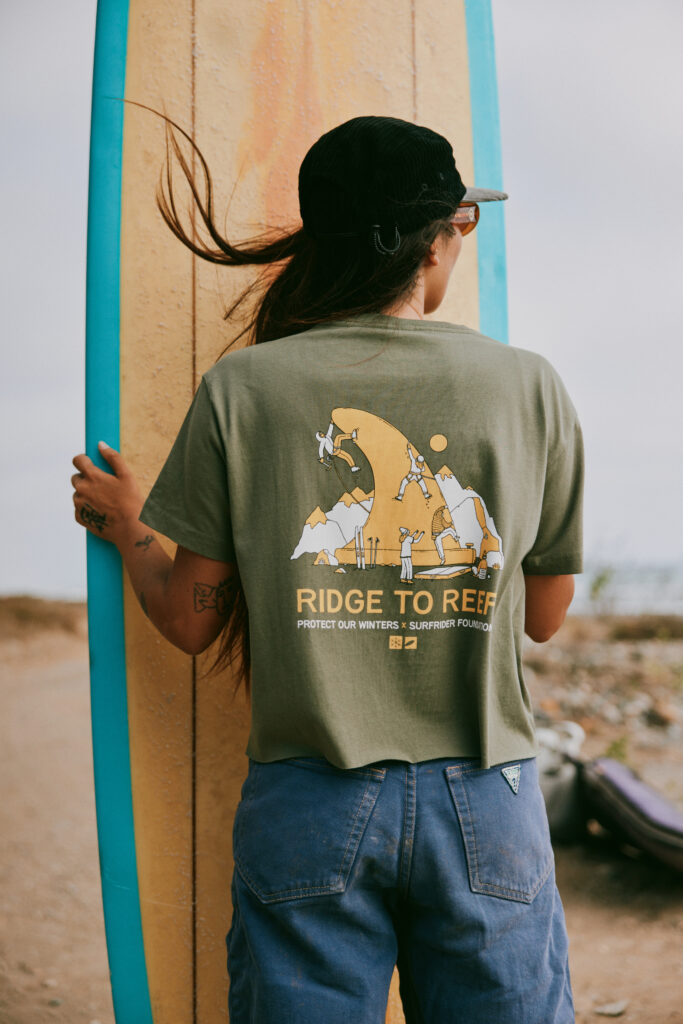
McLeod’s artwork for the collection reflects this synthesis. By merging disparate elements, such as a surfboard fin integrated into a mountain climbing scene, his designs challenge the rigid boundaries that often define outdoor subcultures. This visual strategy is intended to foster a sense of shared identity. For POW and Surfrider, the goal is to move away from a model of activism based on guilt and toward one based on "stoke"—the shared passion for movement in the natural world. This cultural shift is seen as essential for building a movement that is resilient enough to withstand the long-term nature of policy battles.
The Role of Visual Storytelling and the Artistic Process
Dominic McLeod’s artistic process is a blend of traditional observation and modern digital execution. His journey as an artist began in the classroom, drawing characters for peers, and has evolved into a sophisticated practice of "visual anthropology." He captures the "grit and humor" of the outdoor community, focusing on the characters found in surf lineups and on mountain trails.
The creation of the Ridge to Reef collection involved a rigorous design process, beginning with discovery calls and mood boards to align the aesthetic with the mission of the two non-profits. McLeod utilizes digital tools, such as the iPad, to refine sketches while maintaining the hand-drawn feel that resonates with the DIY spirit of surf and skate culture. The versatility of his designs allows the message of conservation to be translated across various mediums, from apparel to digital advocacy campaigns. By humanizing the climate movement through art, McLeod makes the daunting prospect of environmental degradation more approachable and actionable for the general public.
Broader Implications and the Power of the Outdoor State
The collaboration between POW, Surfrider, and Dom Fish Designs carries significant implications for the future of environmental lobbying. The "Outdoor State" represents over 50 million Americans who identify as outdoor enthusiasts. According to the Outdoor Industry Association (OIA), the outdoor recreation economy accounts for $1.1 trillion in annual economic output and 4.8 million jobs. This economic clout provides a powerful lever in legislative discussions. When surfers, skiers, and hikers unite, they represent a diverse geographic and political spectrum that is difficult for policymakers to ignore.
The Ridge to Reef initiative also highlights a growing trend of "recreation-based advocacy," where the enjoyment of nature is directly tied to the responsibility of its stewardship. This model has proven effective in several recent environmental victories, including the permanent authorization of the Land and Water Conservation Fund (LWCF) and the designation of new national monuments. By funding advocacy through the sale of art and apparel, POW and Surfrider are creating a self-sustaining ecosystem of engagement that empowers individuals to contribute financially while also becoming informed messengers for the cause.
As the impacts of climate change become more pronounced—manifesting as both diminishing snowpacks in the Sierras and intensifying hurricanes on the Gulf Coast—the need for a unified front becomes more urgent. The Ridge to Reef collection is more than a product line; it is a strategic effort to consolidate the influence of the outdoor community. By emphasizing the continuity between the mountain peak and the ocean floor, the initiative reminds stakeholders that the defense of one landscape is inherently the defense of the other. The success of this collaboration will be measured not just in sales, but in the strength of the collective voice that rises to meet the challenges of a changing planet.
