

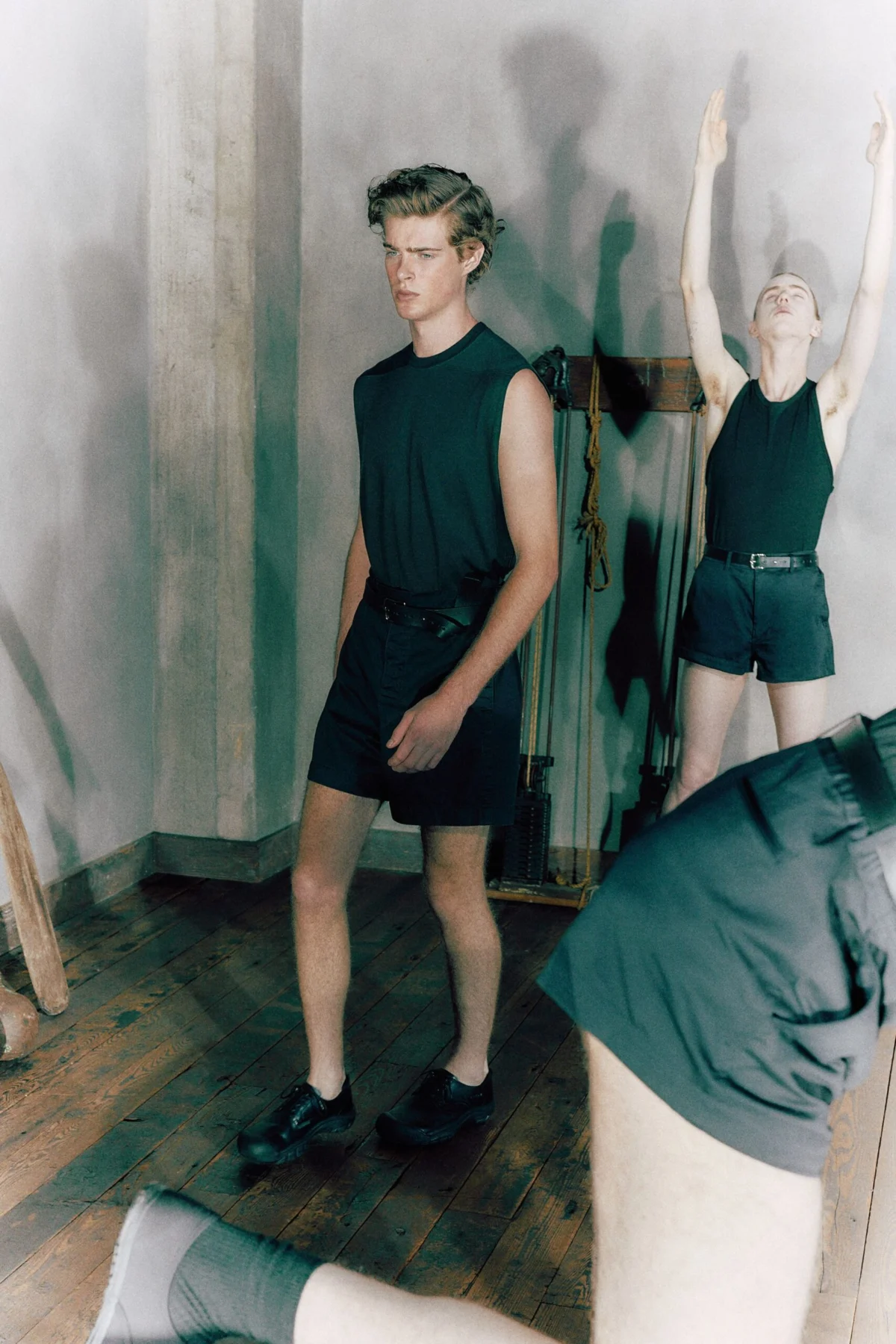
The Spring 2027 menswear season saw N.Hoolywood, under the creative direction of Daisuke Obana, present a collection that masterfully navigates the intersection of post-war Japanese fashion history and the enduring appeal of American workwear. Titled "Watora," a portmanteau of "Work" and "Traditional," the collection is a profound exploration of how heritage garments, when reinterpreted through a contemporary lens, can retain their soulful authenticity while speaking to a new generation. This ambitious undertaking, born from a unique collaboration, offers a compelling narrative on the evolution of style and the cyclical nature of fashion.
The Genesis of "Watora": A Brooks Brothers Commission and a Personal Revelation
The impetus for N.Hoolywood’s deep dive into Ivy League style and its subsequent redefinition originated not solely from Obana’s personal fascination with vintage Americana, but from a direct commission. Brooks Brothers, an iconic American institution synonymous with preppy and classic menswear, approached N.Hoolywood to create a capsule collection. This request provided Obana, a former vintage dealer in the 1990s with a deep understanding of post-war Japanese fashion’s reliance on American Ivy League aesthetics, with a unique opportunity to revisit and reimagine this sartorial lineage.
Obana’s engagement with the Brooks Brothers project led him and his team on an extensive research trip across the United States. Their itinerary included stays at esteemed institutions like the Los Angeles and New York Athletic Clubs, granting them unprecedented access to the archives of these bastions of traditional American style. It was within these hallowed halls that Obana experienced a profound realization. "I realized [the younger members of the team] had never experienced that period," Obana stated via email. "Something that existed in my own memory looked completely new to them." This observation underscored a generational gap in sartorial understanding, prompting Obana to move beyond mere historical replication.
"Watora": A Hybrid Philosophy for a Modern Wardrobe
The core of the N.Hoolywood Spring 2027 collection lies in its innovative "Watora" philosophy. Obana articulated a clear departure from simply reproducing authentic traditional styles, which he deemed uninteresting for the brand’s contemporary output. Instead, he envisioned a symbiotic relationship between established heritage silhouettes and the foundational elements of N.Hoolywood’s own design ethos: workwear and utility clothing. This fusion resulted in garments that possess a familiar yet entirely novel character.
Examples of this "Watora" hybridization were evident throughout the collection. A classic marinière, a staple of naval attire, was reimagined with the addition of professorial elbow patches, imbuing it with an academic gravitas. Trousers, often associated with manual labor, were presented in a paint-splattered finish, a direct nod to the artisan’s workshop. Perhaps most striking was the reimagining of the blazer. Traditionally crafted from fine tailoring fabrics, N.Hoolywood’s version was presented in denim, a material intrinsically linked to workwear, thereby bridging the gap between formalwear and utilitarian durability. This thoughtful integration of disparate sartorial languages resulted in pieces that are both grounded in history and boldly forward-looking.
The Visual Narrative: A Poetic Homage to Physical Culture and Refinement
The presentation of the N.Hoolywood Spring 2027 collection further amplified its thematic depth. The collection film and lookbook were described as "emotive and poetic," featuring a cast that evoked the timeless elegance of Merchant Ivory cinema. However, these were not passive observers of style; they were depicted as individuals ready to engage actively.
In a deliberate move to contextualize the collection, Obana, an athlete himself, staged the presentation amidst a group of actors engaged in "Physical Culture." This turn-of-the-century gymnastic wellness movement, rooted in the late 19th and early 20th centuries, emphasized "training the body and cultivating refinement," as stated in the show notes. This choice of backdrop was no accident. "We wanted to place contemporary clothing within the physical language of the past," Obana explained, highlighting his intention to connect the tangible act of movement and exertion with the enduring aesthetic of classic attire. This deliberate juxtaposition underscored the idea that true style is not merely static but dynamic, imbued with the spirit of action and purpose.
A Patina of Experience: The Embodiment of "Watora" in Styling
The styling of the N.Hoolywood Spring 2027 collection further exemplified the "Watora" ethos. Models were depicted wearing the brand’s interpreted classic garments with an attitude that blended "noblesse oblige" with a distinct vintage flair. Sweaters were neatly tucked into high-waisted trousers, and the hems of shorts were intentionally rolled, signaling a lived-in ease.
This sense of wearability, Obana emphasized, stemmed less from the inherent nature of unchanging prep style and more from the process of aging typical of workwear and workout gear. The collection celebrated the patina that develops through physical exertion and consistent use, a testament to garments that earn their character over time. This aligns with the adage "no pain, no gain," suggesting that true style is not just about acquisition but about the experiences that imbue clothing with personal history and a sense of earned authenticity. The implication is that these garments are not precious artifacts to be preserved but functional pieces designed to be lived in, to be worked in, and to become extensions of the wearer’s active life.
Broader Industry Context and Implications
The N.Hoolywood Spring 2027 collection arrives at a moment when the fashion industry is increasingly grappling with questions of authenticity, sustainability, and the reevaluation of heritage. The resurgence of interest in classic American sportswear and workwear has been a notable trend in recent seasons, driven by a desire for enduring quality and a rejection of fast-fashion’s disposability.
Michael Rider’s recent work at Celine, which has also explored "nouveau prep," signifies a broader industry conversation about updating traditional aesthetics for contemporary relevance. However, N.Hoolywood’s approach, rooted in a deep personal understanding of Japanese fashion history and a genuine integration of workwear principles, offers a distinct and nuanced perspective.
The "Watora" concept itself is a significant contribution to the discourse on hybrid fashion. By creating a dedicated term and a cohesive philosophy, Obana has provided a framework for understanding how disparate sartorial categories can be meaningfully merged. This could inspire other designers to explore similar cross-pollinations of styles and materials, fostering a more experimental and historically informed approach to menswear design.
Furthermore, the collaboration with Brooks Brothers, a brand with over two centuries of history, highlights the potential for established heritage labels to engage with contemporary designers. This partnership allows heritage brands to tap into new creative visions and reach younger demographics, while providing emerging designers with access to historical archives and a platform for showcasing their innovative interpretations. The success of this capsule collection, should it be widely adopted, could pave the way for further collaborations that bridge generational and stylistic divides.
The emphasis on "Physical Culture" and the idea of garments earning their patina through activity also resonates with a growing consumer interest in functional, durable clothing that can withstand the demands of an active lifestyle. In an era where the lines between work, leisure, and athletic pursuits are increasingly blurred, the "Watora" collection offers a wardrobe that is both aesthetically sophisticated and pragmatically adaptable.
Looking Ahead: The Enduring Appeal of "Watora"
As the fashion world continues to evolve, the principles behind N.Hoolywood’s "Watora" collection offer a compelling vision for the future of menswear. By respecting the past while embracing innovation, Daisuke Obana has demonstrated that true style is not about rigid adherence to tradition but about thoughtful evolution and the creation of garments that possess both soul and utility. The collection’s success will likely be measured not only by its immediate commercial impact but also by its lasting influence on how designers and consumers alike approach the enduring power of heritage and the dynamic evolution of personal style. The "Watora" philosophy, born from a unique commission and a profound personal insight, stands as a testament to the creative possibilities that emerge when history, craftsmanship, and a forward-thinking vision converge.
