

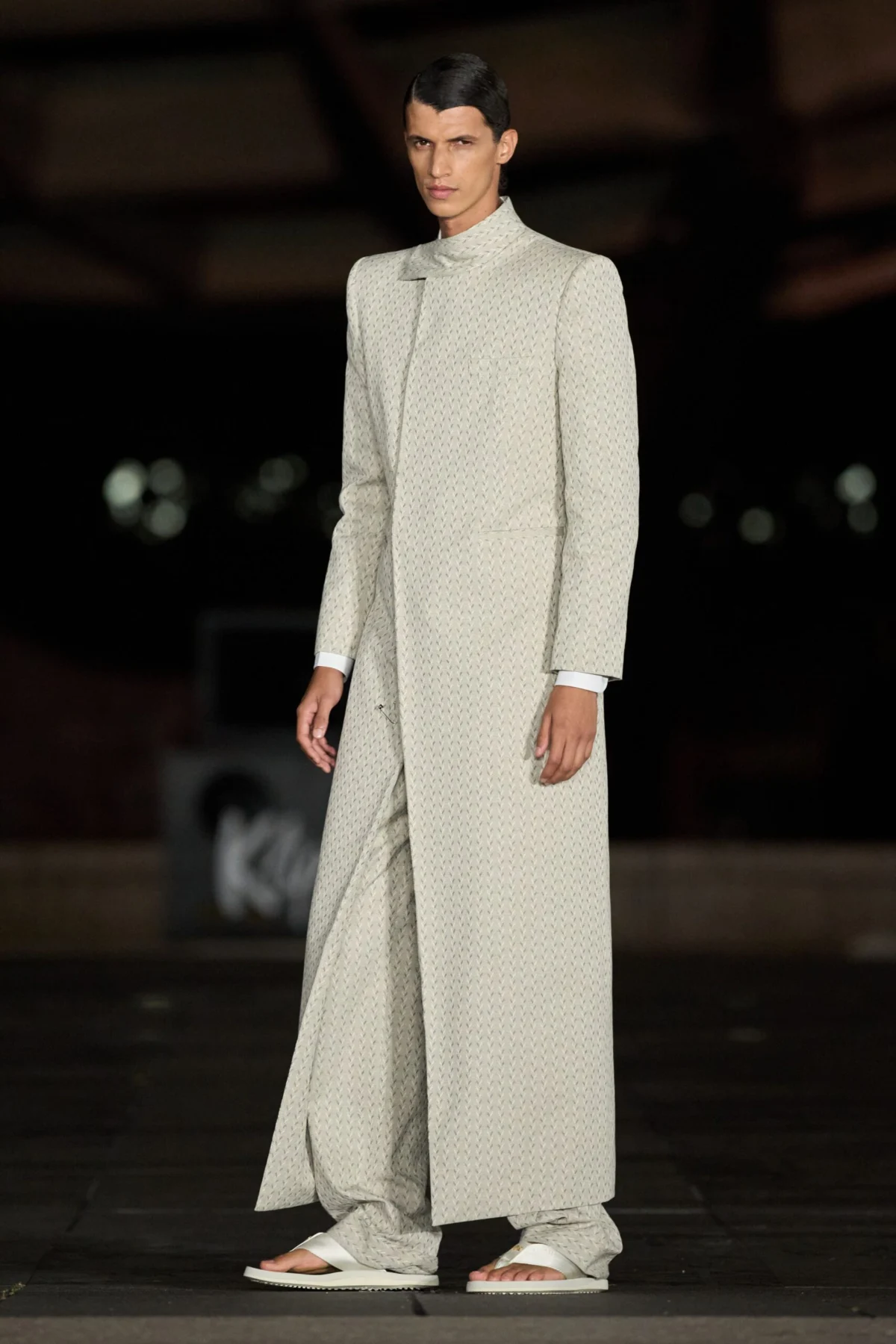
Queens, New York – In a bold move that redefined the traditional runway landscape, designer Raul Lopez of Luar selected the iconic Unisphere in Flushing Meadows-Corona Park as the unconventional yet profoundly symbolic venue for his highly anticipated Spring 2027 collection. This decision, eschewing the conventional Manhattan fashion week circuit, signaled a deliberate departure and a powerful statement about place, heritage, and identity. The collection, provocatively titled "Christopher Street Columbus," is a multi-layered exploration of historical narratives, personal identity, and the very act of reclaiming narratives through fashion.
Lopez, known for his audacious designs and penchant for subverting expectations, described the choice of the Unisphere as serendipitous and fated. "There was no plan B," he stated during a preview of the collection, recounting a chance encounter with a childhood friend’s father while scouting the location. This seemingly coincidental meeting, he interpreted as a powerful omen, reinforcing his conviction that Queens was the definitive stage for his vision. His deep connection to the borough, a place he frequents not only for creative inspiration but also for personal enjoyment, including visits to its vibrant gay clubs, underscores the personal significance of this choice. Queens, a borough often overlooked in mainstream cultural narratives, became the canvas for a collection that challenges historical perspectives and celebrates marginalized identities.
The collection’s title, "Christopher Street Columbus," immediately signals its complex thematic underpinnings. It artfully juxtaposes "Christopher Street," a globally recognized epicenter of LGBTQ+ history and activism in New York City, with "Columbus," the historical figure synonymous with the European colonization of the Americas. This deliberate pairing serves as the central thesis of Lopez’s narrative. He explained his intention to "play with the idea of colonization" and, crucially, to engage in "reclaiming it." For Lopez, this reclamation is embodied by his own presence and expression, particularly within spaces like Christopher Street, and by the act of dressing as a form of survival, adaptation, and, most importantly, rebellion. The collection’s genesis draws inspiration from Tudor-era clothing, a period known for its elaborate silhouettes and social stratification. However, in typical Luar fashion, Lopez filters these historical references through a distinctly modern and queer lens, reinterpreting historical garments for contemporary expression and subversion.
Adding another layer of profound personal and historical significance, Lopez, who is of Dominican descent, wove in elements from his homeland. Columbus’s arrival in the Americas, a pivotal moment in global history, first touched down in what is now the Dominican Republic. By integrating these cultural touchstones, Lopez creates a dialogue between his heritage, the historical impact of exploration, and the contemporary experience of diaspora and identity formation. This intersectionality is central to his design philosophy, where personal history and broader societal narratives converge.
A Narrative of Reclamation Through Silhouette and Textile
Lopez’s approach to design is characterized by a fearless embrace of bold statements. The Spring 2027 collection is a testament to this, employing broad, impactful strokes that command attention. Full, pleated breeches were seamlessly integrated with double-breasted suits or paired with biker jackets featuring dramatically sloping shoulders, creating a silhouette that is both historically resonant and undeniably contemporary. Sharp-shouldered coats, a hallmark of structured tailoring, were elevated by striking neck closures, adding an element of unexpected detail. A particularly arresting leather bodice, adorned with voluminous puffed sleeves, evoked a sense of historical drama while remaining firmly rooted in modern aesthetics. Even athletic wear, such as track jackets, were subtly reimagined to resemble the structured forms of historical doublets, blurring the lines between utilitarian garments and historical sartorial codes.
While the powerful silhouettes were visually arresting, it was Lopez’s masterful manipulation of textiles that truly distinguished the collection. His inspiration often stems from his travels and his heritage. For instance, his recent trip to the Dominican Republic provided a direct source of material innovation. Captivated by the vibrant and varied colors of cacao pods – ranging from sunny yellows and verdant greens to rich browns – Lopez had high-resolution scans of these pods printed onto luxurious silk. This bespoke fabric was then transformed into eye-catching suits and elegantly draped tops, directly translating the natural beauty of his homeland into wearable art.
Further exploring the tactile qualities of his influences, Lopez incorporated umber jacquards that evoked the earthy, decaying textures of overripe cacao. Broad suits, meticulously tailored with nipped waists, were rendered in sumptuous brown-and-black striped velvet, adding a tactile richness and depth. Smoky skirts, crafted from delicately dyed lace, introduced an element of ethereal fragility, while a selection of more understated pieces featured creamy navy moiré, offering a refined counterpoint to the collection’s more dramatic elements. The show culminated with a series of sequined dresses, their asymmetric hemlines a modern flourish, each cinched at the waist with a feather sash, adding a final touch of theatricality and celebratory exuberance.
Accessories: The Flourish of Reimagined Histories
Raul Lopez has firmly established Luar as a brand synonymous with impactful accessories, most notably the iconic, large-handled "Ana" bag. The Spring 2027 collection continued this tradition, showcasing a range of meticulously crafted accoutrements that amplified the collection’s narrative. In collaboration with MCM, Lopez presented stylish pouchettes that echoed the collection’s aesthetic. Footwear ranged from sharp, architecturally designed mules to sporty flip-flops, the latter created in partnership with the Brazilian brand Kenner, underscoring a global approach to design and craftsmanship.
A particularly intriguing detail, discovered by Lopez on TikTok and drawing inspiration from 16th-century practices, involved ripped gloves that revealed bejeweled fingers. This small yet significant element served as a tangible link to historical adornment, reimagined for the modern wearer. Boas, another classic accessory, were given a contemporary twist with curled feathers, providing an extra bounce and dynamism. These accessories were not mere afterthoughts; they were integral components of the narrative, each piece carefully considered to enhance the overall storytelling of the collection.
Context and Chronology: The Unfolding of a Vision
The decision to present in Flushing Meadows-Corona Park for Spring 2027 did not occur in a vacuum. The fashion industry has been witnessing a gradual but significant shift away from its traditional hubs, with designers increasingly seeking out unique and meaningful locations that resonate with their artistic vision and brand ethos. This trend, accelerated by the global pandemic, has seen shows staged in art galleries, industrial spaces, and natural landscapes. Lopez’s choice aligns with this broader movement, prioritizing an immersive experience and a deeper connection to the environment over the convenience of established fashion week venues.
The selection of the Unisphere, a symbol of global unity and a landmark of the 1964-65 New York World’s Fair, adds a layer of historical resonance. The fair itself was a celebration of human achievement and a vision of the future, themes that can be seen as parallel to Lopez’s own aspirations for his collection. The fair also aimed to foster international understanding, a concept that subtly echoes Lopez’s exploration of transatlantic historical connections and his incorporation of Dominican heritage. The choice of a Queens location also speaks to a growing recognition of the borough’s cultural significance and its role as a melting pot of diverse communities, a narrative that aligns perfectly with the inclusive spirit of Luar.
Industry Reactions and Broader Implications
While direct statements from other designers or industry leaders regarding Luar’s specific venue choice for this season are not publicly available, the broader fashion industry has consistently recognized Raul Lopez as a transformative voice. His ability to blend commercial appeal with profound artistic and cultural commentary has garnered critical acclaim and a dedicated following. The move to Queens, therefore, is likely to be viewed as another bold affirmation of his commitment to challenging the status quo and creating fashion that is both aesthetically compelling and intellectually stimulating.
The implications of this show extend beyond the immediate impact on the Spring 2027 season. By choosing a location outside of Manhattan’s traditional fashion district, Lopez is further democratizing the fashion landscape, drawing attention to the cultural richness and creative potential of New York City’s outer boroughs. This can inspire other designers and brands to consider similar unconventional settings, potentially leading to a more diverse and inclusive fashion calendar. Furthermore, the thematic underpinnings of "Christopher Street Columbus" – reclamation, identity, and the reinterpretation of history – resonate deeply in contemporary discourse. Lopez’s work offers a powerful visual language for understanding complex social and historical issues, demonstrating fashion’s capacity to be a platform for dialogue and social commentary.
A Cinematic Backdrop with Scale Challenges
The Unisphere provided a undeniably cinematic and awe-inspiring backdrop. Its imposing 120-foot-wide stainless steel structure, a globe representing Earth, offered a visually dramatic setting for the runway. Pre-show, the landmark served as a popular photo opportunity for attendees, highlighting its iconic status and photogenic qualities. However, the sheer scale of the venue presented a significant challenge. The vastness of Flushing Meadows-Corona Park, while grand, ultimately appeared to dwarf the intricate details and rich textures of the collection. After experiencing the depth and vibrancy of the garments in the more intimate setting of the studio, their impact felt diminished when viewed against the expansive backdrop of the park. This is a lamentable outcome for a collection that was, by all accounts, thoughtfully designed and richly executed. The garments, deserving of a focused and intimate presentation, may have been somewhat lost in the immensity of their surroundings, prompting a reflection on the delicate balance between grand spectacle and the detailed appreciation of sartorial artistry. The ambition of the location, while conceptually powerful, ultimately overshadowed the nuanced craftsmanship of the designs themselves.
