

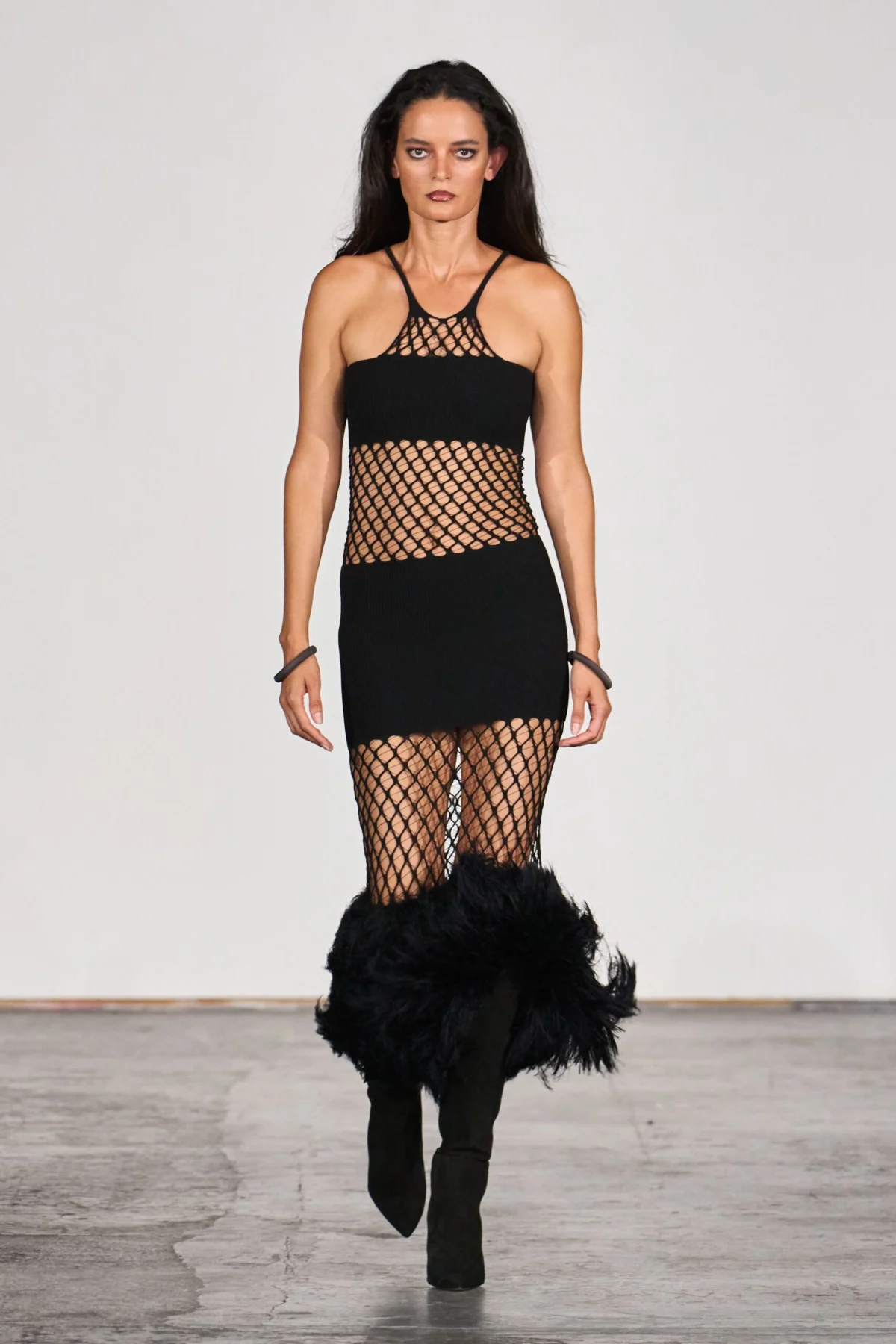
The fashion landscape has recently undergone a noticeable shift, pivoting from the voluminous, oversized aesthetics that dominated for seasons past towards more figure-skimming silhouettes. This transition, while representing uncharted territory for some designers, is precisely where Mark Fast has consistently anchored his creative vision since his very debut. Reflecting on this enduring commitment, Fast recalled pivotal advice from his late Central Saint Martins tutor, Louise Wilson, during a preview of his latest spring collection. "People are going to come to you for the bodycon dress," he remembered her encouraging him to fully embrace and commit to "what he loves." Nearly two decades on, this foundational passion remains the bedrock of his design philosophy.
The Genesis of a Signature Style and Artistic Inspiration
Mark Fast’s dedication to form-fitting attire is not a recent adaptation to trends, but rather an intrinsic element of his design DNA. His journey began with a clear understanding of how to sculpt garments that celebrate and accentuate the human form. This unwavering focus has allowed him to cultivate a distinct aesthetic that resonates with a specific clientele who appreciate the power and confidence derived from such clothing.
The visual language of his spring collection draws a direct line to the evocative photography of Franco Rubartelli, particularly his iconic shots of the model Veruschka. This artistic influence is palpable in the collection’s palette, which evokes a dusty, desert-hued sensibility. Soft, powdered-tone yarns are meticulously knotted and knitted into Fast’s signature forms. These intricate constructions manifest as delicate webs that gracefully splay across the décolletages and torsos of the models, creating a sense of ethereal layering. For more structured pieces, such as minidresses and miniskirts, tighter, more intricate weaves are employed. These garments often feature daring side slits, adding a dynamic visual element, and oscillate with fringed edges at the hemlines, lending a playful yet sophisticated movement.
The Mark Fast Woman: Confidence, Craftsmanship, and "Second Skins"
The archetypal Mark Fast woman, as presented in this collection, is unapologetically daring and self-assured. Several of the caged knits featured in the show reveal a deliberate play on coverage, with some designs exposing more of the body than others. The wide-weave shorts and catsuits, for instance, offer a glimpse of skin, with carefully placed panels acting as a counterpoint, much like "second skins," as the designer himself articulated. This thoughtful application of fabric creates a sophisticated balance between allure and modesty.
A notable advancement in Fast’s technique was showcased in a select few pieces. This innovative approach involves the meticulous threading of beads onto each row of knitting. This addition of weight to the otherwise barely-there stretch knits imbues the garments with a unique character, a quality Fast likened to armor. "I wanted to focus on the craft," he stated, underscoring his commitment to artisanal techniques and the inherent value of skilled workmanship. This emphasis on craft not only elevates the visual appeal of the garments but also speaks to their durability and the intricate labor involved in their creation.
Expanding the Repertoire: Jersey, Denim, and Commercial Appeal
While the bodycon silhouette remains a central tenet, Mark Fast’s spring collection also demonstrates a strategic expansion of his design repertoire, aiming to broaden his commercial appeal. Alongside his signature knits, the collection features forays into jersey fabrics and low-slung denim "jorts" (jean shorts). These additions are intended, as Fast explained, to "bring things back down to earth" for the more commercially-minded customer. This diversification suggests a thoughtful approach to market demands, ensuring that the brand can cater to a wider audience without compromising its core identity.
The overarching theme of the collection, as succinctly summarized by the designer at the preview, is a pervasive sense of "tightness." This word encapsulates not only the form-fitting nature of the garments but also the precise and controlled execution of his design vision. It speaks to a deliberate sculpting of fabric against the body, creating a unified and impactful aesthetic.
Industry Context and Market Reception
The current fashion climate, characterized by a return to more body-conscious dressing, provides a fertile ground for Mark Fast’s established expertise. Designers who have long championed these silhouettes are now finding their approaches resonating with a broader market. Fast’s consistent dedication to this aesthetic for nearly two decades positions him as a pioneer rather than a follower of this trend. His ability to adapt and evolve his signature style while staying true to his core principles is a testament to his enduring relevance in the fashion industry.
The preview of the spring collection, attended by fashion editors, buyers, and influencers, offered a glimpse into the potential commercial viability of these new directions. While the signature knits are likely to appeal to his established clientele and fashion-forward consumers, the introduction of jersey and denim pieces signals an intention to capture a larger market share. This strategic move could be crucial for the brand’s growth in the competitive retail environment.
The Business of Fashion: Data-Driven Trends and Designer Adaptability
Recent market analysis from fashion industry intelligence firms has indicated a growing consumer appetite for clothing that offers both comfort and a flattering silhouette. Reports from NPD Group, for instance, have shown an uptick in sales for fitted apparel categories, suggesting a broader shift away from overly relaxed styles. This data corroborates the trend observed on runways and in retail spaces, highlighting the importance of designers like Fast who have consistently catered to this demand.
The inclusion of more accessible materials like jersey and denim, alongside the intricate knitwear, can be seen as a strategic response to these market dynamics. It allows the brand to offer a tiered product range, potentially catering to different price points and occasions. This approach is common among successful fashion houses, enabling them to maintain brand identity while maximizing market penetration. For example, luxury brands often introduce diffusion lines or more casual collections to reach a wider demographic. Mark Fast’s incorporation of these elements can be viewed through a similar lens, aiming for sustained commercial success alongside artistic integrity.
Broader Implications for the Fashion Industry
Mark Fast’s collection serves as a case study in brand longevity and the power of a distinct design ethos. In an industry often characterized by rapid trend cycles and fleeting fads, his unwavering commitment to the bodycon silhouette, coupled with his willingness to innovate and adapt, offers valuable insights. His ability to draw inspiration from art history, evident in the Rubartelli-inspired palette and textures, further elevates his work beyond mere garment creation, imbuing it with a narrative and cultural resonance.
The emphasis on craftsmanship, particularly with the introduction of beaded knits, also speaks to a growing appreciation for artisanal skills within the fashion world. As consumers become more discerning, there is an increasing demand for pieces that are not only aesthetically pleasing but also possess a tangible quality and a story of meticulous creation. This focus on craft can differentiate a brand and build a loyal customer base that values longevity and artistry.
Furthermore, Fast’s strategic expansion into more accessible fabrics and styles demonstrates a keen understanding of the contemporary fashion market. The ability to balance high-concept design with commercial viability is a hallmark of successful brands. His collection suggests that it is possible to maintain a strong brand identity while also evolving to meet the diverse needs and preferences of a global consumer base. The success of this approach will likely be measured not only by critical acclaim but also by its reception in retail environments and its impact on the brand’s overall market position. The "tightness" that defines his collection is, in essence, a reflection of his tight grip on his creative vision and his precise calibration of market demands.
