

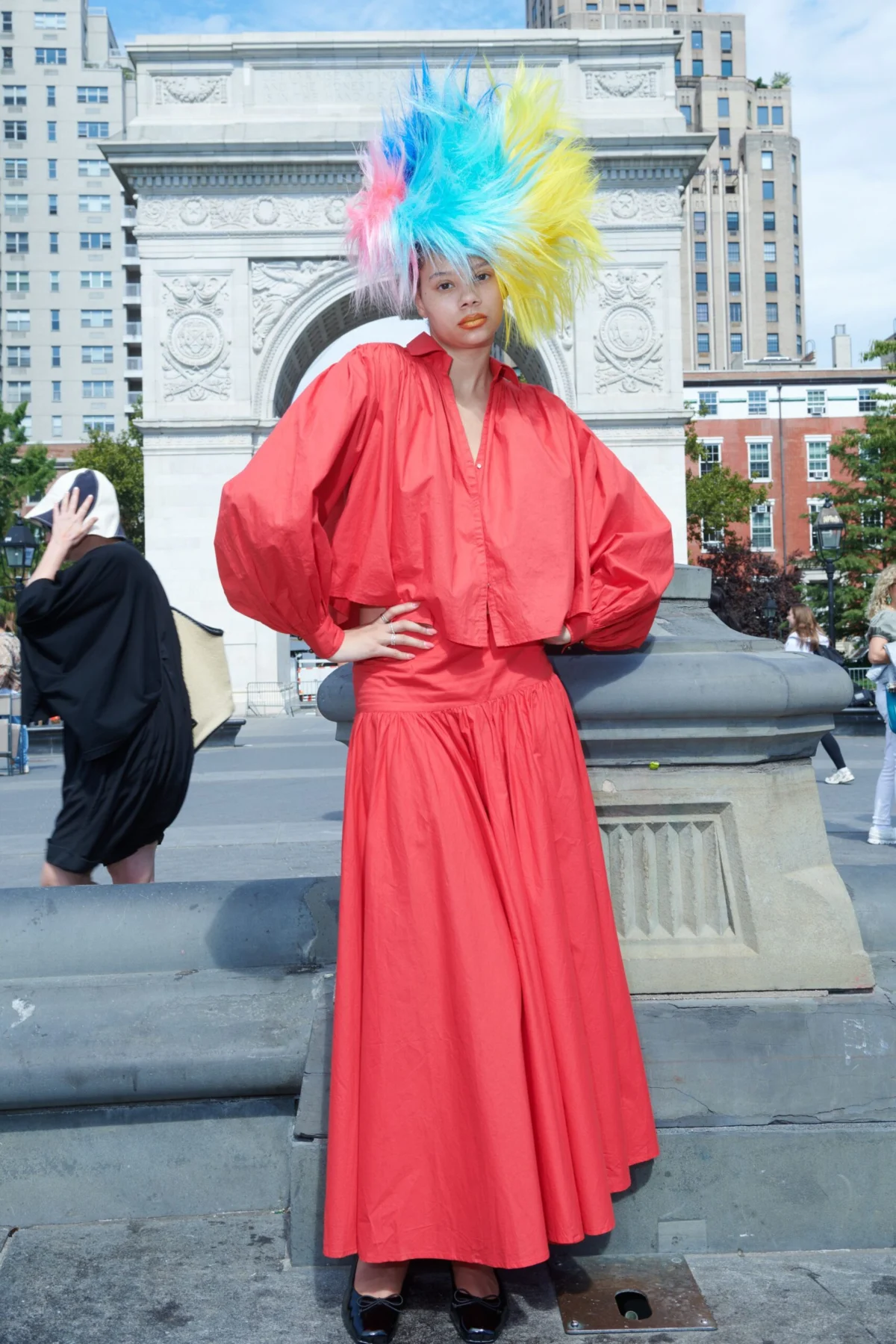
New York City, NY – In a bold departure from conventional fashion industry presentations, designer Batsheva Hay staged an unconventional, "guerrilla" runway show on the bustling streets of New York City for her Spring 2027 ready-to-wear collection. Eschewing the polished interiors of studios or the curated atmosphere of traditional venues, Hay transformed the urban landscape into her personal catwalk, a move that underscores her signature approach to challenging industry norms and embracing spontaneity. The event, which unfolded on a sweltering Wednesday afternoon, began with a gathering of models – a mix of close friends, established campaign faces, and individuals street-cast for the occasion – at Hay’s NoLIta storefront. From there, the procession ventured to Washington Square Park, turning a public space into an impromptu fashion theater.
"We’ve done really wacky in front of an audience, we’ve done really wacky in front of the store, but what felt like the wackiest was to really do something without any prepared audience, using the city as the stage," stated Hay, articulating the core philosophy behind this audacious presentation. This sentiment highlights a deliberate effort to break free from the confines of expected fashion show formats and to engage with the public in a more organic and surprising manner. The choice of the city as a stage is not merely aesthetic; it’s a commentary on accessibility and the democratizing potential of fashion, bringing it directly to the people rather than expecting them to seek it out in a controlled environment.
The initial procession into Washington Square Park was a spectacle in itself. Ten models, adorned in Batsheva’s latest creations, made their entrance, their presence amplified by vibrant, neon-hued wigs that evoked a whimsical, almost surreal aesthetic, described by onlookers as a blend of "Paris meets Troll Doll." The ensembles featured sheer organza plaids and delicate "ditsy floral" prints, creating a visual narrative that evoked a sense of playful escapism. For many, the sight was akin to witnessing a procession of "psychedelic ducklings" entering a vibrant circus, a stark contrast to the everyday rhythm of the city. The models navigated the park, circling a dry fountain, their movement drawing a mixed reaction from the public. Some passersby stopped, captivated, and documented the scene with their mobile phones, their curiosity piqued by the unexpected display. However, in true New York fashion, a significant portion of the city’s inhabitants continued their daily routines, largely unfazed by the sartorial spectacle unfolding before them. This duality – the striking visual presence of the collection juxtaposed with the urban indifference – is, as Hay implicitly acknowledges, "the beauty of New York." It speaks to the city’s capacity to absorb and integrate the extraordinary into the ordinary.
The Collection: A Fusion of Nostalgia and Modernity
At the heart of the Spring 2027 collection was a striking drop-waist circle skirt. This piece was directly inspired by a vintage Norma Kamali design from the 1980s, a style that Hay herself has been frequently seen sporting, indicating a personal connection and a desire to translate cherished vintage aesthetics into contemporary pieces. Complementing this hero item were several dresses designed with an easy, drop-waist silhouette reminiscent of the 1920s, channeling an era of fluid silhouettes and understated elegance.
The styling for the collection emphasized a cohesive yet playful approach. The voluminous skirts and dresses were paired with more fitted and charming tops, such as full-sleeved button-down blouses and cropped sailor tops. This juxtaposition of voluminous bottoms with more structured or form-fitting tops created a balanced and visually interesting silhouette.
A notable and perhaps most experimental element for the designer was the introduction of a small batch of lingerie-inspired items. These pieces, characterized by their sheer fabrics, added a layer of sensuality and intrigue to the collection. The inclusion of sheerness is a recurring theme that Hay has explored in previous collections, and its presence in the Spring 2027 line further solidifies her unique brand identity, which often blends modesty with a subtle, sophisticated allure. This element suggests a continued exploration of how traditional notions of femininity and sensuality can be reinterpreted through modern design.
A Mid-Show Interlude: Embracing the Urban Experience
The unconventional nature of the show extended to its logistical flow. Following their presentation in Washington Square Park, the models took a brief, yet quintessentially New York, interlude: a stop at a Mister Softee truck parked on the edge of the park. This spontaneous detour not only provided a moment of refreshment amidst the summer heat but also further integrated the fashion event into the fabric of daily city life. It served as a playful nod to the everyday experiences that define New York, a city where even the most unexpected encounters can occur.
Following this refreshing pause, the ensemble descended into the city’s subway system, marking the beginning of the second phase of the "guerrilla" show. This subterranean segment involved another runway presentation and a photo shoot, transforming the often-chaotic environment of the subway into an unexpected fashion venue. This choice to utilize the subway underscores Hay’s commitment to embracing the raw energy and diverse environments of New York City, a sentiment encapsulated in the observation, "So it goes with the NYC daily commute." This phase highlights the brand’s adaptability and willingness to find beauty and inspiration in less conventional, and often overlooked, urban spaces.
Context and Industry Reaction
Batsheva Hay has built a reputation for her distinctive aesthetic, often characterized by a modern interpretation of vintage silhouettes, particularly those associated with modest fashion. Her designs frequently feature puffed sleeves, high necklines, and voluminous skirts, drawing inspiration from historical periods and her own upbringing. This Spring 2027 collection continues this lineage while pushing boundaries with the unconventional presentation.
The fashion industry, while often steeped in tradition, has seen a growing trend towards more experiential and less conventional show formats in recent years. Brands are increasingly seeking ways to create buzz, engage with a broader audience, and stand out in a crowded market. The "guerrilla" approach adopted by Batsheva is a potent example of this shift, prioritizing authenticity and surprise over the predictability of established formats.
Industry analysts suggest that this type of presentation can generate significant social media engagement and organic media coverage, offering a high return on investment in terms of brand visibility. While specific attendance figures for this unconventional show are not publicly available, the nature of the event – being accessible to anyone present in the chosen public spaces – suggests a potentially far larger, albeit unquantifiable, audience than a traditional seated runway show. The spontaneity and accessibility of the event are key factors in its potential impact.
Reactions from fashion commentators, while not explicitly detailed in the provided text, can be inferred to be largely positive, given the brand’s established following and Hay’s consistent ability to generate interest. Her approach aligns with a growing sentiment among consumers for brands that are relatable, authentic, and unafraid to break the mold. The use of a diverse cast of models, including friends and street-cast individuals, further contributes to this sense of inclusivity and authenticity, which resonates strongly with contemporary audiences.
Broader Implications and Future Trends
The success of Batsheva’s Spring 2027 "guerrilla" runway show has several implications for the future of fashion presentations. Firstly, it demonstrates that innovative and impactful fashion events do not require exorbitant budgets or exclusive guest lists. By leveraging public spaces and embracing spontaneity, designers can create memorable experiences that capture public imagination. This could pave the way for more brands, particularly independent designers with limited resources, to explore similar unconventional approaches.
Secondly, the event highlights the increasing importance of social media and digital dissemination in fashion marketing. The visual spectacle of the show, from the "Paris meets Troll Doll" wigs to the subway presentations, is inherently shareable, generating organic content that can reach a global audience. This democratizes fashion visibility, moving beyond the traditional gatekeepers of fashion criticism and editorial coverage.
Thirdly, Batsheva’s collection, with its blend of vintage inspiration and modern interpretations, including the introduction of sheer lingerie-inspired pieces, reflects ongoing trends in the fashion industry. The embrace of nostalgia, the exploration of subtle sensuality, and the focus on wearable yet distinctive pieces are all elements that resonate with contemporary consumer preferences. The success of the drop-waist silhouettes and the playful styling suggests a continued interest in feminine yet empowered aesthetics.
Finally, the choice to integrate elements of everyday urban life – from street casting to subway transit and even a Mister Softee stop – into the fashion narrative underscores a broader industry shift towards greater authenticity and relatability. As the fashion landscape evolves, brands that can successfully connect with their audience on a more human and accessible level are likely to thrive. Batsheva’s Spring 2027 show serves as a compelling case study in how to achieve this, proving that innovation and impact can be found not just on the runway, but in the very streets that inspire us. The event’s success suggests a potential paradigm shift, where the urban environment itself becomes an active participant in the fashion narrative, fostering a more dynamic and inclusive relationship between designers, their collections, and the public.
