

Published March 4, 2026, 10:17 AM PST
The biting wind whipped across the summit of Jackson Hole Mountain Resort in late January, carrying with it temperatures hovering around zero degrees Fahrenheit. Amidst this frigid embrace, a group of seasoned skiers, including two professional guides, three brand representatives, and a fellow ski journalist, descended from the tram. The objective was clear: to experience the renowned terrain of Rendezvous Bowl, a descent of approximately 4,000 vertical feet. The pace was brisk, punctuated by brief regrouping stops, as the group carved down the mountain at speeds often exceeding 20-30 miles per hour. Even after two hours of exhilarating skiing on a mix of steep pitches and meticulously groomed corduroy, the mercury had only nudged up to a still-chilly five degrees Fahrenheit.
While waiting for the next tram, a moment of reflection on personal comfort emerged. Despite the persistent cold, a surprising observation was made: while hands felt the chill and a nose began to freeze, the toes remained remarkably comfortable. This was a significant departure from typical cold-weather ski experiences, where toes are often the first to succumb to discomfort. The reason for this newfound warmth was traced back to a piece of gear recently integrated: the Bootcap.
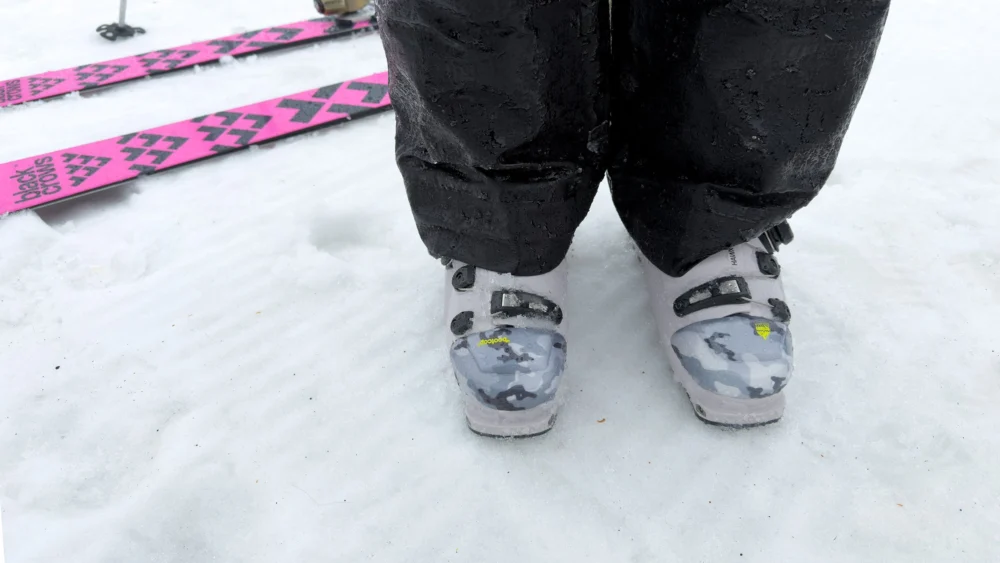
The day prior, a brand representative had introduced this innovative accessory, a custom-molded piece of closed-cell foam designed to encase the front of a ski boot. Initially met with skepticism, the journalist had agreed to try the Bootcap as a favor to a long-standing relationship with the representative, who had a proven track record of recommending effective gear. This instance proved no different, with the seemingly minor addition of the Bootcap significantly enhancing overall foot comfort, enabling prolonged enjoyment of the challenging conditions.
The Genesis of an Idea: A Bootfitter’s Longstanding Pursuit
The origin story of Bootcap is rooted in the practical experience and keen observation of its co-founder, Mike Thorpe, a bootfitter with three decades of experience in Salt Lake City. Thorpe had long noticed a correlation between the use of high-end, closed-cell foam liners and sustained foot warmth during long ski days. Recognizing that the substantial cost of these premium liners—often exceeding $200—presented a barrier for most skiers, he began contemplating alternative solutions to bring similar thermal benefits to a wider audience. This concept simmered for years, a persistent idea at the back of his mind, until 2017, when Thorpe decided to experiment with applying high-performance foam directly to the exterior of ski boots.
His initial prototype was a resourceful endeavor: he acquired a $250 boot liner, meticulously detached the toe section, and then adhered it to the exterior of his own ski boot. This creative approach was driven by a fundamental understanding of ski boot design and common skier complaints. The toes of the feet are inherently the coldest extremities, directly exposed to the elements and wind. Furthermore, modern ski boot manufacturers were increasingly employing thinner plastic in the toe box to reduce weight, a trend that inadvertently exacerbated the insulation problem. Compounding this, bootfitters like Thorpe frequently had to "punch out" the toe area to achieve a customized fit for clients, further diminishing any inherent insulation. Thorpe’s innovative Bootcap aimed to compensate for this inherent vulnerability in a remarkably straightforward manner.
Proving the Concept: Rigorous Testing in the Wasatch Backcountry
The initial field test of Thorpe’s rudimentary Bootcap took place at Snowbird Ski Resort. To isolate the effect of the insulation, he skied for four hours with only his left toe covered. The results were immediate and striking. While his right foot became progressively frozen, the left foot, protected by the foam, remained comfortably warm. Initially concerned about the possibility of a placebo effect, Thorpe continued his assessment. The stark contrast in sensation became even more apparent during the drive home, where his right foot ached from the cold, while his left foot remained remarkably toasty.
"At that point, after a full day of testing, I knew I was onto something," Thorpe recounted. "I wasn’t lying to myself." This successful, albeit informal, trial solidified his conviction in the potential of his invention.
The next critical step involved bringing in a business partner. Thorpe connected with Nate Ries, a long-time friend with whom he had previously discussed entrepreneurial ventures. Ries, possessing valuable design expertise, recognized the significant market potential of Thorpe’s concept. Together, they pooled $250,000 of their own capital to formally establish the company.

The subsequent development and testing phases were characterized by an obsessive dedication to refinement. Thorpe continued to frequent Snowbird, conducting increasingly sophisticated experiments. In one notable instance, he equipped his ski boots with digital thermometers placed between the plastic shell and the liner. To mitigate any influence from body heat, he taped a temperature readout device to his thigh. After four hours of skiing, the boot fitted with the Bootcap registered a temperature difference of 20 degrees Fahrenheit compared to the unprotected boot, providing irrefutable data that validated his initial observations and dispelled any lingering doubts about the product’s efficacy.
Obsessing the Details: Material, Shape, and Adhesive
With the core concept validated, Thorpe and Ries embarked on a meticulous process of optimizing every aspect of the Bootcap. The selection of the primary material was a straightforward decision: high-end closed-cell foam emerged as the clear frontrunner due to its superior insulating properties and its ability to retain heat generated by the boot and foot.
The challenge of achieving a universal fit was addressed by leveraging the standardized design of ski boot toe pieces. All adult ski boots are engineered to interface with bindings that accommodate a consistent toe shape, enabling Thorpe to develop a single, adaptable cap design. The choice of adhesive also required careful consideration. While Velcro was initially contemplated, it was ultimately rejected due to its propensity to allow air infiltration, compromising the insulation. This led to the selection of a robust, high-strength glue as the preferred method of attachment.
Early prototypes and subsequent versions began to gain traction within the skiing community through personal connections and endorsements from professional skiers in the Salt Lake City area. Prominent figures such as Dash Longe, Jonny Moseley, Ted Ligety, and Todd Ligare, recognizing the tangible benefits, actively sought out and requested samples of the Bootcap.
After six years of dedicated development, beginning with Thorpe’s initial prototype in 2017, the company officially launched as Bootcap during the 2023/24 winter season. The product became available for purchase through the company’s website and select retail partners. "Nate and I are obsessive, so it took a long time, but we didn’t want to put a bad product on the market," Thorpe stated, underscoring the company’s commitment to quality and performance.
Thorpe continues to dedicate approximately 10 hours per week to his bootfitting practice, maintaining client relationships built on his extensive experience. However, the majority of his time is now focused on expanding the Bootcap enterprise. Future plans include the launch of Bootcaps specifically designed for children’s ski boots in the upcoming year, as well as the expansion of strategic partnerships. The company has already collaborated with the film production company TGR on a co-branded Bootcap, and has received inquiries from numerous other entities seeking similar custom solutions. The overarching objective is to achieve growth while remaining steadfastly committed to the founding principle: providing a simple, effective product that enhances the skiing experience and increases enjoyment on the slopes.
"The whole reason Nate and I got into the ski industry was because we love product development and we love style," Thorpe explained. "We want Bootcaps to be useful, but we also want people to love the brand and feel great about wearing our product on their gear."
Testing Verdict: A Gimmick or Essential Equipment?
As of the publication of this article, Bootcap is on its third iteration. Ries has undertaken a comprehensive redesign, creating a new clay mold that has informed the development of an improved Bootcap, which the company launched in December 2025. These subtle yet significant enhancements have resulted in a cap that offers a superior fit and is easier to apply, a characteristic personally verified by the journalist.
The application process is straightforward: peel off the protective backing from the adhesive and snugly position the caps onto the toe of the boot. While the adhesive is effective at room temperature, its bonding strength is further enhanced by gentle heating with a hairdryer. An integrated jig is provided to ensure accurate placement, preventing any interference with ski binding mechanisms.
While acknowledging the limited duration of personal testing—a mere two weeks—the journalist concedes the possibility of a degree of placebo effect. Nevertheless, the perceived difference in warmth is undeniable. The intention to continue using the Bootcaps is firm, with plans to acquire the forthcoming youth version for children. At a retail price of $60, the Bootcap may initially appear to be a significant investment for a piece of foam. However, based on the product’s performance and the tangible improvement in comfort it provides, the testing suggests that this cost is a worthwhile expenditure for reliably warm toes, a crucial element for an enjoyable day on the mountain. The implications for the broader ski industry are significant, offering a readily accessible solution to a widespread and often frustrating problem for skiers of all levels.
