


The intersection of outdoor recreation and climate advocacy has reached a critical juncture as the "Outdoor State"—a demographic of approximately 50 million Americans who identify as outdoor enthusiasts—transforms from a niche interest group into a formidable political force. At the center of this movement is Protect Our Winters (POW), a non-profit organization founded in 2007 by professional snowboarder Jeremy Jones. Initially conceived as a response to the diminishing snowpacks of the Sierra Nevada, POW has evolved into a sophisticated advocacy engine that leverages the $1.3 trillion outdoor recreation economy to influence federal and state climate policy. The organization’s strategy relies on a fundamental shift in perspective: moving beyond individual carbon footprints to address the systemic reliance on fossil fuels that threatens the landscapes essential to the outdoor industry.

Historical Context and the Genesis of POW
The founding of Protect Our Winters in 2007 occurred during a period of increasing scientific consensus regarding the anthropogenic causes of climate change. For Jeremy Jones, the motivation was experiential. As a professional athlete whose career depended on consistent winter conditions, he observed firsthand the rising snow lines and shorter seasons that were beginning to destabilize the global ski industry. At the time, the environmental movement was largely focused on individual lifestyle changes, such as recycling or reducing home energy use.
POW’s entry into the space introduced a different logic: that the leaders of the outdoor community—athletes, brands, and scientists—could have an outsized impact by engaging directly in the political process. Over the following two decades, the organization expanded its scope. What began as a snow-focused initiative grew to include trail runners, mountain bikers, climbers, and anglers. This diversification reflected the reality that climate change was not merely "unmaking" snow, but was also fueling the wildfires, floods, and extreme heatwaves that disrupt all forms of outdoor recreation.
Chronology of Strategic Growth and Policy Engagement
The trajectory of POW’s influence can be traced through several key phases of development:
- 2007–2012: Community Building. The early years focused on recruiting professional athletes as "Alliance" members. These individuals served as trusted messengers who could translate complex climate science into the language of the outdoor community.
- 2013–2018: Economic Positioning. POW began emphasizing the economic weight of the outdoor sector. By highlighting that outdoor recreation contributes more to the U.S. GDP than industries like mining or pharmaceutical manufacturing, the organization gained access to bipartisan discussions in Washington, D.C.
- 2019–2024: Legislative Advocacy and Mobilization. This period saw POW play a significant role in advocating for major climate legislation, including the Inflation Reduction Act (IRA). The organization focused on "Get Out the Vote" (GOTV) campaigns, reaching millions of voters in key geographic regions.
- 2025–2028: Infrastructure and Implementation. Currently, the organization is focused on the "Build" phase—ensuring that the policy wins of previous years translate into tangible clean energy projects. This includes a target of realizing 1 gigawatt (GW) of clean energy capacity by 2028.
Quantifying the Impact: Data-Driven Results
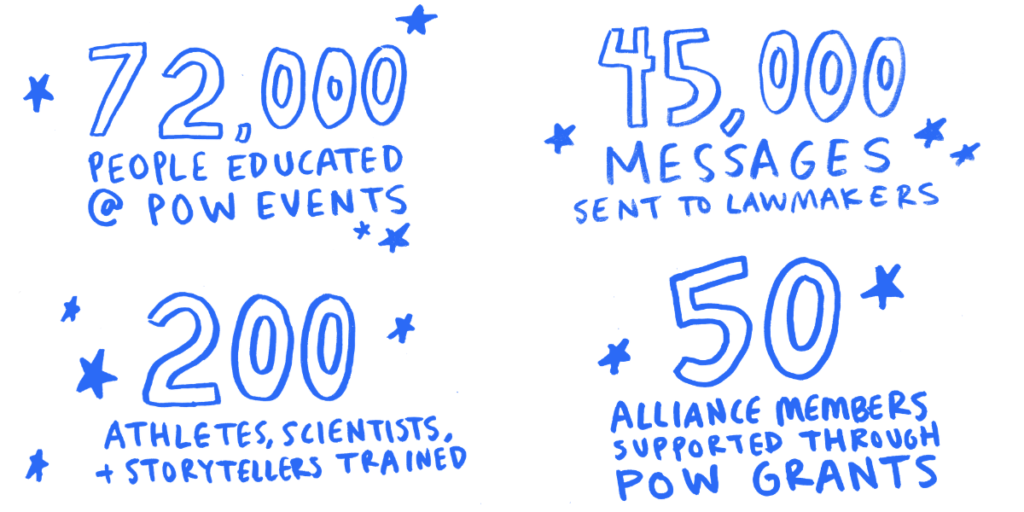
The effectiveness of POW’s advocacy is reflected in its recent operational metrics. In the 2025-2026 period, the organization trained 200 athletes, scientists, and storytellers to lead independent climate projects. This cohort executed over 600 specific climate actions, ranging from educational outreach to direct legislative testimony.
Public engagement has also scaled significantly. Across 150 live events, POW reached 72,000 in-person attendees, while its digital storytelling garnered 36 million views. In the legislative arena, supporters sent more than 47,000 messages to decision-makers, and 16,000 new advocates joined active campaigns.
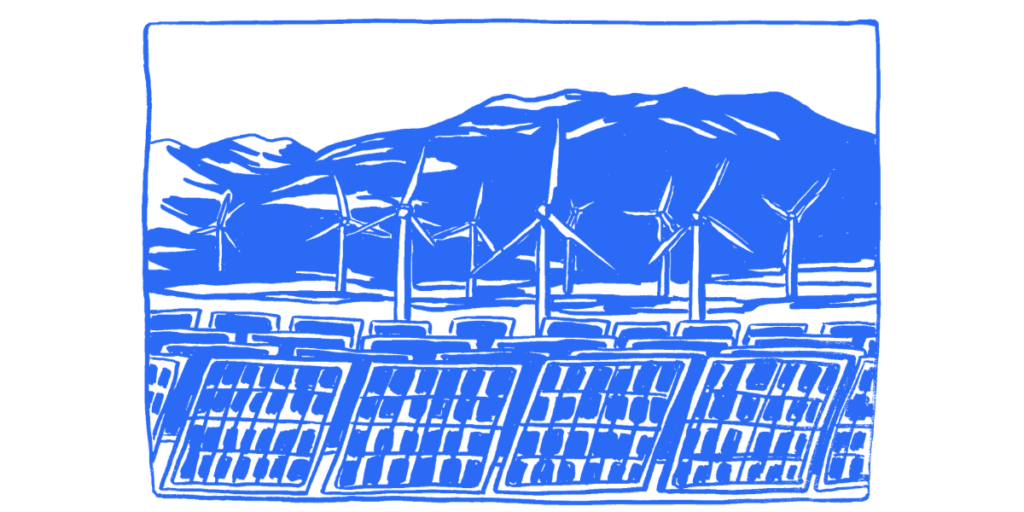
The organization’s focus on clean energy deployment has yielded measurable results in the field. To date, POW’s clean energy campaigns have facilitated the realization of 297 megawatts (MW) of renewable energy capacity. The organization is currently on track to reach 500 MW by the end of 2026, with the ultimate goal of 1,000 MW (1 GW) by 2028. These projects are concentrated in states with high outdoor recreation value, such as Montana, Nevada, and Colorado, where community-led fights for solar and wind permitting are most active.

The Three Pillars of Advocacy: Defend, Build, and Shift
To manage the complexities of climate reform, POW operates under three strategic pillars designed to address different aspects of the transition to a decarbonized economy.
Defending Public Lands and Carbon Sinks
The "Defend" pillar focuses on the protection of federal lands from fossil fuel expansion. Public lands are not only the playground for the outdoor community but also serve as vital carbon sinks. POW has been vocal in opposing "public lands sell-offs" and defending the integrity of the Arctic National Wildlife Refuge and Bears Ears National Monument. This work involves translating the $1.3 trillion economic impact of recreation into political leverage to ensure that public land policy prioritizes conservation and renewable energy over extraction.

Building Clean Energy Infrastructure
The "Build" pillar acknowledges that policy alone is insufficient without the physical infrastructure to support a green transition. With electricity, transportation, and industry accounting for the majority of U.S. emissions, POW advocates for the rapid deployment of wind, solar, and battery storage. In 2024, these technologies accounted for 93% of new electricity capacity added to the U.S. grid. POW’s role is to act as a localized advocate in permitting meetings and county commission hearings, helping to overcome the "Not In My Backyard" (NIMBY) sentiment that often stalls renewable projects.
Shifting Political Will and Norms
The "Shift" pillar is perhaps the most intangible but crucial aspect of POW’s work. It focuses on changing the cultural norms surrounding climate action. By using professional athletes and influencers, POW aims to make climate advocacy a "compulsory" part of the outdoor identity. During the last federal election cycle, the organization’s GOTV efforts reached 7.5 million people, targeting outdoor enthusiasts who traditionally have lower-than-average voter turnout rates.
Regional Mobilization: The Montana Case Study
A recent example of POW’s grassroots efficacy occurred in the summer of 2026 during a Montana Public Service Commission hearing. The hearing concerned long-term resource planning and the potential for continued reliance on coal-fired power plants. POW representatives traveled six hours to attend the session, ultimately constituting nearly one-third of the attendees in the room.
This presence provided a counterweight to the lobbying efforts of fossil fuel companies, which collectively spent nearly $500 million during the previous election cycle to influence energy policy. By showing up in person at low-profile but high-impact meetings, POW demonstrates how social currency and community presence can disrupt the influence of traditional industrial lobbies.

Analysis of Implications for the Outdoor Industry
The shift toward systemic advocacy marks a maturation of the outdoor industry’s political engagement. For decades, outdoor brands focused on sustainable manufacturing—using recycled materials or reducing water waste. While these efforts remain important, POW’s work suggests that the industry’s greatest power lies in its ability to influence the "systemic" carbon embedded in the national grid and transportation networks.
The economic implications are significant. Climate change represents an existential threat to the multi-billion dollar ski and mountain resort industry. A 2024 economic analysis suggested that shortening winter seasons could cost the U.S. economy billions in lost tourism revenue and thousands of seasonal jobs. By positioning climate action as an economic necessity for rural communities and recreation hubs, POW has successfully moved the conversation away from partisan environmentalism and toward pragmatic economic resilience.
Future Outlook and Challenges
Despite the progress made in renewable energy costs—with solar now 90% cheaper than it was 15 years ago—significant hurdles remain. The transition to a fossil-fuel-free world requires not only technological innovation but also a massive overhaul of the nation’s transmission lines and regulatory frameworks.
POW’s strategy for the coming years involves deepening its presence in "key geographies"—swing states and regions where energy policy is currently being contested. The organization’s leadership maintains that while the climate crisis is daunting, it remains a solvable problem through collective action. The goal is a future where the "exhaust hanging in the cold" at trailheads is replaced by electric vehicle fleets, and where the "single degree" of difference between snow and rain is managed through rigorous global and national emissions reductions.
The organization’s "assignment," as they define it, is to continue building a movement that is as durable as the landscapes it seeks to protect. As the outdoor community continues to align its passion for the land with its responsibility to protect it, the political will for a just transition to clean energy appears to be reaching a critical mass. The question of "what comes next" is increasingly answered by the mobilization of the millions of individuals who comprise the Outdoor State.
