

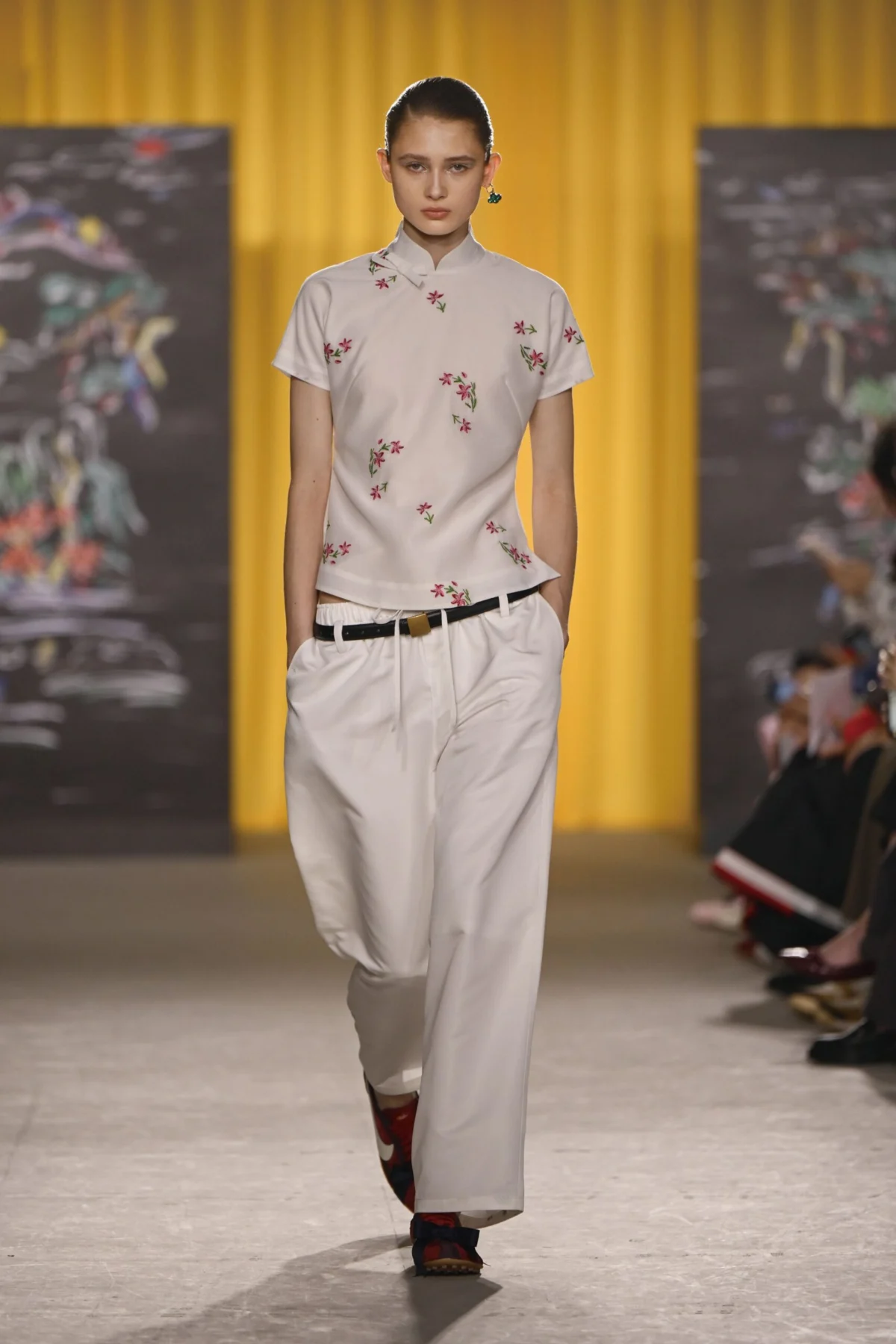
The Spring collection from Chinese designer duo Austin Wang and Yansong Liu, under the banner of Ao Yes, emerged as a captivating exploration of heritage reimagined for a new generation. This season, tradition was not a weighty decree but a vibrant palette for creative expression, infused with a lightness of touch and a palpable sense of playfulness. The designers centered their collection on the evocative theme of reflection, drawing inspiration from the interplay of mirrors, sunlight, shadows, and the fluid textures of water. This conceptual foundation translated into a series of aesthetically pleasing and distinctly feminine pieces. Familiar motifs like polka dots, sharp, jagged patterns, and whimsical, almost cartoonish renderings of traditional Chinese mountains and seas were woven into the fabric of the collection, injecting a lively energy into garments whose primary appeal lay in their effortless charm.
The silhouettes presented a departure from rigid formality, embracing a lighthearted ease that permeated the entire collection. The range spanned from uncomplicated, flowing dresses to more form-fitting, body-conscious shapes. Dramatic, tiered capes added a sense of theatricality, while delicate reinterpretations of the iconic qipao offered a contemporary nod to sartorial history. Traditional influences were subtly embedded, most notably in brocades meticulously crafted with patterns inspired by Song Dynasty court textiles. The color red, a perennial symbol of happiness and good fortune in Chinese culture, made its customary and welcome appearance. However, crucial to Ao Yes’s ethos, these traditional elements never felt burdened by excessive cultural solemnity. Instead, the designers approached heritage with a sensibility that was both cheerful and delicate, imbuing familiar motifs with a distinctly youthful and contemporary inflection.
Since the inception of the Ao Yes brand, Wang and Liu have articulated a clear ambition: to define what a new Chinese style might entail. This vision is particularly pertinent for a generation that appears less inclined to adhere strictly to inherited dress codes and more eager to forge their own sartorial narratives. Their ambition, as manifested in this collection, was not presented as a grand, declarative statement but rather as an inviting proposition. Ao Yes suggested that heritage can, and indeed should, be a source of pleasure rather than an obligation. This inclusive approach was even subtly reflected in the collection’s casting, which featured a diverse group of models, hinting at a brand that is consciously looking beyond its domestic market without severing its deep-rooted connections to its origins. Ao Yes’s collection successfully made cultural memory feel less like a static inheritance to be meticulously upheld and more like a dynamic set of possibilities, ripe for playful exploration and reinvention.
The Genesis of a Contemporary Chinese Aesthetic
The emergence of Ao Yes as a prominent voice in contemporary Chinese fashion is part of a broader, evolving landscape. Over the past decade, Chinese designers have increasingly asserted their unique perspectives on the global stage, moving beyond mere imitation to cultivate distinct design languages. This shift is fueled by a confluence of factors: a growing national pride, increased access to international fashion education and trends, and a burgeoning domestic market with a discerning consumer base eager for original designs.
Ao Yes, founded by Austin Wang and Yansong Liu, represents a vanguard of this movement. Their design philosophy, as evidenced in their Spring collection, deliberately navigates the complex relationship between past and present. They are not merely referencing tradition; they are actively deconstructing and recontextualizing it. This approach is particularly significant for younger Chinese consumers who, while proud of their heritage, are also deeply engaged with global youth culture and digital trends. The designers’ emphasis on “reflection” as a core theme speaks to this dual identity – a looking inward at cultural roots while simultaneously reflecting outward towards contemporary global aesthetics.
The Runway Presentation: A Symphony of Light and Shadow
While specific details of the runway show’s venue and exact date within the larger fashion week calendar were not provided in the original text, it is understood that this collection was presented as part of a significant fashion event, likely within a major fashion hub such as Shanghai, Beijing, or potentially during an international fashion week where Chinese designers are increasingly featured. Such events serve as crucial platforms for designers to showcase their creative vision, generate buzz, and secure retail partnerships.
The narrative of the collection – the interplay of light, shadow, and water – would have been artfully translated into the runway presentation. One can envision a set design that mimicked rippling water surfaces or incorporated strategically placed mirrors to amplify the thematic elements. The lighting would have been crucial, shifting to create dynamic contrasts between light and shadow, mirroring the collection’s conceptual underpinnings. The music selection would likely have been contemporary yet evocative, perhaps incorporating subtle traditional Chinese musical elements in a modern arrangement. The models, with their diverse backgrounds, would have moved with a sense of grace and confidence, embodying the collection’s blend of modern sophistication and playful spirit.
Key Design Elements and Inspirations
The Ao Yes Spring collection is characterized by a sophisticated interplay of traditional Chinese motifs and contemporary design sensibilities. The use of brocades inspired by Song Dynasty court textiles is a direct link to a rich historical period known for its refinement and artistic prowess. The Song Dynasty (960-1279 CE) was a golden age for Chinese art, literature, and philosophy, and its textile arts were particularly renowned for their intricate patterns, luxurious materials, and symbolic imagery. By drawing inspiration from this era, Wang and Liu are tapping into a deep well of aesthetic heritage, lending their designs a sense of gravitas and historical resonance.
The reinterpretation of the qipao, a quintessential symbol of Chinese fashion, is another significant element. The qipao, with its form-fitting silhouette and often ornate detailing, has undergone numerous transformations throughout its history. Ao Yes’s “delicate reinterpretations” suggest a modern approach, perhaps featuring updated fabrics, contemporary cuts, or subtler nods to the traditional garment, making it more accessible and relevant for today’s wearer.
The inclusion of polka dots, jagged patterns, and cartoon-like drawings of Chinese landscapes adds a layer of youthful exuberance and unexpected whimsy. These elements serve to democratize the collection, preventing it from becoming too reverential or inaccessible. The "cartoon-like drawings," in particular, speak to the designers’ understanding of contemporary visual culture and their willingness to embrace a more informal, playful aesthetic. This juxtaposition of high-fashion textiles and playful imagery is a hallmark of modern design, allowing brands to appeal to a broader audience.
Data and Market Context
The Chinese fashion market has experienced exponential growth in recent years. According to Statista, the Chinese apparel market is projected to reach $290.3 billion in 2023, with a significant portion driven by the luxury and premium segments. This growth is supported by a rising middle class, increasing disposable incomes, and a growing appetite for fashion that reflects personal identity and cultural pride.
Young Chinese consumers, in particular, are driving innovation and demanding authenticity. A 2022 report by McKinsey & Company highlighted that Gen Z consumers in China are the most engaged with fashion and are increasingly seeking brands that offer unique value propositions, including cultural relevance and sustainable practices. Ao Yes’s approach, which thoughtfully blends heritage with contemporary appeal, directly addresses this demographic’s desires.
The internationalization of Chinese fashion is also a notable trend. Brands are no longer solely focused on the domestic market; they are actively seeking to establish a global presence. This is evident in the "international casting" mentioned in the article, a strategic move to broaden appeal and signal global ambitions. Designers are participating in international fashion weeks, collaborating with global influencers, and seeking distribution channels in key overseas markets.
Official Statements and Designer Intentions (Inferred)
While direct quotes from Austin Wang and Yansong Liu regarding this specific collection were not provided, their stated intentions offer insight into their design philosophy. Their exploration of "what a new Chinese style might look like" and their focus on a generation "less interested in inherited dress codes than in making them their own" are central to their brand identity.
One can infer that Wang and Liu view their role as cultural navigators, translating the richness of Chinese heritage into a language that resonates with contemporary global audiences. Their emphasis on "pleasure rather than obligation" suggests a desire to liberate traditional elements from a sense of historical burden, allowing them to be appreciated and enjoyed in a modern context. This perspective is likely a deliberate response to a perceived need for Chinese fashion to evolve beyond historical archetypes and embrace a more dynamic, inclusive, and personal expression of identity.
Broader Impact and Implications
The Ao Yes Spring collection carries significant implications for the future of Chinese fashion. By successfully demonstrating a balanced approach to heritage and modernity, the brand offers a blueprint for other emerging designers. Their emphasis on playfulness and personal expression challenges the notion that traditional aesthetics must be treated with solemnity, opening up new avenues for creativity.
The collection’s success, if reflected in positive critical reception and commercial performance, could further solidify the narrative of Chinese fashion as a distinct and influential force on the global stage. It contributes to the growing discourse around cultural appropriation versus cultural appreciation, showcasing how designers can engage with their heritage in a respectful, innovative, and commercially viable manner.
Furthermore, Ao Yes’s strategic use of international casting and their forward-looking approach to defining a "new Chinese style" signals a brand poised for global growth. Their success would not only benefit the designers themselves but also contribute to the broader economic and cultural soft power of China in the fashion industry. In a world increasingly seeking authenticity and diverse perspectives, Ao Yes’s ability to make cultural memory a source of "possibilities to play with" is a powerful testament to the enduring relevance and adaptability of Chinese heritage in the 21st century. Their work suggests that the future of Chinese fashion lies not in rigidly preserving the past, but in creatively reimagining it for a dynamic and interconnected present.
