

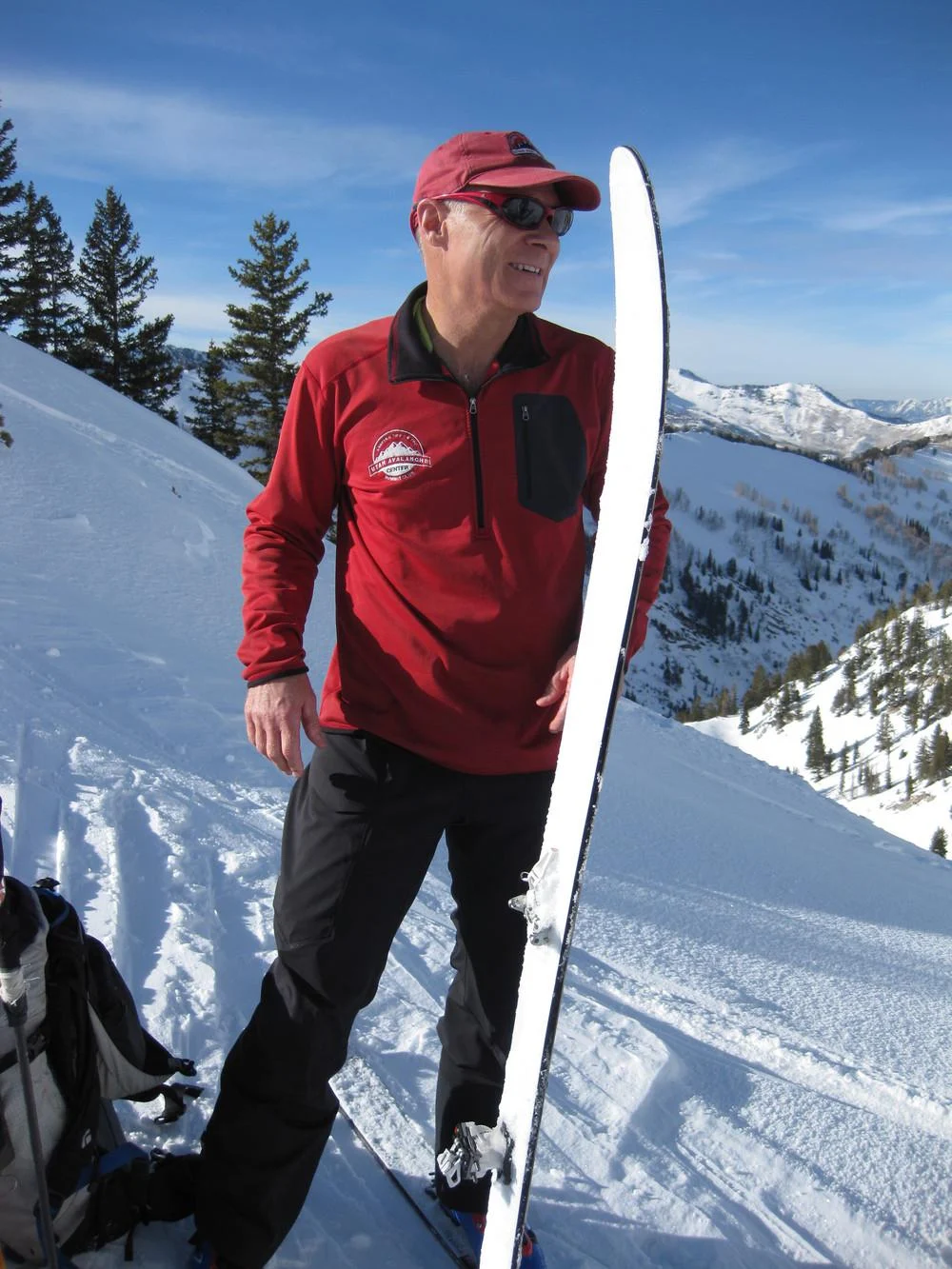
The Utah Avalanche Center (UAC) is undergoing a significant leadership transition as long-serving Director Bruce Tremper announces his retirement from the U.S. Forest Service at the close of August. Tremper, a towering figure in avalanche safety for nearly three decades, leaves behind a legacy of innovation and public education that has profoundly impacted avalanche forecasting and safety protocols both domestically and internationally. His departure marks the end of an era for the UAC, a period characterized by continuous evolution in how critical avalanche information is disseminated to the public.
A Quarter-Century of Leadership and Innovation at the UAC
For the past 29 years, Bruce Tremper has been synonymous with the Utah Avalanche Center. His tenure, beginning in 1986, saw the UAC transform from a nascent organization relying on phone-based advisories to a sophisticated operation leveraging the power of the internet. Under Tremper’s guidance, the UAC became a pioneer in developing user-friendly and informative avalanche products. This included the introduction of visual icons to represent avalanche conditions and the clear delineation of distinct avalanche problems, strategies that have since been adopted by avalanche centers worldwide. This proactive approach to communication was crucial in enhancing public understanding of complex snowpack dynamics and associated risks.
Tremper’s passion for avalanche science was evident from the early stages of his career. He earned his Master of Science degree from Montana State University, where he collaborated with renowned avalanche expert Dr. John Montagne. This academic foundation was quickly complemented by extensive practical experience. He engaged in avalanche control work at prominent ski resorts like Bridger Bowl and Big Sky in Montana, gaining firsthand knowledge of managing avalanche hazards in real-world conditions. Further deepening his expertise, Tremper worked as an avalanche forecaster at the Alaska Avalanche Center, collaborating with other influential figures in the field such as Doug Fesler, Jill Fredston, and Jim Woodmency. This diverse background provided him with a comprehensive understanding of avalanche phenomena across varied geographical and climatic contexts.
Beyond the UAC: A Multifaceted Contribution to Avalanche Safety
Tremper’s influence extended far beyond his directorship of the UAC. He dedicated six years of service as the editor for The Avalanche Review, a key publication for the avalanche community, shaping discussions and disseminating vital research. His prolific output includes numerous academic papers, several impactful avalanche safety videos, and two seminal books on avalanches that are considered essential reading for anyone involved in backcountry travel or avalanche education. These publications have served as cornerstones for avalanche knowledge, distilling complex scientific principles into accessible formats.
His expertise was also sought after for high-profile events. Tremper was instrumental in overseeing backcountry avalanche safety for Salt Lake City’s 2002 Winter Olympics, a responsibility that demanded meticulous planning and execution in a high-stakes environment. He consistently served as a valuable resource for the media, conducting hundreds of interviews that educated the public about avalanche dangers and safety measures. Furthermore, Tremper has been a dedicated educator, teaching at the National Avalanche School for decades, shaping the next generation of avalanche professionals. His involvement in the working group that developed the conceptual model of avalanche danger and the associated avalanche danger scale in 2010 underscores his significant role in establishing the theoretical frameworks that guide avalanche forecasting today.
A New Era for the Utah Avalanche Center: Mark Staples Appointed Director
With Bruce Tremper’s retirement, the Utah Avalanche Center has appointed Mark Staples as its new Director. Staples brings a wealth of experience and a deep understanding of avalanche science to the role. His professional journey includes valuable stints as a ski patroller and in snow safety at Big Sky Ski Area. He further honed his scientific acumen by pursuing a Master of Science degree in Engineering at Montana State University, focusing on snow avalanche research.

Staples has also contributed to national avalanche efforts through special projects for the National Avalanche Center. His practical forecasting experience includes eight seasons with the Gallatin National Forest Avalanche Center, where he developed a keen understanding of backcountry snowpack dynamics and forecasting methodologies in a different, yet equally challenging, mountain environment. He has expressed enthusiasm for joining the UAC team, recognizing its reputation as a top-tier organization.
The Evolving Landscape of Avalanche Forecasting
The transition at the UAC occurs against a backdrop of continuous evolution in avalanche forecasting and risk management. The science of avalanche prediction has advanced significantly, with increased emphasis on understanding the nuances of snowpack stratigraphy, weather patterns, and their complex interactions. Technological advancements have played a crucial role, enabling more sophisticated data collection and analysis. Satellites, automated weather stations, and advanced modeling techniques provide forecasters with unprecedented insights into snowpack stability.
The dissemination of this information has also undergone a revolution. What began as basic telephone hotlines has blossomed into comprehensive online platforms featuring detailed daily advisories, interactive maps, social media updates, and educational resources. The UAC, under Tremper’s leadership, was at the forefront of this digital transformation, recognizing the need to meet the public where they are and deliver information in the most accessible and actionable ways. The increasing popularity of backcountry recreation across the globe further amplifies the importance of these accessible forecasting efforts. Data from organizations like the National Ski Patrol and the Colorado Avalanche Information Center consistently highlight the growing number of individuals venturing into avalanche-prone terrain, underscoring the critical need for robust and reliable avalanche information services.
Broader Implications and Future Outlook
Bruce Tremper’s retirement, while marking the end of his formal service to the Forest Service, is not a complete withdrawal from the field. He has indicated his intention to continue teaching, writing, and contributing to avalanche safety projects. This ongoing involvement ensures that his vast knowledge and experience will remain accessible to the avalanche community. Many in the Wasatch backcountry anticipate seeing Tremper and his wife, Susi, continuing to enjoy skiing, likely with an even greater frequency now that his professional commitments have lessened. His continued presence, even in a less official capacity, will be a valuable asset.
The UAC’s announcement of Mark Staples’ appointment signifies a commitment to maintaining and building upon the strong foundation Tremper established. Staples’ background, blending academic rigor with practical forecasting and ski industry experience, positions him well to lead the center through future challenges and opportunities. His leadership will undoubtedly shape the UAC’s strategic direction, potentially focusing on further integrating new technologies, enhancing community outreach, and adapting to the ever-changing landscape of outdoor recreation and climate impacts on snowpack.
The continuity of expert leadership at organizations like the Utah Avalanche Center is paramount for public safety. As the backcountry continues to attract a growing number of enthusiasts, the need for accurate, timely, and understandable avalanche information remains critical. The successful transition from Bruce Tremper to Mark Staples suggests a promising future for avalanche safety in Utah and beyond, ensuring that the vital work of forewarning and educating the public will persist with the same dedication and innovation that has characterized the UAC for decades. The avalanche community expresses its gratitude to Bruce Tremper for his immeasurable contributions and extends a warm welcome to Mark Staples as he embarks on this important new chapter.
