

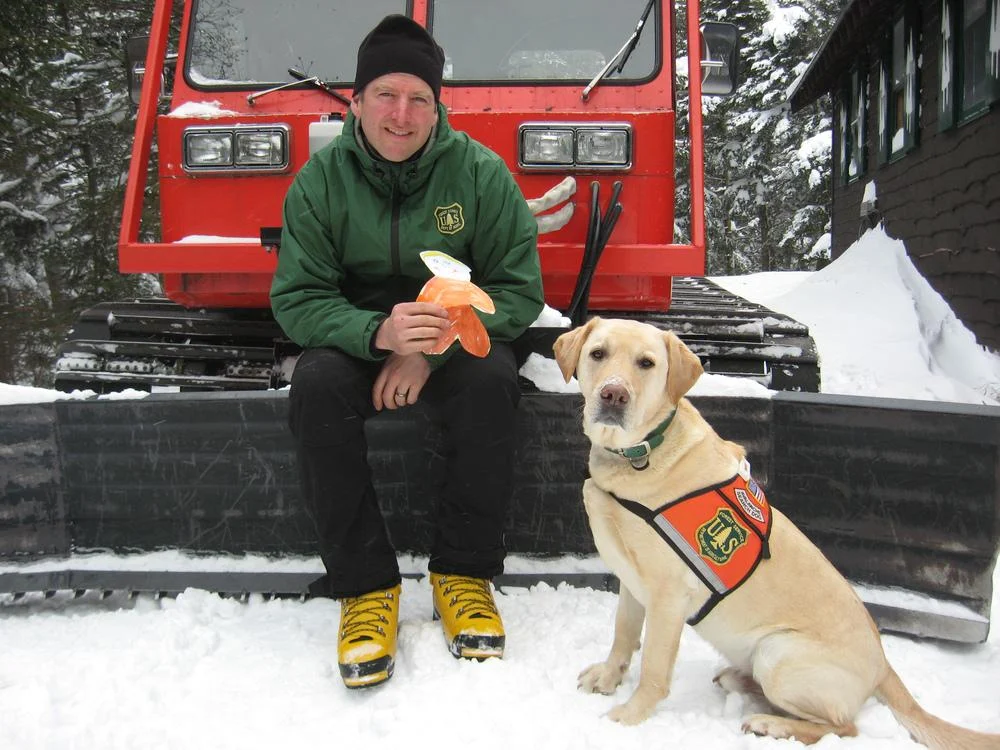
The mountain community is in mourning following the recent passing of Cutler, a highly respected avalanche rescue dog who served the Mount Washington Avalanche Center (MWAC) in New Hampshire with unwavering dedication for eleven years. Cutler, a four-legged hero, spent approximately 80% of his life tirelessly working to ensure the safety of visitors to the White Mountain National Forest, a region renowned for its challenging terrain and unpredictable winter weather. His contributions extended beyond his critical search and rescue capabilities, as Cutler also played a vital role in public relations, significantly enhancing the MWAC’s ability to reach and educate a broader audience on avalanche safety.
A Legacy of Service and Safety
Cutler’s tenure with the Mount Washington Avalanche Center spanned over a decade, a remarkable period of commitment for an avalanche dog. For nearly 80% of his life, he was an integral part of the MWAC’s operations, a testament to his stamina, training, and the deep bond he shared with his handlers. During his service, Cutler was instrumental in numerous training exercises and real-world scenarios, honing his skills in locating individuals buried in snow. His presence on the mountain was not just about immediate rescue; it was about deterrence and preparedness. By being a visible and approachable member of the MWAC team, Cutler, alongside his human counterparts, contributed to a greater awareness of the inherent risks associated with winter travel in avalanche-prone areas.
Mount Washington, the highest peak in Northeastern North America, presents a unique set of challenges for avalanche safety professionals. Its summit is notorious for extreme weather, including hurricane-force winds, heavy snowfall, and rapidly changing conditions. These factors create a dynamic and often dangerous environment for backcountry skiers, snowboarders, hikers, and mountaineers. The MWAC, a collaborative effort between the U.S. Forest Service and the University of New Hampshire, is tasked with monitoring snowpack stability, issuing avalanche forecasts, and responding to incidents. Cutler was an essential component of this vital operation, providing a specialized skill set that complements human expertise.
The Public Relations Paw-sitive Impact
Beyond his life-saving capabilities, Cutler’s role in public outreach was profound. Avalanche dogs, with their intelligence, charm, and unique working relationship with their handlers, often serve as ambassadors for avalanche safety organizations. Cutler was no exception. His appearances at public events, educational programs, and even informal interactions with visitors helped demystify the work of the MWAC and made the concept of avalanche safety more accessible and relatable. For many, encountering Cutler was their first direct interaction with the world of avalanche rescue, sparking curiosity and fostering a greater appreciation for the dangers and the dedicated professionals who work to mitigate them.
Mount Washington Avalanche Center Director Chris Joosen has honored Cutler’s memory with a comprehensive blog post and a poignant photo album. This digital tribute provides an in-depth look at Cutler’s life, his training, his operational deployments, and the deep affection he inspired within the MWAC team and the wider mountain community. Joosen’s account likely details the rigorous training regimen required for avalanche dogs, which includes scent detection, obedience, and simulated rescue scenarios. It also undoubtedly highlights the strong partnership between dog and handler, a relationship built on trust, communication, and mutual reliance.
A Glimpse into Cutler’s Operational Life
The images accompanying the original announcement offer a visual narrative of Cutler’s service. One photograph depicts Cutler alongside Chris Joosen, indicating their close working relationship and the shared responsibility of their duties. The caption suggests they are "going to work in Tuckerman’s Ravine on Mount Washington," a location synonymous with challenging backcountry skiing and snowboarding, and a frequent area of focus for avalanche monitoring. Tuckerman Ravine, a glacial cirque on the eastern side of Mount Washington, is a popular destination for skilled winter enthusiasts but is also known for its significant avalanche hazard. Cutler’s presence here underscores his direct involvement in the most critical areas of the mountain.
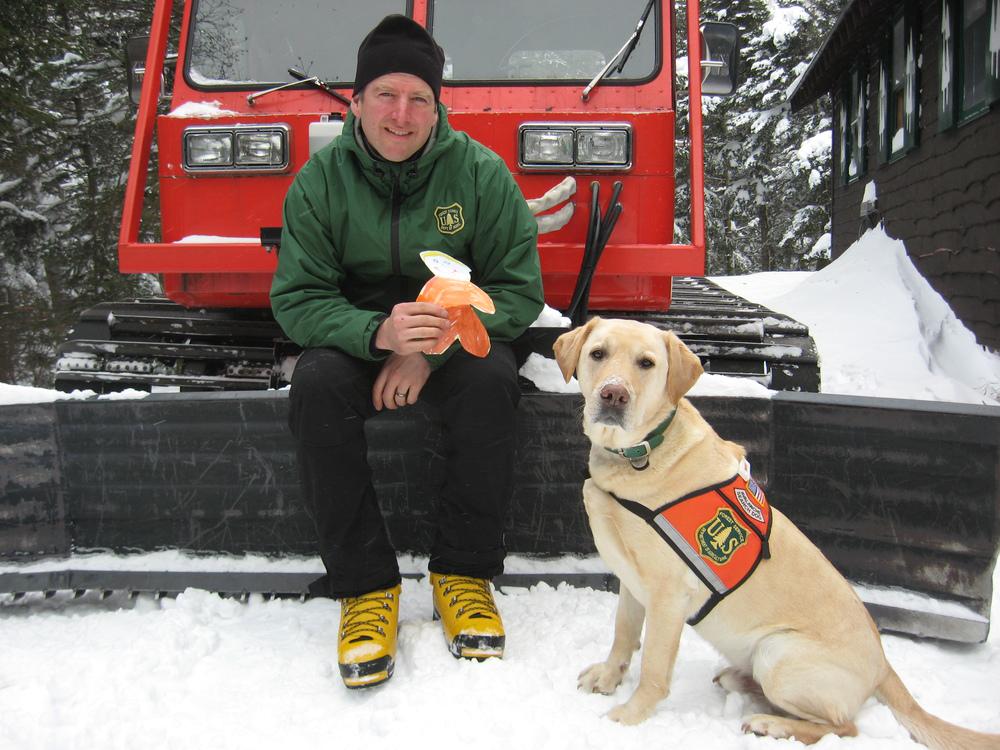
The second image, featuring Cutler with Joosen, further emphasizes the operational aspect of their partnership. The caption "Cutler with Mount Washington Avalanche Center Director Chris Joosen" suggests a moment of professional collaboration, perhaps during a briefing, a training exercise, or an actual deployment. The backdrop of Mount Washington’s rugged terrain serves as a constant reminder of the environment in which Cutler performed his duties.
The Science and Strategy of Avalanche Rescue Dogs
Avalanche rescue dogs are highly trained canine athletes with an exceptional sense of smell. Their ability to detect human scent buried under snow, even at significant depths, is a critical component of search and rescue operations. Dogs can cover vast areas of avalanche debris much faster than human searchers, significantly reducing the time it takes to locate a buried victim. The effectiveness of an avalanche rescue dog is a result of specialized breeding, intensive training, and a deep understanding of canine behavior and scent localization.
The training process for an avalanche dog is rigorous and ongoing. It typically begins in puppyhood and involves teaching the dog to associate the scent of human beings with positive reinforcement. This scent discrimination is crucial, as dogs must be able to differentiate human scent from other organic materials present in the snowpack. Furthermore, they are trained to signal their findings to their handlers, often through barking or a specific digging behavior. The handler’s ability to read these signals and direct the dog’s search is equally important.
Historical Context of Avalanche Dogs in Mountain Rescue
The use of dogs in mountain rescue, particularly for avalanche incidents, has a long and storied history. Perhaps the most famous example is that of the St. Bernard dogs of the Great St. Bernard Hospice, who were used for centuries to rescue travelers lost in the snowy passes of the Swiss Alps. While these dogs were known for their general assistance and ability to find and comfort lost individuals, modern avalanche rescue dogs are trained with a more specialized focus on scent detection and location.
In contemporary avalanche rescue, dogs are deployed in conjunction with other search methods, such as transceivers and probing. Their speed and sensitivity make them invaluable in the initial stages of a search, especially in large or complex avalanche debris fields. The psychological impact of seeing a dog arrive on scene can also be significant for rescue teams, offering a renewed sense of hope and urgency.
Broader Implications and the Future of MWAC Operations
The passing of Cutler marks the end of an era for the Mount Washington Avalanche Center. His absence will undoubtedly be felt by his handlers, fellow MWAC personnel, and the countless individuals he indirectly protected through his service. The loss of such a dedicated and experienced member of the team raises questions about the continuity of specialized roles and the ongoing need for well-trained avalanche dogs.
The MWAC will need to continue its efforts in training and potentially acquiring new avalanche dogs to maintain its operational capabilities. The investment in these highly specialized animals and their handlers is significant, encompassing not only the cost of the dog and its training but also the ongoing veterinary care, specialized equipment, and the handler’s time and expertise.
Furthermore, Cutler’s legacy serves as a powerful reminder of the human-animal bond that is so crucial in many aspects of public service and safety. The dedication and loyalty of animals like Cutler, when coupled with human skill and commitment, create incredibly effective teams that can save lives.
The Mount Washington Avalanche Center, through its continued work and the remembrance of dedicated individuals like Cutler, plays a vital role in ensuring that the majestic, yet often unforgiving, beauty of Mount Washington can be enjoyed safely by all who venture into its domain. The knowledge that dedicated professionals, both human and canine, are working to protect them provides a crucial layer of security for the thousands of visitors to the White Mountain National Forest each winter. Cutler’s years of service will not be forgotten, and his impact on avalanche safety in the region will continue to be felt.
