

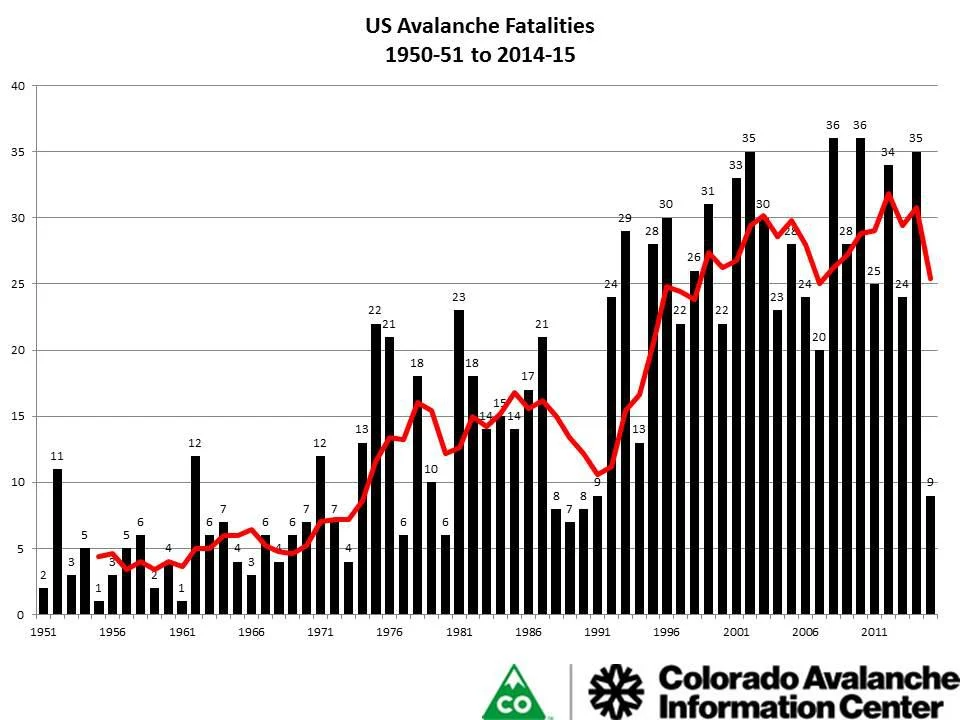
The 2014-2015 avalanche season, which officially concluded on April 30th, concluded with a notable and encouraging decline in fatalities, marking the lowest number of deaths recorded since 1991. While the loss of any life is tragic, the season’s tally of nine fatalities offers a significant reduction from previous years and underscores the complex interplay of environmental conditions and dedicated safety initiatives. This period of reduced risk was influenced by a combination of unfavorable snowpack conditions in certain regions and warmer inland temperatures, which generally suppressed avalanche danger for extended periods. However, experts and safety advocates are quick to emphasize that these environmental factors were significantly complemented by the sustained and expanded efforts of organizations like the Forest Service avalanche centers and the Colorado Avalanche Information Center (CAIC). Their ongoing commitment to providing comprehensive avalanche education and real-time information is widely credited with empowering backcountry users to make safer decisions. Looking at longer-term trends, the data also presents a promising picture. Despite a substantial surge in backcountry recreational use over the past fifteen years, the five-year moving average for avalanche fatalities has remained relatively stable, fluctuating between approximately 25 and 30 deaths annually. This suggests that while more people are venturing into avalanche-prone terrain, the effectiveness of safety messaging and educational outreach may be helping to mitigate the increased risk.
Environmental Factors and Their Impact on Avalanche Risk
The 2014-2015 winter season presented a unique set of meteorological conditions that played a substantial role in the reduced avalanche activity. Along the West Coast, a significantly poor snow year meant less accumulated snowpack, a crucial ingredient for avalanche formation. Reduced snowfall directly translates to a lower probability of weak layers forming within the snowpack and less overall mass to trigger a slide. Inland, a period of unseasonably warm temperatures further contributed to a less volatile snowpack. Warmer temperatures can promote consolidation and strengthening of the snow layers, making them more resistant to the stresses that can lead to avalanches.
These conditions, while beneficial in reducing inherent risk, also present their own set of challenges for backcountry users. A shallow snowpack can sometimes lead to unforeseen hazards, such as hidden obstacles or uneven terrain that may not be as apparent under deeper snow. Similarly, rapid warming can create other instability issues, such as wet avalanches, which can be powerful and unpredictable.
The Critical Role of Avalanche Education and Information
While environmental conditions undoubtedly played a significant role, the consensus among safety professionals is that enhanced avalanche education and accessible information were pivotal in achieving the low fatality count. Organizations such as the Forest Service avalanche centers, which operate across various mountainous regions of the United States, and the Colorado Avalanche Information Center (CAIC), a leading entity in avalanche forecasting and education, have been instrumental in this effort.
These centers provide daily avalanche forecasts, detailing the current danger levels, identifying specific hazards, and offering recommendations for safe travel in the backcountry. Their educational programs, ranging from introductory awareness courses to advanced rescue techniques, equip individuals with the knowledge and skills necessary to assess risk, interpret forecasts, and make informed decisions in avalanche terrain. The CAIC, for example, maintains a comprehensive database of avalanche accidents in the U.S., meticulously collecting data that informs forecasting, research, and public awareness campaigns.
The proactive dissemination of information through websites, social media, and public outreach has likely reached a broader audience than ever before. This increased accessibility ensures that even casual backcountry enthusiasts can access critical safety information, fostering a culture of awareness and preparedness.
Historical Context: A Look at Avalanche Fatality Trends
The nine fatalities recorded in the 2014-2015 season stand in stark contrast to historical averages. Prior to this year, the annual average for avalanche fatalities in the United States had been considerably higher. The data from the U.S. avalanche accident database, maintained by entities like the CAIC, reveals a trend where the number of deaths often fluctuated between the mid-20s and mid-30s annually for much of the preceding decade.
The period between 1990 and 1991, for instance, saw a similarly low number of fatalities, making the current season a significant outlier. To provide further context, the five-year moving average, which smooths out year-to-year variations, offers a more stable indicator of long-term trends. This average has hovered between approximately 25 and 30 fatalities per year over the last five seasons. This stability, in the face of a substantial increase in backcountry participation, is a testament to the growing effectiveness of safety initiatives.
The Rise in Backcountry Recreation and its Implications
Over the past 15 years, the United States has witnessed a dramatic surge in popularity for backcountry activities. Skiing, snowboarding, snowshoeing, and climbing in non-patrolled, avalanche-prone areas have become increasingly accessible and appealing. This rise can be attributed to several factors, including a desire for more challenging and uncrowded experiences, the availability of lighter and more efficient backcountry equipment, and a greater emphasis on self-reliance and adventure.
However, this increased participation inherently elevates the potential for avalanche incidents. More people venturing into avalanche terrain means a larger pool of individuals who, without adequate preparation, could be exposed to significant risk. The fact that avalanche fatalities have not mirrored this exponential increase in participation is a critical point of analysis. It strongly suggests that the efforts to educate and inform backcountry users are beginning to yield tangible results, potentially preventing a proportional rise in accidents.
Analysis of the 2014-2015 Season: A Multifaceted Success
The convergence of favorable weather patterns and robust safety initiatives created a uniquely low-risk environment during the 2014-2015 season. The poor snow year along the West Coast and the warmer inland temperatures acted as a natural buffer, reducing the likelihood of large, destructive avalanches. This environmental advantage, however, would have been insufficient on its own to achieve such a low fatality count without the parallel efforts of avalanche safety organizations.
The Forest Service avalanche centers and the CAIC, through their continuous forecasting, educational programs, and public outreach, have cultivated a more informed and prepared backcountry community. The data from the CAIC, which tracks avalanche accidents, provides invaluable insights into the types of avalanches that occurred and the circumstances surrounding them. While specific details of each of the nine fatalities would require a deeper dive into the accident database, the overall trend suggests that a greater number of individuals were able to avoid dangerous situations due to their awareness and decision-making capabilities.
Broader Impact and Future Outlook
The success of the 2014-2015 season offers valuable lessons for the future of avalanche safety. It highlights the critical synergy between environmental conditions and human preparedness. While we cannot control the weather, we can significantly influence our safety through education and informed decision-making.
The continued commitment to developing and disseminating avalanche education is paramount. As backcountry use continues to grow, the need for accessible, engaging, and effective training programs will only intensify. Investing in these programs, supporting avalanche research, and fostering a culture of safety awareness are crucial steps in ensuring that future seasons, regardless of the snowpack, see continued reductions in preventable tragedies.
The graphic provided by the CAIC, illustrating the trend of avalanche fatalities, serves as a powerful visual reminder of the progress made. It also underscores the ongoing responsibility that all backcountry users have to educate themselves, respect the power of nature, and make safety their top priority. The encouraging numbers from the 2014-2015 season should not lead to complacency but rather serve as a catalyst for further innovation and dedication in the field of avalanche safety. The ultimate goal remains to ensure that everyone who ventures into the backcountry returns home safely.
