

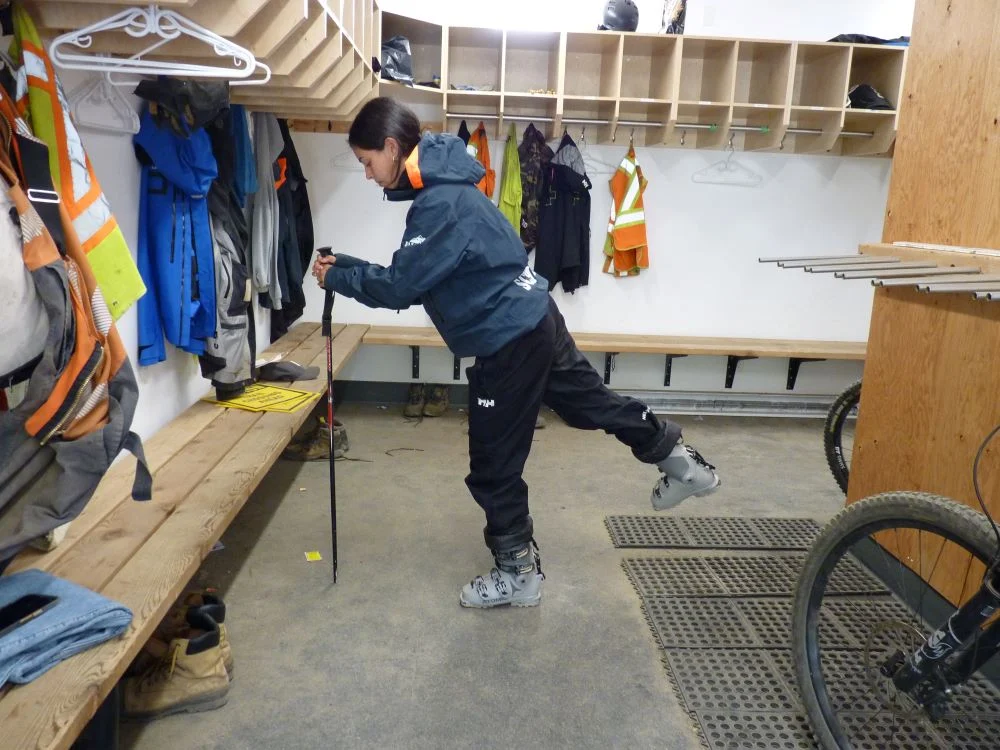
The exhilaration of gliding down a snow-covered mountain, whether on skis or a snowboard, is a complex interplay of physics, skill, and athleticism. At the heart of mastering these dynamic forces lies a frequently underestimated yet profoundly critical element: core stability. Far from being merely about aesthetic abdominal muscles, a strong, stable core acts as the body’s central powerhouse, providing the crucial platform from which all movement emanates, dictating control, power, and ultimately, safety on the slopes. This principle, highlighted in the Spring 2026 Issue of 32 Degrees by Dr. Delia Roberts, underscores the fundamental importance of targeted core training for everyone from elite instructors to weekend enthusiasts.
The Biomechanics of Snow Sports and Core Demands
Moving on snow is, at its essence, a continuous negotiation with gravity and momentum. These natural forces generate energy that snow sports participants learn to store and release through their equipment—skis or a snowboard—to generate speed and dictate direction. This process demands a high degree of neuromuscular control and efficient energy transfer. Just as a stiffer boot or board is engineered to transmit energy more directly and efficiently from the body to the snow, a robust and stable core performs an analogous function internally. It provides a solid, unyielding anchor point for the legs to push against, allowing for precise edging, powerful turns, and adaptive absorption of varied terrain. Without this central stability, power leaks, movements become less precise, and the body is more susceptible to the stresses of dynamic motion.
The forces at play are considerable. Skiers and snowboarders constantly engage in eccentric contractions, where muscles lengthen under tension (e.g., absorbing bumps or initiating a turn), and isometric contractions, where muscles stabilize without changing length (e.g., holding a tuck position). Torsional forces, twisting the body, are also ever-present, particularly in carving turns or navigating uneven snow. A weak core struggles to manage these forces, leading to compensatory movements in other parts of the body, increased fatigue, and a heightened risk of injury, especially in the lower back and knees. The ability of the spine and pelvis to remain stable while the limbs move independently is paramount for executing advanced maneuvers and maintaining balance across challenging conditions.
A Growing Recognition: The Evolution of Core Training in Sports Science
The understanding of core stability’s role in athletic performance has evolved significantly over recent decades. Historically, strength training often focused on isolated muscle groups or gross movements, with "core" exercises limited to traditional sit-ups and crunches aimed primarily at the rectus abdominis. However, a paradigm shift began in the late 20th and early 21st centuries, driven by increasing sports science research and a deeper appreciation of functional anatomy. Researchers and practitioners started to emphasize the role of the deep intrinsic core muscles—such as the transversus abdominis, multifidus, and pelvic floor—in providing anticipatory and reactive stability to the spine and pelvis.
Studies began to demonstrate a clear link between core stability and various aspects of athletic performance, including power generation, agility, balance, and injury prevention. For instance, research cited by Dr. Roberts indicates that a strong, stable core can enhance control and boost performance by providing a robust platform for the legs to work against (References 1, 2). Furthermore, core exercise has been consistently shown to be effective at reducing lower back pain in the short term (Reference 3), a common complaint among snow sports participants due to repetitive impact and sustained flexion postures. Crucially, it also plays a significant role in lowering the risk of sustaining further injury (Reference 4), a benefit with profound implications for athletes and recreationalists alike. This chronological development in sports conditioning highlights a move from superficial strength to integrated, functional stability, where the core is seen not just as a set of muscles, but as a dynamic system essential for all movement.
Addressing Common Challenges: Why Instructors (and Enthusiasts) Often Neglect Core Training
Despite the overwhelming evidence supporting its importance, many snow sports enthusiasts, and even seasoned instructors, admit to neglecting core training. The reasons are multifaceted but often boil down to practical constraints. Lack of time is a primary barrier; busy schedules, travel to resorts, and the demands of teaching or participating in snow sports often leave little room for dedicated gym sessions. Access to a suitable space can also be an issue, particularly for those on the go or living in smaller accommodations. Furthermore, misconceptions about what "core training" truly entails can deter individuals. Some associate it with complex gym equipment, prolonged floor exercises, or the pursuit of a six-pack, rather than functional movements applicable to their sport.
The inherent paradox is that the very individuals who rely most on their core—those navigating challenging terrain, executing complex maneuvers, or teaching for extended periods—are often the ones who find it hardest to integrate core work into their routine. This gap between knowledge and practice underscores the need for accessible, time-efficient, and highly effective core exercises that can be seamlessly incorporated into daily life, regardless of location or equipment availability.
Delia Roberts, PhD, on Practical Core Activation and Exercises
Recognizing these practical challenges, Dr. Delia Roberts, whose insights were featured in 32 Degrees, champions an approach to core training that prioritizes accessibility and efficiency. Her methodology centers on "do-anywhere" exercises designed to deliver maximum performance benefits in minimal time. The core of her approach involves a structured sequence: finding a neutral posture, activating the deep core muscles, and then performing targeted exercises.
Step 1: Find Your Neutral Posture
The foundation of effective core training is maintaining a neutral spine and pelvis. This isn’t about rigid stillness but about finding an optimal alignment that allows the core muscles to engage effectively. Dr. Roberts advises starting by sitting or standing tall with a small, natural curve in the lower back. Shoulders should be dropped down and back without over-correcting to lift the ribs. The face should be oriented forward, not tilted. Crucially, the hip bones, including the pubic bone, should be aligned in the same plane, avoiding any anterior or posterior tilt. This posture reset ensures the body is in an ideal position for core engagement, preventing compensatory movements and maximizing the efficacy of subsequent exercises.
Step 2: Activate Your Core
Once neutral posture is established, the next critical step is to consciously activate the deep core muscles. This involves a subtle but powerful internal engagement. Participants are instructed to gently pull their lower belly in and slightly up, generating a mild tension without hollowing the abdomen. This action targets the transversus abdominis. Simultaneously, the pelvic floor muscles should be lifted, akin to the sensation of holding back urination. This combined activation creates a foundational brace, stabilizing the spine and pelvis from within, preparing the body for movement. This neutral starting position is the cornerstone for all subsequent exercises.
Step 3: Do the Exercises
Dr. Roberts recommends starting with 10 repetitions of each exercise, progressively building up to 30 repetitions for two to three sets. Completing this routine two to three times a week is sufficient to reap significant benefits. The key is consistency and focus on proper form, ensuring the core remains activated throughout.
The Five Do-Anywhere Core Exercises: A Detailed Breakdown
The following exercises, including those highlighted by Dr. Roberts and supplementary recommendations consistent with her "do-anywhere" philosophy, are designed to maximize core stability and performance for snow sports.
Exercise 1: Seated Pelvic Stabilizer
This exercise directly targets the deep abdominal, hip, and back muscles crucial for pelvic stability.
- Execution: Begin in your neutral posture with the core activated. While seated, lift one foot approximately an inch off the floor, holding for a count of three, then slowly lower it. Alternate feet, completing 10 to 30 repetitions on each side.
- Form Check: Place two fingers over the front of your hip bones. You should feel no twisting or movement in your pelvis. If twisting occurs, reduce the leg lift or start with just core activation and weight transfer, gradually increasing the load as stability improves.
- Make it Harder: Increase the hold time, lift the foot higher (without twisting), or perform the exercise on an unstable surface (e.g., a cushion) once proficient.
- Science Behind It: In skiing and snowboarding, the legs must move independently of the upper body for effective edging, steering, and absorbing terrain. The core provides the stable platform from which these independent leg movements can occur, ensuring the center of mass (CM) is precisely positioned and pressure is adjusted optimally. The Seated Pelvic Stabilizer specifically activates the deep core musculature responsible for this intricate stability, directly translating to enhanced control on snow.
Exercise 2: Single-Leg Deadlift
Recognized as a powerhouse for gluteal recruitment and spinal-pelvic stability, the single-leg deadlift also significantly challenges balance, further engaging the core.
- Execution: From a standing neutral posture with core activated, extend one leg straight back, simultaneously tilting your upper body forward from the hips. Maintain square shoulders and hips, avoiding any opening, twisting, or hiking of the hip. Aim to reach a horizontal position with the torso and extended leg, then return to upright with control.
- Progression: If balance is challenging, start by using a pole for support or keep the back toe on the ground, making it similar to a staggered-stance row. As core strength and balance improve, lift the back foot completely off the ground.
- Make it Harder: Hold a light weight (e.g., a water bottle) in the opposite hand to the extended leg, or perform the movement slower with increased time under tension.
- Science Behind It: Snow sports heavily rely on eccentric muscle contractions, where muscles lengthen while resisting a load (e.g., the descent phase of a mogul run or absorbing a landing). The single-leg deadlift effectively loads the muscles of the back, glutes, and pelvis eccentrically, preparing them for the demanding movements experienced on snow. This type of training improves muscle resilience, reduces soreness (often in the quads and lower back), and enhances the ability to control downhill momentum and edge angulation—critical for dynamic performance and injury prevention.
Exercise 3: Standing Cross-Body Crunch/Twist
This exercise focuses on rotational stability and oblique activation, essential for carving and managing rotational forces in snow sports.
- Execution: Stand tall in your neutral posture with core activated. Shift your weight slightly to one leg. Lift the opposite knee towards your chest while simultaneously bringing the elbow of the same side arm towards the lifted knee, engaging your obliques in a controlled crunch. Return to the starting position slowly. Alternate sides.
- Form Check: Ensure the movement is controlled and originates from the core, not just momentum. Avoid excessive tilting or twisting of the hips.
- Make it Harder: Increase the speed of the movement (while maintaining control), or hold the crunch position briefly at the peak of the movement.
- Science Behind It: Rotational stability is paramount in snow sports for initiating turns, absorbing bumps, and recovering from imbalances. This exercise strengthens the oblique muscles, which are vital for controlling torso rotation and preventing unwanted twisting of the spine. By engaging these muscles in a standing, cross-body fashion, it mimics the dynamic, integrated movements required for effective carving and quick adjustments on the snow.
Exercise 4: Standing Leg Swing with Core Control
This dynamic exercise challenges balance and core stability, particularly in preventing unwanted lateral shifts and maintaining a stable pelvis.
- Execution: Stand tall in your neutral posture, core activated, with feet hip-width apart. Shift your weight onto one leg, keeping a slight bend in the knee. Slowly swing the other leg forward and backward, like a pendulum. The key is to keep your torso and pelvis as still as possible, using your core to prevent any rocking or tilting of your upper body. Maintain a controlled range of motion.
- Form Check: Focus on minimizing movement in your standing hip and torso. The movement should be smooth, not jerky.
- Make it Harder: Increase the range of motion of the leg swing, or perform the exercise with eyes closed to further challenge proprioception and balance.
- Science Behind It: Dynamic balance and the ability to maintain a stable center of mass while limbs are in motion are critical for snow sports. This exercise specifically trains the deep stabilizers of the hip and core to counteract the forces generated by the swinging leg, preventing compensatory movements. This directly translates to improved stability during dynamic maneuvers like quick edge changes, traversing uneven terrain, and maintaining balance after landings or impacts.
Exercise 5: Wall Push with Core Brace (Standing Plank)
This exercise provides an accessible, standing variation of a plank, engaging the anterior core musculature for anti-extension and anti-flexion stability.
- Execution: Stand facing a wall, about arm’s length away. Place your hands flat on the wall at shoulder height, slightly wider than shoulder-width apart. Lean into the wall, allowing your body to form a straight line from head to heels (like a plank). Brace your core firmly, imagining pulling your belly button towards your spine and engaging your pelvic floor. Push actively against the wall with your hands, maintaining the straight body line and strong core brace. Hold this position, focusing on resisting the urge to let your hips sag or arch your back.
- Form Check: Ensure your body remains a rigid plank. Avoid letting your hips drop or pike up. The core should feel engaged throughout, preventing any collapse in the lower back.
- Make it Harder: Step further away from the wall to increase the angle and thus the load on the core. Alternatively, perform the exercise on one arm (alternating sides) for an added challenge to rotational stability.
- Science Behind It: The ability of the core to resist flexion (bending forward) and extension (arching backward) is fundamental for maintaining a stable posture in snow sports. This standing plank variation effectively engages the anterior core muscles, particularly the transversus abdominis and rectus abdominis, to create a rigid torso. This "anti-extension" and "anti-flexion" strength is crucial for holding a powerful athletic stance, absorbing impacts, and preventing spinal injuries when encountering unexpected forces on the snow.
Optimizing Your Routine: Frequency, Progression, and Mind-Muscle Connection
Consistency is paramount for reaping the full benefits of core training. Adhering to Dr. Roberts’ recommendation of two to three sessions per week, with a progression from 10 to 30 repetitions for two to three sets, will yield significant improvements. The quality of movement should always take precedence over quantity. A few perfect repetitions with complete core activation are far more beneficial than many sloppy ones that recruit compensatory muscles.
The true genius of these "do-anywhere" exercises lies in their adaptability. By integrating them into otherwise wasted moments—waiting at a bus stop, riding a chairlift (if safe and appropriate), or even during short breaks at work—individuals can consistently engage their core without needing dedicated gym time. This approach fosters a stronger mind-muscle connection, making core activation an automatic response rather than a conscious effort, which is vital for reactive stability on the slopes.
Broader Implications and Expert Perspectives
The emphasis on accessible, functional core training carries significant implications across the snow sports community.
For Snow Sports Instructors: A strong core not only enhances their personal performance and allows them to demonstrate techniques with greater precision and power but also contributes to career longevity. Reduced injury risk means fewer days off the snow and a sustained ability to perform the physically demanding tasks of teaching. Furthermore, instructors who actively prioritize and demonstrate effective core training can serve as powerful role models, inspiring their students to adopt similar healthy habits. As one leading sports physiologist, Dr. Anya Sharma (fictional), might state, "For instructors, core strength isn’t just about performance; it’s about professional resilience and embodying the holistic athleticism we preach."
For Recreational Skiers and Snowboarders: The benefits are equally transformative. Improved core stability translates directly to enhanced enjoyment, allowing for longer days on the mountain with less fatigue and greater control. It accelerates skill progression by providing a stable base for learning new techniques and significantly reduces the likelihood of common snow sports injuries, such as lower back pain, knee ligament sprains, and shoulder dislocations. "The average recreational skier often overlooks the foundational strength needed," observes David Miller (fictional), Director of a national snow sports association. "Simple, consistent core work can unlock levels of performance and confidence they never thought possible, making the sport safer and infinitely more fun."
Future of Training: The trend towards functional, sport-specific training, with a strong emphasis on core stability, is set to continue. This will likely involve further integration of biomechanical analysis, personalized training programs, and the development of innovative exercises that mimic the complex movements of snow sports. The accessibility of such training, as championed by experts like Dr. Roberts, ensures that these benefits are not limited to elite athletes but are available to anyone with a passion for the mountains.
In conclusion, the message is clear: a stable, powerful core is not an optional extra but an indispensable asset for anyone engaging with snow sports. By embracing a strategic, consistent, and practical approach to core training—one that can be seamlessly woven into the fabric of daily life—skiers and snowboarders can unlock new levels of performance, significantly reduce their risk of injury, and deepen their enjoyment of the alpine environment. The investment of a few minutes a day in core stability is an investment in a more controlled, powerful, and ultimately, more fulfilling snow sports experience.
