

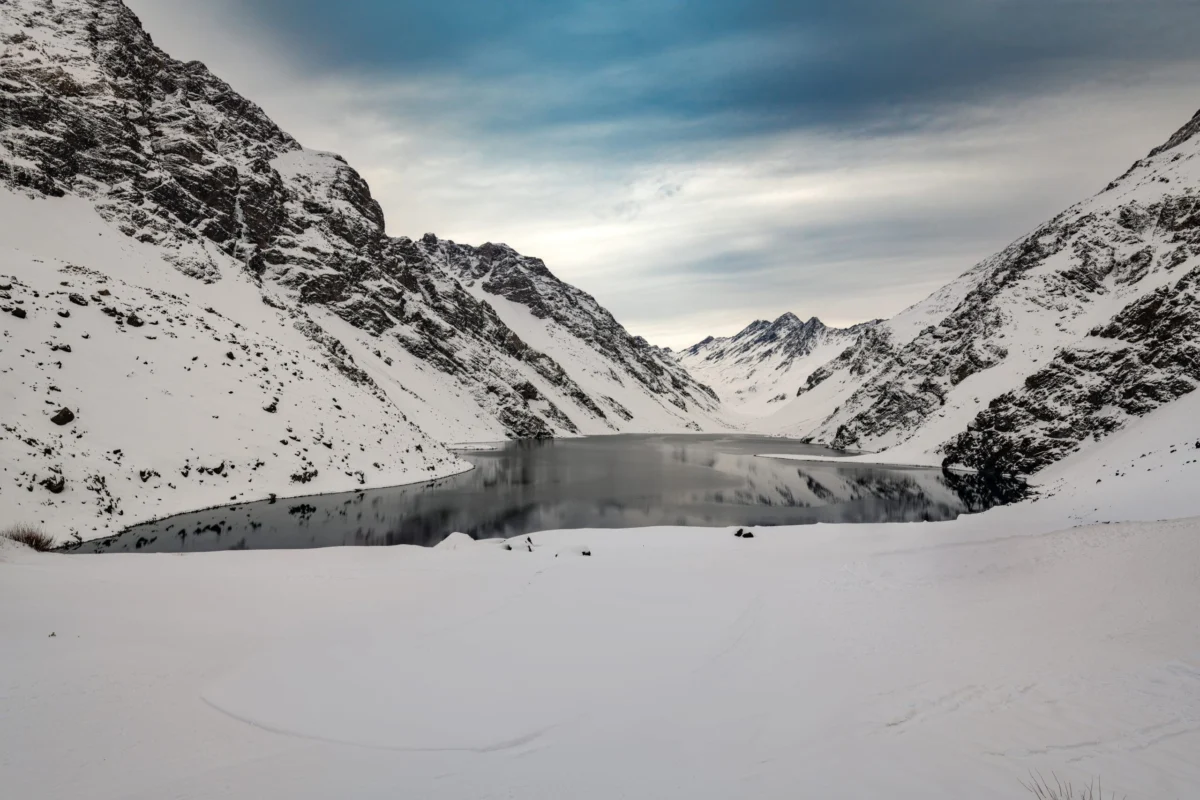
Three individuals lost their lives and four others sustained injuries when a powerful avalanche swept a group of seven into the frigid waters of Laguna del Inca, a picturesque glacial lake adjacent to the renowned Ski Portillo resort in Chile, on Saturday, October 17th. The devastating incident occurred as the group was attempting to ascend the slopes of Cerro Los Tres Hermanos, a challenging peak in the central Andes.
The Fatal Ascent and Avalanche Trigger
According to official statements released by Ski Portillo management, the group inadvertently triggered a slab avalanche while engaged in mountaineering activities. Slab avalanches are particularly dangerous as they occur when a cohesive layer of snow fractures and slides as a single block, often with little warning. The sheer force and volume of snow involved in such events can be overwhelming, making survival incredibly difficult.
The remote location of the incident, in an unpermitted backcountry area outside the resort’s operational boundaries, underscores the inherent risks associated with off-piste exploration. Ski Portillo management emphasized that this area was clearly marked with prominent signage indicating significant avalanche danger. The resort had officially concluded its winter season on October 11th, a full week prior to the fatal accident, highlighting that the group was venturing into terrain not under the resort’s active patrol or management.
Rapid Rescue Response Amidst Grim Realities
Despite the remoteness and the swiftness of the avalanche, a rapid and coordinated rescue effort was mounted. The resort’s dedicated ski patrol team, renowned for their expertise in mountain rescue, mobilized immediately. They were joined by members of the Chilean Carabineros, the national police force, who responded with remarkable speed. Within a mere 10 minutes of the avalanche being reported, rescue teams were on the scene.
The immediate priority was the extraction of survivors from the treacherous conditions of the lagoon. Four individuals were successfully rescued from the icy waters and the debris field. Their injuries, while serious, did not prove immediately life-threatening. These survivors were promptly transported by helicopter to Los Andes Hospital, a medical facility equipped to handle trauma cases, to receive urgent medical attention. Tragically, the efforts to locate and rescue the remaining three members of the group were unsuccessful, confirming their deaths in the avalanche.
Unprecedented Snowfall and Escalating Avalanche Risk
The tragedy occurred against a backdrop of an exceptionally unusual and snowy season in Chile’s central Andes. After a relatively slow start to winter, a series of powerful storms delivered record-breaking snowfall across multiple ski resorts. Ski Portillo, in particular, reported an astonishing nearly 40 feet of snowfall for the season, a figure that dramatically surpasses its historical average of approximately 17 feet. This exceptional accumulation created a complex and potentially unstable snowpack.
The timing of the avalanche is also critical. While the main ski season had concluded, rising spring temperatures in the Andes were contributing to increased avalanche danger. As temperatures rise, the snowpack undergoes transformations. Layers can become saturated with water, reducing their cohesion and making them more susceptible to detachment. This phenomenon, known as warming-induced instability, can create dangerous conditions even in areas that might have seemed stable earlier in the season. The increased moisture content within the snowpack can also make avalanches heavier and more powerful.
The unusually heavy late-season snow also prompted neighboring Valle Nevado to extend its operational season into November, a decision unprecedented in its 38-year history. This highlights the extraordinary nature of the snowfall experienced in the region during this period, which, while a boon for skiers, also amplified the inherent risks associated with the mountainous terrain.
Official Statements and Condolences
Miguel Purcell, the General Manager of Ski Portillo, issued a statement expressing profound sorrow and extending deepest condolences to the families of the victims. "Our hearts go out to the families and friends of those who lost their lives in this tragic accident," Purcell stated. He reiterated that the group had entered an area that was clearly designated as dangerous and off-limits, emphasizing the resort’s commitment to safety.
Purcell also confirmed that resort personnel had interacted with the group earlier on the morning of the accident and had explicitly warned them against venturing into the backcountry due to the heightened avalanche risk. This detail underscores a poignant aspect of the tragedy: that warnings were issued, but unfortunately, not heeded.
Background Context: Ski Portillo and Laguna del Inca
Ski Portillo, established in 1961, is one of South America’s oldest and most iconic ski resorts, renowned for its challenging terrain, vibrant atmosphere, and stunning location in the Andes Mountains, approximately 165 kilometers (103 miles) from Santiago. The resort is situated at an elevation of 2,535 meters (8,317 feet) and offers breathtaking views of the surrounding peaks.
Laguna del Inca, a naturally formed glacial lake, is a central feature of the Portillo landscape. Its striking turquoise waters and the dramatic backdrop of the Andes make it a visually arresting landmark. However, the beauty of the area belies its inherent dangers. The steep slopes surrounding the lagoon are prone to avalanches, a natural phenomenon that has shaped the region’s topography and poses a constant risk to those who venture into its backcountry. The lake itself, with its frigid temperatures, adds another layer of peril for anyone caught in an avalanche and swept into its depths.
Chronology of Events (Inferred)
While a precise minute-by-minute timeline is not publicly available, the sequence of events can be reconstructed based on the information provided:
- Early Saturday Morning, October 17th: The group of seven individuals embarks on their mountaineering expedition towards the summit of Cerro Los Tres Hermanos. Resort personnel, aware of their intentions, issue direct warnings against entering the unpermitted backcountry due to elevated avalanche risk.
- Later Saturday Morning/Early Afternoon: While ascending Cerro Los Tres Hermanos, the group triggers a slab avalanche.
- Immediately Following Avalanche Trigger: The avalanche sweeps the group into Laguna del Inca.
- Within Minutes of Avalanche: Reports of the incident reach Ski Portillo. The resort’s ski patrol and the Chilean Carabineros are mobilized.
- Approximately 10 Minutes After Report: Rescue teams arrive at the scene.
- Following Arrival: Rescue operations commence. Four survivors are located, extracted from the lagoon and debris, and airlifted to Los Andes Hospital. Search efforts for the three missing individuals continue.
- Later Saturday: The tragic confirmation of the deaths of the three missing individuals.
Broader Implications and Safety Considerations
The incident at Ski Portillo serves as a stark reminder of the unforgiving nature of mountain environments and the critical importance of adhering to safety protocols. The allure of challenging backcountry terrain, especially after an exceptionally snowy season, can be powerful, but it must be balanced with a thorough understanding of the risks involved.
Key implications and safety considerations arising from this tragedy include:
- Backcountry Awareness: The event highlights the critical need for backcountry users to possess advanced knowledge of snow conditions, avalanche forecasting, and safe travel techniques. This includes understanding how to read terrain, identify avalanche hazards, and carry essential safety equipment such as avalanche transceivers, probes, and shovels.
- Respect for Warnings and Signage: The fact that the area was clearly marked as dangerous and that warnings were issued underscores the necessity of heeding official advisements from resort management and avalanche forecasting centers.
- The Role of Avalanche Forecasting: While Ski Portillo had closed, regional avalanche centers likely provided daily forecasts. Understanding and consulting these forecasts, which are based on meticulous analysis of snowpack stability, is paramount for anyone venturing into the backcountry. The complex snowpack from an unusually heavy season would have required particularly diligent monitoring.
- Consequences of Unpermitted Travel: Venturing into unpermitted or closed areas carries inherent risks, not only due to potential hazards but also because these areas are not under active patrol or rescue readiness. The response time, while commendable, was still a critical factor in the outcome.
- Technological Advancements vs. Natural Forces: While modern avalanche safety equipment and forecasting tools have significantly improved, they cannot eliminate the inherent dangers of natural avalanches. Human decision-making and risk assessment remain the most critical factors in preventing such tragedies.
The incident at Laguna del Inca will undoubtedly lead to renewed discussions about backcountry safety education and the enforcement of regulations in popular mountain destinations. As the investigation into the specific circumstances of the avalanche continues, the focus remains on remembering the lives lost and reinforcing the vital importance of respecting the power of the mountains.
This is a developing story, and further updates will be provided as more information becomes available from official sources.
