

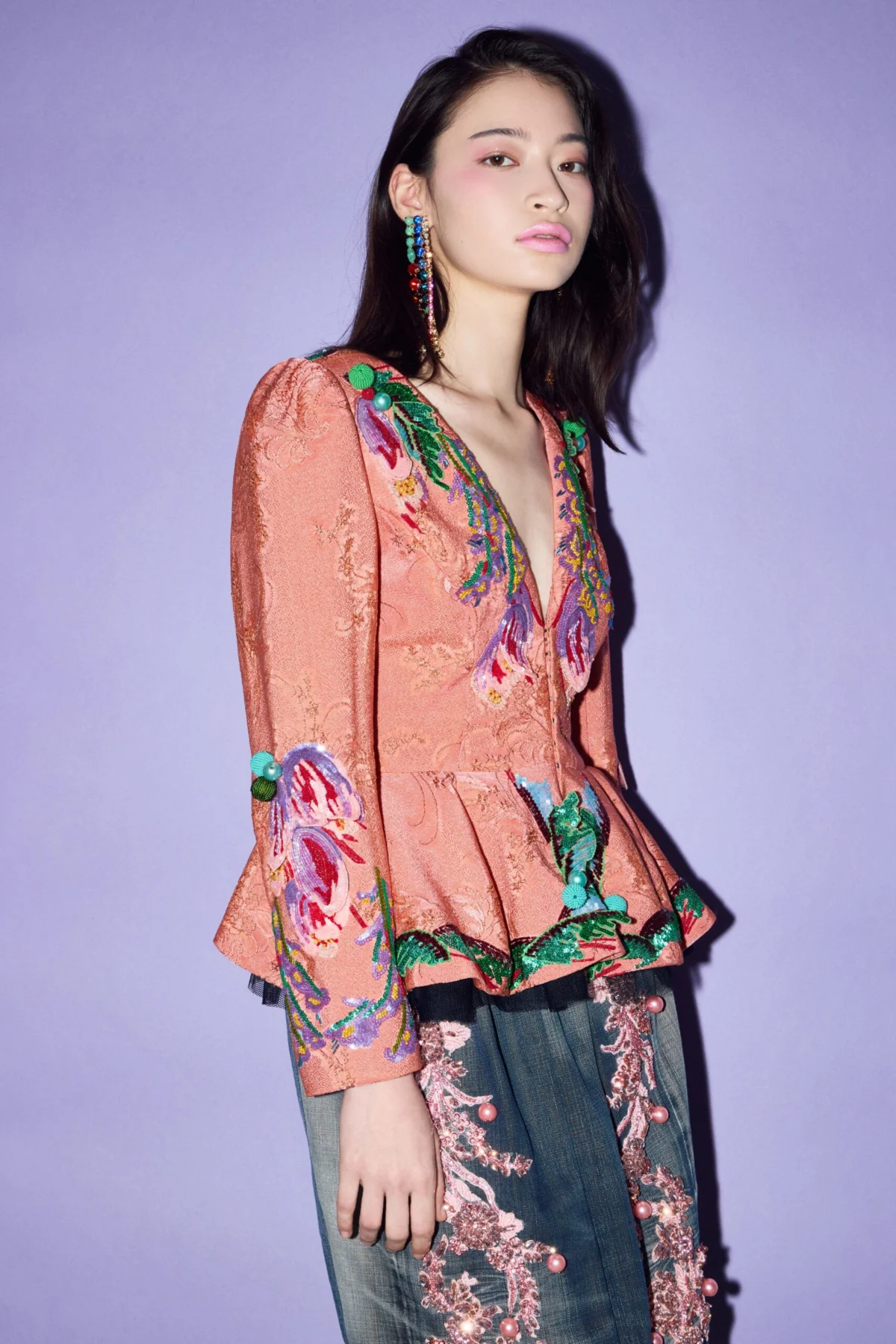
Two months after the debut of their spring collection, the dynamic Australian fashion house Romance Was Born has swiftly followed with a compelling new offering, extending their creative exploration of an extraordinary archival find. Designers Luke Sales and Anna Plunkett, speaking from Rome, have characterized this latest endeavor as "part two" of a narrative deeply rooted in a vintage wallpaper scrapbook discovered within the Powerhouse Museum Archive, the very location housing their design studio. While the spring collection hinted at a more refined aesthetic, this subsequent release leans into a decidedly celebratory, almost festive spirit, though the brand’s signature intricate detailing ensures that neither collection can be strictly categorized as casual, even with the occasional, artfully placed denim element.
The Genesis of a Dual Collection Narrative
The genesis of this two-part collection lies in the serendipitous discovery of a voluminous antique wallpaper book. This find, unearthed within the hallowed halls of the Powerhouse Museum Archive in Sydney, has provided an unexpectedly rich wellspring of inspiration for Sales and Plunkett. The museum, a prominent institution dedicated to collecting and showcasing Australian design, decorative arts, industrial heritage, and scientific innovation, offers a unique ecosystem for creatives. Its proximity to Romance Was Born’s studio facilitated an immersive exploration of the archival material, allowing the designers to delve deeply into its patterns, motifs, and historical context.
The initial spring collection, launched approximately two months prior to this new release, served as the foundational chapter of this thematic exploration. It laid the groundwork by introducing the visual language and stylistic sensibilities derived from the wallpaper. This subsequent collection, therefore, acts as a natural progression, a deepening of that initial exploration, and a testament to the designers’ prolific creative output. Sales’s observation that "we’re calling it part two" underscores the deliberate continuity and the extension of the core concept. The designers have indicated that the vastness of the antique wallpaper book offers ample material for further exploration, suggesting that this thematic arc is far from concluded. This approach allows them to meticulously develop and present their ideas, avoiding the pressure to condense an abundance of creative impulses into a single, finite collection.
A Symphony of Texture and Ornamentation
The hallmark of Romance Was Born’s design philosophy has always been an embrace of opulent detail and artisanal craftsmanship, and this new collection is no exception. Embroidery and jacquard fabrics continue to command the spotlight, forming the very backbone of the collection’s aesthetic. In a deliberate departure from minimalist trends, virtually every piece presented eschews plain, unadorned surfaces. This commitment to intricate embellishment is evident in a mock-neck striped button-down shirt, which is elevated by delicate, dangling floral appliqués, transforming a classic silhouette into a wearable work of art.
The playful and theatrical influence of the wallpaper is further amplified through the strategic use of wispy feathers. These ethereal elements are artfully integrated, adorning hemlines, encircling collars, and gracing the cuffs of garments, imbuing them with a sense of movement and whimsical flair. This meticulous attention to detail not only showcases the brand’s technical prowess but also injects a spirited, celebratory mood into the collection.
The introduction of black and navy lace adds a sophisticated edge, demonstrating the versatility of the brand’s aesthetic. This lace is employed in various applications, from a daring floral-embroidered dress featuring a provocative front slit, embodying a bolder, more avant-garde sensibility, to its more demure application as a refined trim on a vibrant, funky green set inspired by vintage silhouettes. These contrasting uses of lace highlight the brand’s ability to navigate between statement pieces and subtly elevated ensembles, all while maintaining a cohesive visual identity.
Contextualizing Romance Was Born’s Creative Process
Romance Was Born, established in 2005 by Luke Sales and Anna Plunkett, has consistently carved a unique niche in the Australian fashion landscape. Their work is characterized by a fearless approach to color, print, and embellishment, often drawing inspiration from art, history, and unconventional sources. The brand has garnered international acclaim for its distinctive aesthetic, which blends high fashion sensibilities with a playful, almost theatrical spirit. Their runway shows are often described as immersive experiences, celebrated for their innovative staging and elaborate costumes.
The Powerhouse Museum, as a key cultural institution, plays a vital role in nurturing Australian creativity. Its extensive collection encompasses a vast array of objects, including significant holdings of fashion and textiles, providing invaluable resources for designers and researchers. The partnership between Romance Was Born and the museum, particularly through the archival discovery, exemplifies the symbiotic relationship between cultural heritage and contemporary creative practice. This discovery is not an isolated incident; the museum actively collaborates with artists and designers, offering access to its collections and facilitating new interpretations of historical materials.
The Power of Archival Inspiration: A Broader Trend
The use of historical archives as a source of inspiration is a recurring theme in the fashion industry. Designers often look to the past to inform the future, reinterpreting historical silhouettes, motifs, and textile techniques for a contemporary audience. This practice not only pays homage to sartorial heritage but also allows for the creation of garments that possess a unique depth and narrative.
In the context of Romance Was Born’s latest collection, the wallpaper scrapbook represents a specific, tangible link to a particular era and aesthetic. The act of "extending it on from there," as Sales describes, signifies a process of creative evolution, where historical elements are not merely replicated but reimagined and infused with the brand’s signature contemporary vision. This approach allows for a sustained engagement with a chosen theme, fostering a richer and more nuanced exploration than might be possible within the confines of a single season.
Future Trajectories and Designer Intentions
Luke Sales’s statement that "these last two collections only scratch the surface of the lengthy antique wallpaper book" is a significant indicator of the brand’s long-term vision. It suggests a strategic decision to develop a multi-season narrative arc, allowing for a more in-depth exploration of the archival material. This deliberate pacing allows for greater creative freedom and the potential for more complex and layered design development.
The brand’s dedicated wearers, often referred to as "Romance Was Born’s tribe," are accustomed to the brand’s commitment to intricate craftsmanship and unique storytelling. Their anticipation for further textile development in the coming year is a testament to the brand’s ability to cultivate a loyal following that values originality and artistic integrity. Sales’s further elaboration, "I just think when we do something, we have so many ideas and it’s so hard to condense them all into one collection, and it’s nice to be able to spread it out and take our time with something and really explore it and really see it all through," encapsulates the philosophy behind this extended creative project. It speaks to a desire to fully realize their artistic vision without the constraints of rapid production cycles, allowing for a more thoughtful and comprehensive creative output.
Analysis of Implications and Market Position
The strategic decision by Romance Was Born to present a dual collection, directly linked by a singular archival inspiration, has several implications for the brand and the wider fashion industry.
Firstly, it signals a move towards a more narrative-driven approach to collection development. By extending a theme across multiple seasons, the brand can build a deeper connection with its audience, inviting them into a prolonged creative journey. This can foster greater brand loyalty and engagement, as consumers become invested in the unfolding story.
Secondly, this approach allows for a more sustainable and considered production cycle. Instead of constantly churning out entirely new concepts each season, Romance Was Born can delve deeper into the chosen theme, optimizing resource allocation and minimizing waste associated with rapid trend cycles. This aligns with a growing industry trend towards more conscious and mindful fashion production.
Thirdly, the success of this strategy could influence other designers and brands. It offers a compelling alternative to the traditional seasonal collection model, demonstrating that a focused, in-depth exploration of a concept can be equally, if not more, impactful. This could lead to a broader adoption of more deliberate and artistically driven collection planning within the fashion ecosystem.
Finally, the collaboration with the Powerhouse Museum Archive highlights the importance of cultural institutions as vital partners for contemporary designers. By providing access to historical artifacts and fostering creative interpretation, museums can play a crucial role in the ongoing evolution of fashion and design. The visibility generated by such collaborations also serves to promote the museum’s collections and its mission to preserve and celebrate Australia’s cultural heritage.
In conclusion, Romance Was Born’s latest collection, born from a deep dive into the Powerhouse Museum’s wallpaper archive, is more than just a series of garments; it is a testament to the power of sustained creative inquiry, the enduring allure of historical narratives, and the brand’s unwavering commitment to artistry and detail. The "part two" approach signals a thoughtful evolution in their design process, promising further creative dividends and reinforcing their position as innovators in the Australian and international fashion arenas.
