

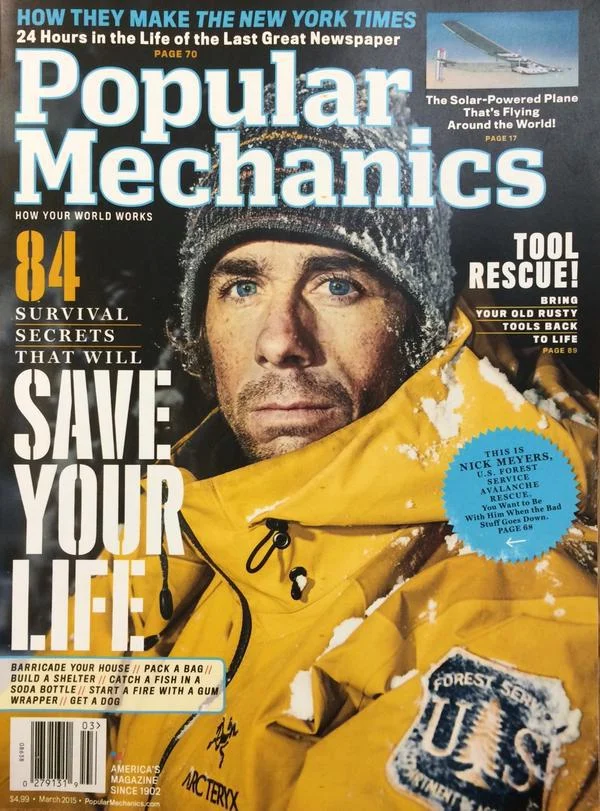
The esteemed Mount Shasta Avalanche Center Director and Lead Climbing Ranger for Mount Shasta, Nick Meyers, has achieved a significant professional milestone, gracing the cover of the latest issue of Popular Mechanics magazine. This prominent placement highlights his expertise in avalanche safety and rescue, underscoring the critical role he and his team play in safeguarding lives in challenging mountainous environments. The feature article delves into his profound knowledge and practical experience, offering readers an intimate look at the strategies and gear essential for survival in the face of avalanche threats.
A Deep Dive into Expertise: The Popular Mechanics Feature
The Popular Mechanics feature, titled "10 Survival Essentials an Avalanche Rescue Expert Always Carries," provides an in-depth exploration of the tools and mindset that Nick Meyers employs in his high-stakes profession. The magazine, known for its accessible yet authoritative coverage of technology, science, and practical application, selected Meyers for his demonstrable experience and leadership in a field where split-second decisions and reliable equipment can mean the difference between life and death.
The article itself, accessible online, details specific items Meyers prioritizes for avalanche rescue and survival. While the exact list is not provided in the source material, the context of an avalanche rescue expert’s essentials typically includes, but is not limited to: avalanche transceivers, probes, shovels, specialized first-aid kits, navigation tools such as GPS devices and maps, durable and weather-appropriate clothing, emergency shelters, communication devices, and essential sustenance. The emphasis is on items that are not only functional but also reliable under extreme duress and varying environmental conditions. Meyers’ selection and explanation of these items offer practical advice for anyone venturing into avalanche-prone terrain, from professional rescuers to recreational skiers and snowboarders.
The decision by Popular Mechanics to feature Meyers on its cover signifies a broader recognition of the importance of avalanche safety and the specialized knowledge required to manage its risks. The magazine’s readership, typically interested in innovation and practical problem-solving, is likely to find Meyers’ insights particularly valuable. This exposure also serves to elevate the profile of the Mount Shasta Avalanche Center and the broader field of avalanche science and rescue.
Background: The Mount Shasta Avalanche Center and its Mission
The Mount Shasta Avalanche Center (MSAC) operates as a vital resource for the public, providing critical information and forecasts regarding avalanche conditions on and around Mount Shasta. Mount Shasta, a stratovolcano in Northern California, is a popular destination for a variety of outdoor activities, including climbing, skiing, and snowboarding. Its dramatic elevation and susceptibility to significant snowfall make it an area where avalanche risk is a constant consideration.
The MSAC’s primary mission is to reduce the risk of avalanche accidents through education, forecasting, and public outreach. This involves a rigorous process of snowpack observation, weather monitoring, and analysis of avalanche incidents. The center’s forecasts are crucial for recreationalists, guiding their decisions about where and when it is safe to travel in mountainous terrain. The center’s work is often carried out in challenging conditions, requiring dedication, specialized training, and a deep understanding of snow science and mountain meteorology.
Nick Meyers, as Director of the MSAC, holds a position of significant responsibility. His leadership involves not only directing the forecasting operations but also overseeing educational programs and ensuring the center’s resources are effectively utilized. His role as Lead Climbing Ranger on Mount Shasta further deepens his connection to the mountain and its inherent dangers. This dual role provides him with firsthand experience of the mountain’s conditions and the challenges faced by those who ascend its slopes, whether for recreation or professional duty.
Chronology of Recognition and Impact
While the exact timeline of how Nick Meyers came to be featured in Popular Mechanics is not detailed, such features typically stem from an established reputation and a history of significant contributions to a field. Meyers’ likely progression to this level of recognition would have involved:
- Years of Dedicated Service: Accumulating extensive experience in avalanche forecasting, rescue operations, and climbing ranger duties on Mount Shasta.
- Development of Expertise: Honing his skills in snow science, meteorology, and rescue techniques, possibly through advanced training and certifications.
- Community Engagement: Actively participating in educational outreach, public safety initiatives, and potentially contributing to research or best practices in avalanche safety.
- Recognition by Peers and Organizations: Gaining the respect of colleagues within the avalanche community, the Forest Service, and other relevant agencies.
- Media Outreach and Collaboration: Potentially engaging with media outlets to share expertise, leading to opportunities for broader features.
The Popular Mechanics feature itself can be seen as a culmination of this sustained effort. The magazine’s editorial team likely identified Meyers as a leading authority whose insights would resonate with their audience. The cover placement is a powerful endorsement, elevating his profile and, by extension, that of the MSAC and the critical work it performs.
Supporting Data and Contextual Analysis
The importance of avalanche safety cannot be overstated. According to the Colorado Avalanche Information Center (CAIC), the leading cause of avalanche fatalities is human-triggered avalanches. While specific statistics for the Mount Shasta region may vary, the national trend highlights the persistent danger. Data from the Utah Avalanche Center indicates that between 2000 and 2010, an average of 25 avalanche fatalities occurred annually in the United States. More recent data often shows similar figures, underscoring the ongoing need for robust forecasting and public education.
The decision by Popular Mechanics to focus on survival essentials is particularly relevant. In avalanche situations, survival often depends on rapid and effective rescue. The "golden hour" – the period immediately following burial – is critical. If a victim is not located and extricated within this timeframe, their chances of survival decrease dramatically. This emphasizes the importance of:
- Avalanche Awareness Education: Ensuring individuals venturing into avalanche terrain understand the risks, how to identify dangerous conditions, and how to avoid triggering avalanches.
- Proper Equipment: Carrying and knowing how to use essential rescue gear, such as transceivers, probes, and shovels.
- Rescue Skills: Practicing avalanche rescue techniques to ensure proficiency in a high-stress environment.
Meyers’ expertise, as highlighted in the article, directly addresses these critical components of avalanche safety. His guidance on essential gear is not merely a list of items but a testament to a survival philosophy honed through experience.
Inferred Reactions and Official Endorsement
While direct statements from other parties are not provided, the feature in Popular Mechanics inherently implies a level of endorsement from various stakeholders.
- U.S. Forest Service: As Director of the Mount Shasta Avalanche Center, Nick Meyers operates under the purview of the U.S. Forest Service. The Forest Service likely views this feature as a positive development, amplifying the reach of their public safety messaging and highlighting the caliber of their personnel. Such recognition can bolster support for the center’s operations and funding.
- Avalanche Community: Professionals within the avalanche science and rescue community would undoubtedly view Meyers’ recognition as a well-deserved honor. It validates the importance of their collective work and can inspire new entrants to the field.
- Outdoor Enthusiast Community: Skiers, snowboarders, climbers, and hikers who frequent mountainous regions would likely appreciate the accessible information provided by Popular Mechanics. This feature serves as a valuable educational tool, potentially saving lives by raising awareness and promoting best practices.
The accompanying blog post mentioned in the original text, accessible via a USDA Forest Service link, further suggests an internal recognition and promotion of Meyers’ achievement within the agency. This indicates a coordinated effort to leverage this media attention for broader public benefit.
Broader Impact and Implications
The Popular Mechanics feature on Nick Meyers has several significant implications:
- Enhanced Public Safety Awareness: The broad readership of Popular Mechanics means that crucial avalanche safety information will reach a wider audience than might typically engage with specialized avalanche resources. This can lead to more informed decision-making by individuals who may not consider themselves "avalanche professionals" but still venture into backcountry areas.
- Professional Recognition and Recruitment: Highlighting the expertise of individuals like Meyers can inspire others to pursue careers in avalanche science, meteorology, and search and rescue. This is vital for ensuring the continued availability of skilled professionals to staff avalanche centers and rescue teams.
- Validation of Scientific and Practical Expertise: The feature underscores the value of blending scientific understanding with practical, on-the-ground experience. Meyers’ role as both a director of an avalanche center and a climbing ranger exemplifies this crucial synergy.
- Promoting Mount Shasta as a Destination with Awareness: While Mount Shasta is a popular destination, this feature can help promote responsible recreation. By emphasizing safety and preparedness, it encourages visitors to approach the mountain with the respect it demands.
The image accompanying the original article, a photograph of Nick Meyers, further personalizes the story and provides a visual anchor for the reader. Such imagery is common in magazine features, helping to connect the audience with the individual whose expertise is being showcased. The resolution and presentation of this image in a high-profile magazine like Popular Mechanics would have been carefully considered to convey professionalism and credibility.
In conclusion, Nick Meyers’ appearance on the cover of Popular Mechanics is a notable achievement that extends beyond personal recognition. It serves as a powerful platform to disseminate vital information about avalanche safety, highlight the critical work of the Mount Shasta Avalanche Center, and underscore the dedication and expertise required to protect lives in some of the world’s most challenging environments. The feature reinforces the message that preparedness, knowledge, and the right equipment are indispensable for anyone venturing into the backcountry.
