

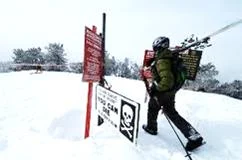
The allure of untamed snow and the thrill of skiing beyond the roped boundaries of ski resorts beckons many winter enthusiasts. While many ski areas in the United States are strategically situated on or adjacent to publicly accessible lands, presenting an unparalleled recreational resource, these backcountry zones operate under a distinct set of realities. Unlike the meticulously managed and patrolled environments within resort boundaries, these areas are uncontrolled and unpatricated. This crucial distinction means that ski patrols do not conduct avalanche control operations in these zones, and in the unfortunate event of an accident, the responsibility for rescue falls squarely upon the shoulders of the individuals themselves. As Doug, a seasoned voice in avalanche safety, pointedly questions, “after a parent waves goodbye in the ski area parking lot do they know what the kids are doing? Are they leaving the ski area for R-rated terrain?” This stark question highlights a growing concern regarding the increasing popularity of "sidecountry" skiing and the inherent risks associated with venturing into terrain that carries a significantly higher potential for danger.
The Growing Phenomenon of Sidecountry Skiing
Sidecountry skiing, a term encompassing terrain that lies just outside the designated ski area boundaries but is still accessible from the resort, has experienced a surge in popularity over the past decade. This trend is fueled by several factors. Firstly, the accessibility is a major draw. Skiers can often reach these areas via a short hike from the top of a lift or by simply ducking under a rope. This offers a taste of backcountry adventure without the arduous multi-day expeditions often associated with true wilderness ski touring. Secondly, the perceived safety compared to deep backcountry, coupled with the availability of resort infrastructure like warming huts and emergency services (albeit not for rescue in the sidecountry itself), creates a deceptive sense of security for some. Advanced skiers and snowboarders, seeking steeper pitches, fresher powder, and a less crowded experience, are increasingly drawn to these transitional zones.
However, this accessibility and perceived proximity to safety can breed a dangerous complacency. The inherent unpredictability of avalanche conditions, snowpack stability, and weather patterns in mountainous terrain remains a constant and formidable threat, regardless of how close one is to a ski resort. The "R-rated" nature of this terrain, as described by Doug, refers to the significantly amplified risks that are not mitigated by resort operations.
Understanding the Risks: Avalanche Dangers Beyond the Boundary
Avalanches are a natural and powerful phenomenon, capable of releasing immense forces that can bury skiers, snowboarders, and their equipment. The U.S. Avalanche Hazard Scale, a widely recognized system, categorizes avalanche danger on a scale of 1 (low) to 5 (extreme). Even at lower danger ratings, human-triggered avalanches are possible in specific terrain features. As the danger rating increases, the likelihood and size of avalanches grow, and the ability of skiers to trigger them becomes more pronounced.
Data from the Colorado Avalanche Information Center (CAIC) and the Utah Avalanche Center (UAC), two of the most active avalanche forecasting centers in the United States, consistently show that a significant percentage of avalanche fatalities occur in the backcountry, including sidecountry areas. While specific statistics for sidecountry-only incidents are often aggregated within broader backcountry categories, the underlying risks are identical. For instance, CAIC data has historically indicated that human factors, such as misjudging conditions, riding alone, or insufficient avalanche education, play a critical role in avalanche accidents.
The U.S. Forest Service National Avalanche Center (NAC) consolidates data from various forecasting centers. While a precise breakdown of sidecountry fatalities is difficult to isolate, analyses of avalanche accidents reveal recurring themes:
- Lack of Education: A significant portion of avalanche victims lack formal avalanche education and training.
- Inadequate Equipment: Not carrying or knowing how to use essential avalanche safety gear (beacon, shovel, probe) is a common contributing factor.
- Poor Decision-Making: Underestimating the danger, succumbing to peer pressure, or the "herd mentality" can lead to risky choices.
- Terrain Traps: Choosing to ski or ride in terrain features that channel debris and increase the likelihood of burial.
Chronology of a Growing Concern
The rise of sidecountry skiing is not a recent phenomenon, but its intensity has increased with the advent of specialized equipment and the widespread availability of information about accessible backcountry zones.
- Early 2000s: The popularity of freeride skiing and snowboarding, emphasizing off-piste terrain, began to grow. This led to increased interest in areas just beyond resort boundaries.
- Mid-2000s to Early 2010s: The development of lighter, more touring-oriented equipment, such as tech bindings and wider, lighter skis, made accessing sidecountry areas more feasible for a broader range of skiers.
- Mid-2010s to Present: Social media platforms have played a significant role in showcasing the allure of sidecountry terrain, often through visually stunning imagery and videos. This has further fueled the trend, sometimes without adequately conveying the inherent dangers. The phrase "skiing out the back," a common term for exiting a resort into adjacent backcountry, has become more prevalent.
The article by Doug, referenced in the original prompt, likely emerged during this period of heightened awareness and concern regarding the increasing number of skiers venturing into these uncontrolled areas without adequate preparation. His question serves as a critical touchstone for parents, guardians, and skiers themselves, prompting a vital conversation about responsibility and risk assessment.
Supporting Data and Expert Insights
The International Snow Science Workshop (ISSW) is a leading global conference that brings together researchers, avalanche forecasters, and rescue professionals. Presentations and research from ISSW consistently highlight the critical importance of avalanche education and the dangers associated with uncontrolled terrain. Studies have shown that individuals with formal avalanche training are more likely to recognize avalanche hazards, make safer decisions, and carry and use avalanche safety equipment correctly.
The American Avalanche Association (AAA) is the national professional organization for avalanche professionals in the United States. The AAA emphasizes a layered approach to avalanche safety, which includes:
- Education: Obtaining formal avalanche training (e.g., AIARE courses).
- Observation: Monitoring snowpack and weather conditions, and understanding avalanche bulletins.
- Decision-Making: Applying knowledge and observations to make safe choices about where and when to travel.
- Equipment: Carrying and knowing how to use avalanche safety gear.
"We’ve seen a definite increase in people exploring terrain adjacent to ski resorts," states an avalanche forecaster from a prominent Western U.S. avalanche center, who preferred to remain anonymous due to the sensitive nature of ongoing safety discussions. "The accessibility is a double-edged sword. It allows for incredible experiences, but it also means people are venturing into areas where they are solely responsible for their safety. We often see accidents where individuals have a basic understanding of the risks but underestimate the actual conditions on a given day."
Official Responses and Industry Perspectives
While ski resorts are not legally obligated to manage avalanche risk in the uncontrolled terrain beyond their boundaries, many are increasingly taking proactive steps to educate their patrons.
- Information Dissemination: Resorts are often posting information about avalanche danger and the importance of backcountry preparedness at lift ticket windows, on their websites, and through social media channels. Some may even provide access to local avalanche forecast information.
- Signage: Clear signage at boundary lines is crucial, warning skiers of the uncontrolled nature of the terrain and the absence of ski patrol services.
- Partnerships: Collaborations with local avalanche centers and safety organizations are becoming more common, aiming to provide educational resources to skiers.
However, the ultimate responsibility remains with the individual. "Our role is to manage the terrain within our permit boundaries," explained a spokesperson for a major ski resort chain. "Once a skier crosses that boundary, they are entering public land, and that is a different regulatory and operational environment. We encourage all our guests to be informed and prepared if they choose to explore beyond our marked trails."
Broader Impact and Implications
The increasing popularity of sidecountry skiing has several broader implications:
- Increased Rescue Demands: While ski resorts are not responsible for sidecountry rescues, when accidents occur, search and rescue (SAR) teams, often comprised of volunteers and funded by local communities, are frequently called upon. This can strain resources and put rescuers at risk.
- Evolving Avalanche Education: The trend necessitates a greater emphasis on avalanche education tailored to the specific challenges of sidecountry terrain, which can differ from deep backcountry travel in terms of accessibility and decision-making complexity.
- The "R-Rated" Mindset: The perception of "R-rated" terrain requires a fundamental shift in mindset. It signifies a realm where the thrill is amplified, but so too is the potential for severe consequences. It demands a level of self-reliance, technical skill, and unwavering respect for the mountain environment that cannot be understated.
Doug’s question resonates as a call to action. It urges parents, guardians, and indeed, every individual contemplating venturing beyond the resort’s edge, to engage in a critical self-assessment. Do they truly understand the risks? Are they equipped with the knowledge, skills, and gear to navigate such terrain safely? The breathtaking beauty and exhilarating freedom of sidecountry skiing are undeniable, but they come with an inherent responsibility. Ignoring this responsibility is akin to stepping onto an "R-rated" stage without understanding the script, a gamble that can have irreversible and tragic outcomes. The siren song of untamed powder must be met with a sober understanding of its potential dangers, transforming the desire for adventure into a commitment to safety and preparedness.
