

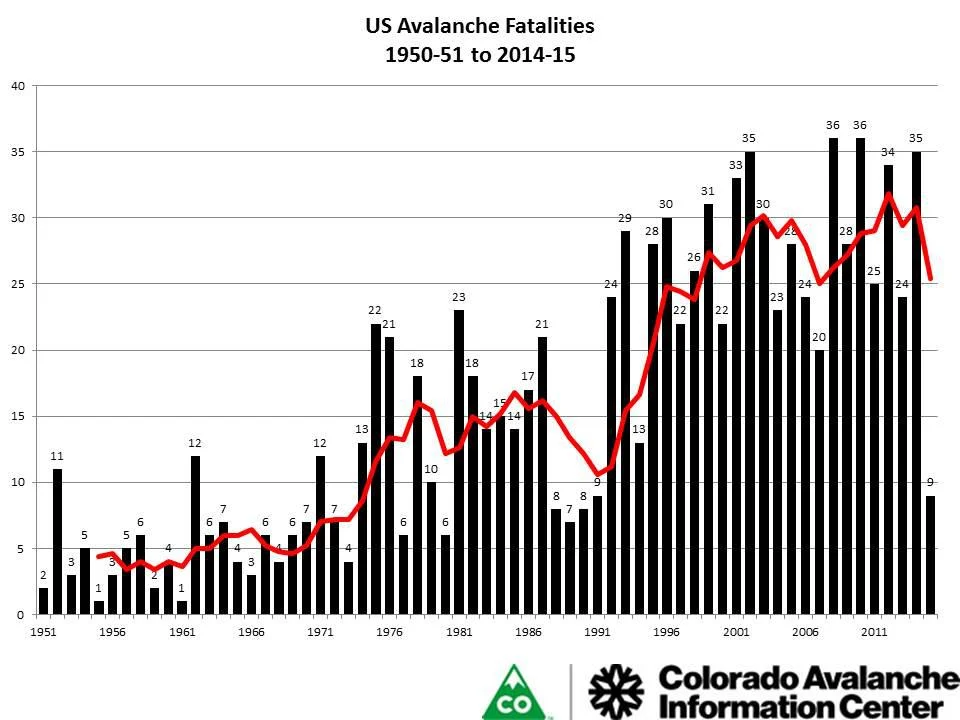
The 2014-2015 avalanche season concluded on April 30th, marking a significant and encouraging downturn in fatalities across the United States. With a total of nine recorded deaths, this season saw the fewest avalanche-related fatalities since 1991, a statistic that offers a glimmer of hope amidst the inherent risks of winter backcountry recreation. While any loss of life is a tragedy, this notable decrease signals a potential shift in safety awareness and contributing environmental factors.
Factors Contributing to the Decline
Several key elements converged to create a less perilous season for those venturing into snow-covered mountainous terrain. A primary driver of the reduced fatality count was the prevailing weather patterns. The western United States experienced a notably poor snow year, characterized by insufficient snowfall and less persistent snowpack stability. This directly translated to lower avalanche danger ratings for extended periods. Concurrently, inland regions faced unseasonably warm temperatures that, while potentially creating other hazards, contributed to a more stable snowpack and diminished the likelihood of large-scale avalanches.
However, attributing the success solely to meteorological conditions would overlook the dedicated efforts of avalanche safety organizations. The Forest Service avalanche centers, alongside the Colorado Avalanche Information Center (CAIC), have consistently worked to enhance public awareness and provide critical safety information. Their ongoing commitment to avalanche education, forecasting, and public outreach is undeniably a crucial factor in empowering backcountry users with the knowledge to make informed decisions and avoid dangerous situations. This proactive approach, coupled with favorable weather, appears to have fostered a safer environment for snow sports enthusiasts.
Long-Term Trends and Sustained Engagement
Beyond the immediate season’s statistics, longer-range trends offer further encouragement. Over the past 15 years, there has been a substantial surge in backcountry use, with more individuals participating in activities like skiing, snowboarding, snowshoeing, and climbing in avalanche-prone areas. Despite this dramatic increase in participation, the five-year moving average for avalanche fatalities has remained relatively stable, fluctuating between approximately 25 and 30 deaths per year. This suggests that while more people are engaging in these activities, the overall safety education and awareness initiatives are proving effective in mitigating the proportional increase in risk.
The data, meticulously maintained by Spencer Logan and the Colorado Avalanche Information Center through the U.S. Avalanche Accident Database, serves as a vital resource for understanding avalanche incidents and informing future safety strategies. The graphic provided, illustrating the trend of fatalities, underscores the importance of continuous data collection and analysis in the field of avalanche safety.
Background Context of Avalanche Safety
Avalanches are a natural phenomenon, the result of unstable snowpack conditions triggered by a combination of factors including snowfall, temperature fluctuations, wind, and terrain. Human activity, particularly in recent decades, has brought more people into direct contact with these hazards. The rise of backcountry skiing and snowboarding, often referred to as "out-of-bounds" or "sidecountry" travel, has exponentially increased the number of individuals seeking untracked powder away from the controlled environments of ski resorts. This increased access, while offering unparalleled recreational opportunities, inherently elevates the risk of encountering avalanches.
Historically, avalanche fatalities have fluctuated significantly year by year, heavily influenced by the severity of winter conditions. Prior to the widespread availability of sophisticated forecasting and educational programs, the numbers were often higher and more unpredictable. The development and expansion of organizations like the Forest Service Avalanche Centers and the CAIC represent a critical evolution in the approach to avalanche safety. These entities employ trained professionals who analyze snowpack conditions, monitor weather patterns, and issue daily avalanche forecasts. Their work is essential in providing timely and actionable information to the public.
Chronology of Avalanche Safety Initiatives
The journey towards improved avalanche safety has been a gradual one, marked by key developments:
- Early Recognition: As backcountry recreation grew, so did the awareness of avalanche dangers. Early efforts focused on basic survival skills and understanding terrain.
- Establishment of Forecasting Centers: The mid-to-late 20th century saw the establishment of dedicated avalanche forecasting centers, such as the U.S. Forest Service Avalanche Centers and the CAIC, modeled after successful programs in Europe. These centers began to systematically gather data and disseminate information.
- Formal Education Programs: The development of standardized avalanche safety courses, such as those offered by the American Institute for Avalanche Research and Education (AIARE) and the Snowcard program, provided a structured curriculum for learning about snow science, risk assessment, and rescue techniques.
- Technological Advancements: The advent of GPS devices, satellite communication, and sophisticated weather monitoring equipment has further enhanced forecasting capabilities and rescue efforts.
- Data Aggregation: The creation of national databases, like the one maintained by CAIC, has allowed for a comprehensive overview of avalanche incidents, enabling researchers and safety professionals to identify trends and patterns.
- Public Outreach and Social Media: In recent years, the widespread use of social media and online platforms has allowed avalanche centers to reach a broader audience with real-time updates and educational content.
The 2014-2015 season can be viewed as a positive outcome of these cumulative efforts, demonstrating the effectiveness of combining environmental factors with robust safety infrastructure.
Supporting Data and Analysis
The U.S. Avalanche Accident Database, maintained by the CAIC, is a cornerstone for understanding avalanche fatalities. While the exact numbers for past decades can vary slightly based on reporting methodologies, the trend of nine fatalities in 2014-2015 stands out. For comparison, the five-year moving average of 25-30 fatalities per year suggests that previous seasons were significantly more dangerous on average. For instance, in years with more typical or severe winter conditions, fatalities have often reached into the 30s and even 40s.
The data also often reveals common contributing factors to avalanche accidents. These typically include:
- Human Triggering: The vast majority of avalanche fatalities are caused by humans triggering the avalanches themselves. This highlights the critical importance of proper education and decision-making in the field.
- Terrain Selection: Choosing to travel on or below steep slopes that are prone to avalanches is a major risk factor. Understanding slope angles and aspect (the direction a slope faces) is crucial for avalanche safety.
- Snowpack Instability: The presence of weak layers within the snowpack is a primary condition for avalanches. Identifying and understanding these weak layers, often through snow pit analysis, is a key skill taught in avalanche courses.
- Group Dynamics: Issues such as riding alone, not communicating effectively within a group, or succumbing to peer pressure can also contribute to accidents.
The 2014-2015 season’s low numbers suggest that either the inherent danger was reduced by weather, or that individuals who did venture out were better equipped to manage the risks, or a combination of both. The sustained stability in the five-year moving average, despite increased participation, strongly suggests the latter is a significant factor.
Official Responses and Expert Opinions
Organizations involved in avalanche safety and forecasting expressed cautious optimism regarding the 2014-2015 season’s statistics. While celebrating the reduction in fatalities, they emphasized that the inherent risks of the backcountry remain.
"We are encouraged by the decrease in avalanche fatalities this past season," stated a spokesperson for the National Avalanche Center, an umbrella organization that coordinates efforts across various regional centers. "This is a testament to the hard work of our forecasters, educators, and the growing awareness among backcountry users. However, it is crucial to remember that avalanches are a natural hazard that can occur even in years with seemingly low danger. Complacency is a significant risk in the mountains."
Similarly, a representative from the Colorado Avalanche Information Center, an organization renowned for its comprehensive forecasting and educational programs, echoed this sentiment. "While the numbers are positive, each life lost is a profound tragedy. Our mission is to provide the best possible information to help people make safe decisions. The fact that we have seen a stabilization in fatalities despite increasing participation is a strong indicator that our educational efforts are making a difference. We will continue to advocate for ongoing training and responsible backcountry practices."
These statements underscore a consistent message within the avalanche safety community: while progress is being made, vigilance and continuous learning are paramount. The focus remains on empowering individuals with the knowledge and tools to assess risk and make sound judgments in dynamic mountain environments.
Broader Impact and Implications
The implications of a season with significantly fewer avalanche fatalities extend beyond the immediate statistics. A reduction in accidents can lead to:
- Increased Public Confidence: A safer season may encourage more individuals to explore the backcountry, knowing that resources and information are available to help them stay safe.
- Reinforcement of Safety Protocols: The success of the season can serve as a powerful reinforcement of the importance of avalanche education, proper gear, and conservative decision-making.
- Resource Allocation: While tragic, avalanche fatalities often lead to reviews of safety protocols and sometimes increased investment in research and forecasting. A lower number of incidents might allow for a sustained focus on preventative measures rather than reactive responses.
- Economic Impact: While not directly quantifiable, a season with fewer major accidents can contribute to a more positive perception of winter recreation, potentially benefiting local economies that rely on tourism for activities like skiing and snowboarding.
However, the long-term trend of stable fatalities despite increasing participation also raises questions about the capacity of current safety initiatives to keep pace with the exponential growth in backcountry users. As more people flock to the mountains, the challenge of reaching every individual with effective education becomes more complex. Future efforts may need to focus on innovative outreach strategies, accessible digital resources, and potentially mandatory training for certain levels of backcountry access.
In conclusion, the 2014-2015 avalanche season stands as a significant milestone, marked by a welcome decline in fatalities. This positive outcome is likely a confluence of favorable weather conditions and, more importantly, the sustained and effective efforts of avalanche safety organizations in providing education and information. While this season offers reason for optimism, the ongoing growth in backcountry use necessitates continued dedication to promoting a culture of safety, preparedness, and responsible decision-making in the mountains. The lessons learned from this season will undoubtedly inform future strategies aimed at minimizing risk and ensuring the well-being of all who venture into avalanche terrain.
