

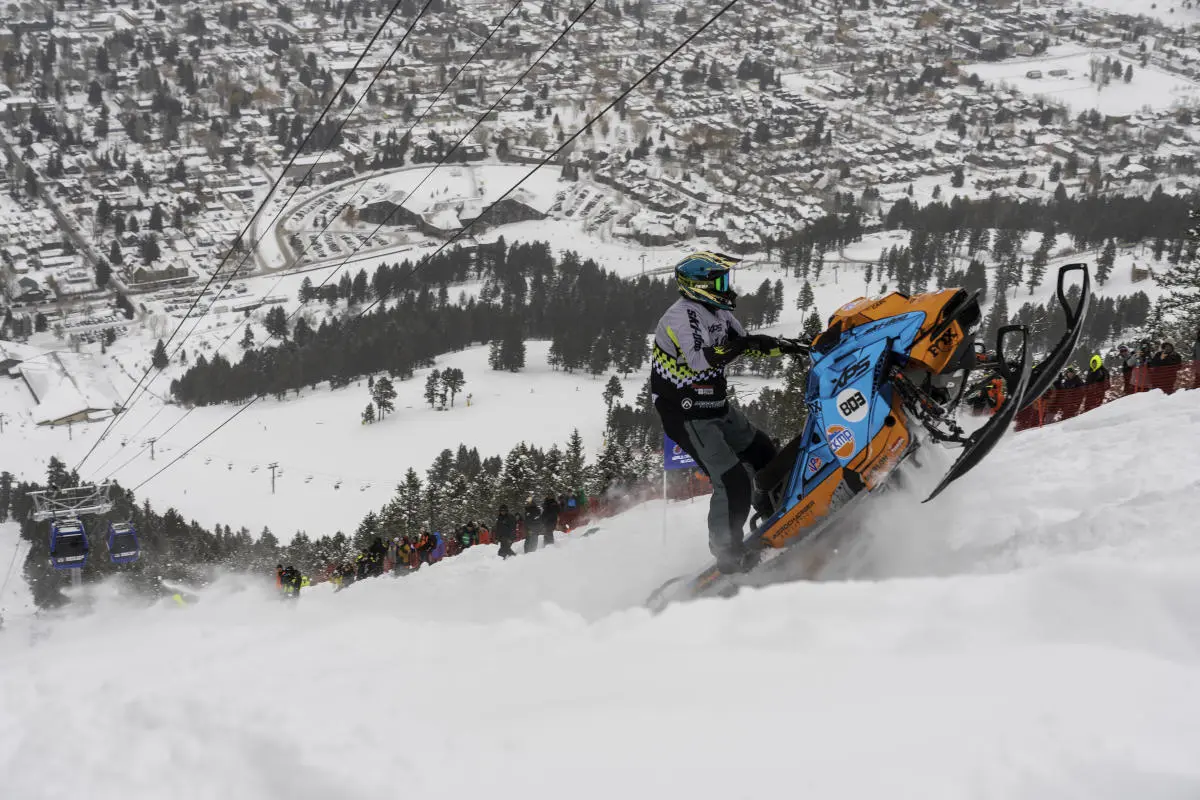
The iconic roar of snowmobiles that typically punctuates March in downtown Jackson Hole will be notably absent this year, as the Jackson Hole Snow Devils have officially announced the cancellation of the 2026 World Championship Snowmobile Hill Climb. The decision, confirmed on Wednesday, stems from a confluence of record-breaking warm temperatures and a critically dwindling snowpack across Snow King Mountain, rendering a safe and competitive event impossible despite extensive efforts by the organizing crew and mountain staff. This marks a rare but significant pause in a tradition that has captivated the global snowmobiling community for nearly five decades.
Safety First: The Paramount Concern on a Precarious Slope
The decision to cancel the 2026 event was not made lightly. It followed a comprehensive assessment of the traditional competition venue, the notoriously steep Exhibition run at Snow King Mountain. Known for its formidable 1,500-foot vertical ascent, the mountain’s current snow depth of approximately 20 inches is insufficient to safely support the powerful machines and the demanding maneuvers required for the championship.
Mike Robertson, vice president of the Jackson Hole Snow Devils, articulated the gravity of the situation: "There’s no way we could make it happen and have it safe, or have a quality World Championship course," he stated. The organization underscored that the paramount priorities in their deliberations were the preservation of the event’s integrity and, above all, the safety of the more than 300 elite athletes who traditionally converge on Jackson for this prestigious competition. The inherent risks associated with a compromised snow base on such a challenging incline are substantial, ranging from unpredictable sled behavior to potential track damage and rider injury.
Exhausting All Alternatives: A Battle Against Nature’s Whims
The Jackson Hole Snow Devils demonstrated a tenacious commitment to salvaging the event, diligently exploring a range of alternative solutions. Several potential alternate routes were meticulously evaluated, including Cougar Run and the Grizzly ski trail. However, each option presented significant logistical hurdles and staging requirements that ultimately proved insurmountable. Furthermore, the Grizzly ski trail is slated to host a ski race the following weekend. Allowing snowmobiles to significantly alter its snow conditions would unfairly compromise the experience for the ski racers, a scenario the organizers sought to avoid.
The prevailing weather patterns, characterized by persistent rain and unseasonseasonably warm temperatures, amplified concerns regarding the stability of the mountain. This raised the specter of "hang fire"—a phenomenon where snow, particularly at lower elevations, can become unstable and prone to rapid melting or sloughing. Similar conditions in 2015 contributed to the cancellation of the event due to avalanche risk, a risk that this year’s environmental factors regrettably mirrored. The potential for unpredictable snow movement and the increased likelihood of avalanches presented an unacceptable level of danger, further solidifying the decision to cancel.

A Rare Pause in a Storied Tradition: Historical Context and Community Impact
The cancellation of the 2026 World Championship Snowmobile Hill Climb represents a significant, albeit infrequent, interruption in the event’s rich 48-year history. This marks only the fourth time in its existence that the competition has been called off. The previous cancellations provide a historical perspective on the challenges the event has faced:
- 1981: Low Snow Conditions: Similar to the current situation, insufficient snowfall in 1981 made it impossible to establish a safe and viable course.
- 2015: Avalanche Risk: Unstable snowpack and elevated avalanche danger, exacerbated by weather patterns, led to the cancellation of the event.
- 2020: COVID-19 Pandemic: The global health crisis necessitated the cancellation of numerous large-scale events, including the Hill Climb, due to public health mandates and safety concerns.
The World Championship Snowmobile Hill Climb is far more than just a sporting event for the Jackson Hole community; it is a deeply ingrained tradition and a vital economic engine. For decades, the event has drawn thousands of spectators and participants from across the globe, injecting substantial revenue into local businesses, including hotels, restaurants, and retail establishments. The absence of the Hill Climb this year will undoubtedly have a tangible economic impact on the region. Beyond the financial implications, the event serves as a crucial gathering point for the global snowmobiling tribe, a moment where enthusiasts and competitors alike can connect, share their passion, and celebrate the sport.
Teton Gravity Research (TGR), a prominent action sports media company with deep roots in Jackson Hole, views Snow King Mountain as a familiar backyard testing ground. The energy surrounding the Hill Climb, whether through filming local segments or witnessing the world’s elite riders tackle the formidable Exhibition face, is described as "always unmatched." The current snow deficit is acknowledged as a significant disappointment, a "kick in the gut" for the dedicated community. However, the spirit of resilience within the Jackson Hole Snow Devils organization is evident. They are already looking ahead with determination, with plans to explore innovative snow-making solutions for the 2027 event. This forward-thinking approach underscores their commitment to ensuring that this cherished tradition continues to thrive, regardless of the unpredictable challenges posed by a changing climate.
The Broader Implications: Climate Change and the Future of Winter Sports
The cancellation of the 2026 World Championship Snowmobile Hill Climb serves as a stark, real-world illustration of the escalating impact of climate change on winter sports and outdoor recreational events. Jackson Hole, like many mountainous regions, is experiencing warmer winters and a reduced snowpack, trends that are projected to intensify in the coming years. This phenomenon has far-reaching implications for a wide array of winter activities, from professional competitions to recreational pursuits.
The economic reliance of many mountain towns on winter tourism and events makes them particularly vulnerable. The ability of organizers to adapt and innovate, as the Jackson Hole Snow Devils are aiming to do with potential snow-making solutions, will become increasingly critical. However, such solutions often come with significant financial and environmental considerations, raising questions about the long-term sustainability of certain events in increasingly marginal climate conditions.
The situation also prompts a broader discussion about the future of traditional winter sports. As natural snow resources diminish, the industry may need to explore new venues, alter competition formats, or invest heavily in artificial snow production. This could lead to a re-evaluation of accessibility, cost, and the overall environmental footprint of these activities. The cancellation of the Hill Climb is not an isolated incident but rather a symptom of a larger trend that demands attention and proactive adaptation from athletes, organizers, and communities worldwide. The resilience and forward-thinking of organizations like the Jackson Hole Snow Devils offer a glimpse into the potential pathways for navigating these challenges, but the overarching reality of a warming planet presents an undeniable and persistent hurdle.
