

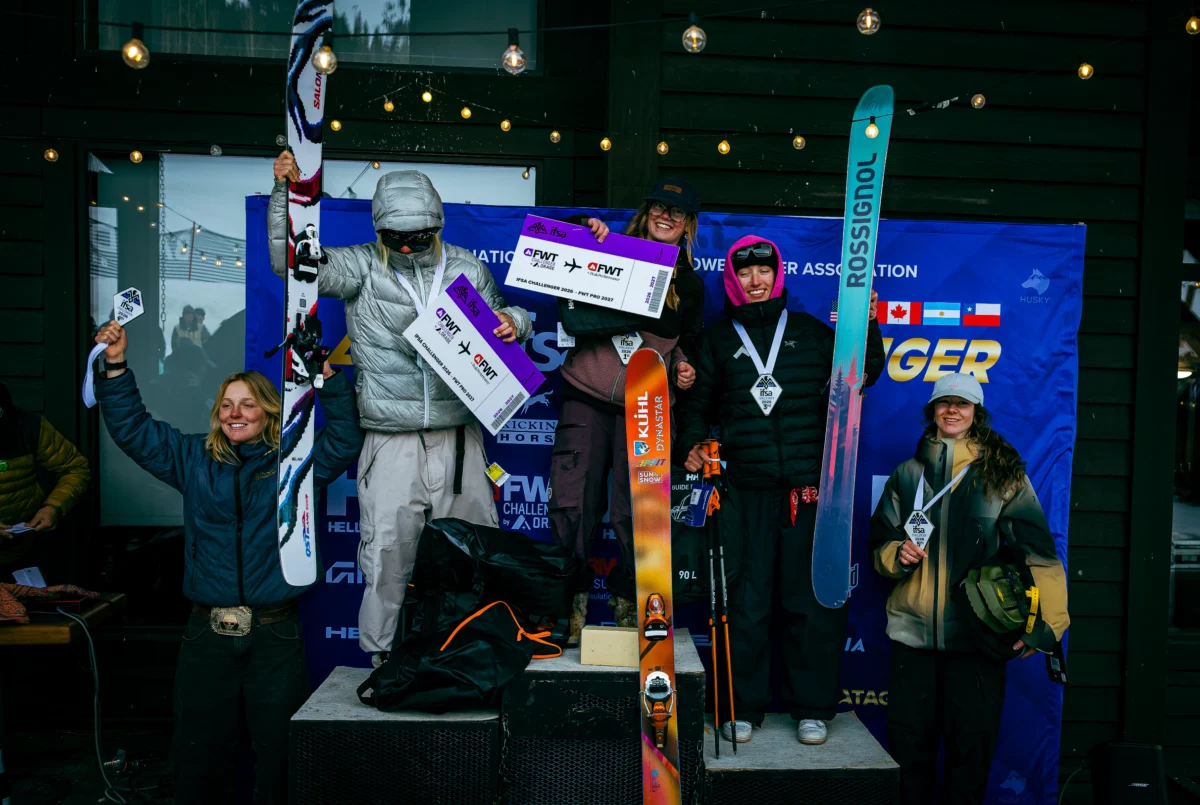
The journey to the pinnacle of professional freeride skiing is rarely a linear ascent. For Delila Quinn, a 22-year-old native of Lake Tahoe, California, her return to the prestigious Freeride World Tour (FWT) is a testament to navigating a complex landscape of setbacks, near-misses, and burnout, ultimately leading to a profound reset that rekindled her passion for the sport. After a challenging period, Quinn has not only clawed her way back to the biggest stage in freeride but is doing so on her own terms, emphasizing genuine enjoyment and positive momentum over the pressures of competition.
Quinn’s initial qualification for the Freeride World Tour in 2023 marked a significant milestone in her burgeoning career. However, the season proved to be a steep learning curve. A series of injuries and significant crashes prevented her from securing the necessary results to maintain her tour status. Despite the disappointing outcome, the experience of competing at the elite level, traveling, and connecting with a global community of athletes solidified her ambition to return. This initial taste of the FWT left her with a sense of "unfinished business."

The subsequent three years presented a relentless pursuit to requalify. Each season saw Quinn narrowly miss the mark, often by mere points. This consistent string of near-misses, while indicative of her talent and dedication, also began to take a toll. The pressure to perform, coupled with the emotional weight of coming up short repeatedly, led to significant burnout. The tipping point arrived during the previous season. A small error on her final run at Arapahoe Basin, a notoriously challenging venue, cost her another opportunity to qualify. The devastation was palpable, leaving her deeply demotivated and questioning her future in competitive skiing, even though she held prequalified status for subsequent Challenger events.
This pivotal moment prompted Quinn to take a significant step back. During the summer, she intentionally disconnected from skiing. She immersed herself in other activities, notably surfing, and focused on reconnecting with life outside the demanding world of professional sports. This period of introspection proved transformative. It led to a crucial realization: her personal happiness and fulfillment were not solely contingent on her success as a competitive skier. She discovered a broader perspective, recognizing the existence of a rich and rewarding life beyond the competitive circuit. This fundamental shift in perspective reignited her intrinsic love for skiing and reminded her of the pure joy that first drew her to the sport. The overwhelming pressure she had placed upon herself, which had gradually leached the fun out of her passion, began to dissipate.
This renewed mindset permeated her approach to the current season’s Challenger competitions. Quinn consciously let go of expectations and prioritized enjoyment. She skied when she felt inspired, rather than driven by obligation. A significant part of her resurgence involved her involvement with TJFS, a local junior freeride series where she spent time coaching. Witnessing the unadulterated enthusiasm, excitement, and genuine love for skiing exhibited by the young athletes served as a powerful reminder of her own early experiences with the sport – a time when fun and passion were paramount, unburdened by the weight of results.

Carrying this lighter, more authentic approach into the Challenger events, Quinn found that by loosening her grip on outcomes, she was able to ski the lines that truly resonated with her, executed in a manner that felt natural and true to her style. This shift in focus marked a profound departure from her previous competitive endeavors, and for the first time in a long while, her skiing felt genuinely right.
The realization of her qualification for the Freeride World Tour again did not come with a singular, dramatic moment but rather a gradual dawning, punctuated by unexpected twists. Quinn achieved strong results in the initial competitions, securing a third-place finish in the first event and a victory in the second. However, the competitive landscape of the FWT Challenger series is fierce, with numerous highly skilled athletes vying for limited spots. She was acutely aware that even with these impressive performances, her qualification was not yet guaranteed, as other competitors were also posting strong results, and a final event remained.
In the climactic final event, Quinn experienced a significant mishap, describing her run as an "explosion." This setback led her to mentally prepare for the possibility that her dream of returning to the FWT might slip away once more. She spent the remainder of that day enjoying the mountains with friends, a testament to her evolved priorities. In a candid moment, she even contacted her parents to inform them that her qualification was likely not going to happen.

The moment of truth arrived during the overall results announcement. The suspense was palpable as names were called. Hearing her own name announced for second overall was an overwhelming and deeply emotional experience. It represented the culmination of years of hard work, perseverance through adversity, and a profound personal journey of rediscovery.
When asked about the influence of judging on her skiing style, Quinn acknowledged the inherent challenge of performing under scrutiny. While she aspires to maintain an authentic skiing style regardless of external evaluation, she admitted that the awareness of what judges are looking for is an ever-present, albeit subconscious, factor. However, her refined approach prioritizes staying true to herself and executing lines that genuinely excite her. She has discovered that this alignment between personal passion and performance leads to her best skiing, emphasizing skiing for oneself rather than solely for the score.
Style, in Quinn’s view, is the unique signature that distinguishes an athlete. In a sport where many competitors may tackle similar lines, infusing personal expression and maintaining a sense of fun are crucial for standing out and ensuring the enduring appeal of the sport.

The foundation of Quinn’s skiing prowess and her approach to the mountains has been shaped by a collective of influential figures. She credits all her coaches throughout her development, including Max Weintraub, Eric Deslauries, Desi Sherwood, Colin Gordon, Seany K, Tilen Lane, and Jacques Fix, for instilling not only fundamental skills but also a deep appreciation for the sport, the mountain environment, and the community. Beyond formal coaching, she emphasizes the invaluable learning that occurs when skiing with friends, observing their unique perspectives and techniques.
When pressed for a favorite ski film or video, Quinn humorously deferred, stating it was too difficult to choose but offering a nod to Teton Gravity Research (TGR) as a benchmark of quality filmmaking in the genre.
In a single word, Quinn encapsulates her current approach to skiing as "HaveFUN." This simple yet profound statement encapsulates the essence of her renewed perspective and her commitment to enjoying the sport for what it is.

The evolution of Delila Quinn’s journey underscores a critical insight: there is a potent and transformative power in a skier who shifts their focus from chasing results to chasing the feeling of the sport. Her reset has not only facilitated her return to the Freeride World Tour but has fundamentally reshaped her presence on the mountain. By embracing less pressure and more instinct, she has unlocked a more profound sense of enjoyment. This reframed approach suggests that her "return" may well evolve into a significant breakthrough, marking a new and exciting chapter in her professional skiing career.
The Freeride World Tour, established in 1996, has become the premier global competition series for big mountain skiing and snowboarding. The tour features a series of events held at iconic ski resorts worldwide, where athletes are judged on their line choice, fluidity, control, and execution of tricks. The Challenger series serves as a vital feeder system, providing aspiring athletes with a pathway to qualify for the elite World Tour. Quinn’s journey through the Challenger series highlights the intense competition and the significant hurdles athletes must overcome to reach the pinnacle of the sport. The FWT itself represents a significant platform for showcasing the artistry, bravery, and technical skill inherent in freeride skiing. The FWT’s commitment to showcasing diverse talent and promoting the spirit of adventure has cemented its status as a cornerstone of the action sports world. Quinn’s story resonates within this context, illustrating the personal resilience required to navigate the demanding yet rewarding landscape of professional freeride.
