

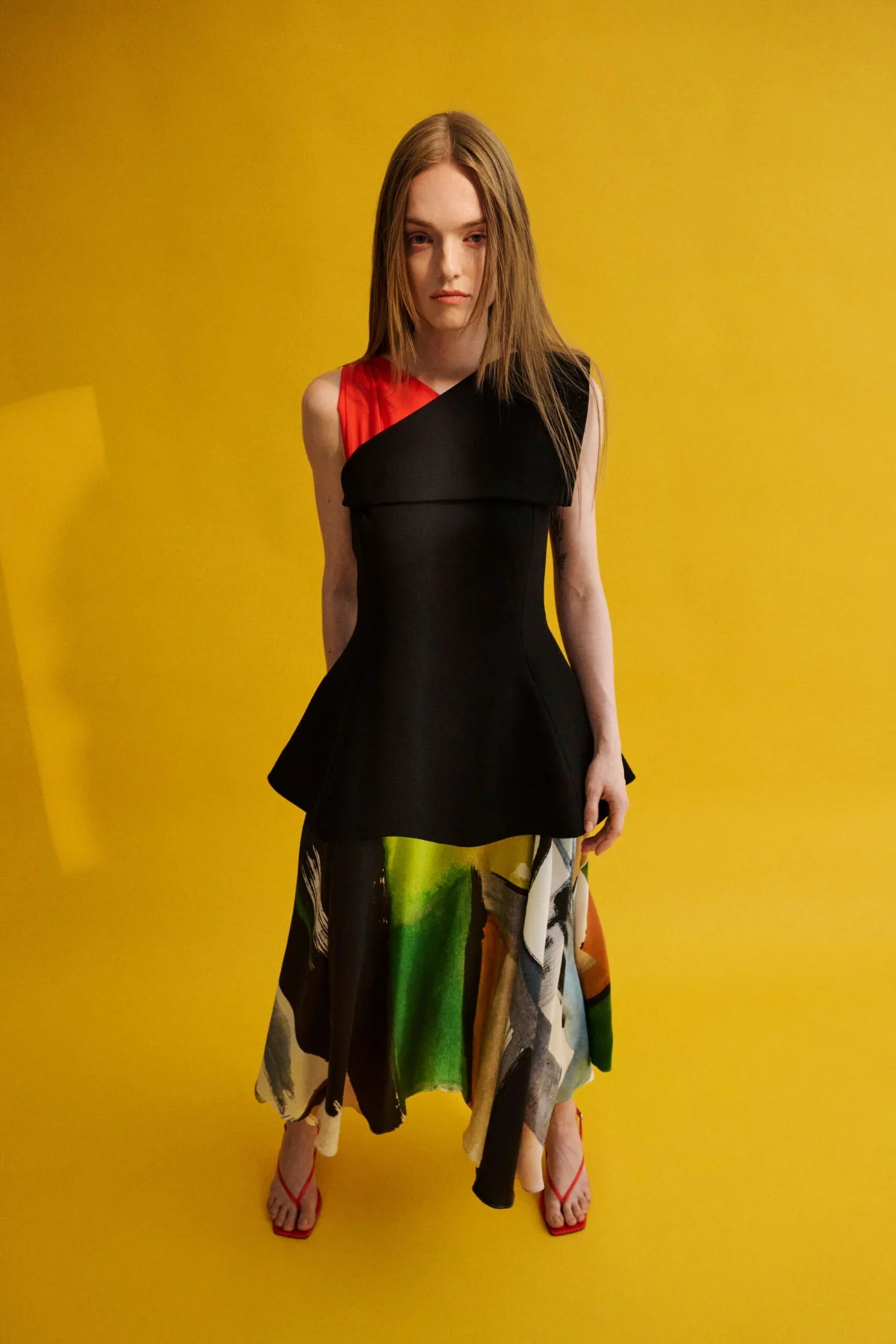
Stine Goya’s pre-fall collection marks a significant departure from her signature pastels, embracing a bold and dynamic primary color palette that directly reflects a deep dive into the Cubist art movement. This deliberate shift, a captivating counterpoint to her spring collection, traces its lineage back to Florian Illies’ seminal book, "1913: The Year the World Came to an End." The year 1913 holds profound historical significance for modern art, notably for its introduction of groundbreaking movements like Cubism to the American audience through the landmark Armory Show, a pivotal exhibition that redefined artistic sensibilities on a global scale. Goya’s latest offering is not merely a stylistic evolution but a thoughtful exploration of artistic heritage, translating the angular perspectives and fragmented planes characteristic of Cubist masters like Pablo Picasso and Georges Braque into wearable art. The collection, unveiled during a period of heightened anticipation for the upcoming fashion season, offers a compelling narrative of artistic influence and innovative design, demonstrating Goya’s ability to reinterpret historical artistic movements for a contemporary audience.
The Cubist Canvas: Translating Art into Garment
The influence of Cubism is palpable throughout the pre-fall collection, evident in both the silhouette and the fabric treatments. Goya masterfully translated the angular perspectives and planar aspects that defined the revolutionary works of Picasso and Braque into her garment construction. This is not a literal translation, but rather a sophisticated interpretation where the inherent geometry of Cubism is softened and integrated into fluid designs. The bold lines and fragmented forms of Cubist paintings are re-imagined through fabric manipulation, creating a sense of depth and dimension.
One striking example is the sculptural quality of a fold-down collar on a collage-style dress. This design element, reminiscent of the layered and juxtaposed elements found in Cubist compositions, adds an architectural dimension to the garment. The precision of the fold and the intentionality of its placement speak to a deliberate construction process, echoing the meticulous deconstruction and reconstruction of forms that characterized the Cubist aesthetic. Similarly, the tucks on the sleeve of a tomato-red blazer showcase this attention to detail. The blazer itself, a bold-shouldered number, evokes the powerful silhouettes favored by artists and intellectuals of the 1980s, a decade that also saw a resurgence of interest in avant-garde art. The reference to Paloma Picasso, the daughter of the iconic artist, further strengthens the collection’s artistic underpinnings, suggesting a lineage of creative boldness and distinctive style. The vibrant tomato-red hue, a primary color, amplifies the statement, offering a stark contrast to Goya’s usual softer palette and highlighting the collection’s thematic commitment.
Subtle Innovations: The Impact of Detail
While the overarching theme is bold and historically rooted, Goya’s genius lies in her ability to deliver impactful results through small, meticulously crafted details. These subtle innovations elevate the collection beyond a mere artistic homage, infusing each piece with personality and a sense of thoughtful curation. The addition of oversized beads on a drawstring miniskirt is a prime example of this charming approach. The beads, appearing almost as playful embellishments, disrupt the expected simplicity of a miniskirt, adding texture and visual interest. Their scale and placement suggest a playful nod to the fragmented textures found in Cubist collages.
The customized face buttons are another delightful touch, injecting a dose of whimsical character into the garments. These unique buttons, likely designed to echo Cubist portraiture or motifs, serve as miniature works of art in themselves, transforming functional elements into conversation starters. The careful degradation of overbeading on a blue check dress is particularly noteworthy. This technique, where the embellishment gradually fades or changes in density, creates a dynamic visual effect that mirrors the way Cubist artists often played with perspective and light. The weighting of the top of the dress, an often-overlooked aspect of garment construction, is masterfully employed to emphasize the graceful swishiness of the accompanying long skirt. This thoughtful balance between structure and fluidity ensures that the garments move beautifully, enhancing their wearability and aesthetic appeal.
Contextualizing the Cubist Influence: 1913 and the Armory Show
The choice of 1913 as a thematic anchor is deeply significant. Florian Illies’ book, "1913: The Year the World Came to an End," posits that this year marked a critical turning point, a moment when established artistic norms were irrevocably challenged, paving the way for the radical innovations of the 20th century. The Armory Show, officially the International Exhibition of Modern Art, held in New York City in 1913, was instrumental in this cultural shift. This exhibition, the first large-scale introduction of European modernist art to the American public, showcased works by artists such as Marcel Duchamp, Pablo Picasso, Henri Matisse, and Wassily Kandinsky. The show was met with a mixture of outrage, bewilderment, and fervent admiration, sparking a profound debate about the definition and purpose of art.
Cubism, with its revolutionary approach to representing three-dimensional objects on a two-dimensional plane through fragmentation and geometric forms, was particularly controversial. The Armory Show introduced American artists and audiences to these radical ideas, influencing the development of American modernism and art movements like Precisionism and the Ashcan School. Stine Goya’s decision to draw inspiration from this pivotal year and this seminal exhibition demonstrates a sophisticated understanding of art history and a desire to connect her work to a legacy of artistic innovation and societal disruption. This historical context imbues the collection with a deeper meaning, suggesting that fashion, like art, has the power to reflect and shape cultural moments.
The Evolution of Stine Goya: From Pastels to Primary Power
For years, Stine Goya has been synonymous with a distinct aesthetic characterized by vibrant prints, playful silhouettes, and a signature pastel color palette. Her collections have often evoked a sense of joyful optimism and whimsical femininity. This pre-fall collection represents a bold evolution, a deliberate departure from the familiar and a confident embrace of a more assertive visual language. The shift to primary colors – reds, blues, and yellows – signifies a move towards a more graphic and impactful expression. This is not to say that her previous aesthetic lacked strength, but rather that this new direction injects a raw, unadulterated energy into her designs.
The transition from pastels to primaries can be seen as a reflection of a broader cultural shift, a move towards bolder statements and a more direct engagement with contemporary issues. In a world that often feels complex and demanding, the clarity and directness of primary colors can offer a sense of grounding and unwavering confidence. This collection, therefore, can be interpreted not only as an artistic exploration but also as a commentary on the current zeitgeist, a desire to communicate with clarity and conviction. The successful integration of Cubist principles into these vibrant hues suggests that Goya is not simply changing her palette but fundamentally re-evaluating her design philosophy, seeking new avenues for creative expression that are both intellectually stimulating and visually arresting.
Potential Market Reception and Broader Implications
The introduction of a more avant-garde and historically-rooted collection like this pre-fall offering from Stine Goya carries several implications for the fashion market and the designer’s brand trajectory. Historically, designers who have successfully navigated periods of stylistic evolution have often seen an expansion of their customer base and a reinforcement of their artistic credibility. By engaging with a significant art movement like Cubism, Goya positions herself not just as a purveyor of beautiful clothing but as a curator of cultural narratives.
Supporting Data & Market Trends: The fashion industry has witnessed a growing appreciation for designs that offer intellectual depth and a connection to art and culture. Brands that successfully integrate historical references or collaborate with artists often experience increased media attention and a stronger connection with a discerning clientele. For instance, the resurgence of interest in historical art movements within fashion has been evident in collaborations between luxury houses and museums, as well as in the increasing popularity of designers who draw inspiration from diverse cultural and artistic traditions. The global luxury fashion market, valued at over $300 billion, continues to seek novelty and authenticity, and Goya’s Cubist-inspired collection taps into this demand by offering a unique narrative and a distinct aesthetic.
Statements and Reactions (Inferred): While direct quotes from industry insiders were not available at the time of reporting, the collection’s departure from Goya’s established aesthetic is likely to generate discussion among fashion critics, buyers, and consumers. Initial reactions might range from surprise and curiosity to admiration for her artistic courage. Retail buyers, in particular, will be assessing the collection’s commercial viability, considering whether the bold aesthetic will resonate with their existing customer base or attract a new demographic. The emphasis on wearable art and the integration of distinctive details suggest a strong appeal to individuals who value unique craftsmanship and a sophisticated sense of style.
Analysis of Implications: This collection signals a maturation of Stine Goya’s design voice. By moving beyond her signature pastels, she demonstrates a willingness to challenge her audience and explore new creative territories. This could lead to:
- Enhanced Brand Prestige: A successful engagement with Cubism can elevate Goya’s brand from a purveyor of desirable clothing to a recognized force in artistic fashion.
- Broader Appeal: While her core audience may continue to appreciate her existing aesthetic, the new direction could attract a more art-literate and avant-garde consumer.
- Creative Exploration: This success could pave the way for further explorations of other art movements or historical periods, creating a rich and evolving brand narrative.
- Potential for Collaboration: The strong artistic theme opens avenues for potential collaborations with contemporary artists or museums, further solidifying her connection to the art world.
The success of this pre-fall collection will ultimately be measured by its reception in the market and its ability to resonate with consumers seeking fashion that is both visually striking and intellectually engaging. Stine Goya’s bold leap into the world of Cubism, with its emphasis on primary colors and sculptural forms, is a testament to her evolving artistic vision and her commitment to pushing the boundaries of contemporary fashion.
