

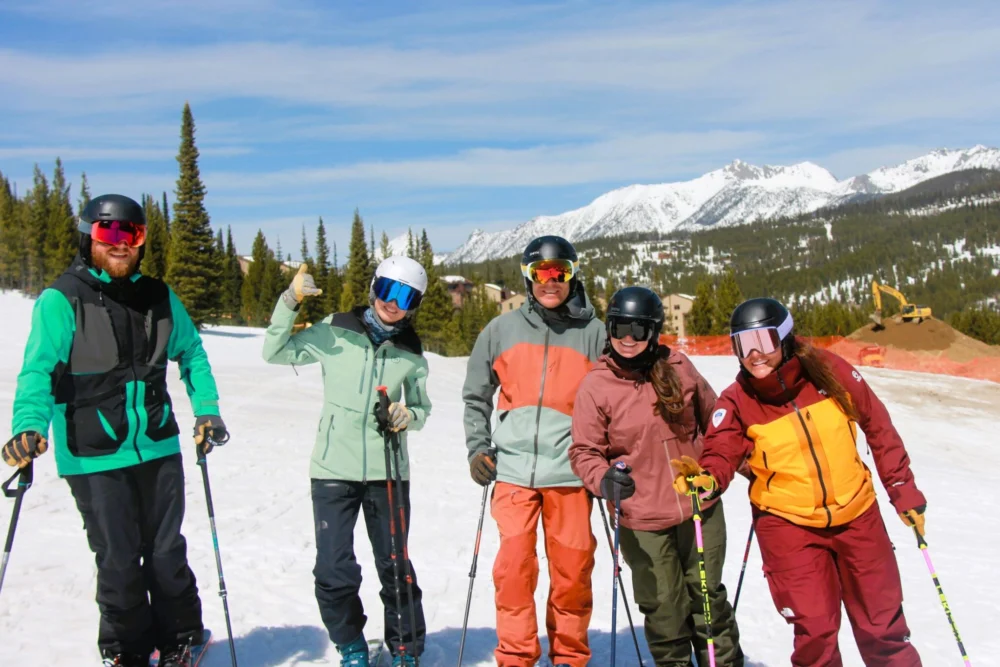
The Professional Ski Instructors of America and American Association of Snowboard Instructors (PSIA-AASI) continues to champion an evolving American Teaching System (ATS), a dynamic curriculum under constant assessment, field-testing, and refinement. This sophisticated pedagogical framework underpins national certification standards that not only align with the expertise of the international snowsports community but also incorporate a distinctly American innovation: a pioneering shift in the 1980s towards a student-centered approach. This methodology is specifically designed to accommodate a vast spectrum of student objectives, ranging from fundamental competence in navigating bumps and mastering big mountain terrain to excelling in racing, park and freestyle disciplines, and proficiently handling both on-piste and off-piste conditions, catering to both recreational enthusiasts and aspiring professionals. This foundational commitment to adaptive and effective instruction is further bolstered by a comprehensive set of "teacher mindsets" identified by PSIA-AASI Education Development Manager Angelo Ross, which serve as aspirational goals for all snowsports educators.
A Legacy of Pedagogical Innovation: The Evolution of the American Teaching System
The roots of PSIA-AASI’s American Teaching System extend over 65 years, built upon and evolving from earlier instructional paradigms. Historically, snowsports instruction often emphasized a rigid, technique-first approach, where instructors delivered a set curriculum with less emphasis on individual student needs or learning styles. This model, while effective for some, inadvertently excluded others who found it unengaging or ill-suited to their personal goals. The formation of PSIA in 1961 (and AASI in 1987, later merging) marked a concerted effort to standardize and professionalize snowsports instruction across the United States. However, a significant paradigm shift occurred in the 1980s. Recognizing the diverse motivations of snowsports participants, PSIA-AASI embarked on a journey to redefine its instructional philosophy, moving decisively towards a student-centered model. This transformation was not merely cosmetic; it represented a deep integration of best practices drawn from fields like educational psychology, sociology, and human development.
The "American twist" refers to this deliberate focus on the individual learner, placing their motivations, expectations, and goals at the forefront of the instructional process. This innovative approach allows instructors to tailor lessons dynamically, rather than adhering to a one-size-fits-all script. For instance, a student seeking to simply enjoy carving on groomed runs will receive a different instructional path than one aiming to conquer moguls or improve freestyle jumps. This adaptability has been crucial in expanding the appeal of snowsports and improving retention rates among new participants, a critical factor for the industry’s sustained growth. According to industry reports, personalized instruction is a key driver of satisfaction and continued engagement in outdoor recreational activities, directly impacting the estimated $3 billion snowsports lesson market in North America.
Foundational Principles: The People and Teaching Skills Fundamentals
Central to the ATS are the People and Teaching Skills Fundamentals, a set of core competencies rooted in robust psychological, sociological, and educational theories. These fundamentals are designed to cultivate learning environments that are supportive, effective, and responsive to student needs. They emphasize critical elements such as effective two-way communication, fostering trust, promoting collaboration between instructor and student, demonstrating adaptability in instructional strategies, and encouraging reflective practice. The goal is to create a dynamic rapport where students feel understood, supported, and empowered to achieve their snowsports objectives, regardless of their initial skill level or ambition. This ethical framework ensures that instructors not only possess subject-matter expertise but also ethically foster student learning, prioritize safety, and promote growth through sound judgment, empathy, and adaptability. This rigorous standard aligns with societal demands for highly qualified educators across all disciplines, positioning certified snowsports teachers as dedicated professionals within the broader educational landscape. PSIA-AASI’s commitment to these standards is demonstrated through its extensive network of hundreds of volunteers who annually contribute thousands of hours to refine and uphold the national alignment process, ensuring the system remains current and effective.
Cultivating the "Teacher Mindset": Essential Qualities for Snowsports Educators
To truly excel and do well by all stakeholders—from students and resorts to the broader snowsports community—instructors must adopt a specific mindset. This mindset, as articulated by Angelo Ross, transcends mere technical proficiency; it embodies a holistic approach to teaching and professional growth.
Curiosity: The Unquenchable Spark of Learning
Curiosity serves as the fundamental orientation toward learning, providing the intrinsic spark that compels both instructor and student to delve deeper. For snowsports educators, curiosity manifests in various forms. It can be a "vertical" exploration, where an instructor seeks a profound, comprehensive understanding of a single discipline—for instance, immersing themselves in cross-country skiing’s history, specialized vocabulary, equipment nuances, technique, tactics, training methods, movement patterns, terrain utilization, waxing protocols, fashion trends, and cultural traditions. Alternatively, curiosity can be "horizontal," prompting a comparative study across multiple snowsports disciplines to identify similarities and differences in efficient movement patterns and techniques. A pragmatic combination of both approaches is also common, where an instructor aims for deep expertise in one area while maintaining a broad foundational knowledge across other disciplines and general pedagogy, ensuring preparedness for any student who walks into a snowsports school. This active inquiry, often expressed through thoughtful questions, is a strong indicator of intrinsic motivation, a quality PSIA-AASI encourages instructors to both cultivate within themselves and actively nurture in their students. This continuous learning ensures instructors remain at the cutting edge of their field, capable of addressing the evolving demands of snowsports.
Empathy: Fostering Connection and Collaboration
Empathy is the cornerstone of an instructor’s orientation toward students, facilitating profound connection, cooperation, and collaboration. It demands attentive listening, acute emotional awareness and regulation, and the crucial ability to step beyond one’s own perspective to understand another’s experience. Empathy is readily diminished by ego, self-absorption, defensive identity protection, making hasty assumptions about others, and attribution errors—such as blaming students for a perceived lack of learning ("They’re not athletic," "They don’t care," "They’re not trying"). Practical challenges like time constraints and cognitive overload (when instructors are rushed or distracted) also pose threats to empathetic engagement.

Conversely, empathy is significantly augmented by mindfulness, allowing instructors to be fully present and responsive. Drawing from PSIA-AASI’s People Skills Fundamentals, instructors are trained to identify, understand, and manage their own emotions and actions effectively. This self-awareness then enables meaningful, two-way communication, allowing them to recognize and positively influence the behaviors, motivations, and emotions of others. The ultimate goal is to develop robust relationships founded on mutual trust, which is paramount for effective learning in a dynamic and sometimes intimidating environment like the slopes. Studies in educational psychology consistently show that empathetic teachers lead to higher student engagement, reduced anxiety, and improved learning outcomes, contributing to a more positive overall experience that encourages students to continue their snowsports journey.
Presence: Mastering the Moment
Presence, as both a mindset and a habit, is the ability to be fully engaged in the current moment, emotionally regulated, and acutely attuned to the immediate environment and the individuals within it. This quality is vital for maintaining composure, achieving clear perception, and making sound, on-the-spot decisions. When an instructor is truly present, they are more aware of subtle signals and cues from their students—a shift in body language, a hesitant glance, a subtle change in balance. This real-time functioning allows for dynamic interaction and immediate responsiveness. The development of presence can be cultivated through mindful practices and deliberate strategies such as purposeful pausing, which encourages slowing down and observing. Anchoring attention to specific focal points—such as one’s own breathing, the precise words students are using, or the path and orientation of students’ skis or snowboards during performance assessment—can significantly enhance presence. Cognitive clutter, often characterized by overthinking or trying to manage too many variables, actively precludes presence. Therefore, embracing a "less is more" philosophy by simplifying goals and instructional language creates mental space for heightened attention and more effective responses to observed phenomena.
Responsiveness: The Art of Cooperative Teaching
Responsiveness is the defining characteristic that differentiates true teaching from mere "presenting" or lecturing. Angelo Ross highlights this distinction by comparing teaching to what a tour guide might do: delivering information with minimal regard for the specific interests, motivations, or goals of the audience beyond answering occasional questions. While tours have their function, teaching, as codified in the PSIA-AASI Teaching Snowsports Manual and supported by National Standards and Teaching Skills Fundamentals, represents an entirely different form of interaction. Teaching is fundamentally a "cooperative art," an endeavor intended to create outcomes through collaboration with others. This stands in contrast to "operative arts" like playing an instrument, woodworking, or even performing skiing and snowboarding, where skill predominantly depends on individual competence. Even when students might metaphorically be "tourists" seeking a novel experience, the teacher’s mindset is to treat them as active learners, engaging in meaningful dialogue, listening attentively, and responding appropriately to their evolving needs and feedback. This collaborative spirit ensures that the learning experience is personalized, engaging, and ultimately more effective, fostering a sense of shared accomplishment.
Cultivating Growth and Professionalism
Beyond these immediate instructional qualities, the teacher mindset also encompasses broader principles for continuous growth and professional integrity.
Reflection: The Path to Continuous Improvement
Objective and honest reflection on one’s own performance and behaviors is an exceedingly difficult yet crucial aspect of professional development. It often entails challenging one’s own competence and self-worth by acknowledging mistakes or shortcomings. Instructors, like all individuals, are prone to confirmation bias, focusing on aspects of their performance that reinforce existing self-perceptions. The Dunning-Kruger effect illustrates this challenge, showing that individuals with low skill often overestimate their competence, while highly skilled individuals tend to underestimate theirs. To overcome these cognitive biases, feedback from external sources—trusted friends, loved ones, students, and qualified trainers and mentors—is invaluable in increasing the accuracy of performance assessments. This is where the real work of growth begins. While it can be comfortable to retreat behind an indignant "Well, that’s how I do it," the true teacher mindset demands digging in, preparing for challenges, and relentlessly striving for improvement. This commitment to real professional development prioritizes personal growth and fosters a lifelong dedication to being a true student of one’s subject matter.
Humility: The Foundation of Lifelong Learning
Humility, as a mindset, involves maintaining a modest view of oneself, which paradoxically liberates the instructor to fully focus on students’ goals, experiences, and takeaways. The article underscores that expertise is provisional and fleeting if not diligently maintained through continuous effort, honest self-work, and ongoing learning. In the teacher mindset, one never truly "arrives"; there is always more to learn, always someone who does it better, and always new perspectives to consider. Humility prompts instructors to reflect not only on the students they successfully "hooked" but, more importantly, on "those that got away." This self-interrogation demands an honest assessment of how personal decisions and behaviors might have negatively impacted a student’s experience, driving a commitment to prevent such occurrences in the future. Humility eschews bragging, attacking, or trolling; instead, it fosters open-mindedness, the willingness to admit, "I don’t know," and the determination to seek out answers and graciously receive and respond to feedback from peers, mentors, and students alike.
Stewardship: Guardians of the American Teaching System
The American Teaching System, like any significant body of knowledge or "canon," does not belong to any single individual. Its development spans over 65 years, building upon foundational systems that predate it by decades. Countless individuals, including the hundreds of dedicated volunteers who contribute thousands of hours to national alignment efforts annually, have collectively shaped and improved it. As practitioners, snowsports instructors have a vital role in preserving and passing on this accumulated body of knowledge. Simultaneously, as association members, they hold the right to question and refine this knowledge, coupled with the profound responsibility to be actively involved in its evolution and ensure its continuous improvement. Teachers, therefore, act as stewards—caretakers—of the content, ensuring its integrity, relevance, and accessibility for future generations of instructors and students.
Professionalism: Upholding Standards and Integrity
Professionalism encompasses the overarching expectation for all teachers to consistently exercise sound judgment, act with unwavering integrity, and prioritize student safety, learning, and growth above personal convenience, ego, or preference. This manifests in thorough preparation, unwavering reliability, and consistent accountability. Professional decisions are always aligned with best practices, which for snowsports instructors includes a deep understanding of body mechanics, human development, pedagogical principles, and equipment design specifically framed within their respective sports. Beyond direct instruction, professionalism also entails representing the profession, PSIA-AASI as an association, and their employers effectively—both on and off the snow, and critically, in online interactions. Instructors understand that their words and behaviors profoundly influence how students, colleagues, and the wider skiing and riding public perceive and value their expertise and the profession as a whole.
Broader Impact and Future Outlook
These aspirational goals and guiding principles are not merely internal guidelines for PSIA-AASI members; they represent a significant contribution to the broader snowsports industry. By fostering highly skilled, empathetic, and professional instructors, PSIA-AASI elevates the quality of the learning experience, which in turn enhances student enjoyment, improves safety records, and encourages greater participation and retention in snowsports. This professionalization has a tangible impact on resorts, equipment manufacturers, and local economies reliant on winter tourism. Furthermore, the pedagogical principles championed by PSIA-AASI—curiosity, empathy, presence, responsiveness, reflection, humility, stewardship, and professionalism—are universally applicable and hold profound relevance for educators across diverse fields, underscoring the enduring value of these fundamental teaching mindsets. As snowsports continue to evolve, PSIA-AASI’s commitment to these principles ensures that its instructors remain at the forefront of educational excellence, guiding countless individuals to discover and deepen their passion for the mountains.
