

Updated March 12, 2026 09:51AM
In the heart-stopping chaos of an avalanche burial, a single, determined snout pushing through the frozen debris can represent the most profound beacon of hope. This visceral image, familiar to those who have participated in avalanche dog training drills, underscores the critical role these highly trained canines play in the perilous world of mountain rescue. Unlike the controlled environment of a drill, where rescuers await in a secure pocket, a real avalanche victim faces a brutal reality: tumbling, impact, and being encased in a suffocating mass of snow. Survival hinges on precious minutes, and the keen senses of an avalanche dog offer a chance that no technological advancement has yet been able to replicate.
Despite over 35 years dedicated to searching for avalanche victims, veteran rescuer John Reller has, tragically, never found anyone alive. Yet, his unwavering conviction in the efficacy of avalanche dogs remains. He understands that while trauma from the initial impact and debris can claim lives instantaneously, the vast majority of fatalities occur due to suffocation during and after burial. The Utah Avalanche Center reports that while numerous factors influence survival rates, including burial depth and the presence of an air pocket, approximately 90 percent of avalanche victims can be rescued alive if found within the crucial 15-minute window. This stark statistic highlights the urgency of every rescue operation and the unparalleled speed and precision that trained dogs bring to the search.
While modern avalanche safety equipment has advanced significantly, including state-of-the-art transceivers, RECCO reflectors, and avalanche airbags, Reller emphasizes that none can replace the power of a dog’s olfactory capabilities. "There’s no technology that can replace that," Reller asserts. "Transceivers have done a hell of a job. By far your best chance of survival is companion rescue. If you’re waiting for someone to arrive, you’ve probably already used up the survival window. But the way these dogs pick up scent is incredible." This sentiment is echoed by many in the search and rescue community, who view dogs not as a supplement to technology, but as an indispensable element in their life-saving arsenal.
The evolution of avalanche dog programs in the United States can be traced back to the growing recognition of their potential. John Reller’s own journey into this specialized field began in the late 1980s as a patroller at Copper Mountain. His involvement in search and rescue operations with the local Sheriff’s Office, which utilized a limited number of dogs, exposed him to their capabilities. A pivotal moment arrived with a devastating avalanche on Breckenridge’s Peak 7, then a backcountry area, which claimed the lives of four skiers. This tragedy served as a stark reminder of the need for dedicated search dog resources on ski patrols.
Following his marriage to Andrea in 1990, the Rellers acquired their first avalanche dog, Skadee, a golden retriever who would be the first in a lineage of highly capable female retrievers. This personal commitment spurred the formalization of avalanche dog training under the banner of Colorado Rapid Avalanche Deployment (C-RAD). This non-profit organization, recently honored with the prestigious 2025 Colorado Snowsports Hall of Fame Top of the Hill Award, has become a cornerstone in training and certifying avalanche dog teams across Colorado and surrounding states. Today, a C-RAD-validated dog and handler team represents the gold standard for avalanche search missions, signifying a level of expertise and reliability that is trusted by emergency services.

"If the Sheriff’s Office is calling a C-RAD dog team, they know they have a certain level of competency and professionalism they can trust," states John Alfond, Dog Program Leader at Vail Mountain Ski Patrol. "They can say, ‘OK, these guys are validated? They’re good to go.’" This validation process ensures that teams are prepared to respond effectively under immense pressure, a critical factor when every second counts.
The Unseen Game of Hide-and-Seek: A Glimpse into Validation Drills
A C-RAD validation drill offers a compelling demonstration of an avalanche dog’s remarkable abilities. In a recent February exercise at Vail, a diverse group of highly trained teams, including one from the Summit County Rescue Group and five from various Colorado ski resort patrols, put their skills to the ultimate test. To ensure an objective assessment, patrol dogs are deliberately not validated on their home mountains, as unfamiliarity with the terrain is crucial for simulating real-life avalanche rescue conditions.
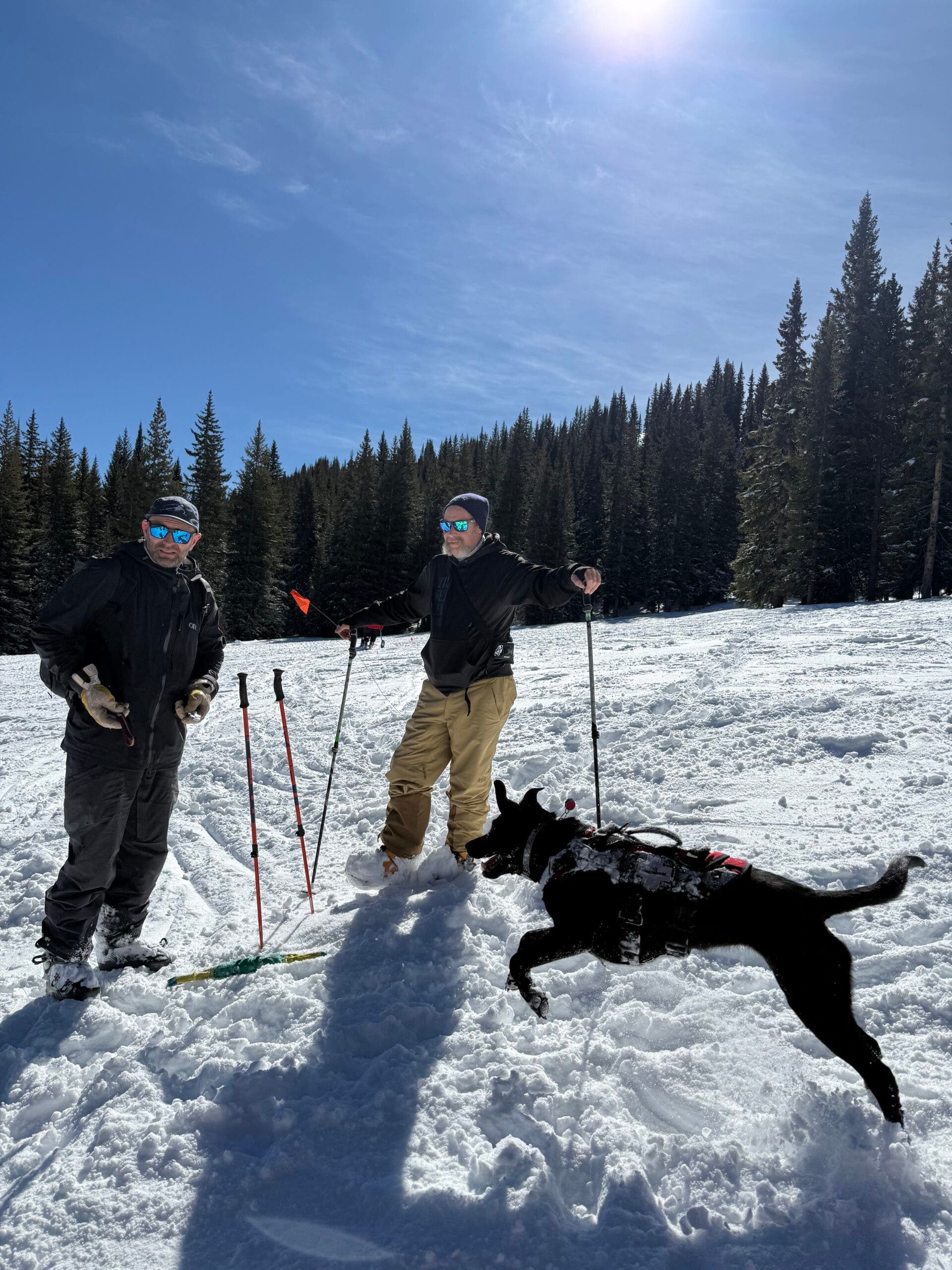
The scenario involved a 100-square-meter zone on the mountain, within which each dog and handler team had a strict 20-minute timeframe to locate one to three buried individuals. Daisy, a spirited four-year-old black Labrador retriever from Steamboat Resort’s Ski Patrol, exhibited palpable excitement, leaping in anticipation of the signal to enter the search area. Upon receiving the cue from her handler, Chad Feagler, Daisy launched herself onto the slope, her nose pressed to the snow, tail a blur of enthusiastic motion. Her search was astonishingly efficient. She located her first "victim" in under 30 seconds and the second, positioned approximately 80 feet away, just over a minute later.
Chrissie Oken, an avalanche technician with Vail’s ski patrol, expressed her awe at the dogs’ capabilities. "Watching the dogs, you have to be like, ‘they didn’t know beforehand where this person was buried?’" she remarked. "They’ll catch a scent, do a 180 and b-line it to where the person is buried. It’s amazing." This instinctive ability to detect faint human scent through dense snow, even when masked by other environmental odors, is a testament to their highly specialized training and innate instincts.
John Reller likens avalanche victim searches, whether in a drill or a real emergency, to a sophisticated game of "hide and seek" for these dogs. He also notes that a specific temperament is ideal for this demanding work, with breeds like retrievers, Labradors, and herding dogs topping his list. "As puppies, these are dogs that have a higher drive, an independent drive," he explains. "They’re not just playing with the litter. They have a confidence, an inquisitiveness to them. Dogs we’re looking for are potentially the more challenging ones at home. They need more exercise, more direction." This inherent drive and curiosity, often perceived as a challenge in a typical pet, is precisely what makes them exceptional avalanche search candidates.
Beyond the Search: Morale Boosters and Marketing Stars
Beyond their critical search and rescue functions, avalanche dogs serve a significant role as beloved mascots for ski resorts. Programs like Vail Mountain’s "Dine with the Dogs," a complimentary hour-long event held every Sunday that introduces guests to the patrol dogs, consistently attract substantial crowds, often ranging from 80 to 200 attendees. These interactions not only provide valuable public education about avalanche safety but also foster a positive connection between the resort and its visitors.
"The dogs are there in case something happens in resort boundaries or right outside," explains Andrea Reller. "They also use them for advertisements. They definitely play a marketing part." This dual role highlights the multifaceted value of these canine companions.
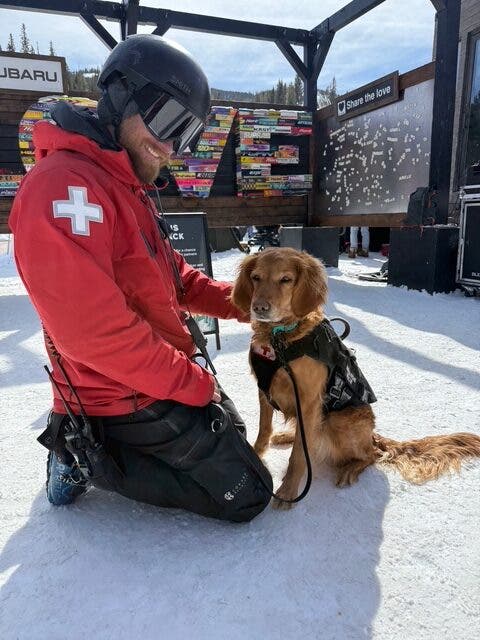
For Copper Mountain Patroller Nick Slaton, the most rewarding aspect of working with his six-year-old C-RAD-validated golden retriever, Nevé, is the "day to day." "Being able to bring my girl to work – she goes everywhere with me – that’s the best," he shares, while guiding Nevé through a crowd of admiring children during a Copper Patrol Dog "Meet and Greet" event at Subaru Winterfest. "I can’t tell you how nice it is when I get back to the duty station and she’s just cuddled up on the couch with my coworkers. As soon as I grab the vest, she’ll be up and at it and ready to go play that game. Just that continued bond between us that keeps building all the time is rewarding."
The presence of these energetic and happy animals has a palpable effect on the morale of ski patrol teams. "They’re so happy," agrees Chrissie Oken. "Patrolling is hard. It’s draining. It’s fun to work with that energy. It brings everyone up." This infectious enthusiasm and unwavering loyalty create a positive and supportive atmosphere, essential for teams facing challenging and often emotionally taxing work.
The deep bond between an avalanche dog and its handler is, arguably, the most crucial element for successful searches. This partnership is forged through rigorous training and a profound understanding of each other’s cues. "If we’ve done our training appropriately, the dog has already started working. They’ve started smelling, looking for scent," Reller notes. "It’s working together with purposeful movements. Some dogs have a longer range. Some want to work closer to their handler. A lot of avalanche dog searches involve reading your dog’s body language. Knowing she’s in scent, what the ears do or how the tail wags." This intricate communication, developed over countless hours of practice, allows handlers to interpret their dog’s subtle signals and direct the search effectively.
The Reality of the Find: From Body Recovery to Life-Saving Rescues
The ultimate goal of any avalanche search is, of course, a live rescue. While John Reller’s extensive career has predominantly involved recovering victims, the prospect of a live find remains the ultimate aspiration. The successful rescue of a snowmobiler on Vail Pass last winter, found alive attached to his airbag and protected by a helmet-created air pocket, serves as a powerful reminder of the potential for survival and the critical role of various safety measures. Although the avalanche dogs had not yet begun their scent detection, the discovery underscored the importance of a multi-layered approach to avalanche safety.
"It doesn’t matter how the person was found. A live find is a cool experience for us," says Ben Butler, who, along with his black Labrador, Hoggle, serves with the Summit County Rescue Group. Reller himself expressed profound satisfaction upon hearing about this rare live rescue, a welcome departure from his decades of experience with body recoveries.
"We call them rescues, but nobody talks about what we typically are going to do," Reller candidly admits, acknowledging the grim reality of his profession. Yet, he finds deep purpose and gratification in providing closure for the families of avalanche victims, a service that is invaluable even in the face of tragedy.
Reller recounts some of his most emotionally resonant experiences with his avalanche dogs, even when the outcome was not a life saved. He vividly remembers an early mission with Skadee, where he was airlifted into a half-mile slide path to search for a buried snowmobiler. On the scene were rescuers, friends, and family, including the victim’s wife. It was Reller who spotted a glove protruding from the snow, which led to the discovery of the buried man.
"The wife came over, dropped down, understandably crying," Reller recalls. "There was something else, though. I was like, what’s that noise? It was Skadee mimicking that wailing sound. That’s why we have emotional support dogs, because they recognize that emotion." This poignant moment illustrates the profound empathy and connection these dogs develop, not only with their handlers but also with the people they encounter, even in the direst circumstances.
The Power of Reward: Fueling the Drive for the Next Find
Motivation is paramount for avalanche dogs, and positive reinforcement plays a critical role in maintaining their drive and enthusiasm. During search drills and official tests, handlers and often the "buried" individuals shower the dogs with praise, affection, and playtime upon a successful find. For Baylee Rice, who leads the dog program at Copper Mountain Patrol, celebrating a job well done with her black Labrador, Lillie, provides some of her most heart-warming moments.
"After we’ve done a hard drill or worked a tough scenario, I always let her win with a toy," Rice shares. "When she gets the toy, she runs around and looks so happy. When she lays down, she’ll drop the toy on her paws and look at me with a big smile. It’s like she knows she did such a good job and found what she was looking for. She’s done her job and now she’s like, ‘let’s play!’ It’s just the cutest." This playful reward system ensures that the dogs view their work not as a chore, but as an engaging and enjoyable activity, reinforcing their desire to perform at their best. The science of animal behavior consistently demonstrates that positive reinforcement builds strong bonds and encourages repeated desired behaviors, a principle that is expertly applied in the training of these extraordinary animals.
