

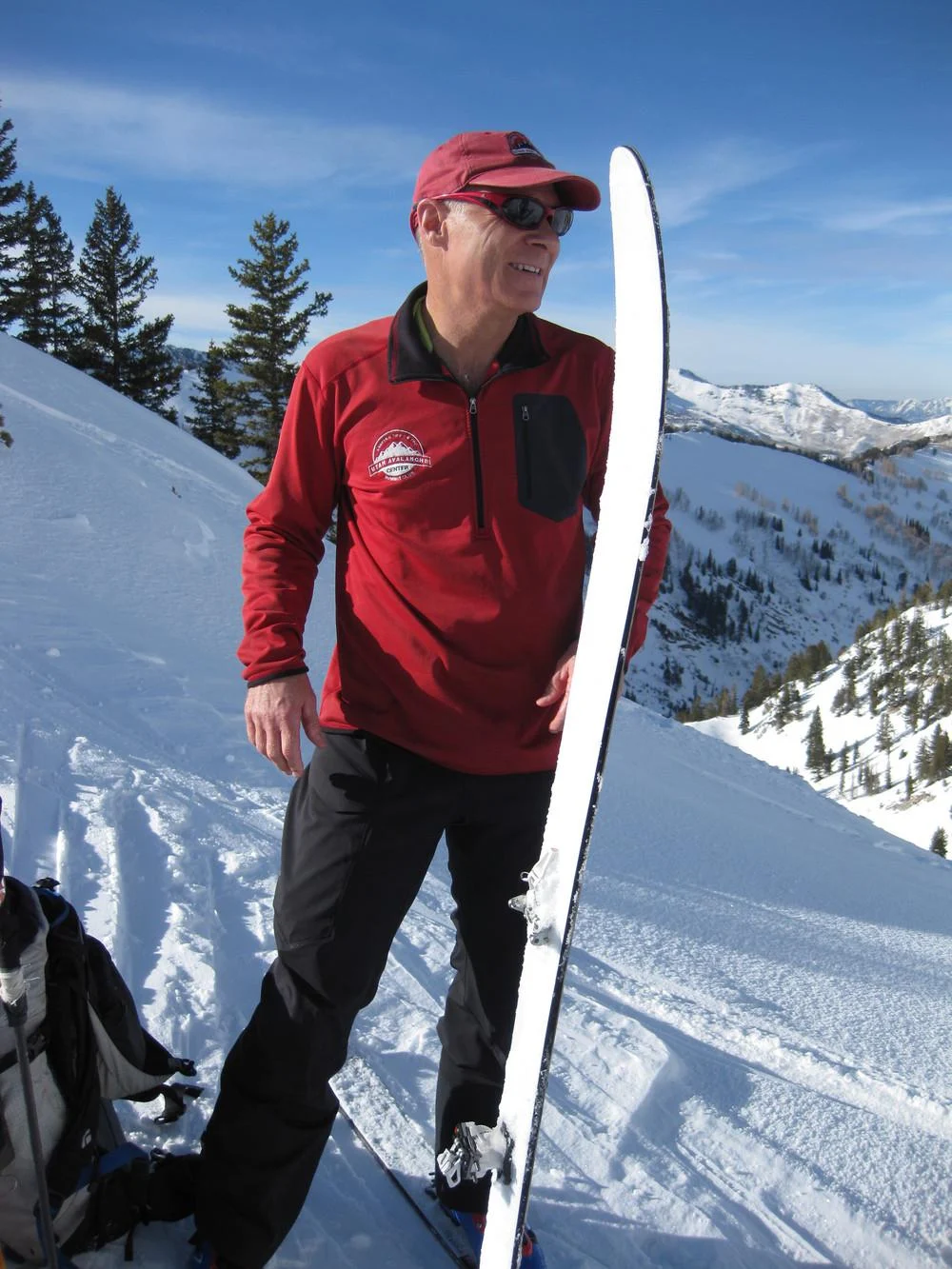
The Utah Avalanche Center (UAC) has announced the retirement of its long-serving Director, Bruce Tremper, effective at the end of August. Tremper, a towering figure in avalanche safety and forecasting for nearly three decades, leaves behind a legacy of innovation and dedication that has profoundly shaped the field, both domestically and internationally. His departure marks the end of an era for the UAC, a period characterized by significant advancements in avalanche forecasting and public education.
Tremper’s extensive career in avalanche science began in Montana, where he pursued his Master of Science degree at Montana State University under the guidance of Dr. John Montagne. This academic foundation was swiftly translated into practical, hands-on experience. He was actively involved in avalanche control operations at prominent ski areas, including Bridger Bowl and Big Sky. His early professional journey also saw him contribute as an avalanche forecaster at the Alaska Avalanche Center, collaborating with esteemed professionals such as Doug Fesler, Jill Fredston, and Jim Woodmency. These formative years provided him with a deep understanding of snowpack dynamics and the critical importance of timely, accurate avalanche information.
In 1986, Tremper assumed the directorship of the Utah Avalanche Center. During his 29-year tenure, he spearheaded a remarkable evolution in the UAC’s operational methods and public outreach. The center transitioned from its earlier reliance on phone-recorded advisories to a sophisticated array of internet-based products. This transformation was not merely technological; it involved a fundamental shift in how avalanche danger was communicated. Tremper and the UAC were pioneers in introducing visual aids, such as icons representing avalanche problems, into their daily advisories. This innovation significantly enhanced the clarity and accessibility of critical safety information for backcountry users. The introduction of the "avalanche problem" concept, which breaks down the complex threat into understandable components, is a testament to Tremper’s commitment to public understanding and safety.
Beyond his leadership at the UAC, Tremper’s influence extended across a broad spectrum of avalanche-related activities. He served as the editor for The Avalanche Review for six years, a publication that serves as a vital forum for the exchange of ideas and research within the avalanche community. His prolific writing includes numerous scientific papers and two seminal books on avalanches, which are considered essential reading for professionals and enthusiasts alike. Furthermore, Tremper played a crucial role in managing backcountry avalanche safety for Salt Lake City’s 2002 Olympic Games, a high-profile event that demanded meticulous planning and execution of safety protocols. His expertise has been consistently sought after by the media, leading to hundreds of interviews where he has effectively conveyed the risks and necessary precautions associated with mountain travel. For decades, he has been a dedicated instructor at the National Avalanche School, imparting his knowledge and experience to the next generation of avalanche professionals. Notably, Tremper was a key member of the working group that developed the conceptual model of avalanche danger and the associated avalanche danger scale, a framework that has become an international standard.
A Legacy of Innovation and Public Service
Bruce Tremper’s career can be viewed as a continuous effort to bridge the gap between complex scientific understanding of snow and avalanches and the practical needs of the public venturing into avalanche terrain. His early experiences in Montana and Alaska provided a robust foundation in both theoretical and applied avalanche science. The move to Utah presented a unique opportunity to focus on a region renowned for its steep, challenging, and avalanche-prone terrain, particularly the Wasatch Mountains.
Timeline of Key Milestones in Bruce Tremper’s Career:

- Early 1980s: Earns MS degree at Montana State University, conducts avalanche control work at Bridger Bowl and Big Sky.
- Mid-1980s: Works as an avalanche forecaster at the Alaska Avalanche Center.
- 1986: Appointed Director of the Utah Avalanche Center.
- Late 1980s – Early 1990s: Focuses on developing more accessible avalanche advisories and introduces early forms of graphical representations.
- 1990s: Serves as editor for The Avalanche Review, publishes influential papers and his first book on avalanches.
- 2002: Oversees backcountry avalanche safety for the Salt Lake City Winter Olympics.
- 2010: Contributes to the development of the conceptual model of avalanche danger and the avalanche danger scale.
- Ongoing: Continues to teach at the National Avalanche School and engage in media outreach.
- August 2015: Retires from the Forest Service.
The introduction of the UAC’s sophisticated forecasting products has had a tangible impact on avalanche safety statistics. While precise year-over-year comparisons are complex due to varying snowpack conditions and increasing backcountry use, the general trend in the United States has shown a stabilization or even a decrease in avalanche fatalities per user-day in areas with robust forecasting and education programs, suggesting that improved information dissemination contributes to safer practices. For instance, the number of avalanche fatalities in the U.S. has historically fluctuated, but data from organizations like the National Avalanche Center indicates that consistent public education and accessible forecasting are key mitigation factors. Tremper’s commitment to making complex information understandable is a direct contributor to this trend.
Transition to New Leadership
With Bruce Tremper’s retirement, the Utah Avalanche Center has appointed Mark Staples as its new Director. Staples brings a wealth of experience and a strong academic and practical background to the role. His qualifications include extensive work in ski patrol and snow safety at Big Sky Ski Area, a Master of Science degree in Engineering from Montana State University where his research focused on snow avalanches, and significant contributions to special projects for the National Avalanche Center. Furthermore, Staples has eight seasons of experience as a backcountry avalanche forecaster at the Gallatin National Forest Avalanche Center, providing him with direct experience in the operational aspects of avalanche forecasting in a similar mountainous environment.
Staples expressed enthusiasm for joining the UAC, highlighting the "top-notch" team already in place. His background suggests a continuation of the UAC’s commitment to scientific rigor and effective public outreach. The UAC’s established infrastructure and Tremper’s foundational work provide a strong platform for Staples to build upon. His academic focus on snow avalanche research at Montana State University, a program with a strong reputation in the field, further solidifies his technical expertise.
Broader Impact and Future Outlook
Bruce Tremper’s retirement is a significant event for the avalanche community. His decades of leadership have not only bolstered the Utah Avalanche Center but have also set benchmarks for avalanche forecasting and safety initiatives nationwide. His commitment to education, through teaching at the National Avalanche School and authoring influential books, has had a ripple effect, empowering countless individuals to make informed decisions in the backcountry.
While retiring from the Forest Service, Tremper has indicated his intention to remain actively involved in avalanche safety. He plans to continue teaching, writing, and contributing to avalanche safety projects. This assurance is welcome news for the avalanche community, as his expertise remains invaluable. It is also anticipated that Tremper, along with his wife Susi, will continue to enjoy the backcountry skiing they are known for, likely with even more frequency. Their continued presence in the mountains, coupled with their high level of fitness, serves as an informal reminder of the dedication and passion required for both enjoying and understanding avalanche terrain.
The transition to Mark Staples represents a new chapter for the Utah Avalanche Center. Staples’s background suggests a commitment to maintaining and advancing the high standards set by Tremper. His experience in both operational forecasting and academic research positions him well to lead the UAC into the future, a future that will undoubtedly continue to grapple with the challenges of increasing backcountry use and the inherent risks associated with avalanche terrain. The UAC’s ability to adapt and innovate, a hallmark of Tremper’s tenure, will be crucial as it navigates these evolving dynamics. The appointment of Staples signifies a continuity of expertise and a forward-looking approach to avalanche safety in one of the nation’s most avalanche-prone regions.
