

The grand, domed edifice of the Wang Contemporary, a former landmarked bank meticulously refurbished by designer Alexander Wang and his mother over the past year, set a dramatic stage for the unveiling of his Resort 2027 collection. Situated at the cusp of bustling Chinatown, this hybrid gallery and showroom, located seven floors above Canal Street, offered a dramatic departure from traditional runway settings. Guests ascended in a classic caged elevator, emerging into a moodily lit atmosphere characterized by dark, curtained tableaux and mannequins, a space soon to host private omakase dinners, hinting at the multifaceted vision for the venue.
This collection marks a significant evolution for Wang, who, despite a prevailing sense of "opulence" in the current fashion landscape, presented a relatively spare and streamlined collection last season, lauded for its fun, youthful, flirty, and sexy appeal. The allure of the lavish and ornate, however, has not diminished; rather, it has intensified and been more fully realized in Resort 2027. Wang drew profound inspiration from traditional Peking opera, a rich cultural heritage, and masterfully integrated these influences into what he envisioned as a contemporary wardrobe. The result is a collection that juxtaposes historical grandeur with modern wearability, a testament to Wang’s growing artistic maturity.
Peking Opera’s Opulent Echoes in Modern Silhouettes
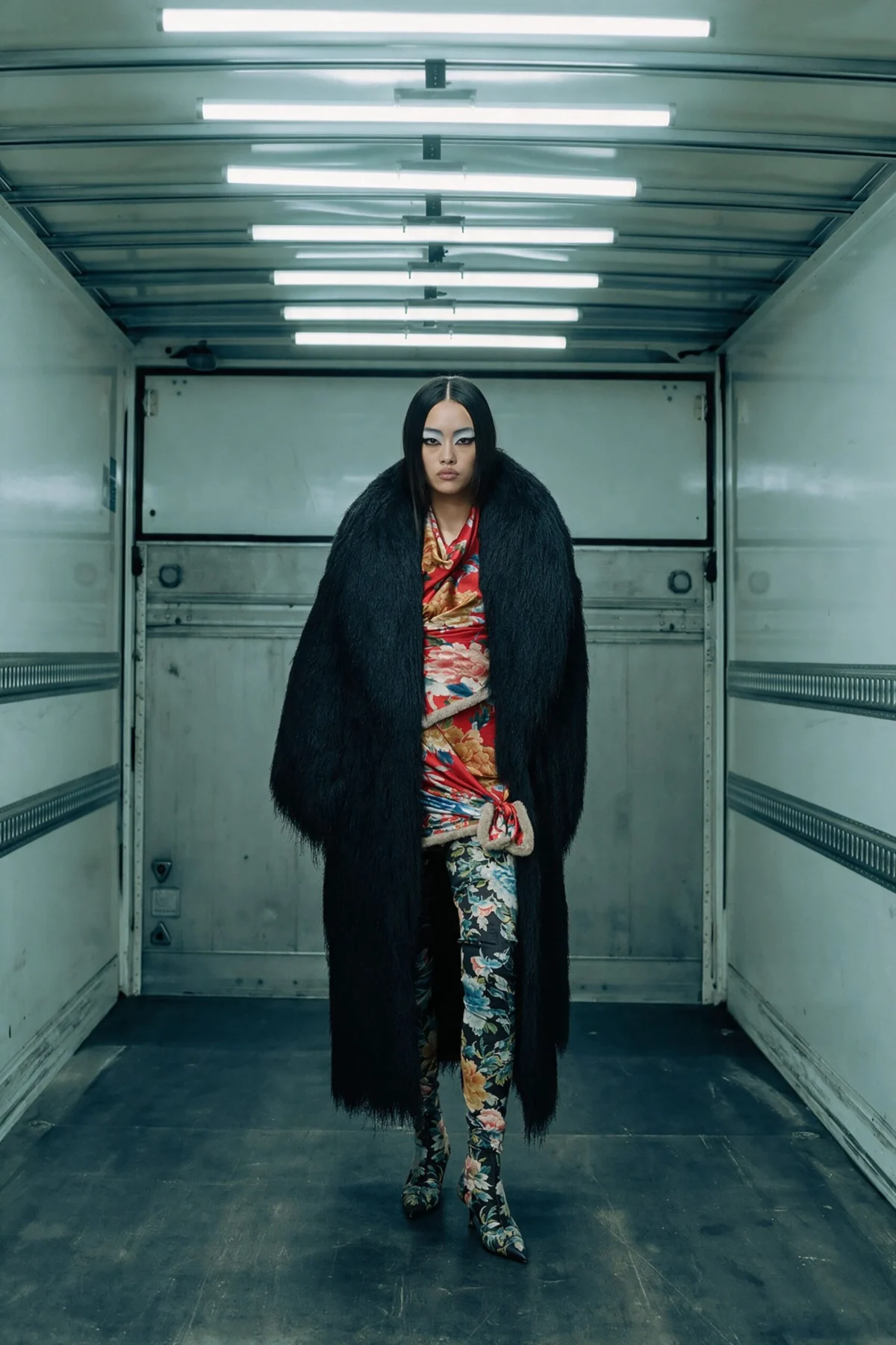
The collection’s first half heavily featured richly drawn floral motifs in the huaniaohua (flower and bird painting) style, a hallmark of traditional Chinese art. These intricate designs adorned draped tops, flowing skirts, and bandeaus, all finished with a touch of playful faux fur. The elaborate patterns extended to high-heeled boots that reached well above the thigh, creating a striking visual statement. This deliberate incorporation of cultural artistry speaks to a broader trend in the fashion industry of drawing from diverse heritage for inspiration, aiming to create collections that are both aesthetically rich and culturally resonant.
Silk Twill and Deconstructed Tailoring: A Fusion of Glamour and Edge
Another prominent theme was the extensive use of silk twill fringe, which densely embellished cocooning evening coats featuring robust shawl lapels. This luxurious material also shaped a floor-length strapless dress designed with a subtle hourglass silhouette, exuding timeless elegance. A mod-ish, straight-line skirt-and-top set further showcased the versatility of silk twill.
Wang also offered a compelling reimagining of classic tailoring. A tuxedo jacket was transformed into a mini wrap dress, its vented back elongated into a dramatic fishtail, blurring the lines between formalwear and avant-garde design. This piece was presented alongside a lustrous two-piece gown, where a cropped, boxy top, inspired by the humble pillowcase, met a flowing skirt. These ensembles exuded an air of elegance and refinement, a maturity and old-world glamour that might surprise those familiar with Wang’s signature casual, "cool-girl" aesthetic. This deliberate exploration of a more sophisticated sensibility suggests a conscious effort to broaden his design vocabulary and appeal to a wider demographic.
"Hybrid State": Wang’s Signature Downtown Aesthetic Reimagined
The latter half of the collection, aptly titled "Hybrid State," saw Wang return to his more familiar, downtown-rooted aesthetic, albeit with a sophisticated twist. This segment explored the concept of pre-styled garments, presented with a playful wink. A jean jacket and skirt, for instance, were artfully designed to appear as if twisted upside down, a clever manipulation of familiar silhouettes. The pre-styled concept was further exemplified by a single piece that artfully mimicked a camisole layered over a long-sleeve T-shirt, offering a seemingly effortless yet meticulously constructed look.
Dark, roomy trousers featuring a loose ruffle down the side, a nerdy cardigan elevated by an argyle print meticulously picked out in crystals, and T-shirts adorned with airbrushed graphics of Peking opera performers, accented with a scattering of sparkle, firmly placed Wang back in his classic element. These pieces, embodying his signature downtown cool, were also among the most commercially appealing in the lineup, demonstrating his ability to blend high fashion with relatable style.
Designer’s Vision: Bridging Tradition and the Everyday
"It’s an evolution of the last collection," Wang stated, elaborating on his creative process. "And thinking about rituals, traditionalism, these things we haven’t really explored before as a visual language. I wanted to think, ‘How do we approach these?’ I’m always interested in things that feel foreign to us and then bringing it in. Even though these things can look very dressed-up, is there a way we can bring them into the everyday?"
This philosophy underpins the entire collection, particularly the "Hybrid State" segment. Wang’s intention to translate the richness of traditional aesthetics into accessible, contemporary pieces resonated throughout the show. The use of familiar garments like denim and T-shirts, combined with elevated embellishments and conceptual styling, serves to democratize luxury and make high fashion more relatable.
The Wang Contemporary: A New Chapter for a Historic Space
The choice of the Wang Contemporary as the venue was not merely aesthetic; it was programmatic. The former bank, purchased by Wang and his mother in the spring of the previous year and undergoing extensive refurbishment, is envisioned as more than just a showroom. Its transformation into a hybrid gallery and event space signals a broader ambition for the brand. The venue itself, with its grand architecture and historical significance, provided a potent backdrop for a collection that explores heritage and evolution.
The refurbishment process, lasting over a year, highlights a significant investment in establishing a physical presence that embodies the brand’s evolving identity. The location, hovering over Canal Street at the edge of Chinatown, strategically places the Wang Contemporary within a culturally rich and dynamic urban landscape, further amplifying the collection’s themes. The upcoming private omakase dinners suggest a curated lifestyle experience that Wang aims to offer, extending beyond fashion to encompass art, culture, and gastronomy.
Industry Context and Future Implications
Alexander Wang’s Resort 2027 collection arrives at a time when the fashion industry is increasingly focused on cultural appropriation versus appreciation, and the dialogue around heritage in design is more critical than ever. Wang’s approach, rooted in a deep engagement with Peking opera and traditional Chinese artistry, appears to be a carefully considered attempt at cultural fusion rather than appropriation. The designer’s personal connection to his heritage, coupled with his stated intention to make these elements accessible for everyday wear, suggests a thoughtful integration that aims to honor the source material while creating something new.
The success of the "Hybrid State" pieces, blending his established downtown aesthetic with these new influences, indicates a strong commercial viability for his more accessible designs. This could signal a strategic direction for Wang, balancing high-concept fashion with market-friendly appeal. The collection’s emphasis on versatile pieces, such as the embellished cardigan and the creatively styled denim, suggests a focus on building a wardrobe that can be mixed and matched, a trend that continues to resonate with consumers seeking longevity and adaptability in their fashion choices.
The investment in the Wang Contemporary as a physical space also points to a larger trend of brands creating immersive brand experiences. Beyond traditional retail, these spaces serve as hubs for cultural exchange, artistic expression, and community building. For Alexander Wang, this new venue offers a canvas to control the narrative around his brand and present his collections in a context that aligns with his artistic vision. The successful integration of a luxury fashion show within a space that also hosts culinary experiences and art exhibitions could set a precedent for how brands engage with consumers in the future, moving beyond transactional relationships to cultivate deeper connections.
Furthermore, Wang’s explicit statement about bringing "foreign" elements into his design language and making them part of the everyday is a crucial insight into his design philosophy. This approach is particularly relevant in a globalized world where cultural influences are constantly exchanged. By deconstructing and reinterpreting traditional motifs and silhouettes, Wang is not only offering a fresh perspective on Chinese culture but also encouraging a broader appreciation for its aesthetic richness. The collection’s reception will undoubtedly be a barometer for how well this delicate balance between cultural homage and contemporary fashion is perceived by both critics and consumers. The future of Alexander Wang appears to be one where heritage and modernity coalesce, creating a distinct and compelling narrative within the competitive landscape of luxury fashion.
