

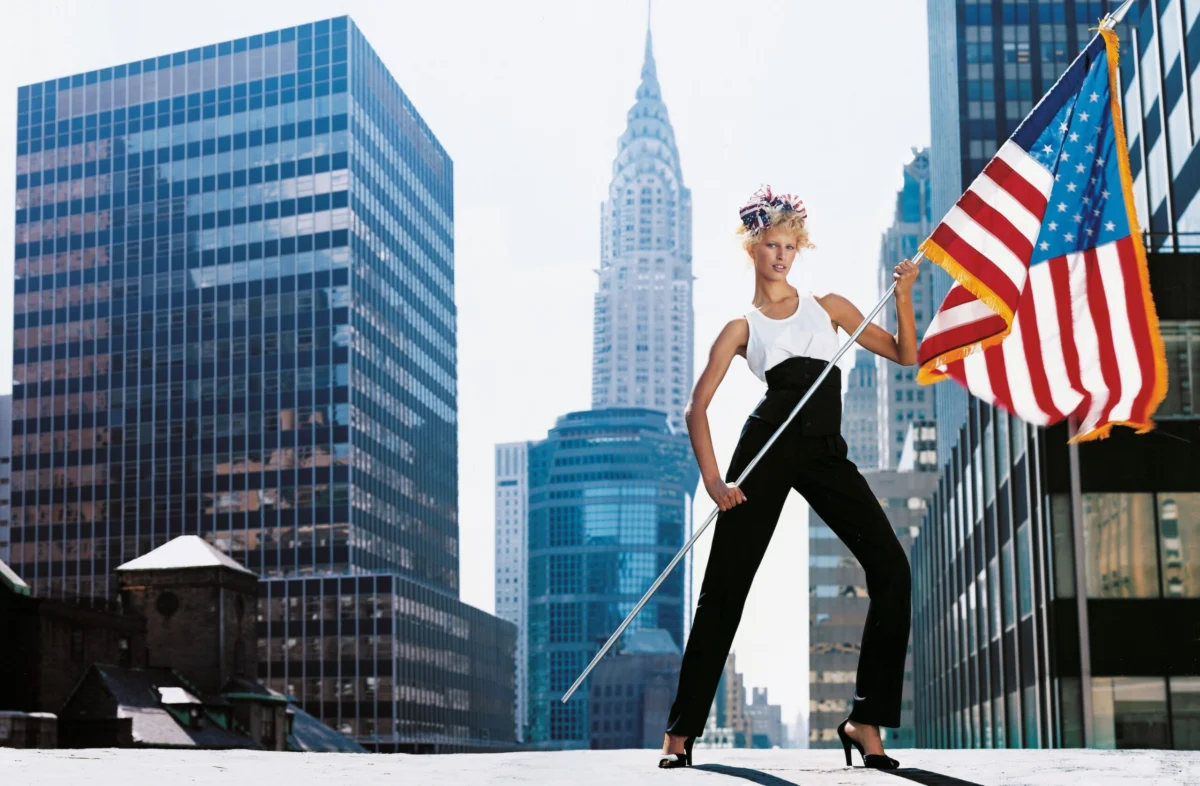
The landscape of American fashion, poised for its Spring 2002 showcase, found itself irrevocably altered by the seismic events of September 11, 2001. In the wake of unimaginable tragedy, the industry, much like the nation it reflects, grappled with profound grief and a shifting sense of purpose. This collection of articles, originally published in Vogue in November 2001 and penned by Sally Singer, offers a poignant glimpse into how designers responded to these "unusual times" with "unusual measures." This preview of the Spring 2002 collections, presented as an exception to Vogue’s standard practice of featuring only immediately available designs, served as a testament to the enduring spirit of American creativity and its capacity to project optimism, vivacity, and confidence in the face of adversity.

The Shadow of Tragedy: Fashion’s Interruption and Reimagining
Prior to the fateful Tuesday in September, the New York fashion collections had unfolded with their characteristic blend of exuberance and occasional pretension. Reports from the time detail a spectrum of experiences, from the avant-garde installations of Imitation of Christ, which playfully inverted the traditional runway hierarchy, to the more exclusive and frustrating access to Marc Jacobs’s shows, drawing comparisons to the VIP gatekeeping of 1980s New York nightlife. These early presentations, filled with what Vogue described as "predictable doses of giddiness" and "tedium," painted a picture of an industry operating within its established rhythms, largely insulated from the unfolding global anxieties.
The immediate aftermath of the September 11th attacks brought a stark and sudden halt to this momentum. All scheduled fashion shows were abruptly canceled. The industry entered a period of profound shock and reflection. It was not until the following week that the collective will to continue began to emerge, albeit in a dramatically altered form. The grand tents of Bryant Park, a traditional epicenter for these presentations, were replaced by more intimate, subdued gatherings. Designers opted for scaled-back presentations in their Seventh Avenue showrooms, inviting small groups of editors to view key looks. These appointments were often devoid of the usual runway music, creating a somber and introspective atmosphere that underscored the gravity of the national mood. This shift in presentation format was not merely logistical; it was a deliberate choice to prioritize substance and emotion over spectacle.

A Nation’s Heartbeat: Designers’ Declarations of Resilience
The revised fashion presentations, though stripped of their usual fanfare, became powerful platforms for expressing a renewed sense of national identity and collective resolve. The events of September 11th had a profound impact on the designers, many of whom directly addressed the emotional weight of the moment. These presentations, characterized by their punctuality and absence of celebrity attendees or elaborate goodie bags, marked a new kind of fashion moment—one rooted in sincerity and shared experience.
Designers universally offered heartfelt and somber remarks, affirming their unwavering commitment to both the city of New York and the nation. For editors and industry insiders, these shows provided a much-needed sense of catharsis, a tangible outlet for "bottled-up grief and an unspoken hunger for hope." This sentiment was particularly palpable at Donna Karan’s presentation. Karan, who revealed that September 11th was the anniversary of her wedding to her late husband, evoked a profound emotional response. The music selections, typically chosen for their fashion-forward appeal, took on a new and poignant significance. Love songs by artists such as Sting and Celine Dion, which might have previously been perceived as merely "schmaltzy," acquired an "unexpected potency," moving many to tears and serving as a powerful reminder of the enduring strength of human connection. This moment highlighted fashion’s ability to transcend its aesthetic purpose and act as a mirror to the collective emotional state of a society.

American Sportswear Ascendant: Practicality Meets Patriotism
In the wake of the attacks, American fashion, which had sometimes been critiqued for not matching the theatricality of Paris, the edginess of London, or the overt sexiness of Milan, revealed its inherent strengths. The Spring 2002 collections showcased the undeniable prowess of American designers in creating exceptional sportswear – pieces that offered both practicality and an understated sense of patriotism. This focus on essential, well-crafted garments resonated with a public grappling with more significant concerns than fleeting trends.
The collections underscored the enduring appeal of foundational wardrobe pieces. The "right narrow pant" was a recurring theme, appearing in variations such as the sarong-like styles at Michael Kors and the fresh coral denim at Marc by Marc Jacobs. The iconic trench coat was reinterpreted with innovative details, including corset-backed versions at Narciso Rodriguez and ethereally light designs at Donna Karan. The crisp white shirt, a timeless staple, was presented in updated forms, from the skinny poplin at Carolina Herrera to the oversized, jacket-like versions at Calvin Klein. These "unbeatable basics and classic separates" offered a sense of groundedness and ease, providing solutions for what to wear when "weightier things" occupied one’s mind. This emphasis on functional elegance underscored the practical and adaptable nature of American design, proving its relevance in a time of uncertainty.

The "Dress and Go" Revolution: Simplicity as a Statement
Beyond essential separates, the Spring 2002 collections highlighted the American designer’s mastery of the effortless day-to-night dress. This category of clothing emerged as a key offering, embodying a spirit of uncomplicated prettiness that allowed the wearer to shine without being overshadowed by the garment. At Bill Blass, Lars Nilsson presented a sequined shirtdress with an appealingly relaxed silhouette. Michael Kors paid homage to the legacy of Halston with a striking stretch-silk halter dress in a vibrant Chinese red. Marc Jacobs’s swingy jersey dresses, embellished with patches and appliqués, evoked the playful spirit of designers like Sant’Angelo and Stephen Burrows for a contemporary audience. Calvin Klein offered layered sheath dresses, featuring ’30s-inspired seaming, crafted from ethereal plum tulle.
What distinguished these dresses was their inherent modernity, a quality derived from their "uncluttered prettiness." They offered a sophisticated simplicity that did not veer into the overly cutesy or ostentatious. The accompanying styling suggestions—pairing them with flat sandals for daytime or "something high and strappy" for evening—further emphasized the ease and versatility of these pieces. The phrase "Dress and go. Life should always be that simple" encapsulates the appeal of these designs, offering a welcome respite from complexity and a return to fundamental elegance. This philosophy of dressing resonated deeply in a post-tragedy world, where simplicity and directness offered comfort and clarity.

A Tapestry of Craftsmanship: Lace, Homespun, and Enduring Charm
The collections also celebrated a rich vein of craftsmanship, with a particular emphasis on lace and homespun finishes. Oscar de la Renta featured eyelet lace used in corsetry, adding a touch of delicate romance to structured pieces. Miguel Adrover incorporated Battenberg lace into bibs and hems, lending a vintage charm. Ralph Lauren presented prairie skirts that evoked a sense of nostalgic romance, adorned with gauzy, beaded lace. Behnaz Saraf-pour showcased guipure lace in a striking strapless dress, demonstrating the fabric’s versatility.
Beyond lace, the collections embraced "homespun finishes and fabrics" that conveyed warmth and a sense of domestic comfort, even within sleek silhouettes. Marc Jacobs and Miguel Adrover explored quilting, while Bill Blass featured crewel embroidery. Washed pajama striping appeared as a subtle detail in coat linings at Marc Jacobs, and Donna Karan experimented with linen, adding a tactile dimension to the collections. This embrace of traditional techniques and comforting materials fostered a mood that was "warm, friendly, and domestic," providing a sartorial antidote to the anxieties of the time. This was not a retreat into the past, but rather a re-appreciation of enduring artisanal skills that offered a sense of grounding and tangible beauty.

Beyond the Trends: A Rejection of Defeatism
In light of the changed global climate, the prevailing trends of black and military-inspired aesthetics, previously dominant, began to lose some of their "too-cool, too-knowing appeal." While designers acknowledged that pieces acquired for the fall season—such as combat boots, pseudo-armor jackets, and Cossack coats—could still be incorporated into wardrobes, the emphasis shifted towards integrating them in a manner that honored their intrinsic design qualities.
The article concludes with a thoughtful reflection on the cultural shift occurring in the discourse surrounding irony. While the attacks were seen by some as signaling an end to irony in American popular culture, the author expresses a hope that fashion would not lose its inherent humor and its "sly, subversive streak." The piece firmly rejects the notion of "defeatist fashion," asserting that this is precisely what is least desired and, importantly, what American designers would be least inclined to offer. Instead, the Spring 2002 collections, as presented through Vogue’s unique editorial lens, offered a powerful affirmation of resilience, creativity, and the enduring spirit of American design. They served as a poignant reminder that even in the face of profound loss, the impulse to create, to express hope, and to find beauty in everyday life remains an indispensable facet of the human experience. The collections, therefore, were not merely about clothing; they were about the indomitable resolve of a nation and its creative heart.
