

Andy Burnham’s initial nine days as the United Kingdom’s Prime Minister have been marked by a flurry of activity and a clear articulation of his policy priorities, resonating particularly strongly with the British fashion and retail industries. His early pronouncements have signaled a departure from traditional centralized economic models, focusing instead on empowering regional manufacturing, revitalizing high streets, and fostering a more inclusive national approach to business and culture. These initiatives, coupled with a distinct personal style that has garnered international attention, suggest a Prime Minister keen on leveraging both policy and perception to drive change.
The backdrop to Burnham’s premiership is one of significant challenges for the retail sector. Data from the British Independent Retail Association paints a stark picture: 17,000 shops shuttered on British high streets in 2025 alone, resulting in substantial job losses. Compounding this, business rates have reportedly doubled since 2024, placing immense pressure on independent businesses. Furthermore, a significant disparity in arts and culture funding between the north and south of England, estimated at £450 million in 2025 by the Institute of Public Policy Research North, underscores the regional inequalities Burnham aims to address.

Burnham’s early policy announcements have been ambitious. He has pledged to decentralize British business through devolved investment strategies, specifically targeting regional manufacturing and small businesses. This echoes his vision for a proposed "renaissance" of the high street, a concept he has championed through preliminary speeches and early actions. Notably, his administrative headquarters have been established not only at Downing Street but also at a new "Number 10 North" in England’s north, a symbolic move reinforcing his commitment to regional development.
A Strategic Style: More Than Just Fashion
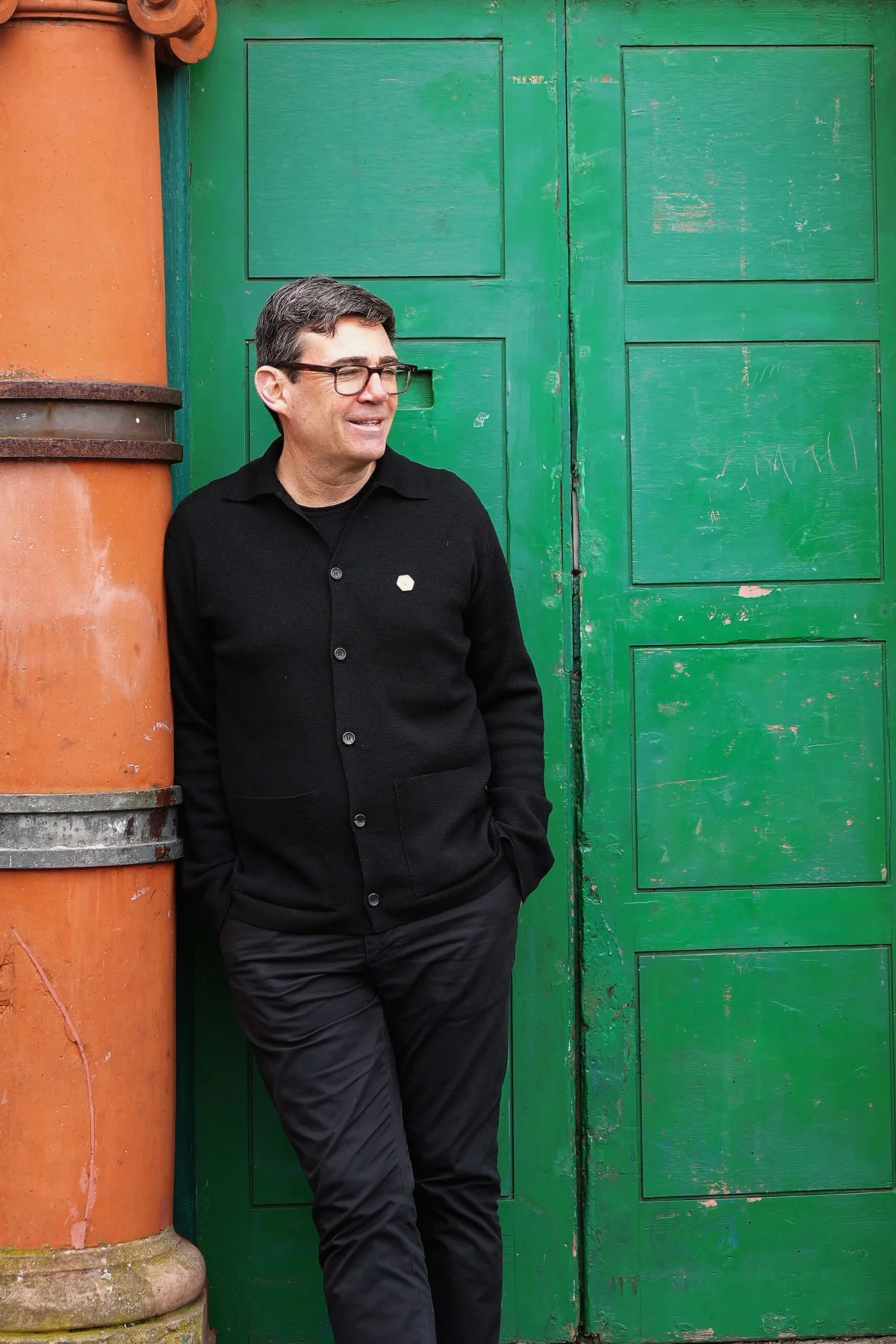
Beyond his policy agenda, Burnham’s personal style has become a talking point, with The New York Times fashion critic Vanessa Friedman labeling his aesthetic "Andycore," "Manchester clothes," or "hipster dad clothes." Friedman posits that Burnham’s deliberate choice to wear Manchester-made labels, such as Private White V.C., is a strategic reinforcement of his political messaging. This suggests a keen understanding of how personal presentation can be used to shape public opinion and signal core values. His sartorial choices, therefore, are not merely personal preferences but potentially carefully curated statements aligning with his broader political and economic vision.
David Pemsel, chair of the British Fashion Council (BFC), has formally engaged with the Prime Minister, penning an open letter in early July. Pemsel emphasized the profound connection between clothing, identity, place, and history, while also highlighting the significant economic contribution of the fashion industry. He noted that the sector generates substantial GVA (gross value added) across the UK, amounting to £67.5 billion, and supports numerous jobs, exports, and investments. This direct appeal from a key industry body underscores the industry’s expectation that Burnham’s government will prioritize its needs.

Revitalizing the High Street: A Multi-faceted Approach
Burnham’s initial actions have included a cut in business rates for music venues, pubs, and hospitality businesses, framed as part of a broader strategy to "drive good growth in every postcode." However, experts within the fashion retail sector argue that independent fashion retailers, a crucial component of town and city centers, have yet to receive comparable support.
Retail consultant and broadcaster Mary Portas, a long-standing advocate for high street regeneration since her 2011 Portas Review, observes Burnham’s efforts. "He’s trying to be the man of the people," Portas commented, acknowledging the magnitude of the task ahead. Burnham’s explicit question in his first speech as Member of Parliament for Makerfield—"Shouldn’t we make our high streets the new symbol of Britain’s renaissance?"—resonates with Portas’s own vision for vibrant, community-driven urban centers, reminiscent of their 1980s heyday.
Andrew Goodacre, CEO of the British Independent Retailers Association, echoes the sentiment that fashion retailers require dedicated support. "Independent fashion and lifestyle retailers have had a tougher run than most," he stated, advocating for a comprehensive British business plan that extends beyond the hospitality sector. Goodacre stressed that fashion is currently the weakest performing sector on the high street, with more independent businesses contracting than expanding. He urged that fashion retailers be integral to policy discussions, not an afterthought, and called for significant business rates reform. Additionally, he highlighted the need to scrutinize the "low-value import threshold," which he believes floods the market with cheap fashion, circumventing fair taxation.

The British Retail Consortium (BRC) reports a staggering 400,000 retail jobs lost over the past decade. Tom Holder, a spokesperson for the BRC, referenced the organization’s "Retail Manifesto for 2026," which outlines ten key steps for high street revival. These include reducing employment costs for young people, reforming employment rights, and addressing the inequities of the business rates system. Holder emphasized the urgency of immediate action on electricity costs and business rates, alongside the necessity of maintaining a diverse mix of both independent and larger retail establishments.
Portas further emphasized the growing importance of independent retailers, citing a recent report by her agency, We Are Portas, in collaboration with Snapchat. This report revealed that 51% of Gen Z consumers prefer the physical experience of shopping in-store, compared to 35% who favor instant online purchases. The experiential aspect of retail is thus paramount. Portas envisions a revival of models akin to "Hyper Hyper," the 1980s designer marketplace that served as a launchpad for emerging brands. Her aspiration is to see similar community-driven marketplaces, fostering discovery, connection, and individual expression, replicated nationwide.
Decentralizing Fashion: A National Opportunity
Burnham’s commitment to decentralizing business holds significant potential for the fashion industry, benefiting brands, retailers, and manufacturers across the UK. This aligns with the strategic direction of the British Fashion Council (BFC) under CEO Laura Weir, who has been instrumental in launching nationwide initiatives to foster inclusivity and regional development within the sector. "British fashion is one of our greatest cultural exports," Weir stated, "But for too long, participation has been concentrated in too few places."

The BFC’s new "Fashion Britain" proposal aims to broaden participation and inspire ambition, ensuring that individuals from all regions can envision a future within the industry. The initiative challenges the notion that success in fashion is solely dependent on a London base or graduation from London-based institutions. Designers like Matty Bovan, who returned to his home in North Yorkshire in 2015, demonstrate the viability of operating internationally from a regional base. Decentralization could facilitate designers establishing studios outside the capital, where costs are often lower, and encourage broader representation and inclusion for young people nationwide.
Peter Ruis, managing director of John Lewis, expressed enthusiasm for Burnham’s high street renaissance agenda. He highlighted the role of retail spaces as "social and economic anchors" that drive footfall, create local jobs, and cultivate community pride. This perspective is directly supported by initiatives such as John Lewis’s decision to feature Liverpudlian designer Steven Stokey-Daley’s SS Daley collection in both its Liverpool store and its flagship Peter Jones in Sloane Square. The positive reception to this collaboration, leading to the purchase of 40 pieces of the collection and a BFC Citywide talk by the designer, illustrates the power of connecting "exceptional homegrown design with a community that takes immense pride in its creative exports." John Lewis is reportedly planning further regional menswear collaborations, emphasizing investment in regional supply chains, the preservation of local skills, and providing a national platform for British talent across various regions.
In a significant move, the BFC announced its "Fashion Britain" campaign, set to launch in September across London, Liverpool, Manchester, Newcastle, Bristol, and Edinburgh. This initiative will feature public events, designer discussions, and retail experiences designed to celebrate local identities, with the long-term objective of nurturing creative talent beyond London. Weir described it as the commencement of a "major shift," aiming to "decentralize fashion, not by diminishing London’s global importance, but by recognizing that the future of British creativity depends on strengthening the connections between every part of the UK."

Strengthening the Textile and Skills Ecosystem
Adam Mansell, CEO of the UK Fashion and Textile Association (UKFT), emphasized the need for practical, well-funded measures to bolster the UK’s textile industry. He stressed that policy initiatives must be translated into tangible support for manufacturers, brands, retailers, and the broader supply chain. Key priorities for UKFT include business rates reform and devolved skills funding specifically linked to regional manufacturing clusters, a move that directly complements Burnham’s proposed reforms to technical education. Mansell also identified significant opportunities within a circular textile economy, suggesting that an effectively designed textile-specific Extended Producer Responsibility (EPR) scheme could reinvest revenues into UK textile collection, sorting, reuse, repair, recycling, innovation, and skills development, thereby fostering new investment, creating skilled jobs, and strengthening domestic manufacturing.
Designer Talia Lipkin-Connor, whose brand Talia Byre was established during the pandemic from her family home in Warrington, participated in the BFC’s Citywide initiative. She underscores the importance of raising awareness about diverse career paths within the fashion industry, beyond design roles, to include makers, pattern-cutters, and tailors. "It is a dying trade in this country," Lipkin-Connor stated, highlighting the urgent need for greater recognition and support for these essential skills.
Burnham’s recent announcement of a significant reform in the education system, focusing on technical education options for students aged 14 to 16, is a pivotal development. This initiative aims to equip young people with practical skills, valuing "the hard hat as much as the graduation cap." This policy is positioned as a crucial step in addressing the youth unemployment crisis in the UK, where 16.4% of 16 to 24-year-olds are unemployed. For the fashion industry, this reform could foster a new generation of apprenticeships in vital technical, design, and production roles.

Lipkin-Connor, whose family has a history in retail with her great uncle’s Liverpool boutique, Lucinda Byre, believes there is potential for independent boutiques to thrive in regional centers like Liverpool. However, she notes that the north west is currently better positioned for fast fashion and athleisure, citing brands like Boohoo and Adanola. For designers operating in different market segments, the established networks and support systems in the north can be challenging to navigate.
Gemma Gratton, co-founder of the Northern Fashion Collective and Manchester Fashion Week, is actively working to shift this perception. Alongside managing director Hayley Shaw, she is dedicated to building a sustainable and inclusive fashion ecosystem in Manchester and the wider northern region. The debut Manchester Fashion Week last year was notably opened by Michael Stoll, co-founder of the Manchester-based heritage brand Private White V.C., a brand favored by Prime Minister Burnham himself. Gratton and Shaw are hopeful for potential government funding to support their initiatives.
"It really ties into what Andy wants to do with Number 10 North," Gratton remarked, having already corresponded with the Prime Minister at his northern outpost. She believes that "Number 10 North has the potential to move fashion and textiles from the margins of policy to the heart of regional growth." She further articulated that the north, as the historical birthplace of industrialized fashion and textiles, has a unique opportunity to spearhead its next chapter, driving innovation, manufacturing, skills, and creativity as part of a new era of "good growth in every postcode."
.jpg)
Manchester Fashion Week plans to feature 16 catwalk shows and an exhibition showcasing the work of 10 schools. Collaborations are also underway with Sustainable Fashion Week in Bath, Ibiza Fashion Week, and Berlin Fashion Week, including a partnership with the sustainable development hub Vorn. Gratton emphasized the importance of collective action and a move away from competition. "Being exclusive, that’s what fashion has been for years. There has got to be a cultural shift," she concluded, advocating for a more integrated and collaborative approach to fashion development across the UK.
