

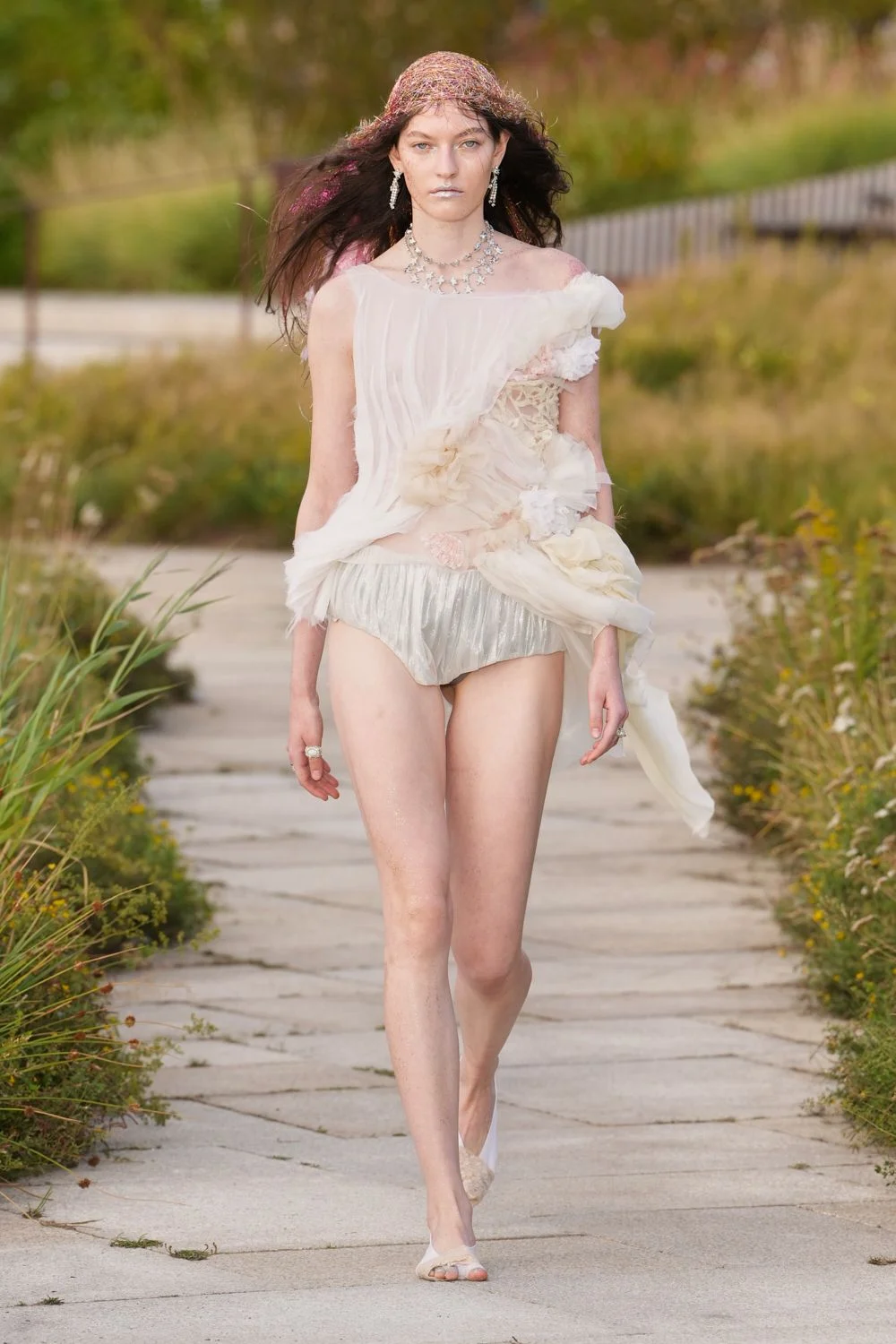
Hillary Taymour, the visionary behind the sustainable fashion label Collina Strada, transformed the iconic Copenhagen Opera House into a stage for her latest capsule collection, a vibrant fusion of Danish folklore and the aspirational spirit of the American Dream. This captivating presentation was not merely a fashion show; it was a powerful testament to the possibilities of eco-conscious design within an industry often criticized for its environmental impact. The opportunity to showcase this collection in such a prestigious setting was facilitated by a collaboration between Copenhagen Fashion Week (CPHFW) and The Climate Pledge, an organization of which Taymour is a dedicated signatory.
The ethos of Collina Strada has always been rooted in challenging the conventional fashion cycle and demonstrating that beauty and desirability can be achieved through responsible practices. This particular collection, born from Taymour’s unwavering commitment to environmental stewardship, underscored this philosophy with remarkable artistry. "Everything we made is from fabrics that were just in the studio already, so nothing is a new thing," Taymour explained during a detailed walk-through of the collection. This statement encapsulates the brand’s core principle: maximizing the potential of existing materials, thereby minimizing waste and the carbon footprint associated with sourcing new textiles.
The genesis of this Copenhagen-exclusive capsule collection provided Taymour with a unique canvas to unleash her unbridled imagination. Freed from the usual constraints of seasonal collections and the pressures of commercial sales cycles, she was able to indulge in the luxurious exploration of craft and her most fantastical whims. "The crazy thing about Collina is that everything that’s shown is available for sale," Taymour elaborated, highlighting a fundamental aspect of her brand’s business model. This direct-to-consumer availability, while a strength, also presents a creative tension. "So I don’t really get to make stuff that’s completely absurd like this that you can’t ever make again—or you could, but it wouldn’t be a Collina price point," she admitted. This acknowledgement of practical limitations, even within a collection designed for creative freedom, adds a layer of authenticity to her artistic process.
Beyond financial considerations, Taymour also discussed the inherent challenges of translating certain conceptual ideas into tangible garments. "Some things I wanted to explore were too delicate in a way where you’re not going to notice it," she revealed. However, given the extraordinary freedom afforded by this special project, she was able to overcome these limitations. "Given the chance, I added all the delicateness to be like, ‘Well here it is, in one vomit of delicateness.’" This evocative description speaks to the sheer abundance of intricate detail and ephemeral beauty woven into the collection, a deliberate embrace of embellishment and texture that might otherwise be deemed impractical for mass production.
A Tapestry of Craftsmanship and Sustainability
The collection presented a series of true "tour de forces," each piece a testament to meticulous craftsmanship and innovative material use. One standout garment was a dress ingeniously constructed from an astonishing 18 different materials, showcasing Taymour’s ability to harmonize disparate elements into a cohesive and stunning whole. Many other pieces featured hand-tucked details, unimaginable intricacies, and opulent embellishments that spoke volumes about the dedication poured into their creation. While some of these exquisite creations took months to produce, the overall impression was one of ethereal lightness and fluid movement.
A particular set of tops, characterized by their rounded shoulders and crafted from mille-feuille strips of fabric, evoked a distinct medieval air. However, the collection as a whole leaned heavily into the opulent spirit of the Rococo era, a sentiment amplified by Taymour’s signature "more-is-more" approach to both fashion and beauty. This maximalist aesthetic, when applied to sustainable materials and ethical production, becomes a powerful statement against the notion that environmental responsibility necessitates a minimalist or austere design sensibility.
The Allure of the Ocean and the Call for Climate Action
The visual narrative of the runway show was deeply intertwined with its waterfront setting. Models were adorned with biodegradable glitter, their hair sparkling with tinsel, creating an enchanting, almost otherworldly aura. The gentle sea breeze, the surrounding water, and the sheer, floaty fabrics of the garments all converged to evoke not only the grandeur of the 18th century but also the mystical allure of Hans Christian Andersen’s beloved fairy tale, "The Little Mermaid."
The designers’ interpretations of natural elements were particularly striking: flowers were reimagined as sea urchins, while tinsel and streamers transformed into delicate strands of seaweed. This thematic resonance with the sea provided a poignant backdrop for Taymour’s underlying message. Unlike the tragic heroine of Andersen’s story, who sacrifices her voice for love, Taymour actively uses her platform and her designs to advocate for climate protection. Her work serves as a vibrant call to action, suggesting that a greener, more sustainable future is not only achievable but also represents the ultimate happy ending for humanity and the planet.
Context of Copenhagen Fashion Week and The Climate Pledge
Copenhagen Fashion Week (CPHFW) has established itself as a global leader in promoting sustainable fashion practices. Since 2020, the event has implemented stringent sustainability requirements for participating brands, demanding a demonstrable commitment to environmental and social responsibility. These requirements include a phased ban on single-use plastics, a reduction in waste, and a commitment to ethical labor practices. This regulatory framework, coupled with a growing awareness among consumers and industry professionals, has created fertile ground for designers like Hillary Taymour to showcase their innovative approaches.
The Climate Pledge, co-founded by Amazon and Global Optimism in 2019, is a commitment to reach net-zero carbon emissions by 2040, ten years ahead of the Paris Agreement. The pledge encourages companies of all sizes to take ambitious, measurable steps to decarbonize their businesses. By participating in this initiative, brands like Collina Strada signal their dedication to tangible climate action and inspire others within their sector to follow suit. The collaboration between CPHFW and The Climate Pledge for this specific event highlights a strategic alignment of goals, aiming to leverage the influence of fashion to drive broader environmental change.
Broader Implications and Industry Analysis
Hillary Taymour’s presentation at the Copenhagen Opera House carries significant implications for the fashion industry. Firstly, it challenges the prevailing notion that sustainable fashion must be aesthetically compromised. By demonstrating the creation of highly desirable, intricate, and fantastical garments from existing materials, Taymour dismantles the stereotype that eco-friendly fashion is inherently drab or unfashionable. This can be crucial in attracting a wider consumer base and shifting market perceptions.
Secondly, the collection’s design philosophy directly addresses the issue of overproduction and waste within the fashion system. The emphasis on utilizing pre-existing studio fabrics is a powerful counter-narrative to the fast-fashion model, which relies on continuous creation of new products, often with significant environmental consequences. Data from the United Nations Environment Programme (UNEP) indicates that the fashion industry is responsible for 10% of global carbon emissions, more than international flights and maritime shipping combined. Initiatives like Taymour’s directly aim to mitigate this impact.
Thirdly, the success of this capsule collection, presented outside the traditional seasonal calendar and outside of Paris or New York, underscores the growing importance of sustainability-driven fashion weeks like CPHFW. These events are becoming vital platforms for innovation and for setting new industry standards. The ability to secure a prestigious venue like the Copenhagen Opera House for a collection with such a strong sustainability message signifies a growing acceptance and validation of these principles at the highest levels of the fashion world.
Expert and Industry Reactions (Inferred)
While direct quotes from specific stakeholders beyond Taymour are not available in the provided text, one can logically infer potential reactions from various parties involved or observing the event.
- CPHFW Organizers: They would likely express immense pride in hosting a designer like Taymour, whose work embodies the core values of their sustainability initiatives. They would see this as a significant achievement in positioning Copenhagen as a global hub for responsible fashion.
- The Climate Pledge Representatives: They would view this collaboration as a successful demonstration of how their pledge can be translated into tangible, creative, and influential actions within a major industry. Taymour’s artistic approach would be seen as an effective way to communicate the urgency and possibility of climate action.
- Fashion Critics and Analysts: Many would likely commend Taymour for her artistic vision and her ability to seamlessly blend high-concept design with deeply embedded sustainability principles. The narrative of "Danish fairy tales meeting the American Dream" would be seen as a compelling and universally resonant theme. The intricate craftsmanship would be highlighted as a counterpoint to the disposability of much contemporary fashion.
- Consumers and Sustainable Fashion Advocates: This collection would likely be met with enthusiastic approval, serving as inspiration and proof that ethical choices do not require sacrificing aesthetic appeal or creative expression. It would reinforce the growing demand for transparency and accountability in the fashion supply chain.
Timeline of Collina Strada’s Sustainable Journey (Chronological Context)
- Founding of Collina Strada (Year Not Specified): Hillary Taymour establishes Collina Strada with a foundational commitment to sustainable and ethical fashion practices. Early collections likely focused on upcycling and using deadstock fabrics.
- Increasing Industry Focus on Sustainability (Late 2010s onwards): As global awareness of climate change grows, fashion industries worldwide begin to grapple with their environmental footprint. Organizations like The Climate Pledge are formed.
- CPHFW’s Enhanced Sustainability Mandates (2020 onwards): Copenhagen Fashion Week implements stringent sustainability requirements, pushing participating brands to adopt more responsible practices.
- Hillary Taymour Signs The Climate Pledge (Year Not Specified): Taymour publicly commits to the principles of The Climate Pledge, aligning her brand’s mission with broader corporate sustainability goals.
- Collaboration for Copenhagen Fashion Week (Current Event): CPHFW, in partnership with The Climate Pledge, invites Hillary Taymour to present a special capsule collection, recognizing her leadership in sustainable fashion.
- Presentation at Copenhagen Opera House (Current Event): The capsule collection is unveiled in a unique, environmentally conscious presentation, showcasing innovative design and responsible material sourcing.
The presentation of Collina Strada’s capsule collection in Copenhagen stands as a powerful symbol of evolution within the fashion industry. It demonstrates that creativity, craftsmanship, and a profound respect for the planet can not only coexist but can also inspire and lead. Hillary Taymour’s work offers a compelling vision for the future of fashion—one where fairy tales of beauty and aspiration are woven with the tangible threads of a sustainable reality.
