

The atmosphere at Eckhaus Latta’s latest presentation was immediately set by an intriguing directive: Manila envelopes, printed with the playful instruction, "Do Not Open. Wait for Laughter," awaited guests. This subtle yet significant detail underscored the brand’s established rapport with its discerning audience, a group that bridges the gap between critical acclaim and underground cool. The mood, as anticipated, was one of collective anticipation and amusement, a sentiment amplified by the knowledge of an impending after-party celebrating the duo’s burgeoning collaboration with J.Crew. Friday night in New York City had become a canvas for this dual unveiling, a testament to Eckhaus Latta’s strategic expansion and evolving brand identity.
The Evolution of Eckhaus Latta’s Aesthetic: A Refined Familiarity
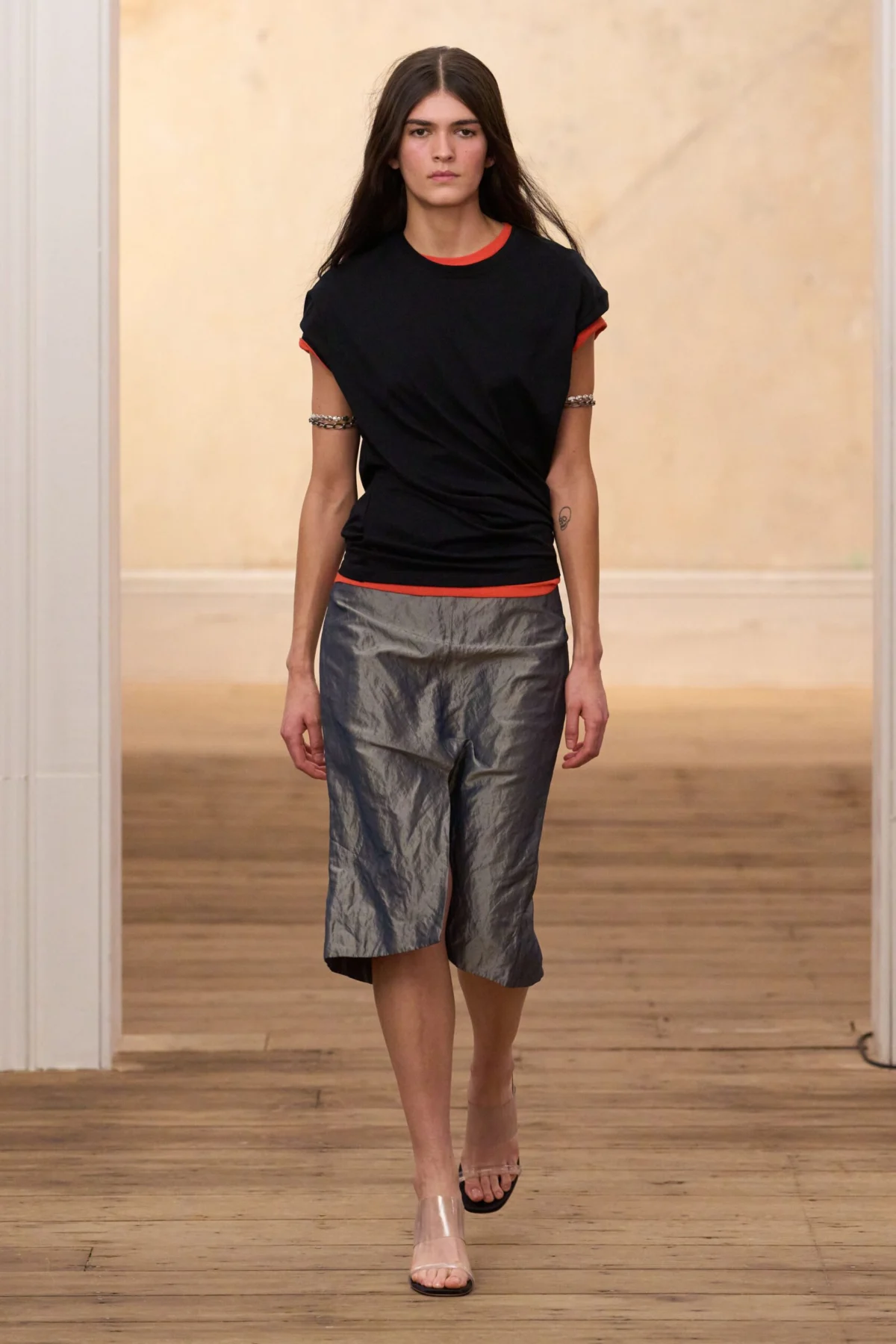
The primary focus of the event was the unveiling of Eckhaus Latta’s spring collection, a meticulously curated selection that built upon the brand’s signature DNA. The collection presented a familiar, yet demonstrably refined, amalgam of everyday staples: elevated tees, innovative knits, and reimagined denim. The opening ensemble, a pencil skirt shot through with metallic threads, immediately signaled a departure from conventional fabric treatments, achieving a permanent, almost organic, wrinkled texture that defied easy categorization. This commitment to textural innovation extended to the t-shirts, which were artfully cut on the bias. This technique not only enhanced their natural drape, allowing them to fall with a fluid grace, but also subtly disrupted traditional garment construction, a hallmark of the brand’s intellectual approach to design.
A recurring theme throughout the collection was a sophisticated exploration of sheerness. Designers Mike Eckhaus and Zoe Latta masterfully employed stretch mesh in a vibrant palette of pop colors, layering it to create dynamic tanks and tube dresses that hinted at the form beneath without revealing it overtly. This approach was further exemplified by the introduction of cloudlike, weightless shifts. These ethereal garments were designed to be slipped on over opaque slips and separates, creating a layered effect that was both intriguing and sensual. Crucially, the designers managed to imbue these sheer elements with a palpable sense of confidence rather than overt provocation. The resulting effect was not leering, a common pitfall in runway presentations where exposed skin can sometimes feel gratuitous, but rather a confident, almost nonchalant sexiness, embodying an "effortlessly cool" sensibility.
Denim Mastery Meets Elevated Tailoring: Expanding the Brand’s Repertoire
Eckhaus Latta has long been lauded for its expertise in denim, and this collection further cemented that reputation. The brand’s signature twisting seam, barrel-shaped jeans, designed to sit low on the hips, exuded their characteristic cool, a testament to their consistent ability to imbue casual wear with an undeniable edge. However, the spring collection also marked a significant lean into more formal tailoring, signaling a broadening of the brand’s sartorial ambitions.
While the term "elegance" might initially seem at odds with the brand’s downtown roots, it aptly describes the sophisticated new direction. This was particularly evident in the menswear offerings, which featured trousers cut with a distinctive paperbag waist, cinched by a belt that bisected a deliberately half-unzipped fly. This detail, a subtle subversion of traditional trouser design, spoke to the brand’s ongoing dialogue with gender fluidity and deconstructed aesthetics. The presentation also included a sharply tailored black suit for men, showcasing an impeccable fit that hinted at a growing interest in more conventionally polished silhouettes. The review noted a desire to see the women’s equivalent of such refined suiting in future collections, suggesting a clear pathway for the brand to explore a more complete spectrum of formalwear. This strategic expansion into more structured and sophisticated pieces demonstrates Eckhaus Latta’s commitment to evolving beyond its established niche, appealing to a wider demographic seeking both avant-garde design and enduring quality.
The J.Crew Revelation: A Strategic Pivot Towards Broader Appeal
As the runway show progressed, the subtle tinkling of laughter from the soundtrack transitioned from an ambient suggestion to a direct cue. The envelopes, previously intact, were now opened, revealing confetti intended to be tossed at the models. This marked the second act of the presentation: the highly anticipated reveal of the "see-now, buy-now" J.Crew collection. This collaboration represents a significant strategic move for Eckhaus Latta, aiming to leverage the accessibility and established market presence of J.Crew to reach a wider consumer base.
The J.Crew collection itself presented a distinctly different aesthetic from the main Eckhaus Latta line. These pieces embraced a younger, more conventionally "straight-world" vibe, leaning into a preppy sensibility that is deeply ingrained in the J.Crew brand identity. This intentional divergence was not an oversight but a calculated effort to create distinct offerings for different market segments. The success of their previous collaboration, a rollneck sweater for J.Crew that sold out within three hours of its release earlier in the year, serves as compelling data supporting the viability and demand for such partnerships. This rapid sell-out is not merely anecdotal; it signifies a strong consumer appetite for the Eckhaus Latta aesthetic translated through a more accessible retail channel.
Strategic Growth and Future Ambitions: Beyond the Niche
The rapid growth of the Eckhaus Latta brand in recent years, further bolstered by the introduction of a successful handbag line, underscores a clear ambition for expansion. The J.Crew collaboration can be viewed as a pivotal step in this trajectory, moving the brand beyond its status as a cult favorite to a more mainstream contender. When questioned about their future aspirations, Zoe Latta articulated this vision directly: "We’re not interested in remaining tiny or nice or specific to a small group of people." This statement is a clear indication that the brand is actively seeking to broaden its reach and appeal, a goal that J.Crew’s extensive retail network and loyal customer base are well-positioned to facilitate.
The implications of this strategy are multifaceted. For Eckhaus Latta, it represents a calculated risk that could propel them to new heights of commercial success and cultural influence. For J.Crew, it offers an infusion of contemporary design credibility and an opportunity to attract a new, fashion-forward demographic. The industry will undoubtedly be watching closely to see if this partnership can successfully bridge the gap between avant-garde design and mass-market appeal. The success of this collaboration could set a precedent for other independent designers seeking to expand their reach without compromising their creative integrity. As Latta suggested, the current season belongs to J.Crew, but the question for next season remains open: will Eckhaus Latta continue to explore similar high-profile collaborations, or will they pursue other avenues for growth, perhaps even a significant creative director role at a larger fashion house? The industry executives are indeed at a pivotal moment, with Eckhaus Latta’s trajectory offering a compelling case study in contemporary brand evolution.
Data and Context: The Eckhaus Latta Phenomenon
Founded in 2011 by Mike Eckhaus and Zoe Latta, Eckhaus Latta has consistently challenged conventional notions of fashion. Their design philosophy often incorporates deconstructed elements, unexpected fabric manipulations, and a gender-fluid approach to silhouettes. This has garnered them a significant following among fashion critics, stylists, and a dedicated consumer base who appreciate their intellectual and artistic approach to clothing. The brand has been recognized with prestigious awards and nominations, further solidifying its position within the contemporary fashion landscape.
The partnership with J.Crew, a heritage American brand with a long-standing reputation for preppy staples, is a strategic alignment that leverages the strengths of both entities. J.Crew, under the creative direction of Jenna Lyons (prior to her departure and subsequent return in a consulting capacity), has often sought to infuse its classic collections with modern sensibilities and collaborations. The timing of this Eckhaus Latta collaboration, following a period of strategic reevaluation for J.Crew, suggests a mutual desire to innovate and capture new market segments. The data point of the rollneck selling out in three hours is a critical indicator of demand and the brand’s ability to translate its appeal to a broader audience through a familiar retail channel. This success provides a strong foundation for future ventures and signals a clear appetite for well-executed designer collaborations within the accessible luxury market.
Broader Impact and Future Trajectories
The Eckhaus Latta x J.Crew collaboration is more than just a seasonal collection; it represents a significant trend in the fashion industry: the blurring lines between niche and mainstream, independent design and established retail. For independent designers, such partnerships offer a vital pathway to financial stability and broader cultural impact without necessarily relinquishing creative control. This model allows brands to scale their operations, reach new demographics, and solidify their place in the fashion hierarchy.
The "see-now, buy-now" model, which was prominently featured in this collaboration, further accelerates the consumption cycle and caters to the immediate gratification sought by today’s consumers. This approach, while not without its challenges, has become increasingly prevalent in the industry, reflecting a shift in how fashion is presented and consumed.
The success of this partnership will likely influence future collaborations and strategic decisions for both Eckhaus Latta and J.Crew, as well as for other brands operating in similar spaces. It demonstrates that thoughtful and well-executed collaborations can be mutually beneficial, driving sales, enhancing brand perception, and ultimately shaping the future of fashion retail. The industry is keenly observing whether this is a one-off success or the beginning of a sustained strategy for Eckhaus Latta to conquer new frontiers in the global fashion market. The implications extend beyond mere sales figures, touching upon the very definition of brand identity and the evolving relationship between designers, retailers, and consumers in the digital age.
