

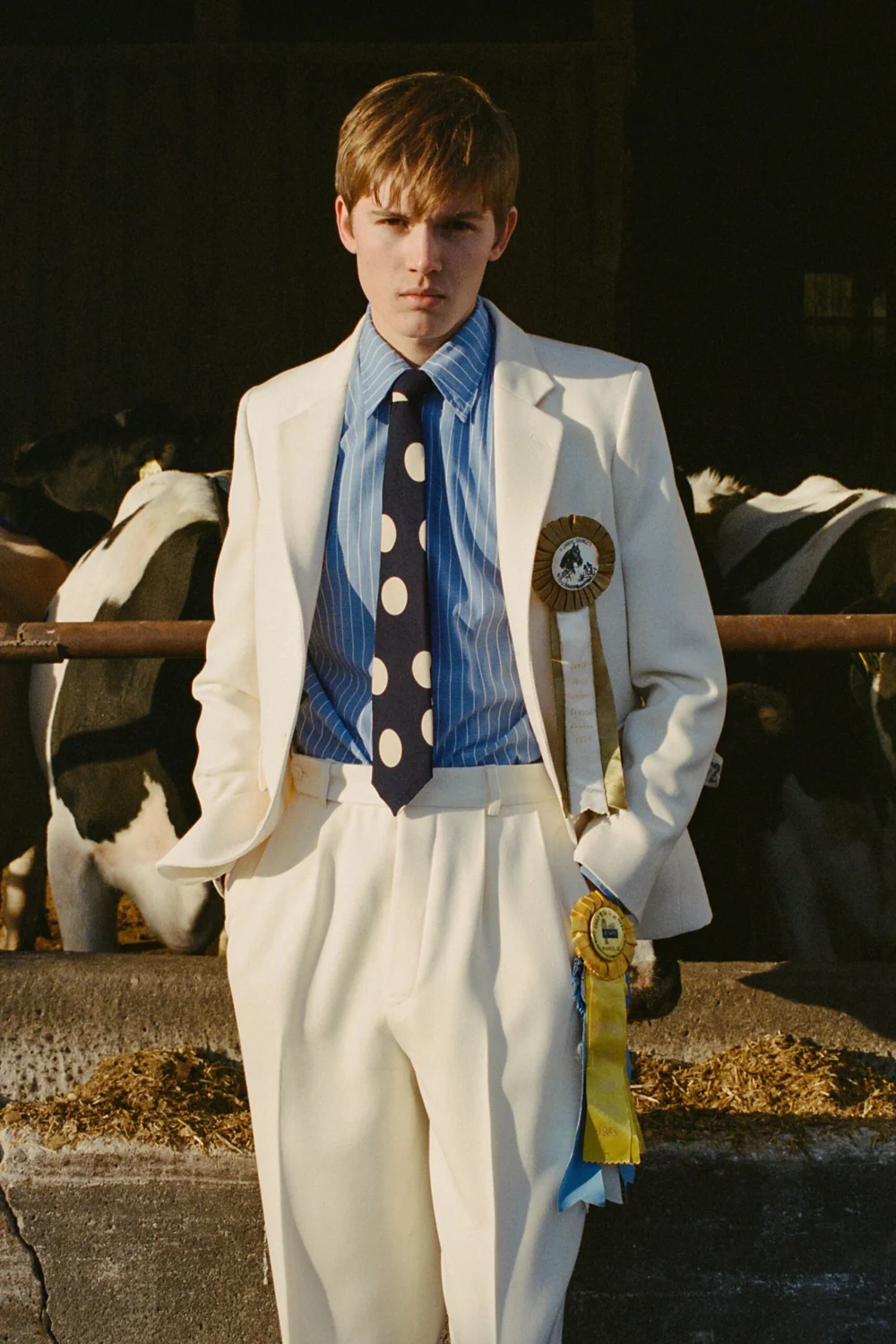
Emily Adams Bode Aujla’s latest collection, aptly titled "Rodeo Bodeo," has emerged as a captivating narrative, weaving together threads of American small-town life with a distinctly contemporary sensibility. Presented against a backdrop that evoked the rustic charm of the American West, the collection offered a welcome counterpoint to the often turbulent narratives dominating contemporary news cycles. Aujla, the visionary behind the eponymous brand Bode, articulated her design philosophy, stating, "I just enjoy thinking about the past to live in the present." This sentiment underpins the collection’s ability to resonate with a modern audience while drawing deeply from historical inspiration.
The fall collection conjured a vision of a storybook Americana, a landscape replete with the quintessential imagery of red-painted barns, stabled horses, and the vibrant excitement of 4-H shows where young participants vie for satin ribbons. It also paid homage to the competitive spirit of Blue Jeans and Chaps competitions, an arena in which Aujla herself participated as a child. Her personal connection to these events, particularly her memories of riding her beloved Pony of the Americas, Checkers, who was blind in one eye, served as a profound wellspring for the collection’s development. Checkers’ past as a retired barrel racer prompted Aujla and her design team to delve into the historical evolution of rodeo events and their associated attire. The outcome was a collection that transcended mere Westernwear, incorporating nuanced references to theatrical costumes, the whimsical world of circus performers, and the practicalities of utilitarian clothing.
"The rodeo is so interesting because it’s a sport that really derived from work," Aujla explained during an interview following the presentation. "It was a chance for people across America to show their expertise in different ways, like ranching or roping skills." This ethos of skilled labor and its transformation into sport is a central theme of the collection. The brand’s ongoing collaboration with Levi’s further solidified this narrative, underscoring the iconic status of jeans as quintessential American workwear. Bode’s interpretation of this staple appeared in two distinct washes, with styles featuring intricate trimmings down the side – whether jeweled, copper, or ribbon embellishments – being playfully dubbed "button-jar styles" by the designer. As Bode marks its tenth anniversary, Aujla expressed a deliberate focus on the brand’s foundational pieces. This retrospective consideration manifested in the reintroduction of enduring favorites, including the brand’s signature pajama suits, versatile sailor pants, thoughtfully designed thematic sweaters and prints, and exquisitely decorated flapper dresses, all of which made prominent appearances.
The Genesis of "Rodeo Bodeo": A Decade of Design and Deep Dives
The inception of the "Rodeo Bodeo" collection can be traced back to a confluence of factors, primarily Aujla’s enduring fascination with American vernacular history and the brand’s milestone tenth anniversary. Bode, established in 2013, has consistently championed the preservation and reimagining of artisanal crafts and historical textiles. The brand’s ethos has always been rooted in a deep respect for heritage, evident in its meticulous sourcing of vintage materials and its commitment to traditional techniques.
The "Rodeo Bodeo" collection represents a more focused exploration into a specific facet of American cultural history. Aujla’s personal connection to rodeo, stemming from her childhood experiences, provided an intimate lens through which to examine this complex tradition. The story of her one-eyed barrel-racing pony, Checkers, is not merely anecdotal; it serves as a powerful narrative anchor, connecting the designer directly to the grit and grace of the rodeo world. This personal history likely fueled an extensive research phase, where the team delved into the historical archives of rodeo attire, from the functional garments worn by ranchers and cowboys to the more flamboyant costumes of rodeo clowns and performers.
The development process likely involved extensive archival research, visiting historical rodeo sites, and consulting with experts in equestrian history and Western wear. The brand’s reputation for meticulous detail and historical accuracy suggests a rigorous approach to sourcing and recreating fabrics, patterns, and embellishments that are true to the period and context being referenced. This dedication to authenticity is a hallmark of Bode, setting it apart in a fashion landscape often characterized by fleeting trends.
A Tapestry of Influences: Beyond the Arena
The "Rodeo Bodeo" collection, while rooted in rodeo, extends its narrative reach far beyond the confines of the competition arena. The designs weave together a rich tapestry of influences, encompassing the theatricality of the circus, the utilitarian needs of various professions, and the celebratory spirit of American social gatherings. This multifaceted approach results in a collection that is both thematically cohesive and remarkably diverse in its aesthetic expression.
For men, the collection featured sharply tailored narrow suiting, a testament to Bode’s ability to reinterpret classic silhouettes with a modern edge. The brand’s inventive approach to formalwear was particularly evident in its "twists on black tie." This included the unexpected pairing of a tuxedo jacket with a plaid Western shirt, a bold juxtaposition that speaks to a new understanding of sartorial codes. Similarly, the integration of a cummerbund and side-striped pants with a simple T-shirt demonstrated a playful yet sophisticated approach to evening attire, blurring the lines between formal and casual.
A notable aspect of the collection’s design philosophy was the intentional repetition of certain styles, adapted with distinct fits for both men and women. This approach underscores a commitment to inclusivity and a belief in the universality of well-crafted garments. A standout piece, particularly personal to Aujla, was a floral bra directly inspired by a crepe-paper costume. This delicate and whimsical creation highlights the collection’s exploration of the more artistic and imaginative elements associated with performance and celebration.
Further exemplifying the collection’s blend of artistry and utility was an elaborately embroidered and fringed jacket, artfully paired with sheer black pants speckled with gold sequined flowers. These garments, while undeniably striking, were not conceived for the practical demands of barrel racing – which, as the show notes aptly highlighted, remains "the only regularly sanctioned women’s event in professional rodeos." Instead, they were designed for moments of elevated style and social engagement, whether within the imagined confines of Bodeland or in the sophisticated settings of urban life. This duality—the ability to evoke a specific historical context while remaining relevant and desirable for contemporary wardrobes—is a testament to Bode’s enduring appeal.
Supporting Data and Market Context
The fashion industry’s ongoing engagement with heritage and artisanal craftsmanship provides a fertile ground for brands like Bode. In recent years, there has been a discernible shift in consumer preference towards brands that offer not just aesthetically pleasing products, but also a compelling narrative and a commitment to ethical and sustainable practices. A 2023 report by McKinsey & Company, "The State of Fashion 2023," highlighted the growing importance of "purpose and sustainability" in consumer purchasing decisions, with a significant percentage of consumers willing to pay a premium for products that align with their values.
Bode, with its emphasis on vintage textiles, traditional techniques, and a deep respect for craftsmanship, is strategically positioned to capitalize on this trend. The brand’s success over the past decade, culminating in its tenth anniversary, can be attributed to its ability to tap into a market segment that values authenticity and storytelling. The "Rodeo Bodeo" collection, by drawing on a specific and evocative aspect of American cultural history, further solidifies this connection with consumers seeking garments that are more than just clothing; they are wearable pieces of history and art.
The economic impact of heritage-inspired fashion is significant. The global market for vintage and secondhand clothing, for example, has seen exponential growth, signaling a broader consumer interest in pre-loved items and the stories they carry. Bode’s approach, which often involves upcycling and repurposing vintage materials, aligns with this growing circular economy model within fashion. The brand’s ability to translate these historical inspirations into contemporary, desirable pieces ensures its continued relevance and commercial success in a competitive market.
Official Statements and Industry Reactions
While specific direct quotes from industry analysts or fashion critics regarding the "Rodeo Bodeo" collection were not immediately available within the provided text, the nature of the collection and Bode’s established reputation suggest a generally positive reception within the fashion establishment. Brands that consistently deliver on a unique aesthetic and a strong narrative, as Bode has done, tend to garner consistent praise for their creativity and market understanding.
Emily Adams Bode Aujla’s clear articulation of her design philosophy serves as a guiding principle for the collection’s interpretation. Her emphasis on "thinking about the past to live in the present" resonates with a broader trend in fashion where designers are increasingly looking to historical archives not for mere replication, but for inspiration that can be recontextualized for contemporary relevance. This approach fosters a sense of continuity and appreciation for craftsmanship, which is highly valued by both critics and consumers alike.
The collaboration with Levi’s, a brand with an equally rich American heritage, further validates the collection’s thematic coherence and its connection to quintessential American workwear. Such partnerships often signal a shared understanding of cultural significance and a mutual appreciation for iconic design. The fashion industry, in general, often celebrates designers who can successfully blend personal history with broader cultural narratives, and Bode’s "Rodeo Bodeo" collection appears to be a prime example of this.
Broader Impact and Implications
The "Rodeo Bodeo" collection, by offering a distinct vision of American heritage, carries broader implications for the fashion industry and for cultural discourse. In an era often marked by rapid change and a sense of discontinuity, collections that engage with the past in a thoughtful and authentic manner provide a grounding influence. Bode’s approach, which prioritizes craftsmanship, storytelling, and a deep appreciation for historical context, contributes to a more nuanced understanding of American identity.
The collection’s success can be seen as a testament to the enduring appeal of Americana, not as a simplistic nostalgic ideal, but as a complex tapestry of work, sport, and community. By drawing inspiration from the rodeo, Aujla highlights an often-overlooked aspect of American culture that is deeply rooted in skill, resilience, and tradition. This exploration can encourage a broader appreciation for the diverse cultural narratives that shape the nation.
Furthermore, Bode’s continued commitment to utilizing vintage materials and artisanal techniques aligns with growing global concerns regarding sustainability in fashion. By extending the lifespan of existing textiles and supporting traditional craftsmanship, the brand offers a model for more conscious consumption. This approach not only appeals to ethically-minded consumers but also contributes to a more responsible and sustainable fashion industry.
The "Rodeo Bodeo" collection, therefore, is more than just a seasonal offering; it is a cultural statement. It demonstrates how fashion can serve as a powerful medium for exploring heritage, celebrating craftsmanship, and fostering a deeper connection to the past while remaining firmly rooted in the present. Emily Adams Bode Aujla’s vision continues to shape a unique space within the fashion landscape, one where history is not merely remembered, but vibrantly reimagined.
