

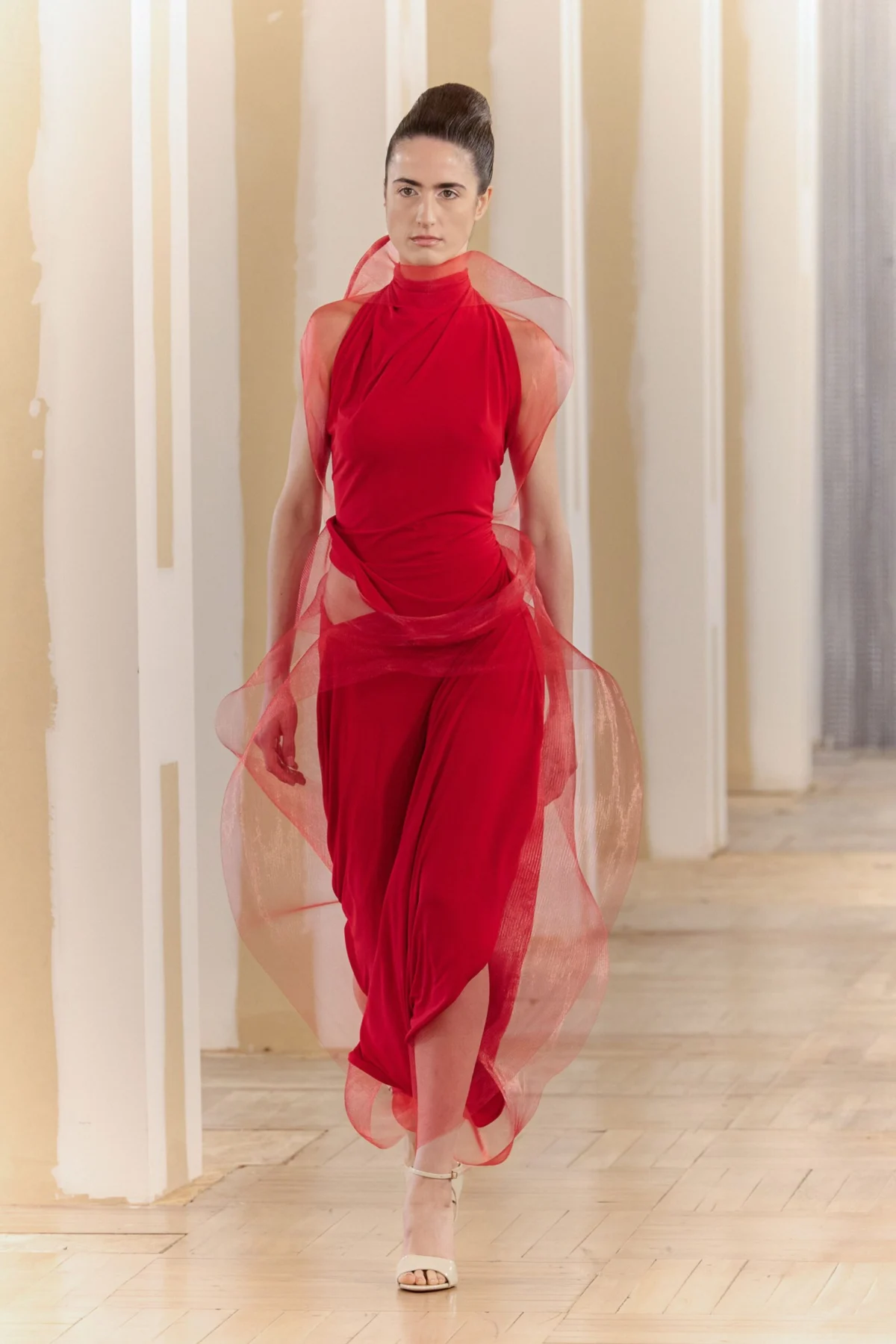
Fall marks a homecoming to Madrid Fashion Week for Ernesto Naranjo, a pivotal moment for a designer who, since his student debut in 2014, has navigated a decade of international acclaim, collaboration with fashion titans, entrepreneurial ventures, and pedagogical contributions. This latest collection, showcased against the vibrant backdrop of Spain’s capital, is not merely a display of refined craftsmanship but a bold declaration of artistic evolution, a testament to his journey from a promising student to a seasoned couturier who is now actively challenging his own established aesthetic. Naranjo, long celebrated for his mastery of the dress, has this season embraced the burgeoning trend of build-a-look separates, a strategic pivot that underscores his desire to push beyond his comfort zone. "I always felt that I was an event designer—and I know that I am that person and I love it—but I wanted to put myself outside of the comfort zone," Naranjo articulated in a recent interview, shedding light on the intellectual and creative impetus behind this significant collection.
A Decade of Growth and Refinement
The intervening years since Naranjo’s inaugural appearance at Madrid Fashion Week in 2014 have been anything but stagnant. After graduating from the prestigious Central Saint Martins in London, his talent was swiftly recognized. A significant chapter in his career involved a tenure working under the iconic John Galliano at Maison Margiela, an experience that undoubtedly honed his understanding of avant-garde design, theatrical presentation, and the meticulous construction of haute couture. This period provided invaluable insights into the inner workings of a globally renowned fashion house, fostering a deeper appreciation for innovative techniques and narrative-driven collections.
Following his immersion in the Parisian haute couture scene, Naranjo embarked on establishing his own eponymous label. This entrepreneurial endeavor required not only creative vision but also a keen business acumen, navigating the complexities of production, marketing, and brand identity in a competitive global market. The success of his independent label is a testament to his resilience and dedication. Simultaneously, Naranjo began sharing his accumulated knowledge and experience by teaching, a move that not only enriches the next generation of designers but also serves as a continuous catalyst for his own creative exploration. This multifaceted career trajectory—from student prodigy to international collaborator, independent designer, and educator—has provided him with a rich tapestry of experiences that are now vividly woven into the fabric of his latest collection.
The Art of Modular Design and Heritage Echoes
Naranjo’s current collection is characterized by its innovative approach to garment construction, utilizing primarily circular and square-cut patterns as foundational elements. These geometrically precise cuts are ingeniously transformed into fluid, sculptural forms that drape and flow on the body, creating pieces that are both architecturally compelling and remarkably wearable. The collection showcases a sophisticated understanding of fabric manipulation, where seemingly simple geometric shapes evolve into complex silhouettes.
Notable examples of this innovative approach include a Little Black Dress (LBD) that transcends conventional form, its construction suggesting a soft, organic sculpture. Similarly, a striking two-tone cape exemplifies the transformative power of these basic patterns, creating a dramatic yet elegant statement piece. The versatility of these building blocks is further highlighted by tops that can be ingeniously reimagined as skirts, offering wearers multiple styling options and underscoring Naranjo’s exploration of functional, adaptable fashion. This emphasis on modularity and transformability speaks to a contemporary desire for clothing that is not only aesthetically pleasing but also practical and sustainable.
Beyond the innovative cuts, Naranjo demonstrates a playful yet sophisticated use of embellishment and accessory. Belts are reimagined as dramatic collars, adding an unexpected architectural element to garments. Straw pom-poms, a recurring motif, are seen peeking from the folds of a delicate pink chiffon blouse and adorning belts. These pom-poms are not merely decorative; they are a direct homage to Naranjo’s Andalusian roots, echoing the vibrant flowers traditionally worn by flamenco dancers. Their creation in Andalusia, the very region of his origin, imbues them with a profound sense of place and cultural significance, connecting the collection to a rich artistic heritage. The styling, with some models wearing these embellished belts decoratively slung over their shoulders, further emphasizes their versatility and artistic integration.
A Tapestry of Influences: From Abstract Art to Disco Glamour
The collection’s conceptual depth is further enriched by a confluence of diverse influences, spanning the realms of contemporary art, abstract expressionism, and iconic cultural movements. References to artists such as Ángela de la Cruz, known for her deconstructed and reconfigured canvases, and Gillian Theobald, whose work often explores texture and materiality, suggest an engagement with artistic practices that challenge conventional forms and perceptions of art. The Gutai movement, a Japanese avant-garde group celebrated for its radical experimentation and performative art, also informs the collection, hinting at a spirit of bold exploration and uninhibited expression.
This artistic dialogue is seamlessly integrated with the flamboyant spirit of Studio 54 glam, a cultural touchstone of the late 1970s known for its hedonistic atmosphere and extravagant fashion. This influence is most palpably expressed through the use of draped jersey and glittering lamé fabrics, which evoke the fluidity, shimmer, and unapologetic opulence of the disco era. The juxtaposition of abstract artistic concepts with the celebratory energy of Studio 54 creates a dynamic tension within the collection, resulting in pieces that are both intellectually stimulating and undeniably glamorous.
The collection’s approach to closures further accentuates its sensuous and understated aesthetic. As is often the case in Naranjo’s work, closures are kept to a minimum, allowing the garments to speak for themselves. The subtle suggestion of undress, conveyed through a stray button or a delicate ribbon tie, adds a layer of intimacy and allure. The opening looks, featuring crin-framed jersey that appeared to dance on its own, set a tone of ethereal movement and playful sophistication, immediately capturing the audience’s attention and signaling the collection’s departure from convention.
Madrid Fashion Week: A Resurgent Hub for Spanish Design
Madrid Fashion Week, also known as MBFWMadrid, has long served as a crucial platform for Spanish fashion designers to showcase their creativity to both domestic and international audiences. Established in 1995, the event has evolved from a relatively modest affair into a significant international fashion calendar fixture, attracting buyers, press, and fashion enthusiasts from around the globe. The event typically takes place twice a year, presenting Spring/Summer and Autumn/Winter collections, and has become a vital engine for the Spanish fashion industry, fostering talent and promoting the rich heritage of Spanish craftsmanship.
In recent years, Madrid Fashion Week has placed a greater emphasis on sustainability, innovation, and the promotion of emerging designers, alongside established names. The inclusion of designers like Ernesto Naranjo, who brings a wealth of international experience and a unique artistic vision, highlights the event’s commitment to showcasing a diverse range of talent. The presence of international press and buyers at MBFWMadrid is crucial for the economic viability of Spanish fashion houses, facilitating export opportunities and global brand recognition. The event’s continued success is a testament to the enduring appeal and dynamism of Spanish design.
Data-Driven Insights and Market Implications
The fashion industry, a multi-trillion-dollar global market, is constantly seeking innovation and differentiation. Ernesto Naranjo’s collection, with its emphasis on modularity, upcycling of materials (implied by the use of circular and square cuts which can minimize waste), and the integration of artisanal techniques, aligns with several key market trends.
Firstly, the demand for sustainable fashion is no longer a niche concern but a mainstream expectation. Brands that can demonstrate a commitment to eco-friendly practices, such as waste reduction through efficient pattern cutting and the use of natural materials like straw, are increasingly favored by conscious consumers. According to a 2023 report by McKinsey & Company, over 60% of consumers consider sustainability when making fashion purchases. Naranjo’s approach, by inherently minimizing fabric waste through his cutting techniques, directly addresses this critical consumer demand.
Secondly, the rise of "build-a-look" or "mix-and-match" fashion reflects a desire for versatility and personalization. Consumers are moving away from single-purpose garments towards pieces that can be styled in multiple ways, offering greater value and longevity. This trend is particularly relevant in the age of social media, where influencers and everyday users showcase diverse styling approaches. Naranjo’s adaptable separates cater directly to this evolving consumer behavior, offering a collection that is both fashion-forward and highly practical.
Thirdly, the appreciation for artisanal craftsmanship and heritage is experiencing a resurgence. In an era of fast fashion, consumers are increasingly drawn to unique pieces that tell a story and showcase human skill. Naranjo’s incorporation of locally sourced, hand-crafted elements, such as the Andalusian straw pom-poms, taps into this desire for authenticity and cultural connection. This not only adds intrinsic value to the garments but also supports traditional crafts and regional economies.
Analysis of Impact and Future Trajectory
Ernesto Naranjo’s return to Madrid Fashion Week with this collection signifies more than just a personal milestone; it represents a significant contribution to the ongoing narrative of Spanish fashion. By consciously stepping outside his established comfort zone, Naranjo has demonstrated a mature artistic vision that is both introspective and outward-looking. His willingness to experiment with new design paradigms, such as modular separates, while simultaneously honoring his cultural heritage, positions him as a forward-thinking designer capable of navigating the complexities of the contemporary fashion landscape.
The implications of this collection are manifold. For aspiring designers, it serves as an inspiring example of continuous learning and artistic evolution. For consumers, it offers a compelling vision of fashion that is sophisticated, versatile, and deeply rooted in cultural identity. For Madrid Fashion Week itself, Naranjo’s collection reinforces its status as a vital platform for showcasing innovative and globally relevant design talent.
The success of this collection could further solidify Naranjo’s international standing, potentially leading to increased demand for his work and collaborations with other global brands or institutions. His demonstrated ability to blend artistic influences with practical design considerations suggests a brand with significant potential for growth and diversification. As the fashion industry continues to grapple with issues of sustainability, individuality, and cultural authenticity, designers like Ernesto Naranjo, who masterfully weave these threads into their creations, are poised to shape the future of fashion. His journey from a student showcasing his work in its nascent stages to a designer commanding attention on the international stage with a collection that is both a personal reflection and a commentary on the broader industry, is a compelling narrative of dedication, talent, and a relentless pursuit of creative excellence.
