

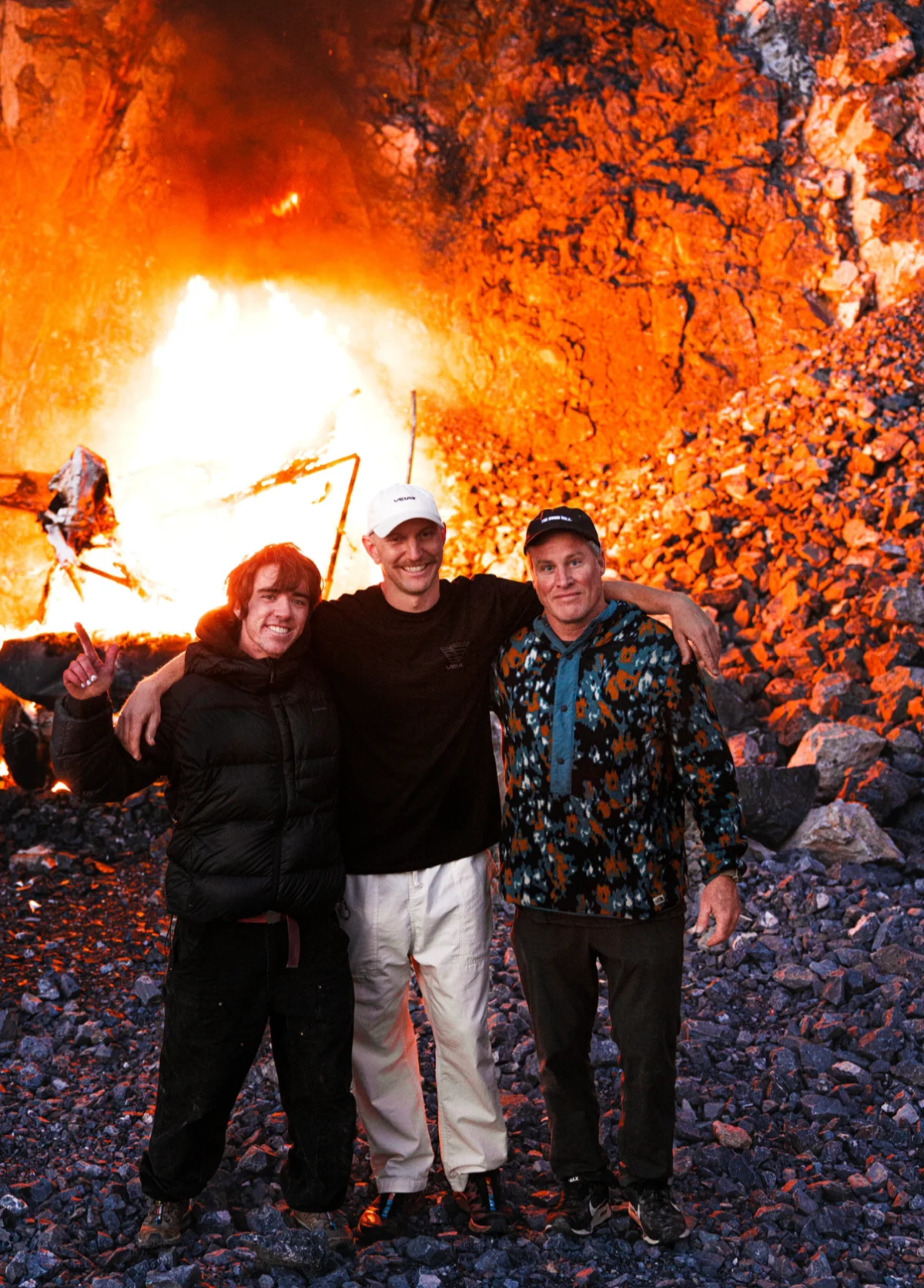
Jack Coyne’s journey from the snow-dusted slopes of Colorado to the forefront of the U.S. snowboarding team is a testament to dedication, evolving ambition, and the profound impact of mentorship. What began as a familial pastime, with his father a snowboarder and sisters skiers, quickly blossomed into a lifelong pursuit for Coyne. The allure of the mountain, coupled with the shared experience of snowboarding with his father, forged an early connection that would shape his trajectory. "I was always kind of dad’s little dude," Coyne recalls, highlighting the foundational bond that sparked his passion. "We just liked to do shit together, so I thought he was sick and we snowboarded together."
This nascent interest soon expanded beyond casual runs. Time spent at the local skatepark, a burgeoning social circle of fellow snowboarders, and eventually, enrollment in a Vail-based snowboarding academy alongside his sisters, amplified his commitment. The academy offered a rigorous six-day-a-week training regimen, a "super silver spoon opportunity" that Coyne was determined to maximize. This immersive environment provided not only unparalleled access to training but also crucial exposure to influential peers. Riders like Ryan Wachendorfer, Jake Pates, and Cody Warble, who were only a few years older, became tangible examples of what was achievable. Seeing them navigate school, the skatepark, and the mountain instilled a sense of possibility in Coyne. Wachendorfer, in particular, served as a significant role model. "We grew up riding the same skate park and the same mountains, and you got to that point where you’re in the pro contest and you’re making it happen," Coyne reflected. "I have the same setup here. That’s something I could do." This realization made the once distant aspirations of professional snowboarding feel within reach.

The Competitive Crucible: Forging an Athlete
Coyne’s early path was predominantly defined by the competitive circuit. His ambition was to snowboard as much as possible, exploring disciplines like boardercross, slopestyle, and halfpipe. The driving force behind this was the pursuit of opportunities that allowed for greater travel and more time on the snow. The progression was a clear, linear path: enhance skills, master new tricks, achieve success in contests, and unlock the next level of opportunity. "If I do better at this contest, then I have the opportunity to get invited to Switzerland and go to training camps," he explained. This methodical approach culminated in his selection for the U.S. Team, setting a clear vision towards major events like the Olympics and X Games. For five years, Coyne was a dedicated member of the U.S. halfpipe team, a period marked by intense training and high-stakes competition.
While the competitive environment provided a powerful impetus, Coyne clarifies that his motivation stemmed not from a desire to outperform others, but from an internal drive for self-improvement. "I’ve never been inherently competitive," he stated. "I always had a real competitiveness with myself." The core motivation was the process of learning and mastering new skills. "I got so fired up on learning tricks," Coyne enthused. "That was my biggest motivator; for me to learn a new trick was like that whole roller coaster of being so scared and then trying it and then figuring out and then really mastering it." The satisfaction of transforming the seemingly impossible into a tangible achievement fueled his dedication. However, alongside the structured progression of competition, another facet of snowboarding had been quietly developing in the background.

Transitioning from Contests to Cinematic Storytelling
Following his tenure with the U.S. halfpipe team, Coyne dedicated a couple of years to slopestyle before increasingly shifting his focus towards filmmaking. The allure of creating snowboard projects that possessed a lasting impact, transcending the ephemeral nature of a single contest result, began to captivate him. "I was always watching snowboard videos and I was like, if I could be part of that, something that lasted longer," he expressed. This marked a significant divergence from the immediate gratification of competitive snowboarding. He observed a fundamental difference: "A contest run happens, gets scored and you’re immediately thinking about the next one. A film part can stay with you." The rapid dopamine cycle of competition, where success in one event immediately leads to the next, contrasted with the enduring legacy of a well-crafted film segment.
"Contests were such a quick dopamine-driven thing where you did well in this contest, but what’s next?" Coyne mused. "And then you’re like, okay, let’s go do the next thing." Now, after only a few years immersed in filming, Coyne contemplates the long-term significance of these projects. He envisions looking back on them years later, stating, "When I’m like 40, I can go look at these videos and be like, ‘Damn, that’s what I did when I was 20, 23, 24,’ instead of like, ‘Oh, I forget what run I did in the Rev Tour.’" This shift signifies a deeper appreciation for the art of storytelling through snowboarding, where the emphasis moves from singular achievements to collective narratives. The transition carries a surreal quality for Coyne, as he finds himself embodying the very figures he admired. "He hasn’t really stopped being the kid watching snowboard movies. He’s just somehow become one of the people in them."

A Full-Circle Moment: From Admirer to Creator
A particularly poignant aspect of Coyne’s evolving career is the opportunity to ride alongside snowboarding icons he once only watched on screen. Collaborating with legends like Bode Merrill, while being filmed by influential cinematographers such as Shane Charlebois, represents a profound full-circle moment. Charlebois’s work, in particular, had a significant impact on Coyne’s early appreciation for snowboarding films. "Shane has filmed probably 90% of my favorite videos," Coyne acknowledged. The realization that he is now the subject of such respected filmmakers is, to him, "so trippy."
This sentiment extends beyond the simple pleasure of having a skilled cinematographer capture his performance. Coyne recognizes the cyclical nature of inspiration within the sport. The snowboard videos he consumed as a youth directly influenced his aspirations; now, he is in a position to create content that may inspire the next generation. "There’s so many moments where, as I’m filming, you just get in the flow and you start locking in with these guys," he described. "Then you take yourself out of it and you’re on top of a jump and you’re like, ‘Holy f*ck, they have been doing this for so long and inspired so many people, and now I’m starting to have that opportunity to hopefully inspire people to go do it.’ It’s a crazy cycle." This understanding of the generational transfer of inspiration underscores the evolving role of riders in the modern snowboarding landscape.

Redefining Style in Snowboarding
Coyne’s evolution has also prompted a reevaluation of what "style" means in snowboarding. For him, true style is not merely about replicating a specific technique but rather about the organic expression of a rider’s personality that emerges after extensive practice. "I love when you can really tell that it’s natural," he stated. "You can really tell that someone’s just snowboarding in a way that their body is naturally doing and they’re not putting too much force and too much extra pizzazz on it." The ideal, he believes, is when a rider appears to be making it look effortless.
This perceived effortlessness, however, is the product of immense dedication. It signifies that a rider has invested so much time and effort into their craft that the underlying work becomes invisible. "That’s the difference between learning a trick and then having it," Coyne elaborated. "When you start doing it in your own way." He emphasizes the critical role of trick selection and feature choice in defining a rider’s style, as these decisions reveal a rider’s unique preferences and approach to snowboarding. "I think trick choice and trick selection and feature selection is really important in people’s style, because you pick the features and tricks that can really show how you like to snowboard." This principle has become increasingly central to Coyne’s approach as he delves deeper into filmmaking.

Creativity Beyond Progression: Storytelling Through Snowboarding
While snowboarding is undeniably a sport driven by progression – characterized by increasingly complex tricks and technical maneuvers – Coyne believes that innovation can manifest in more than just pushing the boundaries of physical possibility. He acknowledges the inherent drive for progression but posits that it doesn’t have to be the sole avenue for creativity. "You’re not gonna just go film your 20 best tricks," he said. "Obviously, that’s the goal and that’s part of it, but you have this vision of like, ‘I want to tell a story without saying a word through my snowboarding.’" This philosophy allows for a broader interpretation of what constitutes a compelling snowboarding performance.
Sometimes, the most impactful approach might involve executing the most technically demanding trick available. At other times, it could be about creatively interpreting a natural feature, culminating in a simpler, yet stylistically resonant maneuver. "Obviously, I still want to go do the craziest trick I can on most jumps," Coyne admitted. "But then there’s also the time where it’s like, I just want to interpret this face in a cool way and do like a simple back one at the end of it." This nuanced perspective highlights a growing emphasis on artistic expression and narrative within modern snowboarding, moving beyond a singular focus on athletic feats.

The Indispensable Role of the Crew
This embrace of creativity has amplified the importance of the people surrounding Coyne. He asserts that the most effective snowboarding crews are not necessarily those composed of the most elite athletes, but rather those where genuine camaraderie and mutual support are paramount. "It’s good times first," he emphasized. "If I’m having a good time and I’m laughing, then we’re snowboarding well." This ethos has been a constant thread throughout his career, from his early days on the U.S. rookie team to his slopestyle endeavors and his current focus on filming projects.
With a cohesive filming crew, the shared stoke extends beyond individual accomplishments. "We are all so stoked when someone gets a clip," Coyne stated. "That’s the vibe we’re going for." This collective spirit can manifest in various ways, from dedicating effort to a feature that a rider might not personally utilize, to assisting with camera angles, operating a snowmobile, or contributing in any capacity that elevates the collective project. "You’re like, ‘I’m going to put in the same amount of work on this jump or filming the B angle or whatever it is, just because it’s for a collective unit,’" he explained. This commitment to collaborative success defines the type of snowboarding experience Coyne actively seeks and aims to create.

Forging His Own Path: The Director and Rider
Coyne’s immediate future involves a shift from participating in established projects to actively developing his own creative visions. The objective is no longer solely about securing invitations to larger productions; instead, he aims to conceptualize, fund, and execute his own snowboarding projects, bringing his close-knit group of friends along for the journey. While he intends to snowboard within these projects, his ambition now extends to a more integral role in their creation. His experience in film school has proven unexpectedly instrumental in shaping this multifaceted vision.
Initially, Coyne viewed filmmaking as a potential post-snowboarding career path, a practical fallback. However, he has discovered that filmmaking and snowboarding have become inextricably linked. "I didn’t think I would take so much inspiration from that into snowboarding," he admitted. "I thought it was kind of more like, I got to have this other avenue and a backup for when I’m done snowboarding." His current perspective is one of deep integration: "They are so cohesively working together. I want to produce films and I want to snowboard in them. And I want to make that all happen together." This holistic approach signifies a mature understanding of the creative process, where the roles of athlete and filmmaker are not mutually exclusive but rather mutually reinforcing.

Letting Inspiration Guide the Journey
When reflecting on the lessons snowboarding has imparted, Coyne highlights the importance of embracing novelty and continually seeking out new environments, individuals, and experiences that spark curiosity. "Whatever else you can do in life to create a community and go see new things, whether it’s art or go to art shows, just let the inspiration, the thing that’s driving you, lead to new friendships and new travels," he advised. "Let it be a driver."
For an individual who once looked up to slightly older riders and thought, "I have the same setup here, that’s something I could do," Coyne’s current trajectory feels remarkably fitting. He continues to pursue that same fundamental feeling of exhilaration and accomplishment. The key difference lies in the expanding array of methods through which he is achieving it, demonstrating a dynamic and evolving engagement with the sport he loves.
