

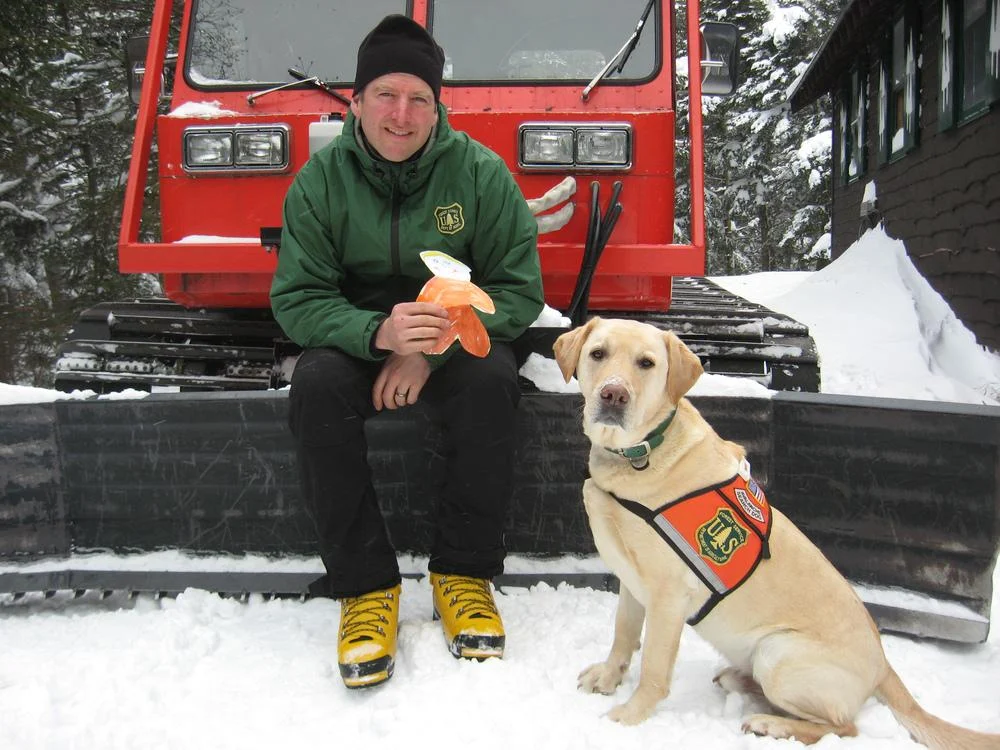
The Mount Washington Avalanche Center and the broader search and rescue community in the White Mountain National Forest are mourning the loss of Cutler, a dedicated avalanche rescue dog who served the region for over a decade. Cutler, a canine integral to the safety operations on the highest peak in the Northeastern United States, passed away at the age of 14 after a distinguished 11-year career. Throughout his tenure, Cutler was more than a search asset; he was a cornerstone of the United States Forest Service (USFS) Snow Ranger program, contributing to nearly 80% of his life to the protection and education of winter backcountry enthusiasts. Under the guidance of Mount Washington Avalanche Center (MWAC) Director Chris Joosen, Cutler became a familiar face in the challenging terrain of Tuckerman Ravine and Huntington Ravine, embodying the critical intersection of specialized rescue capabilities and public safety outreach.
A Decade of Vigilance: The Career Chronology of Cutler
Cutler’s journey began as a highly driven puppy selected specifically for the rigorous demands of alpine search and rescue. Training an avalanche dog is an exhaustive multi-year process that requires an acute sense of drive, physical stamina, and the ability to operate in extreme weather conditions. By the time Cutler reached maturity, he had achieved the certifications necessary to work alongside the Mount Washington Snow Rangers, a specialized group of USFS employees tasked with monitoring snowpack stability and performing rescues in some of the most dangerous terrain in the country.
From approximately 2004 until his retirement, Cutler was a constant presence on the mountain. His career spanned a period of significant growth in backcountry skiing and mountaineering in the White Mountains. As more visitors flocked to the Presidential Range, the potential for avalanche incidents increased, making Cutler’s role increasingly vital. His daily routine often involved ascending thousands of vertical feet into the glacial cirques of Mount Washington, where he remained on standby to respond to reports of burials or missing persons.
Over 11 years, Cutler participated in numerous deployments and training exercises, maintaining a state of readiness that is difficult for human teams to replicate alone. His retirement marked the end of an era for the MWAC, but his passing at age 14 represents the conclusion of a life defined by utility and service to the public.
The Technical Role of K9 Units in Avalanche Mitigation
The inclusion of a dog like Cutler in the Mount Washington Avalanche Center’s toolkit was not merely a matter of tradition, but a calculated operational advantage. In the field of avalanche rescue, time is the most critical factor. Statistics provided by various international rescue organizations, including the International Commission for Alpine Rescue (ICAR), indicate that a victim buried in an avalanche has a 90% survival rate if recovered within the first 15 minutes. This rate drops precipitously to approximately 30% after 35 minutes.
While modern technology such as avalanche transceivers (beacons), RECCO reflectors, and probes are essential, they have limitations. Transceivers require the victim to be wearing a functioning device, and probe lines—where a row of rescuers systematically poke the snow—are incredibly slow and labor-intensive. A single trained avalanche dog can search a one-hectare area (approximately 2.5 acres) in about 30 minutes, a task that would take 20 human rescuers roughly four hours to complete with probes.
Cutler’s training allowed him to detect "scent cones" rising from the snowpack. When a person is buried, their body heat and breath create a scent that permeates through the porous layers of snow. A dog’s olfactory system, which is tens of thousands of times more sensitive than a human’s, can pinpoint the strongest point of that scent, allowing rescuers to dig directly to the victim. Cutler’s presence on Mount Washington provided a "last resort" safety net for those who might not have been wearing beacons or whose devices may have failed.
Mount Washington: A High-Stakes Environment
To understand the significance of Cutler’s service, one must consider the environment of the White Mountain National Forest. Mount Washington is frequently cited as having the "world’s worst weather," characterized by hurricane-force winds, extreme cold, and heavy snowfall. These conditions create a unique set of challenges for avalanche dogs.
Unlike the lighter "cold smoke" powder found in the Rocky Mountains, the snow on Mount Washington is often heavy, wind-packed, and prone to forming hard slabs. This density can trap scents more effectively, making the dog’s job more difficult. Furthermore, the terrain of Tuckerman Ravine is notoriously steep, with some slopes exceeding 45 degrees. Cutler had to navigate these icy, vertical environments alongside Chris Joosen and other Snow Rangers, often in visibility that was near zero.
Data from the Mount Washington Avalanche Center indicates that the Presidential Range experiences dozens of human-triggered and natural avalanches every season. The high concentration of skiers in the spring months—sometimes numbering in the thousands on a single weekend—creates a high-density risk profile. Cutler’s 11 years of service coincided with this peak usage, providing a constant layer of security for the regional outdoor community.
Public Relations and Safety Education
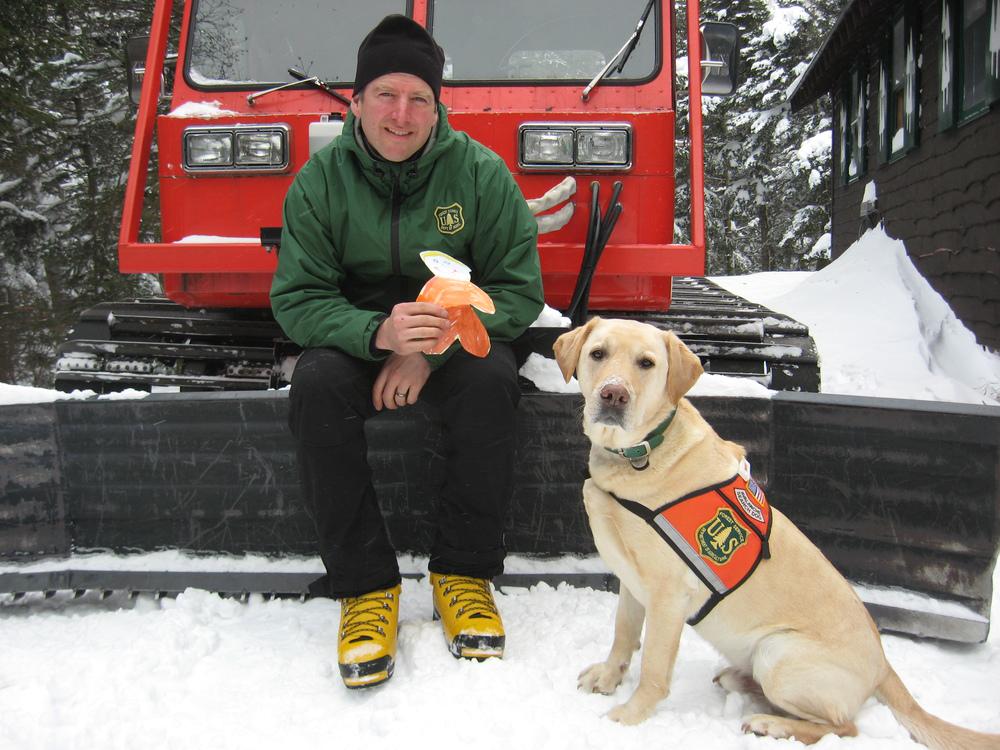
While Cutler’s primary function was search and rescue, his secondary role in public relations proved equally impactful. The Mount Washington Snow Rangers are tasked with a dual mission: emergency response and education. For many visitors, the technical jargon of "wind slabs," "persistent weak layers," and "shear planes" can be daunting. Cutler served as an approachable bridge between the technical expertise of the Snow Rangers and the general public.
By engaging with hikers and skiers at the Hermit Lake Shelters or the Pinkham Notch Visitor Center, Cutler allowed the Snow Rangers to initiate conversations about safety that might otherwise have been ignored. This "social grease" was a vital component of the MWAC’s preventative search and rescue (PSAR) strategy. Every interaction Cutler had with a visitor was an opportunity for Joosen and his team to distribute avalanche bulletins, check for proper gear, and reinforce the importance of situational awareness.
The pedagogical value of a rescue dog cannot be overstated. In many ways, Cutler was the "face" of the avalanche center, humanizing the federal agency and fostering a sense of community trust. This trust is essential during high-risk periods when rangers must issue stern warnings or close certain areas of the mountain to public access.
Official Tributes and the Legacy of the K9 Program
Following the announcement of Cutler’s passing, there has been a significant outpouring of respect from the search and rescue community. Chris Joosen, who worked side-by-side with Cutler for the duration of the dog’s career, highlighted the profound bond that forms between a handler and a working dog. In the professional context of the USFS, these dogs are viewed as colleagues and essential personnel.
"Cutler was a partner in every sense of the word," Joosen noted in reflections shared with the mountaineering community. The sentiment is echoed by the Mount Washington Snow Rangers, who viewed Cutler as a vital asset in their mission to minimize fatalities in the White Mountains.
The legacy of Cutler is also seen in the continuation and evolution of K9 programs within the National Forest System. His career served as a proof-of-concept for the effectiveness of having a dedicated K9 asset stationed on-site during the winter season. The success of his 11-year tenure has informed how subsequent dogs are trained and integrated into the MWAC’s operational framework.
Analysis of Implications for Future Alpine Safety
The passing of a veteran rescue dog like Cutler serves as a reminder of the evolving nature of alpine safety. As climate change creates more volatile weather patterns in the Northeast—leading to more frequent freeze-thaw cycles and potentially more unstable snowpacks—the need for rapid-response rescue assets remains high.
However, the cost and logistical demands of maintaining a K9 program are significant. A dog requires constant training, veterinary care, and a dedicated handler who is also a certified alpine expert. Cutler’s long and healthy career is a testament to the high standards of care and professionalism maintained by the Mount Washington Avalanche Center.
Furthermore, Cutler’s life highlights the shift toward a more holistic approach to mountain safety. The modern Snow Ranger program emphasizes "education over extraction," and Cutler was a primary tool in that shift. By making the rangers more accessible, he likely prevented more accidents through education than he ever had to respond to in the field.
Conclusion: A Final Watch
Cutler’s 14 years of life and 11 years of service represent a monumental contribution to the safety of the White Mountain National Forest. He was a pioneer in a specialized field, a lifesaver in potential emergencies, and an educator to thousands of visitors. As the Mount Washington Avalanche Center continues its mission, the standard set by Cutler and Chris Joosen remains the benchmark for K9 search and rescue operations in the region.
The trails of Tuckerman Ravine and the high plateaus of the Presidential Range are safer today because of the decade Cutler spent patrolling them. While the mountain remains a place of inherent risk, the work of Cutler and the Snow Rangers has ensured that those who venture into the alpine environment are better informed, better protected, and part of a community that values the dedicated service of both human and canine rescuers. Cutler’s passing marks the end of a storied career, but his influence will be felt on Mount Washington for many winters to come.
