

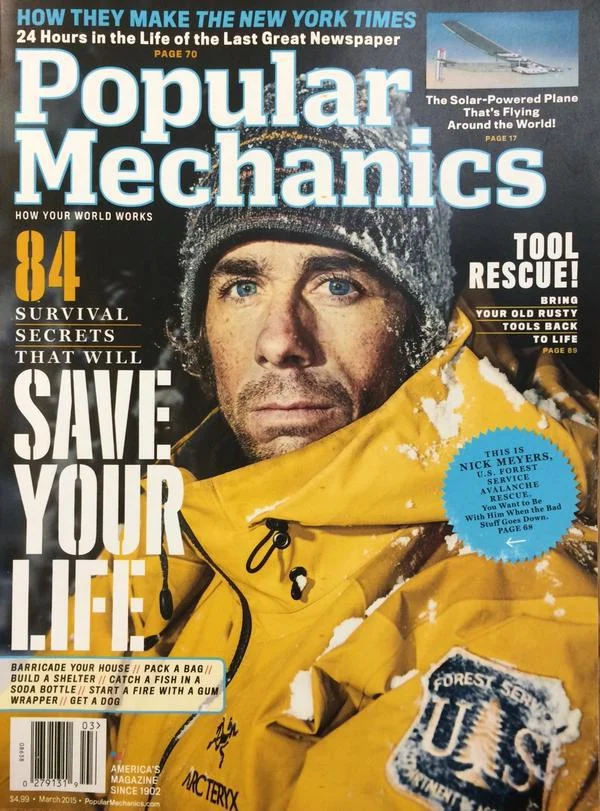
Nick Meyers, a veteran of high-altitude search and rescue and the Director of the Mount Shasta Avalanche Center (MSAC), has been prominently featured on the cover of Popular Mechanics magazine, a milestone that highlights the critical intersection of outdoor safety, gear technology, and professional expertise. Meyers, who also serves as the Lead Climbing Ranger for the Shasta-Trinity National Forest, was selected by the publication to provide a definitive guide on avalanche survival and the essential equipment required to navigate high-risk alpine environments. This national recognition brings significant attention to the rigorous safety protocols maintained on Mount Shasta and underscores the vital role that avalanche professionals play in public land management and life-saving operations.
The feature article in Popular Mechanics, titled "10 Survival Essentials an Avalanche Rescue Expert Always Carries," delves into the specific toolkit Meyers utilizes during his patrols and rescue missions on the 14,179-foot stratovolcano in Northern California. By profiling Meyers, the publication provides its readership with a rare look into the logistical and psychological demands of mountain safety. The inclusion of an active-duty Forest Service ranger on a national magazine cover signifies a growing public interest in backcountry safety as winter recreation continues to see record participation across the United States.
Professional Profile of Nick Meyers and the Mount Shasta Avalanche Center
Nick Meyers has spent over a decade establishing himself as one of the preeminent experts in snow science and mountain rescue in the Pacific Northwest. As the Director of the Mount Shasta Avalanche Center, his primary responsibility is the daily assessment of snowpack stability and the issuance of avalanche forecasts for the thousands of climbers and skiers who visit the mountain annually. His dual role as Lead Climbing Ranger means he is also responsible for managing the climbing program on Mount Shasta, which includes trail maintenance, education, and leading Search and Rescue (SAR) operations in some of the most challenging terrain in the lower 48 states.
The Mount Shasta Avalanche Center itself serves as a cornerstone of the regional safety infrastructure. Operating under a partnership between the U.S. Forest Service and the non-profit Friends of the Mount Shasta Avalanche Center, the organization provides crucial data that informs public decision-making. The center’s forecasts cover a vast and complex vertical relief, where weather patterns from the Pacific Ocean collide with the high-altitude volcanic peak, creating unique and often volatile snow conditions. Meyers’ leadership has been instrumental in modernizing these forecasting techniques and expanding the center’s educational outreach to a broader demographic of outdoor enthusiasts.
The Evolution of Backcountry Safety and the "10 Essentials"
The Popular Mechanics feature focuses heavily on the technical aspects of survival, reflecting a broader shift in the outdoor industry toward professional-grade preparedness for recreationalists. Meyers emphasizes that while technology has advanced, the fundamentals of mountain safety remain rooted in a specific set of "essentials" that must be carried at all times.
In the article, Meyers outlines the primary tools of the trade for avalanche professionals. These include the "Holy Trinity" of avalanche safety: the beacon (transceiver), the probe, and the shovel. However, Meyers expands this list to include modern technological advancements that have become indispensable for SAR personnel. Satellite communication devices, such as the Garmin inReach, allow for two-way messaging in areas where cellular service is non-existent, a feature that has revolutionized rescue response times.
Furthermore, Meyers highlights the importance of redundancy and "analog" skills. Even with GPS technology, a physical map and compass remain vital components of his kit. The feature also covers the necessity of high-calorie nutrition, emergency bivy sacks for overnight survival in sub-zero temperatures, and specialized first-aid kits tailored for traumatic injuries common in high-velocity slides. By detailing these items, the article serves as both a gear review and a pedagogical tool for the public, reinforcing the idea that survival is a matter of preparation rather than luck.
Chronology of Mount Shasta Safety Initiatives
The recognition of Nick Meyers by a national publication is the culmination of years of dedicated safety advocacy and institutional growth on Mount Shasta. To understand the context of this event, it is necessary to look at the timeline of development for mountain safety in the region:
- 1998: The Mount Shasta Avalanche Center is officially established to address the growing number of winter backcountry users and the associated risks of snow slides on the mountain’s popular climbing routes.
- 2002–2010: A period of significant growth in winter sports leads to increased pressure on Forest Service resources. The "Friends of the Mount Shasta Avalanche Center" non-profit is strengthened to help fund equipment and forecasting staff.
- 2010–Present: Nick Meyers ascends to leadership roles within the Shasta-Trinity National Forest. Under his tenure, the center transitions to a more robust digital platform, offering real-time weather data and interactive maps.
- 2015: Popular Mechanics identifies Meyers as a leading voice in the field, leading to the cover story and the "10 Essentials" feature. This period marks a high point in the national visibility of the MSAC.
- Recent Years: The center has integrated advanced snow-pit analysis and remote weather station data to provide some of the most accurate volcanic avalanche forecasting in the world.
Supporting Data: Avalanche Trends and Mountain Usage
The importance of Meyers’ work and the information shared in Popular Mechanics is underscored by national statistics regarding avalanche incidents and mountain recreation. According to data from the American Avalanche Association and the Colorado Avalanche Information Center (CAIC), which tracks national trends, the United States averages approximately 25 to 30 avalanche fatalities per year.
Mount Shasta, due to its accessibility and iconic status, attracts between 10,000 and 15,000 climbers and skiers annually. The "Avalanche Gulch" route, while the most popular, is also a significant drainage for snow and rock, making it a high-risk zone during periods of instability. Data collected by MSAC indicates that during peak winter months, the snowpack on Shasta can exceed depths of 200 inches, with wind speeds at the ridge lines frequently topping 100 miles per hour. These extreme conditions necessitate the high level of expertise that Meyers provides.
Furthermore, the "human factor"—the psychological tendency for skiers and climbers to ignore warning signs—remains a leading cause of accidents. The visibility provided by the Popular Mechanics feature acts as a counter-narrative to "extreme" media, instead promoting a culture of respect for the environment and rigorous adherence to safety protocols.
Official Responses and Peer Recognition
While the U.S. Forest Service typically maintains a reserved public profile, the featuring of one of its lead rangers on a national magazine cover has been met with quiet pride within the agency. Officials from the Shasta-Trinity National Forest have noted that Meyers’ appearance in Popular Mechanics reflects the high caliber of personnel employed by the Forest Service and highlights the agency’s commitment to public safety.
Peer organizations, including the American Avalanche Association (A3), have also acknowledged the significance of the feature. Representatives from the avalanche safety community suggest that having a professional forecaster in the mainstream media helps to bridge the gap between technical snow science and the general public. By humanizing the role of the "Rescue Expert," Meyers makes the concept of risk management more accessible to the average weekend hiker or skier.
Local community leaders in Mount Shasta City and Siskiyou County have also reacted positively, noting that the national spotlight on Meyers reinforces the town’s reputation as a world-class destination for outdoor recreation that is managed by top-tier professionals.
Broader Impact and Implications for Public Safety
The long-term implications of this national exposure are twofold. First, it elevates the standard of "essential gear" for the recreational public. When a recognized expert like Nick Meyers lists specific items as "non-negotiable," it influences purchasing decisions and packing habits, potentially reducing the number of avoidable SAR call-outs.
Second, the feature highlights the ongoing need for funding and support for avalanche centers across the country. Most avalanche centers, including MSAC, operate on lean budgets and rely heavily on community donations and federal grants. The prestige associated with a Popular Mechanics cover story provides a powerful piece of evidence for the value these centers provide to the national economy and public health.
As climate change continues to alter weather patterns, resulting in more frequent and intense "atmospheric river" events in the West, the science of avalanche forecasting will only become more critical. The snowpack is becoming more unpredictable, with rapid temperature fluctuations creating dangerous "crust" layers. Experts like Nick Meyers are at the front lines of studying these changes, and their ability to communicate these risks to the public is the most effective tool available for preventing mountain tragedies.
In conclusion, Nick Meyers’ feature in Popular Mechanics is more than a personal accolade; it is a validation of the professionalization of mountain safety. It serves as a reminder that the beauty of high-altitude environments comes with inherent risks that require respect, education, and the right equipment. Through his work on Mount Shasta and his outreach in national media, Meyers continues to ensure that those who seek adventure in the mountains are as prepared as possible to return home safely.
